
Adidas is undoubtedly the current one of the largest manufacturers of sportswear. Its total revenue in 2022 was USD 23.8 billion. The brand appeared in China in the 1990s, and established its first headquarters in Shanghai in 1997. As one of the largest sales markets China has long played a key role in the production line and profitability sports giant.
Since last year, Adidas’ shares have been decreasing, and the company has recorded significant losses in this country. This downward trend has continued to this day. Therefore, Adidas has developed a new strategy that aims to reverse the visible sales trend and return to the Chinese market with new momentum. Will it work?
The strategic dimension of exchange with China
According to official statistics, the brand has been doing quite well in China until recently. Adidas is believed to have had a 15% share of the Chinese sportswear market in 2021. These figures are also confirmed by the estimated revenue from the Chinese market of over $1.72 billion less than a year later.
This success is likely due to an intricate supply chain spread across the country. Indeed, given the extremely low production costs and even cheaper cost of living, China is a real gold mine. That’s why so many brands decide to distribute their goods there. On Adidas’ list of main suppliers from 2022, as many as 78 out of over 440 are located in China.
Why this downward trend?
And so in the second half of 2022, Adidas CEO Kasper Rorsted estimated s revenue losses in the Chinese market of over 35%. So what is behind this?
One of the main factors of this state of affairs is the situation in China Guochao trend especially visible in the sportswear industry. It is manifested by the fact that young Chinese consumers prefer to buy local brands than Western brands sportswear. That’s why, in addition to the emergence of competition from other sports brands such as Nike and Under Armour, in August 2022 it was the local company, Anta, that became the largest sportswear brand in the country.
Similarly Zero Covid policy became a big problem for Adidas. The company had to cope with closed stores and rising costs. The general lockdown of complex supply chains contributed to additional stagnation in the service sector. In addition, Adidas had problems adapting its strategy to local needs and preferences of consumers in China. The brand was often perceived as too Western or inappropriately adapted to Chinese culture.
The Cotton Affair
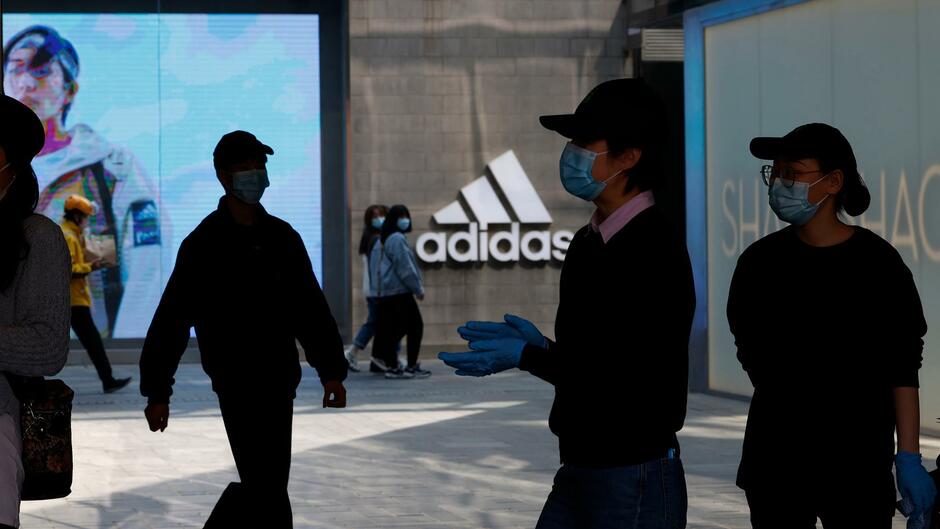
However, it is said that the biggest impact on the brand’s relationship with China was the controversy of 2021. It was related to the use of forced labor by the Chinese authorities in the Xinjiang region, where many companies source cotton. In response to the reports, Adidas issued a statement saying the company does not tolerate forced labour in its supply chain and that it will work with suppliers to ensure their practices are in line with international standards.
At that time, many countries imposed sanctions against the People’s Republic of China, and many companies, including Adidas, began to monitor their cotton sources more closely. The crisis itself caused a boycott of Adidas in China that continues to this day. The brand’s market share was dragged down by 24% in Q4 2022.
Refreshing Adidas-China Relations
Despite the cotton scandal and other challenges to Adidas’ reputation, the company is trying to get its relations with China back on track in various ways. In 2023, it plans to focus on tapping into the huge potential of the Chinese market. Adidas will therefore adapt its products and marketing campaigns to local needs. Wanting to gain greater customer trust and loyalty, the company wants to combine international design with traditional Chinese culture.
There is also talk about investments in digital tools and technologies. Adidas plans to increase its presence in e-commerce and on social media platforms such as WeChat, popular in China, to reach a wider group of consumers. It also intends strengthen cooperation with Chinese business and sports partners. In this way, it wants to increase the reach of its products and services in the Chinese market. Then it will also be able to respond to changing fashion trends.