
Can you imagine a nail polish worth a quarter of a million dollars? It sounds like a joke, but Azature Black Diamond is no fantasy.
When the media first reported in 2012 about the $250,000 price tag for a single bottle of polish, the reactions were… well, mixed. Some called it madness, others admired the creativity. Journalists double-checked the facts, because it was hard to believe such a sum for a cosmetic.
The sparkle of diamonds on your nails – an introduction to Azature Black Diamond
Inside this tiny bottle, you’ll find 267 carats of genuine black diamonds. Not dust, not an imitation—these are real precious stones. Just think about it—most people will never hold that many diamonds in their hands, and here you can paint them right onto your nails.
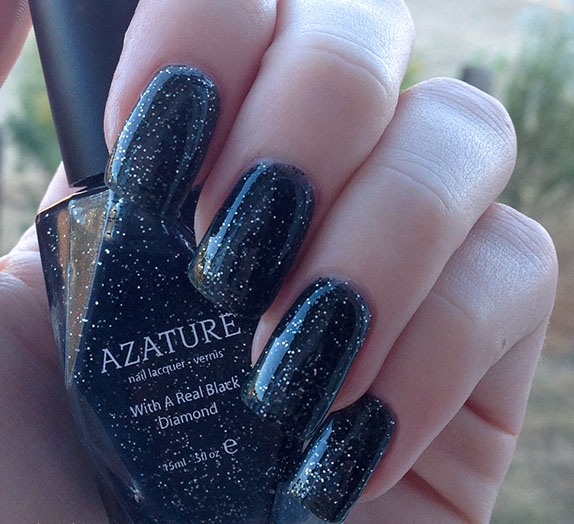
Kelly Osbourne was the first to dare to show off this polish in public. Emmys 2012, red carpet—a moment that went down in beauty industry history. Cameras flashed, and all eyes were on her hands. Not on her dress, not on her hair—on her nails. Who would have thought that a manicure could outshine an entire outfit?
The brand’s creators came up with a slogan that perfectly captures their philosophy:
“luksus na wyciągnięcie ręki”
Luxury at your fingertips. It sounds simple, but that’s the whole idea. Instead of buying diamond jewelry reserved for special occasions, you can have diamonds… every day. On your nails. A little crazy, but absolutely brilliant at the same time.
Of course, Azature Black Diamond didn’t appear overnight. Behind this product lies a fascinating brand story, full of highs and tough decisions. But more on that in a moment—it’s worth discovering the journey the creators took before deciding to put real diamonds into nail polish.
From $250,000 to $25 – the story and milestones of diamond nail polish
Remember when Kelly Osbourne showed up at the Emmys wearing nail polish worth a quarter of a million dollars? That was the beginning of the wild story of Azature Black Diamond—a brand that first made waves with its out-of-this-world prices and then… well, things got interesting.
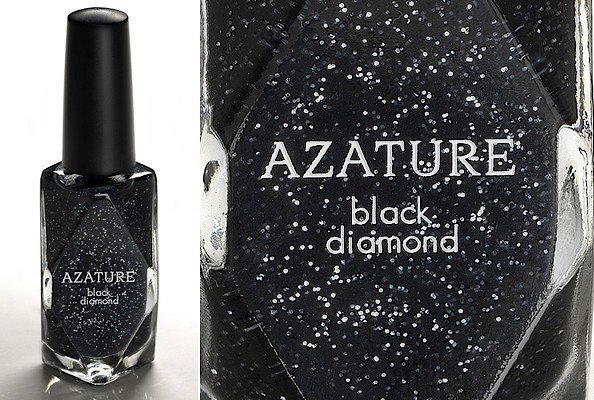
It’s worth looking at this chronologically, because these price changes are a real rollercoaster ride:
| Date | Event | Meaning |
|---|---|---|
| 23/09/2012 | The launch of a nail polish for $250,000, Kelly Osbourne at the Emmys | The first media breakthrough, establishing the brand as a symbol of luxury |
| Autumn 2012 | Introduction of the mass version at $25 with a single pavé diamond | Strategic expansion into a broader market |
| 2013 | “White diamond” nail polish for $1,000,000 (98 carats), Toni Braxton, Lupus LA support | The pinnacle of exclusivity, combined with charitable initiatives |
| 2014 | The $195,000 version and media buzz | An attempt to maintain prestige at a lower price |
| 2015 | The media describe the product as “epitome of indulgence” | Establishing cultural significance |
| 2021 | Collector’s set with 20 bottles | Proof of brand durability and customer loyalty |
Honestly, this price evolution is a marketing masterpiece. You start with an amount you could buy an apartment for, create a buzz, and then introduce a $25 version. Suddenly, everyone feels like they’re buying a piece of that luxury.
The most interesting part is that the brand never completely abandoned the ultra-premium segment. In 2014, that $195,000 variant showed they still wanted to play in the top league. It was a clever strategy—maintain exclusivity at the top while making money on the mass market.
From a million dollars down to 25—that’s a drop of 99.9975%. But is it really a drop? More like a smart expansion of the lineup. Now it’s time to see what’s actually inside those bottles, and whether all the hype was really worth it.
The secret of diamond shine – composition, design, and user experiences
Diamond nail polish sounds like marketing hype, but Azature Black Diamond actually contains real stones inside. No joke. In the basic $25 version, you’ll find a single black pavé diamond blended into the formula. The process is simple—the diamond is crushed and added during production, so every bottle contains microscopic particles of genuine stone.
| Version | Diamonds | Capacity | Price | Key advantage |
|---|---|---|---|---|
| Standard | 1 black pavé diamond | 0.5 fl oz | 25 USD | Accessibility for the masses |
| Million Dollar | 1400 diamonds | 0.5 fl oz | 1 million USD | Platinum cap, collection |
The platinum cap in the million-dollar version is a story of its own. 1,400 diamonds set into the metal top aren’t just for show. It’s a designer statement—a bold declaration that nail polish can be a work of functional art. Collectors are buying not just a product, but a status symbol.
The standard 0.5 fl oz capacity may seem small, but it’s enough for a dozen or so applications. The glossy finish truly mimics gem sparkle—the effect is visible to the naked eye.
“The first time, I thought the diamond thing was a gimmick, but it really does shine differently than regular polishes. It lasts about a week without chipping,” says Anna from Warsaw.
“I bought it out of curiosity and don’t regret it. The application is standard, but the effect is wow. People keep asking what polish I’m wearing,” adds Marta, who tested the product for a month.
A mini application test reveals a few things. Application is straightforward—the brush is standard, the consistency typical. The difference appears after drying. Diamond particles create micro-reflections that shift depending on the angle of the light.
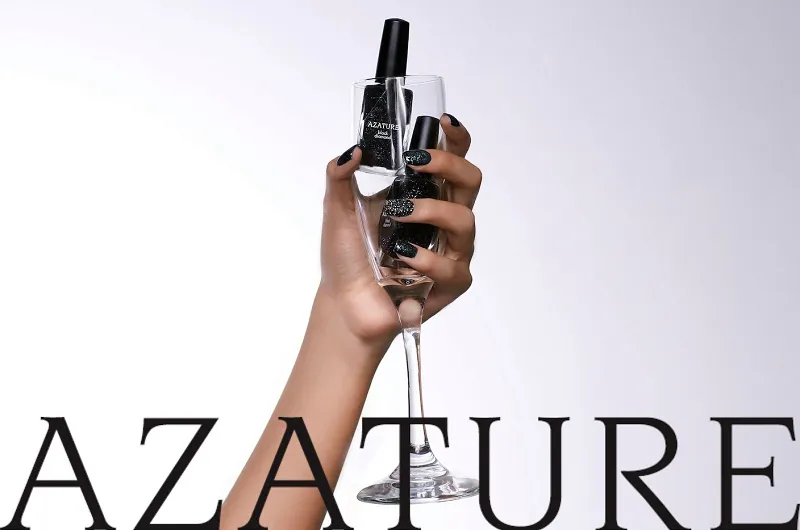
According to users, the wear time ranges from 5 to 7 days without a top coat. With a base and a hardener, you can get up to 10 days. That’s a solid result for a polish with added ingredients.
The only downside is the price for a standard bottle. $25 is quite a lot for 0.5 fl oz, but you’re paying for a unique formula. The question is—are diamond polishes the future of the beauty industry, or just a passing trend?
More Than a Manicure – The Future of Diamonds in Cosmetics
Diamond cosmetics are more than just a passing trend—they mark the beginning of a major revolution in the beauty industry. Market data shows we’re on the brink of a real shift in the perception of luxury.
Let’s look at the numbers. In the US, 55% of engagement rings now feature lab-grown diamonds. That’s a huge change in perception—people are no longer distinguishing between “real” and synthetic stones. For cosmetics, this means one thing: the prestige remains, but without the outrageous price tag.
The price of synthetic diamonds has dropped by 40% since 2022. This opens the door for brands that previously couldn’t afford such additions. And for us as consumers, it means access to products that were out of reach just a short time ago.
China controls 90% of the global production of lab-grown diamonds. That might sound a bit concerning, but for cosmetics it could be good news—greater production scale and more stable supply. Brands can plan for the long term.
Trend chart (to be inserted by chart designer): Growth in sales of lab-grown diamond cosmetics, 2020–2024
What can you do with this knowledge? Here are some practical steps:
- Check the source of diamonds in cosmetics – ask brands about certificates and origin
- Compare prices of similar products with natural and synthetic diamonds
- Look for new brands entering the market with more affordable lab-grown diamonds
- Follow Asian brands – they may offer better prices thanks to shorter supply chains
After all, does it really matter whether the diamond in your polish was formed in the earth or in a lab? The visual effect is the same, and your wallet will suffer less.
The future of diamond cosmetics looks bright. More brands will experiment, prices will drop, and we’ll have more options to choose from. It’s worth keeping an eye on these changes—within a few years, diamond makeup may become as commonplace as glitter.
Majka from High Class Fashion