
“The most influential fashion designer you’ve never heard of” – that’s how the Washington Post described Chitose Abe. And you know what? Paradoxically, it’s spot on. For 25 years, Abe has been creating Sacai, a Japanese fashion house from Tokyo that has defined hybridization—combining haute couture with technical fabrics, sweatshirts with pleated skirts, streetwear with runway fashion. Her designs seem impossible to wear, yet they work perfectly.
Chitose Abe – why does this name appear everywhere?
Right now, the name Abe is everywhere. Why? Because in 2024 Sacai is celebrating its 25th anniversary, and in 2025 Hypebeast awarded her the title “Designer of the Year.” Since 2011, Sacai’s shows have been a regular feature of Paris Fashion Week. Abe isn’t loud—there are no spectacular controversies, she doesn’t speak out on social media. But her impact? Enormous.
In this article, you’ll learn:
- How Rei Kawakubo’s assistant created her own brand with 200 dollars
- Why Sacai is growing without external investors – and why it matters
- How Abe built a collaboration empire (Nike, fragmenty, Moncler) before they became trendy
- What her philosophy says about building a career on your own terms
Let’s start from the beginning – who was Chitose Abe before Sacai?
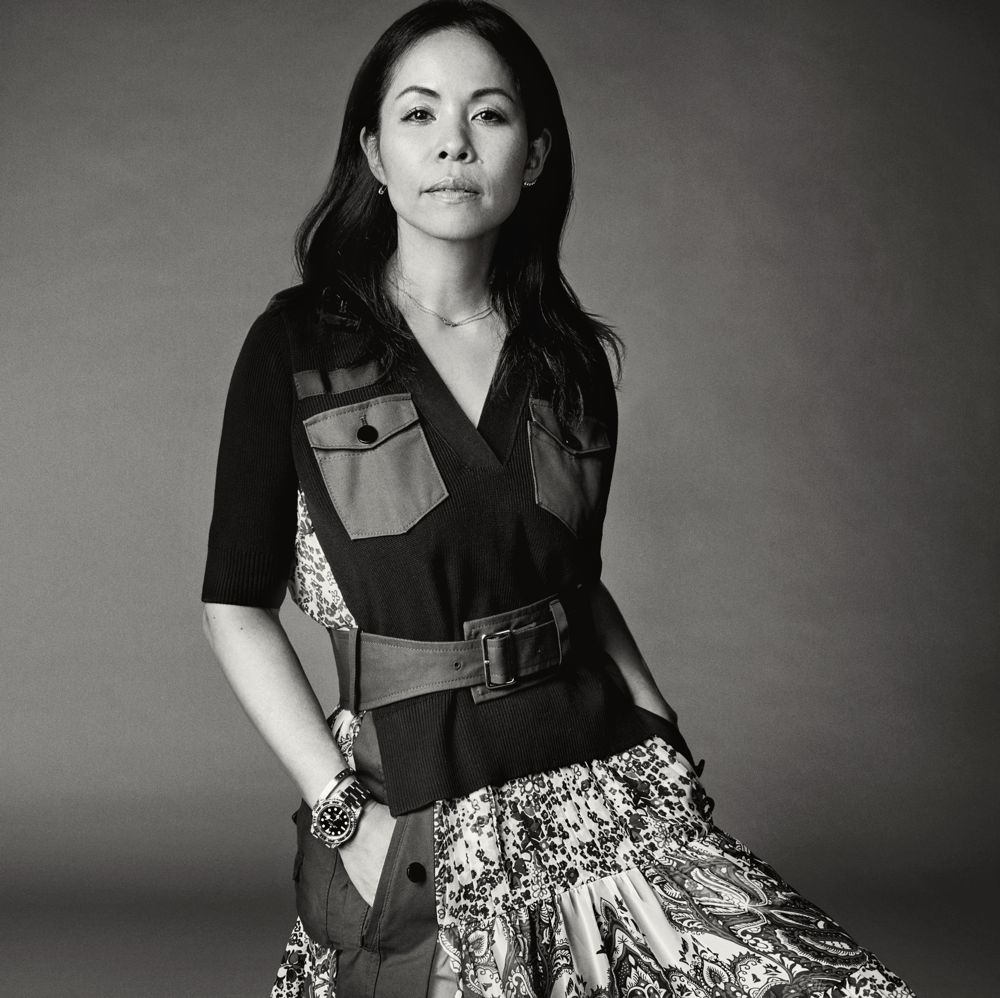
From Bunka Fashion College to Her Own Brand: The Biography of Chitose Abe
Tokyo, Bunka, and first steps in fashion
Chitose Abe was born in Tokyo in the mid-60s, at a time when Japanese fashion was just beginning to carve out its place on the world map. She chose Bunka Fashion College, one of the most prestigious design schools in Japan, where she focused on garment construction and tailoring techniques. It was there that she learned to think about form in three dimensions—a skill that later became the foundation of her designs.
The years of Rei Kawakubo and Comme des Garçons
In 1987, Abe joined the Comme des Garçons team, led by the legendary Rei Kawakubo. She spent nearly 14 years there, working as a pattern maker and designer. It was Kawakubo—known for her radical deconstruction and rejection of traditional proportions—who showed her that fashion doesn’t have to be “beautiful” in the classical sense. It can provoke, it can challenge the rules.
The birth of Sacai and the road to Paris
In 1999, Abe left Comme des Garçons and founded her own brand in Tokyo – Sacai. The name is said to come from a combination of family surnames, highlighting its personal character. Initially, it was a niche women’s brand focused on knitwear and layered constructions.
Key points in her career:
- Early years: boutique successes in the Aoyama district of Tokyo
- 2011: debut at Paris Fashion Week (SS2011 collection) – international recognition
- 2011: launch of the men’s line, expansion of the brand’s vision
To this day, Abe combines the roles of creative director and CEO—overseeing both aesthetics and business.
The philosophy of “hybridization” – how Chitose Abe and Sacai design
The pinstripe coat is attached to floral chiffon. The bottom is double-layered—it looks as if the designer glued one skirt onto another, came back in the evening, reconsidered, and added a third one. You can actually unfasten almost everything. That’s exactly what Sacai is—not just one thing, but several at once.
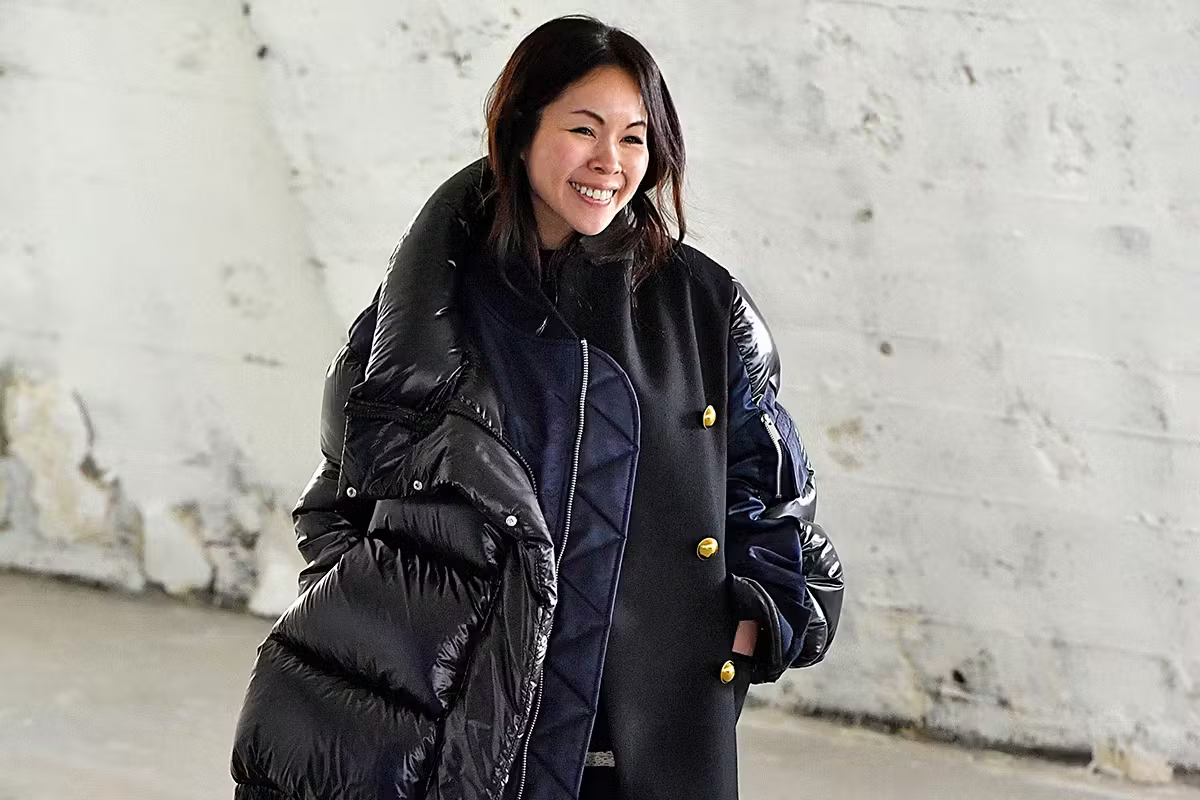
What is hybridization in Sacai
Abe calls his designs “hybrids,” but that sounds a bit too scientific. In practice, it looks like this: he takes a sweater, cuts it in half, and sews a piece of a cocktail dress into the middle. Knitwear meets silk, a sporty jacket has a couture train at the back, and a classic shirt in the front has a backpack at the back. It’s not about shock or provocation. He simply combines things that normally don’t go together:
- technical knits + haute couture finishing
- asymmetrical lengths (short front, long back – or vice versa)
- detachable layers (wear one piece or three, as you prefer)
- mix of textures: satin, neoprene, wool in one outfit
Although it looks like an engineering project on the hanger, it works on the body. You can walk, work, and live in it.
Between streetwear and haute couture
Education at Bunka and years with Kawakubo taught Abe precision in tailoring and deconstruction. But she didn’t go for the avant-garde—she brought a twist to everyday wear. British Vogue called it “quietly revolutionary,” while i-D wrote about “post-deconstruction.” What does this mean for the average wearer? That you buy one garment that works like three. That streetwear stops being just for the street, and the living room stops being just a living room. Sacai builds a bridge—without hype, without shouting.
The evolution of Sacai – from a niche Tokyo brand to a global fashion house
In 1999, Chitose Abe launched Sacai in a small studio in Tokyo. Twenty-five years later, her brand generates around 100 billion yen in annual revenue (roughly 670 million dollars), employs between 200 and 300 people, and has boutiques in fashion capitals across four continents. And the most interesting part? Sacai is still a privately owned company, managed from Tokyo, with no involvement from major luxury groups. This is a rarity in an industry where most fashion houses have long since sold out to conglomerates like LVMH or Kering.
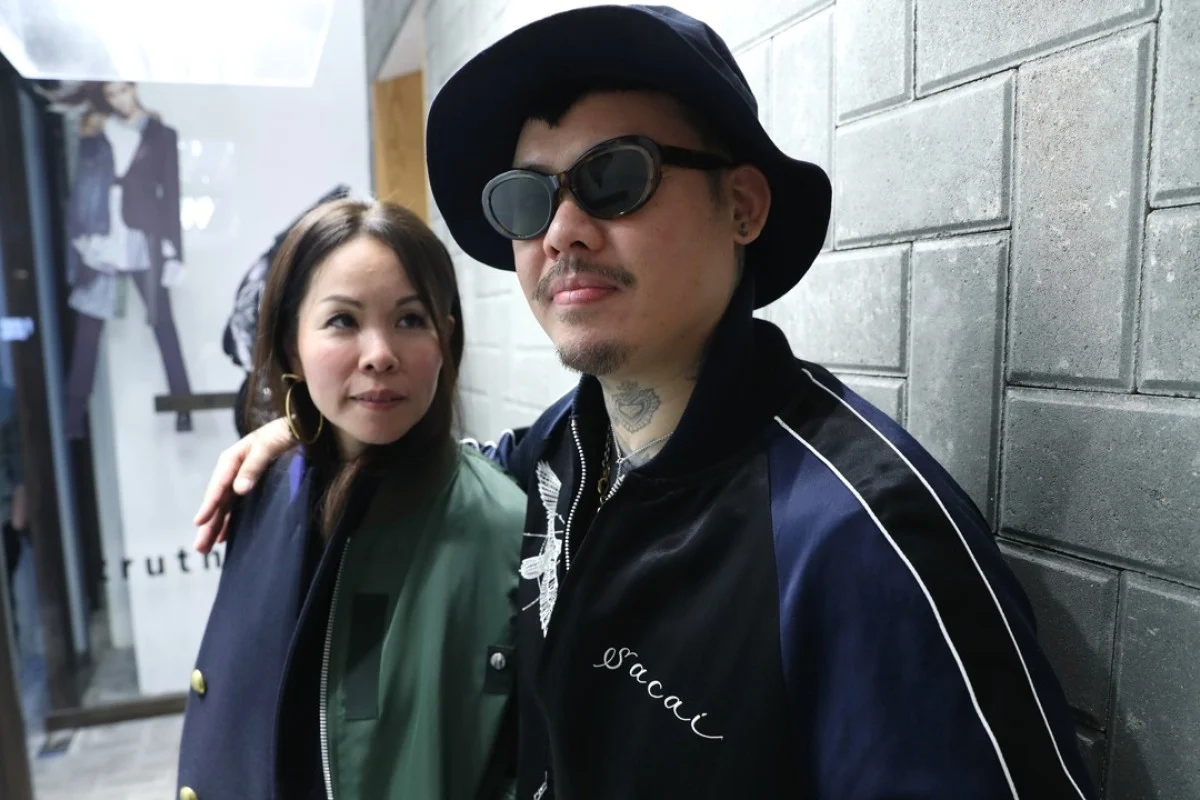
From a local line to the Parisian runways
For the first decade (1999-2009), Sacai operated mainly in Japan—sold in select boutiques, building a reputation among Tokyo connoisseurs. The breakthrough came in 2011, when Abe decided to present the collection at Paris Fashion Week. From that moment on—every season—Sacai shows in Paris, not Tokyo. This is a deliberate strategy: if you want to be global, you have to play on the stage watched by the whole world. In 2015, menswear was introduced, followed by an expansion into accessories and shoes. Retail expansion took place between 2016 and 2020: flagship boutiques in Aoyama, Ginza, New York, London, Paris. In total, 5-10 physical locations plus online sales through sacai.jp and major platforms like Net-a-Porter and Ssense.
Independence as an advantage
Sacai belongs to no one. This gives Abe full control over the pace of growth, over whom she collaborates with, and how she manages the brand in the long term. The 25th anniversary (2024-2025) is a moment when many brands had to “reset” after the pandemic. Sacai? Stable, with no need for a radical change of identity. It simply keeps doing its thing — and it works.
Sacai collaborations and Chitose Abe’s influence on fashion and culture
From LD Waffle to haute couture: the most talked-about collaborations
When the Sacai x Nike LD Waffle was released in 2019, the sneakers sold out within seconds. On the secondary market, prices soared to $500-800, sometimes even higher. This was no accident—Chitose Abe created something no one had seen before: a hybrid of two Nike models in one shoe, featuring a double tongue and a dual-layer sole.
The most important Sacai collaborations:
- Nike (since around 2015) – a series of sneakers combining the silhouettes of Blazer, LD Waffle, and Vaporwaffle. Bestselling models, coveted by streetwear collectors and high fashion enthusiasts.
- Jean Paul Gaultier (2020) – guest haute couture collection, where Abe presented hybrid creations on the Paris runway. A fusion of Japanese precision with French chic.
- Cartier (2022) – the Trinity installation with Sou Fujimoto, a project combining jewelry and architecture. Proof that Sacai is about more than just clothing.
- Fragment Design, The North Face, A.P.C. – serial projects are building a bridge between streetwear and luxury.
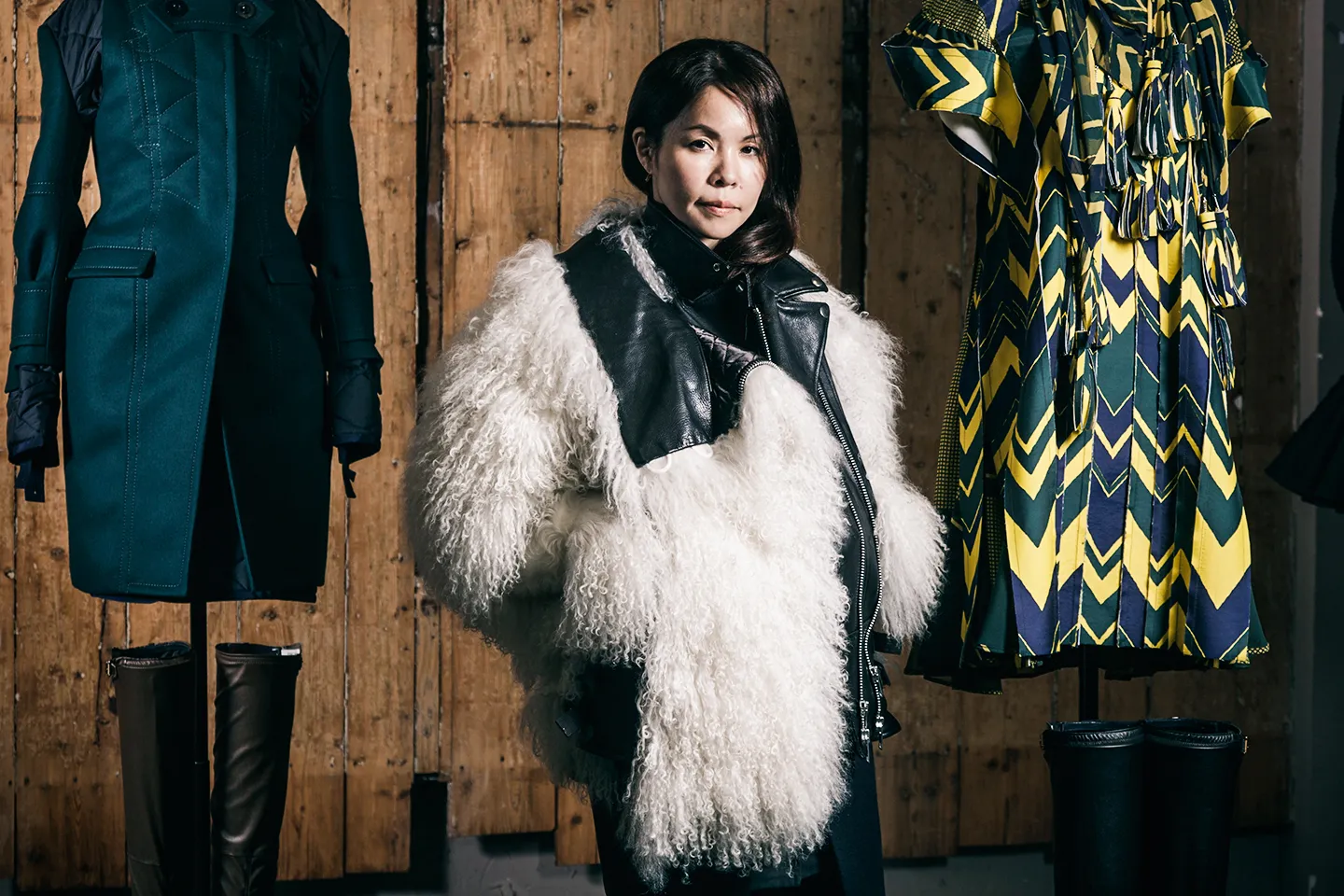
The voice of a designer from Tokyo in the global fashion discussion
Abe appears regularly on the BoF 500 lists, and Hypebeast and Vogue write about her as an icon. She is one of the few female heads of an independent fashion house, which is significant in an industry dominated by white men in creative director positions. The media emphasize that as an Asian woman, she represents a voice often overlooked in discussions about the future of fashion.
Celebrities and K-pop icons (like Hyunjin from Stray Kids) regularly wear Sacai on the streets and in music videos. This not only builds recognition—it changes street style.
Streetwear, luxury, and questions of accessibility
Sacai products cost between $500 and $3,000. A sweatshirt? $600. A coat? Even $2,500. For a brand that grew out of street style and a DIY philosophy, this raises questions. Who can afford Sacai? Do collaborations with Nike democratize the brand, or do they make sneakers even more exclusive?
The debate within the fashion community continues. Abe does not comment on prices publicly, but her position as an independent designer—not employed by a corporation—adds context. Running your own business is a different economy than managing a brand owned by a conglomerate.
What can you learn from Chitose Abe and what’s next for Sacai
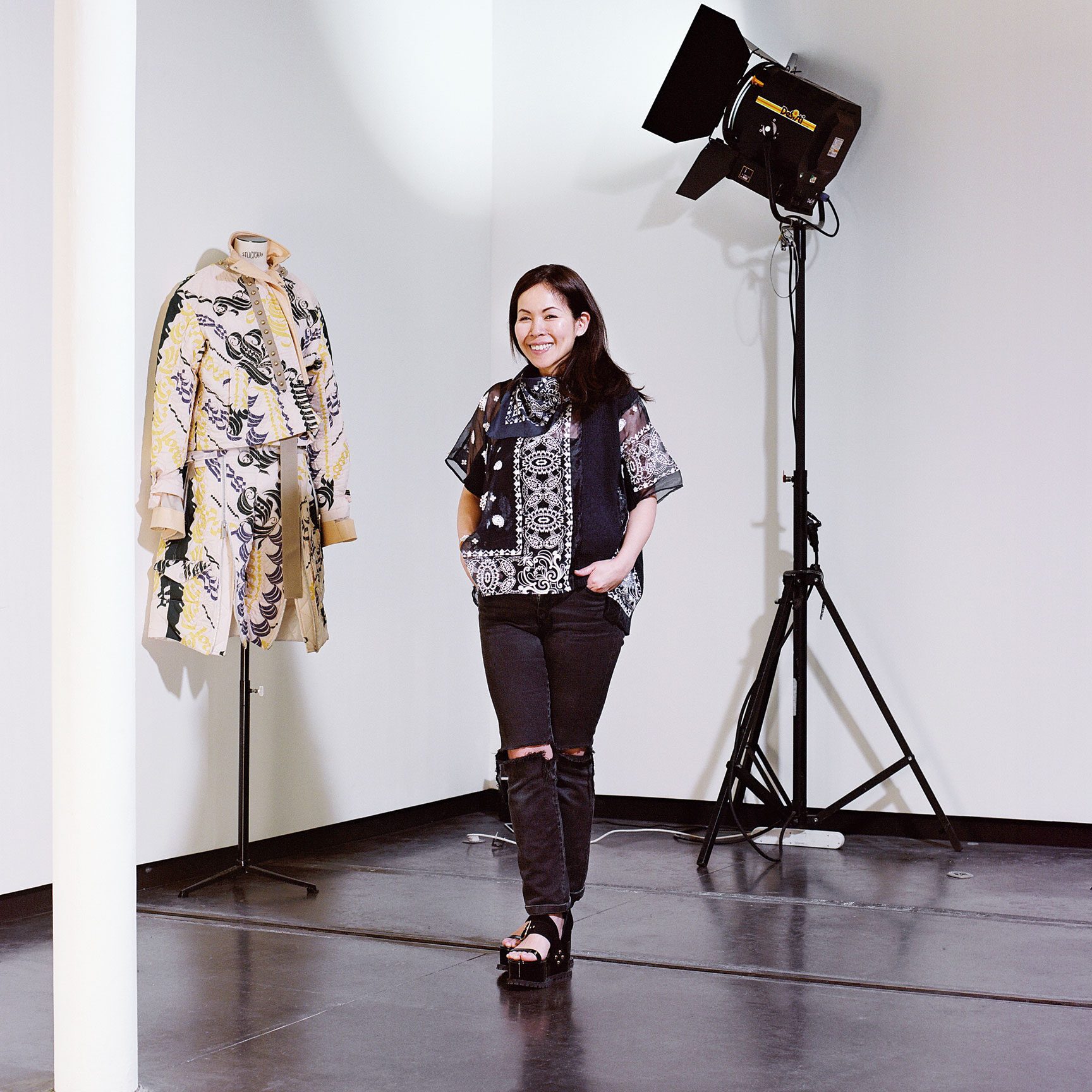
Abe doesn’t look back. After 25 years, the brand has entered a phase it describes as “evolution without betraying its roots”—no revolution, no reset, just steady development of what already works. So what’s next?
What’s next for Sacai after 25 years
The conclusions from Abe’s recent interviews are clear: the priority is becoming sustainable hybridization—not just combining styles, but also using recycled materials, local production, and smaller collections with greater durability. Conversations with Sou Fujimoto (architect) also signal a move toward cross-sector projects—fashion meets space, interior design, installations. In market terms, Sacai is aiming for further growth in Asia (especially China and Korea), and there is speculation about a possible IPO in Tokyo—however, this is just a scenario, not a confirmed fact.
I look into my closet and think: where can I “hybridize” my own style? Maybe this is a good moment to start.
Sanna
people & lifestyle editorial team
High Class Fashion