
Table of Contents
- A revolution on the racks – why “Commune de Paris” is stirring emotions
- Origins and Distinctiveness – Brand DNA and Positioning
- What you can buy and for how much – lines, quality, production, and availability
- A conscious choice for today and tomorrow – how to evaluate a brand and what’s next
“Commune de Paris” is a clothing brand whose name references the historic uprising of 1871. Founded in 2009 by three friends—Sébastien Lyky, Alexandre Maïsetti, and Edouard Launay—it has drawn inspiration from the ideals of independence and rebellion that defined the Paris Commune from the very beginning.
Commune de Paris 1871 – what kind of brand is it?
In 2019, the brand announced a hiatus, but in response to a changing world and growing social awareness, it returned with renewed energy. Co-founder Hugo Bentz emphasizes that “we have become more conscious, more eco-responsible, more open, more independent, more accessible, and we still have the same desire to democratize access to creative and well-crafted wardrobes.”

In 2025, “Commune de Paris” fits into the trend of sustainable fashion and the growing interest in niche brands. Consumers are increasingly looking for clothing that is not only aesthetically pleasing but also carries values and a story. By combining historical references with modern design, the brand responds to these needs, offering products for conscious customers.
In the following sections of the article, we will explore:
- DNA and brand positioning: the values and inspirations behind “Commune de Paris” and how the brand positions itself in the market.
- Offer and prices: an overview of available products and their price ranges.
- Availability: where you can purchase the brand’s products, both in-store and online.
- Reviews and development directions: how the brand is perceived by customers and what plans it has for the future.
Let’s now delve into the origins and identity of the brand to better understand what makes “Commune de Paris” stand out from the rest.
Where it comes from and what sets it apart – brand DNA and positioning
The Commune de Paris 1871 brand takes its name from a historic event—the Paris Commune of 1871, which symbolized rebellion and the pursuit of social equality. This reference is reflected in the brand’s aesthetic, which incorporates revolutionary symbols such as the Phrygian cap and slogans inspired by that era.

Founders and multidisciplinary character
The brand was founded by three creative minds: Alexandre Maïsetti, responsible for graphics, Sébastien Lyky, in charge of music and collaborations, and Edouard Launay, who manages operations. Their diverse skills have contributed to the multidisciplinary nature of the brand, blending fashion with other fields of art.
Values and visual communication
Commune de Paris 1871 emphasizes revolutionary values and social sensitivity. Visual communication often features motifs related to revolution, highlighting the brand’s commitment to social and historical issues.
Market positioning and target audience
The brand positions itself as “accessible premium,” offering lifestyle streetwear with a cultural context. It is aimed at young, conscious consumers who prefer an urban style.
Key milestones
- 2011: Show at Paris Men’s Fashion Week.
- 2014: Collaboration with Colette.
- 2023: Pop-up store in Tokyo.
These events contributed to building the cultural capital of the brand and its recognition on the international market.
In the next section, we will take a closer look at specific products, material quality, and the availability of the Commune de Paris 1871 collection.
What can you buy and for how much? – lines, quality, production, and availability
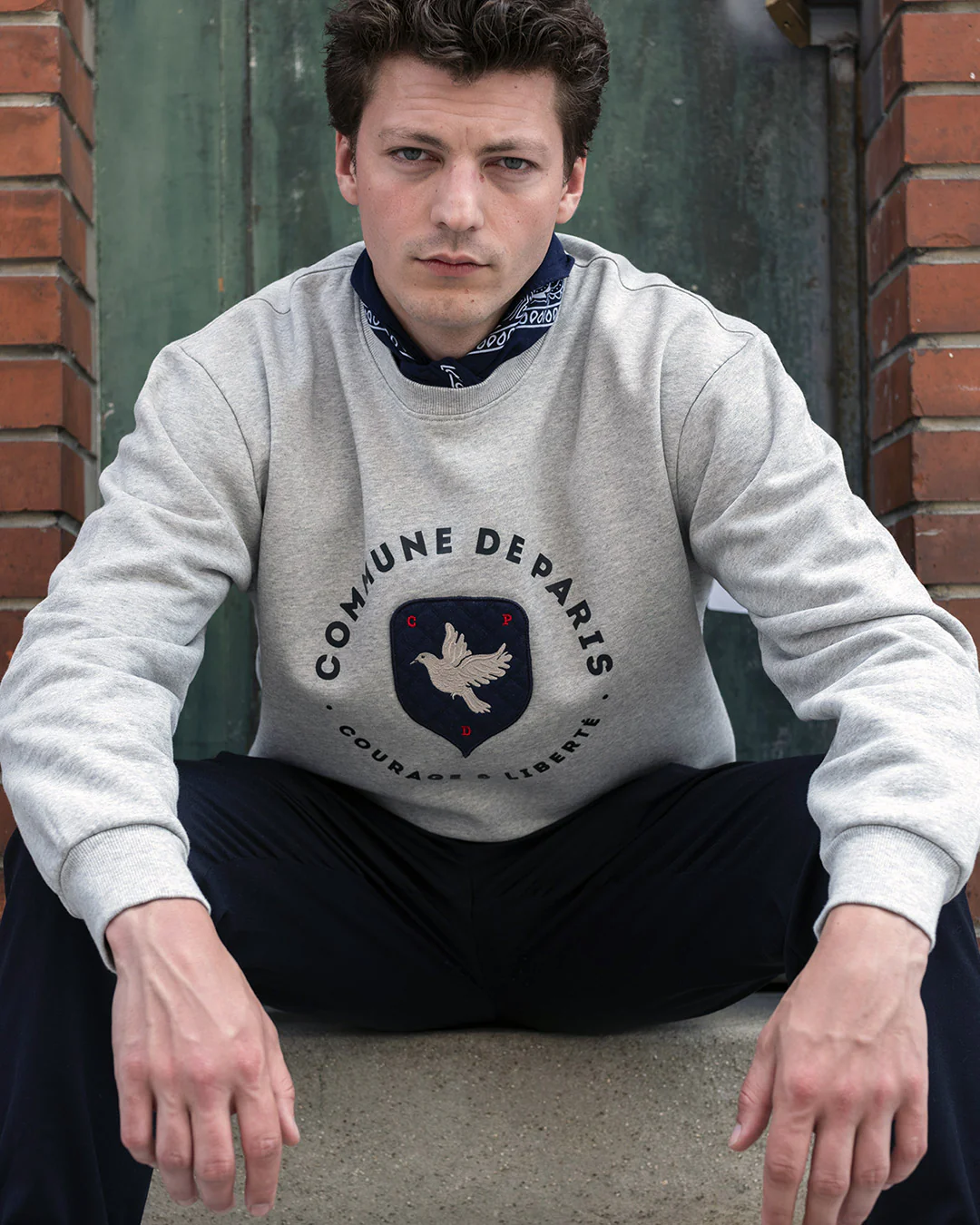
Commune de Paris 1871 offers a wide range of
Main product categories
- T-shirts: Made from 100% organic cotton, often featuring unique graphics inspired by the history of Paris.
- Sweatshirts: Comfortable and stylish, perfect for cooler days, also available in organic cotton.
- Jackets: Stylish and functional, available in a variety of cuts, from lightweight to warmer styles.
- Accessories: Hats, scarves, and other extras to complete any look.
Materials and quality
All products are made from the highest quality materials, such as GOTS-certified organic cotton and recycled polyester. Production takes place in small batches in Portugal and France, ensuring attention to detail and superior craftsmanship.
Size guide notice: Products are available in sizes from XS to XXL. Please refer to the manufacturer’s size chart to choose the right fit.
Prices and collection cycle
- T-shirts: Around €50–80
- Sweatshirts: €100-150
- Jackets: €200–400
- Accessories: €30–100
The brand launches two collections a year, allowing for regular updates to its range and adaptation to current trends.
Sales channels and availability
Commune de Paris 1871 products are mainly available online through the brand’s official website. Additionally, selected items can be found in boutiques in over 20 countries. The main markets are France (about 50% of sales), the USA (about 20%), and Japan (about 15%).
With its wide range of products and high quality, Commune de Paris 1871 attracts customers looking for unique clothing inspired by the history of Paris.
A conscious choice for today and tomorrow – how to evaluate a brand and what comes next
Is Commune de Paris the right brand for you? To make an informed decision, it’s worth taking a closer look at its advantages and disadvantages, controversies surrounding its operations, comparing it with competing brands, and considering the future of this company.

Pros and cons of the Commune de Paris brand
Pros:
- Authenticity of historical narrative: The brand draws inspiration from the rich history of Paris, giving it a unique character and setting it apart from the competition.
- Niche appeal as an asset: Targeting a narrow audience enables you to build a loyal community and highlights the exclusivity of your products.
Cons:
- The risk of “commercializing rebellion”: Using historical symbolism for commercial purposes can be seen as trivializing its meaning.
- Limited reach: The niche nature of the brand may restrict its availability and recognition in the broader market.
Controversies and debates
“Greenwashing” and supply chain transparency
In recent years, there have been allegations of “greenwashing” in the fashion industry, meaning misleading consumers about the environmental friendliness of products. Supply chain transparency is becoming a key factor in evaluating brands. It is worth checking whether Commune de Paris clearly communicates the origin of its materials and production conditions.
Use of historical symbolism
The use of historical symbols in fashion can be controversial, especially when they are linked to significant events or social movements. It is essential for a brand to approach this with respect and an awareness of the context.
Comparison with the competition
When comparing Commune de Paris with other brands such as Ami Paris or Off-White, it’s worth paying attention to the following aspects:
- Price: Ami Paris offers products in a higher price segment, while Commune de Paris may be more accessible to a wider audience.
- Communication: Off-White is known for its modern and bold communication, while Commune de Paris focuses on historical storytelling, attracting a different clientele.
- Niche appeal: Commune de Paris targets a narrow audience, while Ami Paris and Off-White have a broader reach.
- Sustainability: All three brands declare pro-environmental initiatives, but the level of advancement and transparency may vary.
Future perspective
The fashion industry is evolving rapidly, introducing innovations such as AI-generated prints and shopping in virtual reality (VR). It is possible that Commune de Paris will expand its range to include women’s collections and seek to enter new markets. By 2030, we can expect sustainability and transparency to become even more important in the industry, influencing the strategies of brands like Commune de Paris.
Anett
High Class Fashion editor