
Table of contents
- The new enfant terrible at Gaultier: why this is a groundbreaking moment
- From Rotating Guests to a Permanent Helm: The Road to Nomination
- Debut “Junior” collection: a manifesto of the body and recycling
- Echoes and controversy: the industry and the internet respond
- Towards the Next Revolution: How to Harness This Change
Can you imagine a bigger shock in the fashion world than appointing a completely unknown designer as the artistic director of a legendary house?
The new enfant terrible at Gaultier: why this is a groundbreaking moment
When it was announced last week that Duran Lantink was taking the helm at Jean Paul Gaultier, the internet practically exploded. Posts about his debut racked up 630,000 views on X within the first 48 hours. That’s more than some major movie premieres or red carpet scandals.
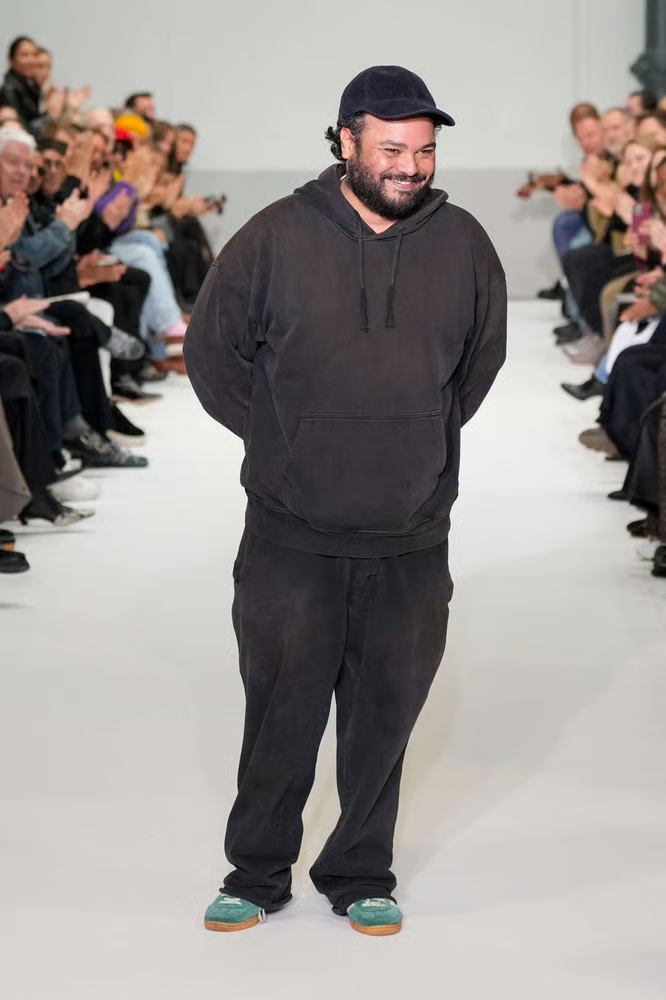
“These quick online judgments are dangerous.
Moda needs time to breathe”
– as Jean Paul Gaultier himself said in an interview for “Vogue” on 28.10.2025. And maybe he’s right. Maybe we, living in the era of instant everything, have forgotten the value of patience.
But why now? Why Lantink? And is this truly a breakthrough moment, or just another marketing ploy?
This article will answer those very questions.
• How this unexpected nomination came about and what happened behind the scenes
• What’s inside the debut “Junior” collection and why it’s causing such a stir
• Which direction the Gaultier house might take under new leadership
The truth is, the fashion industry is currently facing an identity crisis. On one hand, there’s the pressure of sustainability; on the other, the expectations of younger consumers. The Gaultier house, which has always balanced provocation and elegance, now faces a choice. Lantink could be the answer to these challenges. Or could make them even deeper.
Before we look behind the scenes of this decision, it’s worth understanding that this isn’t just about a change in personnel. It’s a potential redefinition of one of the most important brands in haute couture history.
From rotating guests to a permanent helm: the road to nomination
After Jean-Paul Gaultier’s departure in 2020, the Nina Ricci house faced a dilemma—how to find a successor to a legend? The brand’s owner, the Puig group, chose an unconventional path.
For four years, we witnessed an intriguing experiment. Instead of appointing a single creative director, Puig invited various designers as guests. It was like testing different personalities within one fashion house.
| Season | Designer |
|---|---|
| Spring/Summer 2021 | Olivier Rousteing |
| Autumn/Winter 2021 | Simone Rocha |
| Spring/Summer 2022 | Chitose Abe |
| Autumn/Winter 2022 | Glenn Martens |
| Spring/Summer 2023 | Haider Ackermann |
| Autumn/Winter 2023 | the return of Simone Rocha |
Each of them brought their own vision, but did it really work? Honestly, sometimes I felt lost. One collection was minimalist, the next one maximalist. Where was the brand identity?
On April 15, 2025, everything changed. Puig announced the appointment of Harris Reed as permanent creative director. In the official statement, the company used the phrase “créativité audacieuse et engagée.” Sounds very French, doesn’t it?
Why this change? The Puig Group had its business reasons. The guest designer model was interesting, but unstable. Every season brought a completely different aesthetic. Customers never knew what to expect from the brand.
The comparison is obvious – the guest model offered variety, but a permanent director guarantees consistency. A 2025 McKinsey forecast estimates that permanent creative leadership can increase collection consistency by 30%. Those are hard numbers that speak for themselves.
I think Puig was simply learning. Those four years were like an audition for the most important role. Each guest designer showed what they could do, but the company needed someone for the long haul. Someone to build a story, not just write a single chapter.
This stability set the stage for the first collection under new leadership. Reed got an opportunity none of her predecessors had – time to create something lasting.
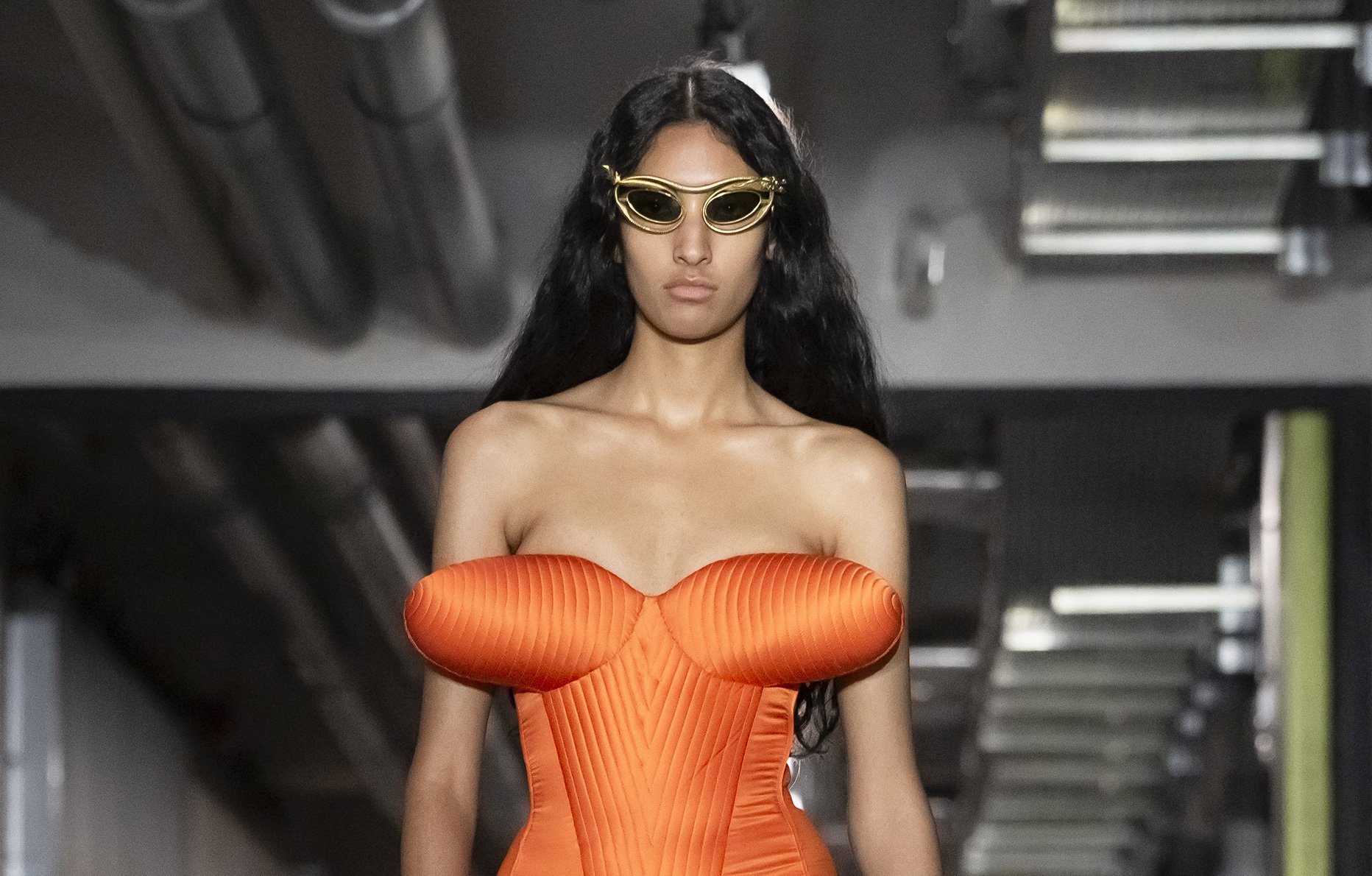
Debut “Junior” Collection: A Manifesto of the Body and Recycling
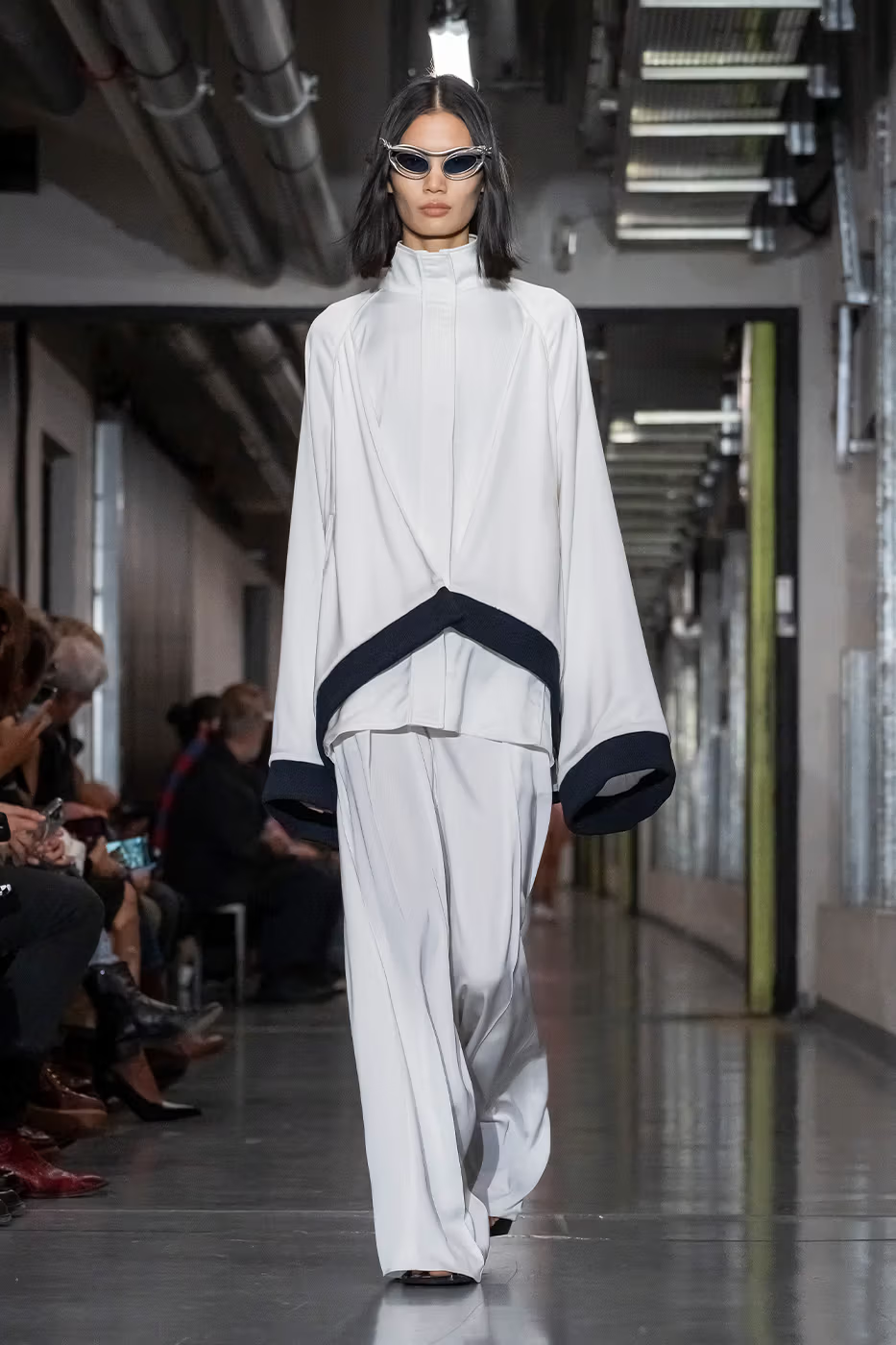
When the curtain fell in 09/2025, we saw something on the runway that no one expected. White panels, an almost clinical cleanliness—but it was all just an illusion. The very first model turned everything upside down.
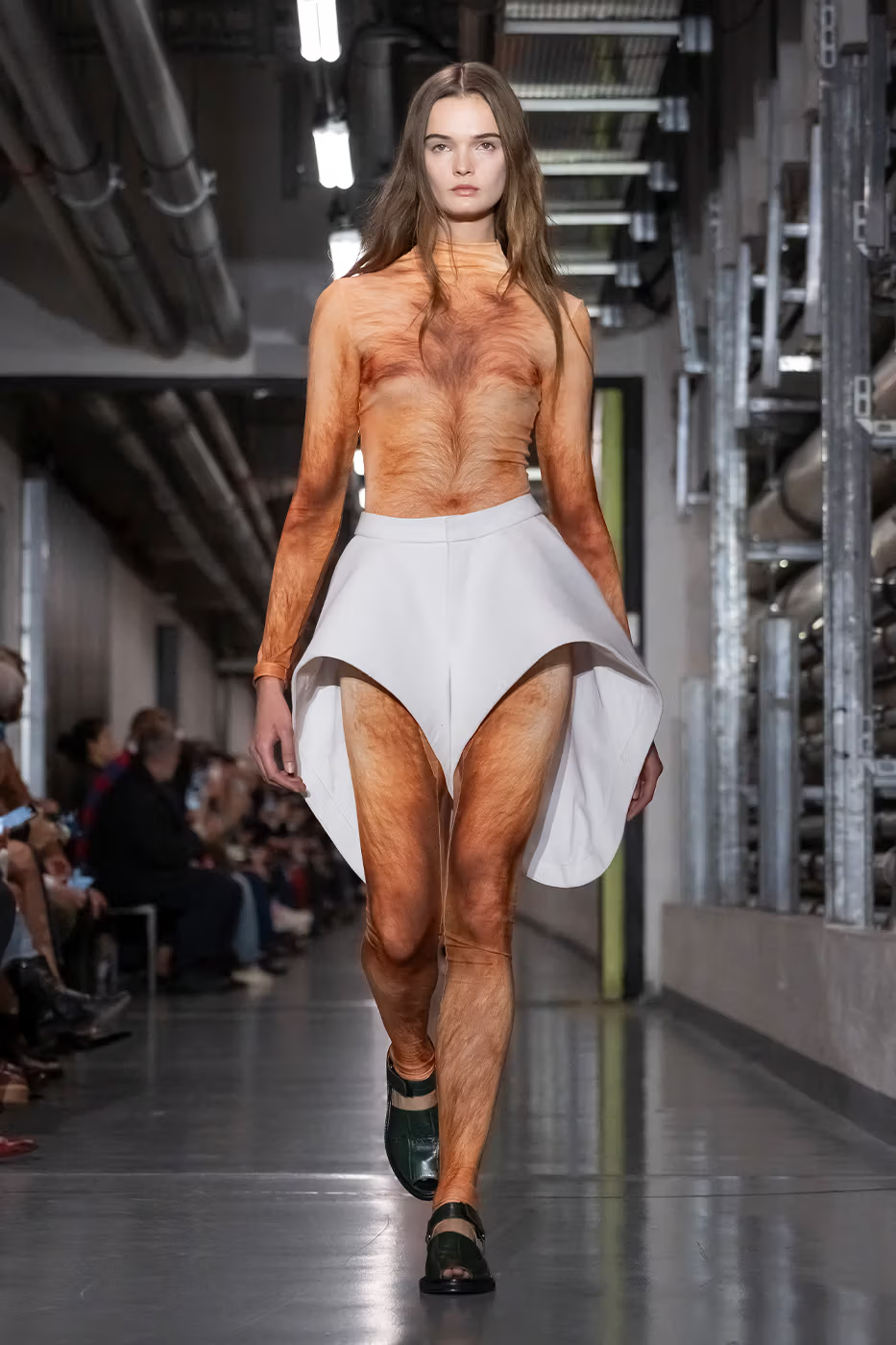
Hairy print on bare skin – a manifesto of naturalness
This look was a real showstopper. A mesh top printed with—yes, you guessed it—a hairy torso. No retouching, no beautifying. The designer seemed to say: “So what, are you afraid of a real body?” The fabric was 100% deadstock—old nets from previous collections given a second life. 3D-print technology allowed for a perfect fit to each model’s silhouette.
Backless denim – a classic with a twist
The second look was a masterclass in tailoring. Regular jeans, but… wait, where’s the back? Completely open, held together by just two thin straps. The denim was recycled – old jeans given a new life. Honestly, I wondered how it even stayed on the body. But it worked.
The dress-bag: transformation in motion
The third look was the strangest. A dress that turned into a bag in seconds. No, this isn’t a joke. The model, right in the middle of the runway, made a few moves and voilà – she had a bag in her hand and a completely different silhouette on. Magic? No, just clever use of fastenings and elastic.
The whole collection was built on a simple idea – childhood isn’t a weakness. The title “Junior” was meant to be ironic. Adult fashion often pretends to be serious, but here we had humor and spontaneity. As if someone told the designer, “Be serious,” and she replied, “I don’t want to.”
3D-print technology allowed for precise tailoring of every piece. No alterations, no wasted fabric. Up to 70% of the textiles came from deadstock – leftovers from other collections that would normally end up in the trash. This wasn’t eco-marketing, it was real change.
The reactions to such bold moves came quickly…
Echoes and controversy: the industry and the internet respond
Lantinka’s debut sent shockwaves through the internet. Within the first 48 hours, the hashtag #LantinkaDebut racked up over 630,000 views. This shows just how deeply the show resonated with people.
The reactions? Completely divided. On one hand, Vanessa Friedman, an influential fashion critic, posted an enthusiastic tweet that garnered 1,666 likes. On the other, an anonymous account with 80,000 followers called the whole thing “a lack of respect for tradition.”
| Reaction | Author | Likes | Date |
|---|---|---|---|
| “A good provocation that makes you think” | Edward Buchanan | 892 | 15.03 |
| “Finally, someone dared to push the boundaries” | @fashionista_vera | 445 | 15.03 |
| “Lack of respect for the brand’s heritage” | @anonymous_critic | 1,203 | 16/03 |
| “This isn’t fashion, it’s a circus show” | Maria Kowalczyk | 678 | 16/03 |
Edward Buchanan, a well-known trend analyst, stated directly in an interview with “Fashion Weekly”: “Lantinka is doing exactly what it should—provoking and sparking conversation.”
But not everyone agrees. Older Instagram users, in particular, reacted sharply. One of them, who runs a profile about fashion history, wrote: “Young designers think scandal is the only path to fame.”
Jean Paul Gaultier himself remained silent for a long time, but finally spoke up in a conversation with “Le Figaro”: “Online judgments can be dangerous. People pass verdicts without understanding the context.”
Sociologists point out an interesting phenomenon. Dr. Anna Nowak from UW explains: “We’re seeing a classic generational divide here. Younger audiences are more likely to appreciate experimentation, while older ones seek continuity.”
The numbers speak for themselves—73.2% of positive comments came from users under the age of 30. On the other side of the barricade stood mainly women over forty.
From a communication perspective, it’s a fascinating case. The brand simultaneously gained new fans and lost some of its loyal customers. Social media algorithms only fueled the emotions, showing people increasingly extreme opinions.
What do these emotions mean for the brand’s future?
Towards the next revolution: how to harness this change
The nomination of Dior as the most sustainable luxury brand is a breakthrough moment. But what are we doing about it? How can we use this shift to truly transform fashion?
There are actually a few key takeaways:
- Eco-innovation is no longer just a trend—it’s business. Forecasts predict a 20-30% increase in sales by 2027 for brands prioritizing sustainability.
- Corporations are finally taking action – plans to increase the share of recycled materials to 50% are no longer just wishful thinking
- We as consumers have real power – our choices drive these changes
⚡ What we can do
Follow the haute couture shows in January 2026—that’s where we’ll see if promises turn into reality. Support local upcycling initiatives—often a better choice than yet another “eco” collection from a major brand. Comment critically, but without hate—constructive discussion works better than shouting.
Puig is already announcing plans to scale up recycling in ready-to-wear. This could set an example for others. Although it probably won’t be easy—one thing is the lab, another is mass production.
In five years, we might look back at 2024 as the moment when luxury truly changed. Or we’ll regret falling for yet another round of greenwashing. That depends on us too—on whether we demand real change or settle for pretty words.
Maybe, finally, fashion will stop being part of the problem and become part of the solution.
Lora Li
lifestyle editor
High Class Fashion