
Table of Contents
- Espresso autumn tones – an introduction infused with the aroma of coffee
- From Heritage to Hit – The Evolution of the Wool Coat in Poland
- Material under the microscope – technical advantages and ecological edge of wool
- Trends and Market 2025 – Who Sells Espresso Coats and at What Price
- Outfits and practical looks – how to wear espresso every day
- Controversies and debates – synthetics, animal welfare, and costs
- What’s next? – steps to help you leverage the trend
The aroma of freshly ground coffee fills the air, and its deep brown shade — RGB 69, 39, 19 — is emerging as the hottest trend of the season. It’s no coincidence that everyone is talking about espresso in the world of fashion right now.
Espresso autumn tones – an introduction filled with the aroma of coffee
Wool coats in this color are all the rage. I see them everywhere—on the streets, in stores, on social media. But why now?
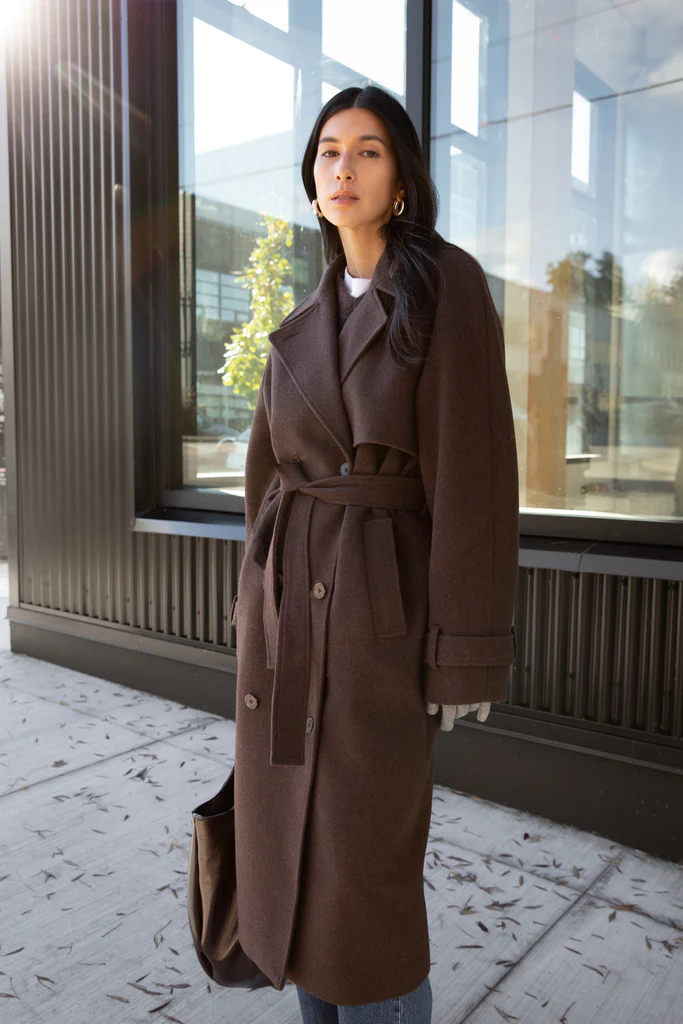
05.12.2024 Pantone announced Mocha Mousse as the Color of the Year 2025. This is the official confirmation of what many of us already sensed. Espresso is more than just a drink—it’s an emotion, warmth, comfort. Exactly what we’re looking for in uncertain times.
The numbers don’t lie. Sales of wool outerwear in Poland rose by 15% in Q3 2025. That’s a jump the industry hasn’t seen in years. Women are snapping up these coats like crazy, and I get why.
Espresso in fashion is more than a color. It’s a mindset about elegance, about how we want to present ourselves to the world. Warm, yet assertive. Classic, yet modern.
Really, when was the last time you saw a color take over wardrobes this fast? Maybe beige in 2019? But that was different—more neutral, less emotional.
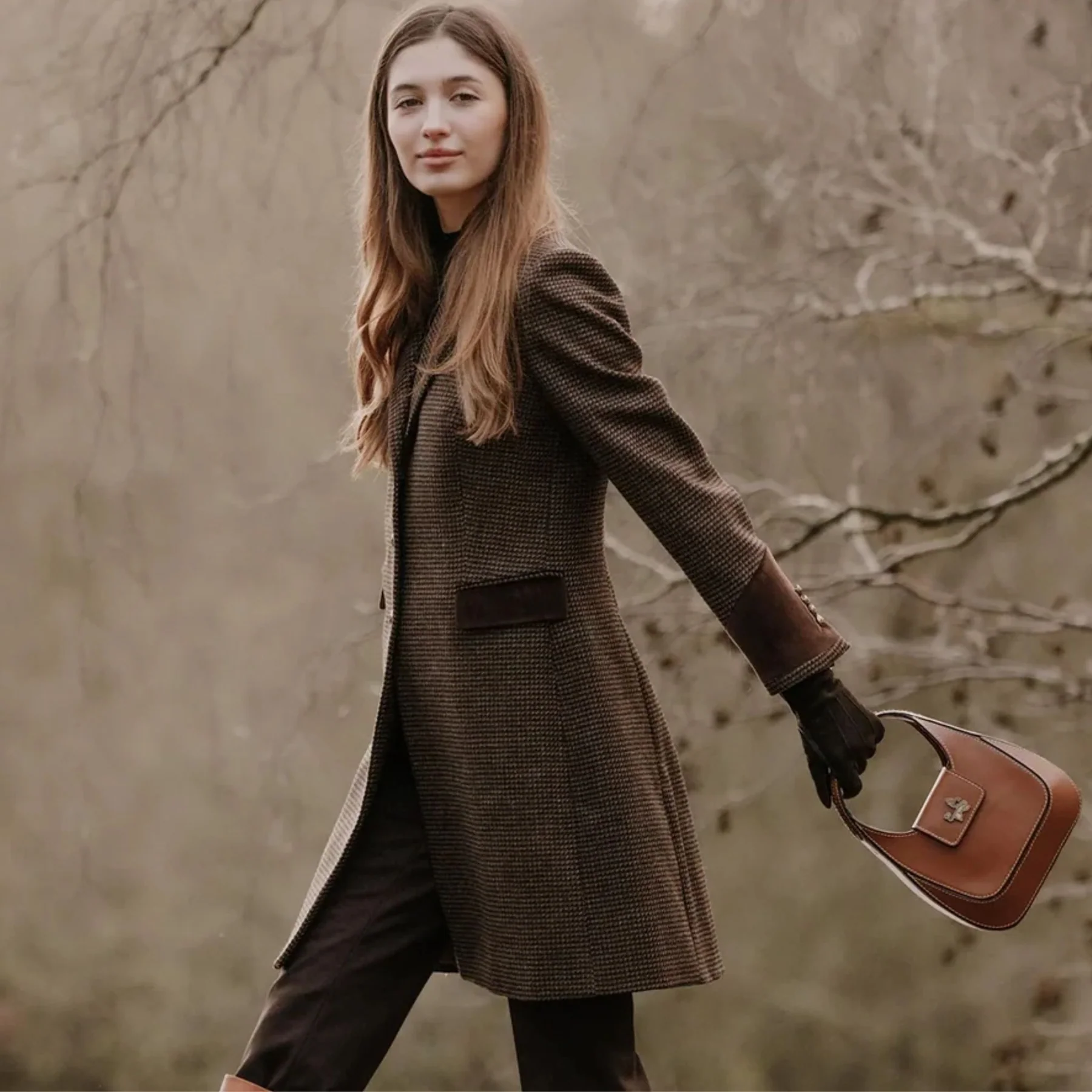
In this article, you’ll discover everything about the espresso phenomenon in autumn wardrobes:
- The history of the wool coat in Poland – from the communist era to today
- Production technology – why quality matters
- Styling – how to wear espresso and look amazing
The espresso trend isn’t just a seasonal fad. It’s a revolution in how we think about color—one that will transform our wardrobes for years to come. I can already see that next year, everyone will have something in this shade in their closet.
Are you ready to dive into the story behind this sensation?
From History to Hit – The Evolution of the Wool Coat in Poland
Sometimes I think that the history of fashion is really the history of women’s needs. And wool coats are the perfect example.
In the 18th century, Polish noblewomen wore the kontusz—a practical, warm garment without unnecessary embellishments. It was about surviving the winter months, not about elegance. Brown color? That was a necessity, not an aesthetic choice.
Everything changed in the 1920s. Coco Chanel introduced a neutral color palette to the fashion world, and brown suddenly became synonymous with chic. Polish seamstresses quickly picked up on this. The “dyplomatka”—that iconic coat cut—emerged precisely at that time.
| Year | Key event |
|---|---|
| 1750-1850 | The kontusz as the foundation of noble attire |
| 1920-1930 | The Chanel Effect – brown enters the mainstream |
| 1945-1989 | “The diplomat coat” as a symbol of resilience in the Polish People’s Republic |
| 1970-1980 | The renaissance of earth tones thanks to the ecological movement |
| 2007 | Kate Fletcher defines “slow fashion” |
| 2020-2025 | The espresso shade boom in quiet luxury |
In the PRL era, the “dyplomatka” became more than just a piece of clothing. It was a symbol. Women wore these coats for decades simply because they had to. The quality was good, the cut timeless. Brown concealed stains and never went out of style.
The 1970s brought a fascination with everything natural. The ecological movement reached Poland as well, though naturally in a limited way. Earth tones, including various shades of brown, suddenly took on a deeper meaning.
A breakthrough came in 2007. Kate Fletcher wrote about “slow fashion” in “The Ecologist” and rehabilitated wool as the material of the future. It was a revolution, even if not everyone understood it right away.
Today, we’re seeing a boom in espresso shades. That’s no coincidence—modern women are looking for clothes they can wear for years. A brown wool coat is an investment, not an impulse buy.
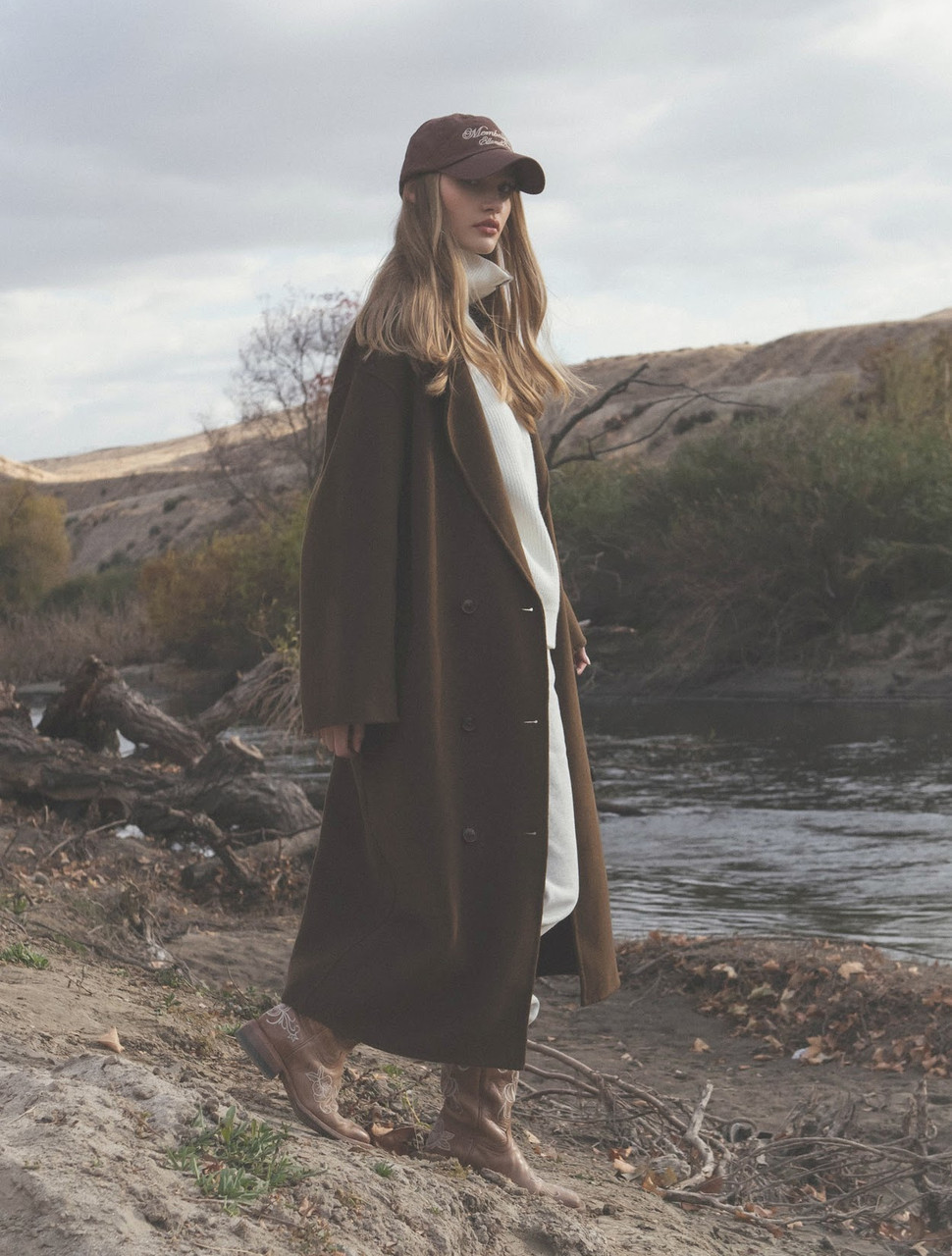
This evolution from an 18th-century necessity to today’s quiet luxury shows just how much our needs and possibilities have changed. But the fundamentals remain the same—we seek warmth, durability, and timeless style.
Material under the microscope – technical advantages and ecological edge of wool
Why should you feel warm, but not stuffy? That’s the question every woman asks herself when choosing a coat for autumn. And this is where wool reveals its true power in numbers.
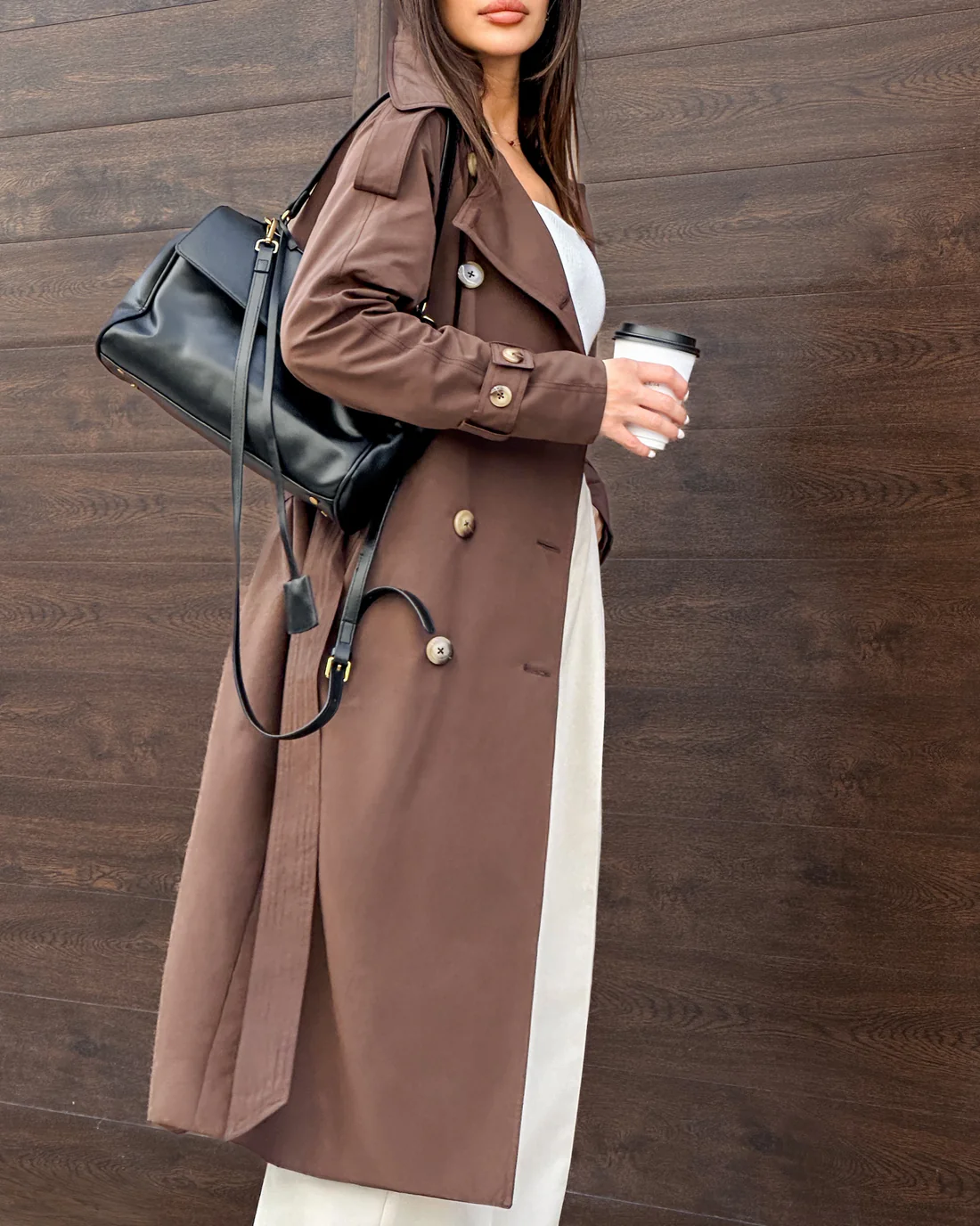
The thermal properties of wool are more than just marketing hype. Studies show that wool insulates 30% better than synthetics of the same fabric weight. This means a wool coat weighing 350 g/m² will keep you as warm as a synthetic one weighing 455 g/m². The difference? You’re carrying 100 grams less.
Wool absorbs up to 30% of its weight in moisture while remaining dry to the touch
But that’s not all. The structure of wool fibers works like an intelligent ventilation system. Each fiber can absorb up to 30% of its weight in moisture and still feel dry to the touch. Synthetics? At just 4% moisture, you already feel stickiness on your skin.
A typical autumn coat weighs in at 300–400 g/m². These aren’t random numbers—they’re the sweet spot between warmth and lightness. Below 300 g/m² isn’t enough for Polish autumns, while above 400 g/m² it becomes too heavy for everyday wear.
| Parameter | Wool | Polyester |
|---|---|---|
| Insulation (at 350 g/m²) | 8.2°C difference | 6.3°C difference |
| Moisture absorption | 30% | 4% |
| CO₂ emissions (production) | 5.1 kg | 7.3 kg |
Wool also wins when it comes to sustainability. Wool production emits 20-30% less CO₂ than polyester manufacturing. Per kilogram of material, that’s a difference of about 2.2 kg of CO₂. It might not sound like much, but multiply that by millions of coats produced each year.
I tested this myself last autumn. Two coats, similar weight—one wool, the other a synthetic blend. After two hours on a damp day, the difference was clear. The wool breathed; the synthetic… not so much.
These numbers have a real impact on the market. Manufacturers are increasingly choosing wool, not out of sentiment, but because it simply makes sense.
Trends and Market 2025 – who is selling espresso coats and at what price
“A coat in this color is my best wardrobe investment,” says Ania, 32, who bought her version for 1200 PLN at Balamonte. And she’s not alone in this opinion.
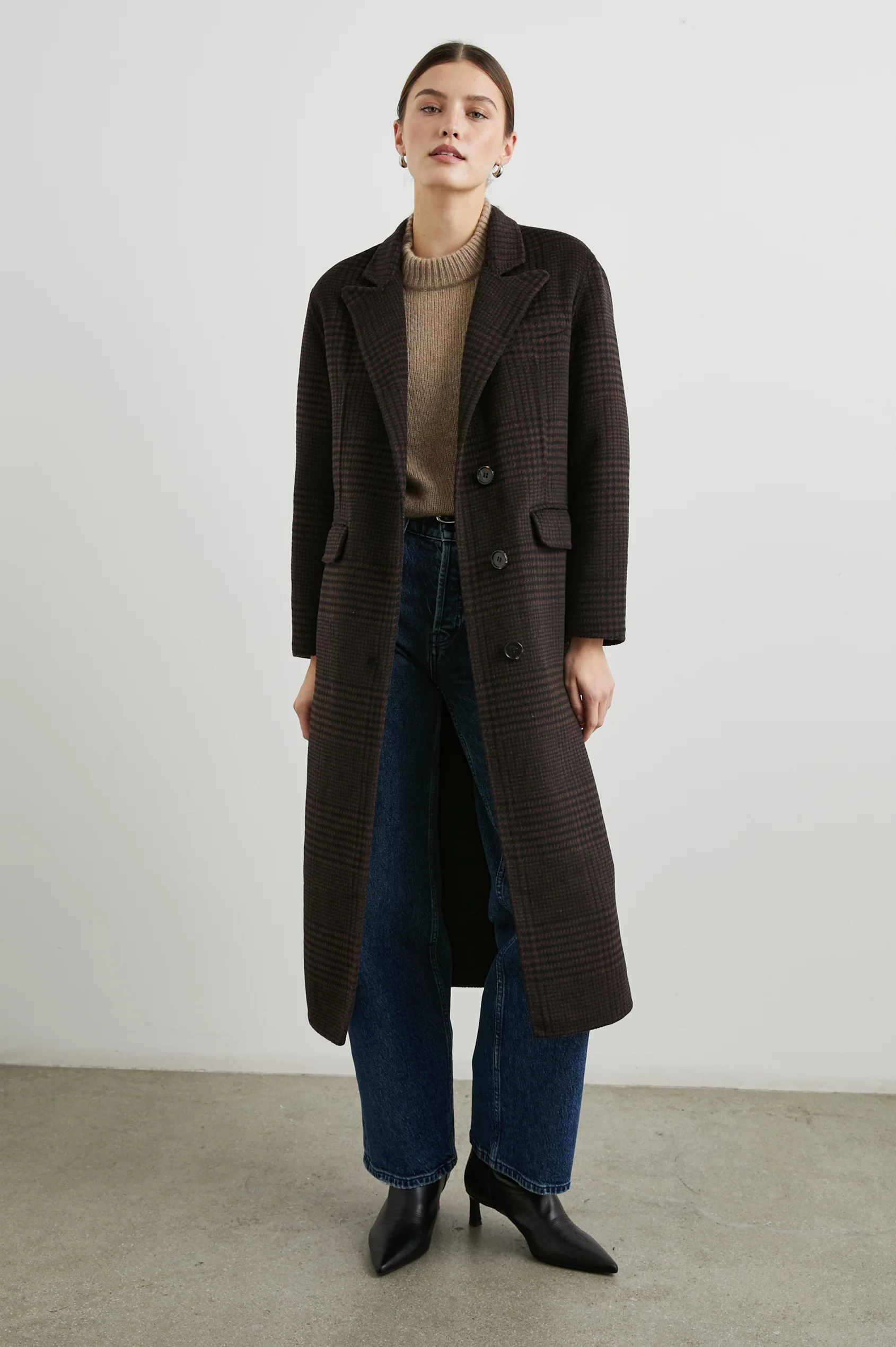
The espresso coat market in 2025 is clearly divided into several price segments. The lower end dominates by far.
| Segment | Price | Flagship brands |
|---|---|---|
| Budget | 200-800 PLN | Zara, Shein, AliExpress |
| Medium | 800-1000 PLN | Reserved, H&M Premium |
| Premium | 1000+ PLN | Balamonte, ELEMENTY |
Interestingly, the budget segment accounts for as much as 60% of total sales volume. This is mainly driven by Zara with its models priced at 299-599 PLN and Chinese imports that have flooded online platforms. Quality varies, but for many women, it’s the only option.
On the other hand, I’m noticing something fascinating in the premium segment. Balamonte and ELEMENTY have introduced transparent margins—they show exactly how much the material and labor cost, and how much profit they make. This is probably the first move of its kind on the Polish fashion market.
Sales dynamics of wool coats 2023-2025:
2023: ████████ (base)
2024: ██████████ (+12%)
2025: ███████████ (+15%)
This 15 percent growth in the third quarter is really significant. Especially considering we’re talking about a segment that, just two years ago, was considered boring.
Demographically, the situation is clear—70% of Polish women aged 25-45 say they prefer natural fabrics. That explains why wool models are gaining popularity at the expense of synthetics. Although I have to admit, I sometimes wonder if these declarations actually translate into real purchases, since most people still shop at Zara.
It’s also interesting to see how premium brands are competing for customers. ELEMENTY focuses on local production, while Balamonte bets on Italian fabrics. Both have waiting lists for popular sizes.
All this means that the espresso coat has stopped being just a wardrobe staple—it’s become a statement piece. And how to wear it to really look good, well, that’s a whole different story.
Outfits and practical sets – how to wear espresso every day
Imagine an autumn street, dry leaves under your feet, and you’re wearing that perfect espresso coat. Sounds like a perfume ad, but the truth is—a good coat in this color is a wardrobe essential. The problem is, most women buy one and then have no idea how to style it for everyday wear.
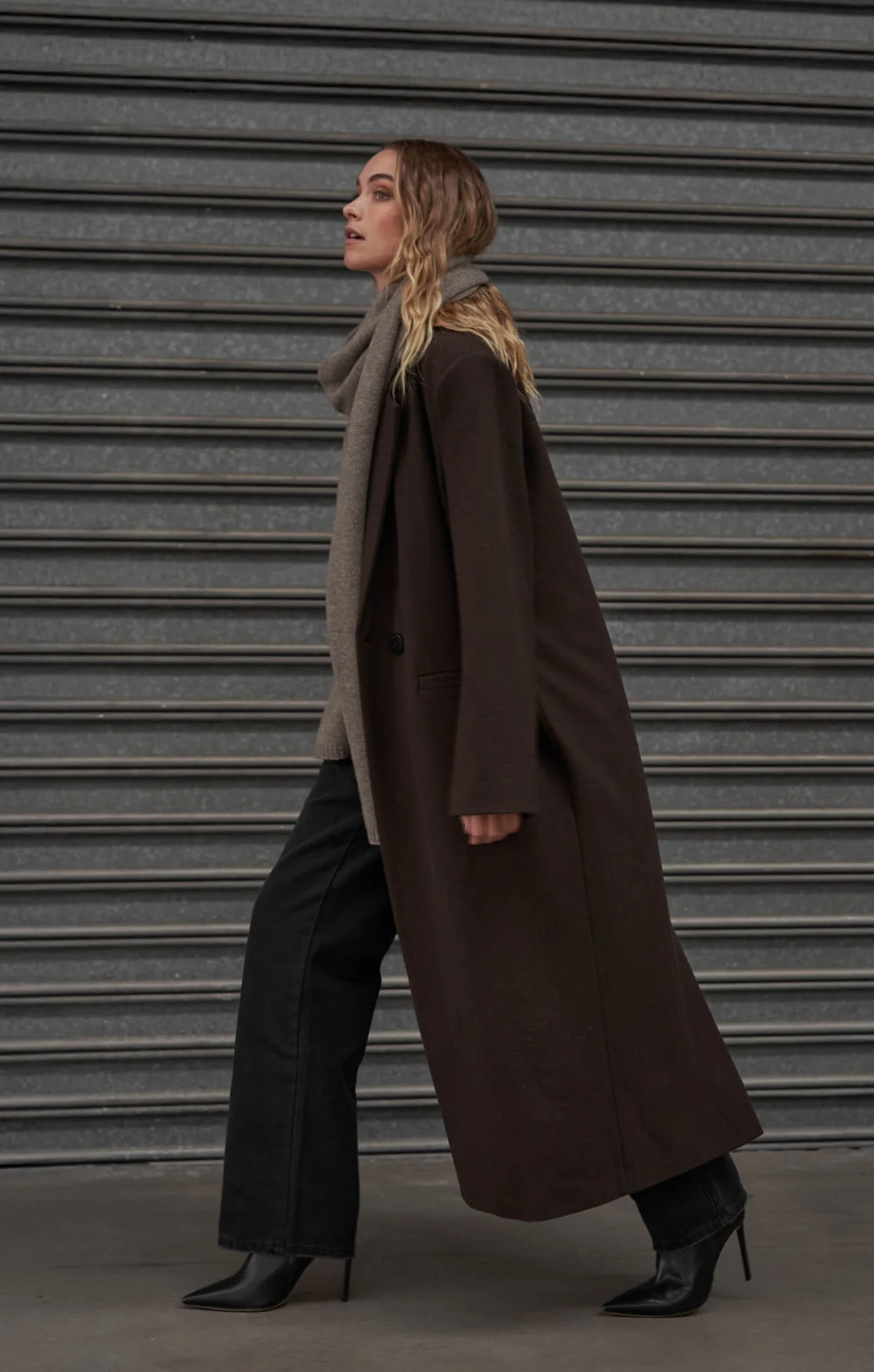
1. Work
For the office, a classic combo works best—a espresso coat, straight-leg jeans, and a white shirt. Add a caramel-toned scarf to break up the monotony. It’s a safe choice that works just about anywhere. If you’re in the mood for something more feminine, try a silk midi dress. Red beads for contrast—it might sound bold, but it actually looks fantastic.
Just make sure the beads aren’t too big. You don’t want to look like a Christmas tree.
2. Weekend
The weekend is the perfect time to experiment. Here you can go for that PRL-inspired twist—cotton socks and loafers. Sounds odd? Maybe a little. But there’s something nostalgic about this combo that pairs perfectly with an espresso coat.
Alternatively—just regular jeans, a sweater, and sneakers. The coat instantly elevates the whole look, even if the rest of the outfit is casual.
3. Evening
For an evening out, go for layering. A dress, tights, high boots, and of course, the coat. You can add a belt to accentuate your waist—especially if the coat is oversized.
Pro tip: Never iron a wool coat with a regular iron. Use steam or hang it in the bathroom while taking a hot shower. Wool likes moisture, but not high temperatures.
The key to wearing an espresso coat is not being afraid of contrasts. This color is neutral enough that you can pair it with almost anything—from soft pastels to bold reds.
Of course, everyone has their own preferences and budget. That’s a completely different story, one that sparks a lot of emotions among fashion lovers.
Controversies and debates – synthetics, animal welfare, and costs
“Buying wool coats these days is a lottery—you either support animal cruelty or harm the environment with synthetics. There’s no good choice”—this post on X was shared 3,200 times last week.
Indeed, the debate around wool coats is a minefield. Strong arguments come from every side.
Synthetics vs. nature—what really lasts
A 2023 study by the Institute of Textile Technology showed that polyester fabrics lose their original shape after just three washes at 30°C. In comparison, wool maintains its form through dozens of wash cycles. On the other hand, synthetics require little special care and are cheaper to produce.
There’s also a rumor about an alleged “cotton ban” in the EU. Where did it come from? Most likely from a misinterpretation of the ecodesign regulation, which only concerns energy efficiency. Experts from the European Apparel and Textile Confederation make it clear—no ban on natural fibers is planned.
PETA versus certifications—who’s right?
PETA has long claimed that sheep shearing is cruel. They present graphic footage from farms where animals are mistreated during wool collection.
Meanwhile, the Responsible Wool Standard certifies farms that follow animal welfare guidelines. Sheep are shorn by trained workers, without stress or pain. The problem is, certified farms are still rare—just 15% of global wool production.
Prices have gone up and there’s no turning back
Inflation plus new EU chemical regulations are raising the cost of natural fabrics by about 8.5% per year. Producers have to invest in cleaner technologies, which affects final prices. A good quality wool coat now costs 40% more than three years ago.
Eileen Fisher is introducing coats made from RWS-certified wool. They cost $200 more than standard ones, but the company boasts a transparent supply chain—from a farm in Patagonia to a factory in Italy.
Each of these controversies has its own justification. The choice isn’t easy, as every solution involves some compromise. Maybe it’s worth considering which values matter most to you.
What’s next? – steps to help you leverage the trend
An espresso-colored coat isn’t just a fleeting trend. It’s an investment that will pay off for years. Or is it, really?
Forecasts are clear— the wool market is set to grow by 20% by 2030. What does this mean for us? Prices will rise, but so will quality. Manufacturers will have to compete not just on price, but above all on durability and the origin of their materials. That’s good news for those thinking long-term.
Vogue.pl is already announcing the trends for fall-winter 2026. Minimalism will reign supreme. Fewer patterns, more quality. Neutral colors, simple cuts. That’s exactly why espresso is such a smart choice—it fits perfectly with what’s coming.
A long-term choice makes economic sense. Instead of buying three cheaper coats over five years, it’s better to invest once in a good one. The math is simple, but it requires patience.
Here’s your practical checklist:
- Check the RWS certificate – it guarantees that the wool comes from ethical sources
- Choose a neutral cut – you’ll avoid going out of style quickly
- Plan your maintenance – well-cared-for wool lasts for decades
- Try it in store – put it on, walk around, check if the shoulders don’t pull
- Think about versatility – does it go with 80% of your wardrobe?
Actually, the last point is crucial. After all, what’s the point of having the best coat if it just hangs in your closet?
Mindful shopping isn’t just an eco-enthusiast’s whim. It’s simply financial sense combined with thinking about the future. Buy less, but better.
Ann
fashion editor
High Class Fashion