
On February 25, 2025, in Milan, the fashion world focused on one place—the Gucci Fall/Winter 2025/26 show during Milan Fashion Week. Social media exploded with comments even before the last model left the runway. Why? Because this collection is more than just clothing—it’s the moment when Gucci officially closes one chapter and opens another.
Gucci Fall/Winter 2025/26 – Ready-to-wear
Ready-to-wear at Gucci is not haute couture for the chosen few — it’s a women’s and unisex line designed for everyday wear, though naturally in a luxurious edition. It’s RTW that defines how the brand is perceived on the streets, in social media, and in the wardrobes of people who actually buy these clothes.
The entire collection is helmed by Sabato De Sarno — the creative director who took over after Alessandro Michele’s era of maximalism. His vision has been described as “nostalgic reinvention amid an era of transition,” and this very tension between past and future is felt in every creation. De Sarno stabilizes Gucci, but doesn’t lead it into boredom.
In the following part of this article, we’ll take a closer look at the history that brought the brand to this point, the aesthetics of the collection itself, the business context, and — most importantly — how you can style these designs for everyday wear.
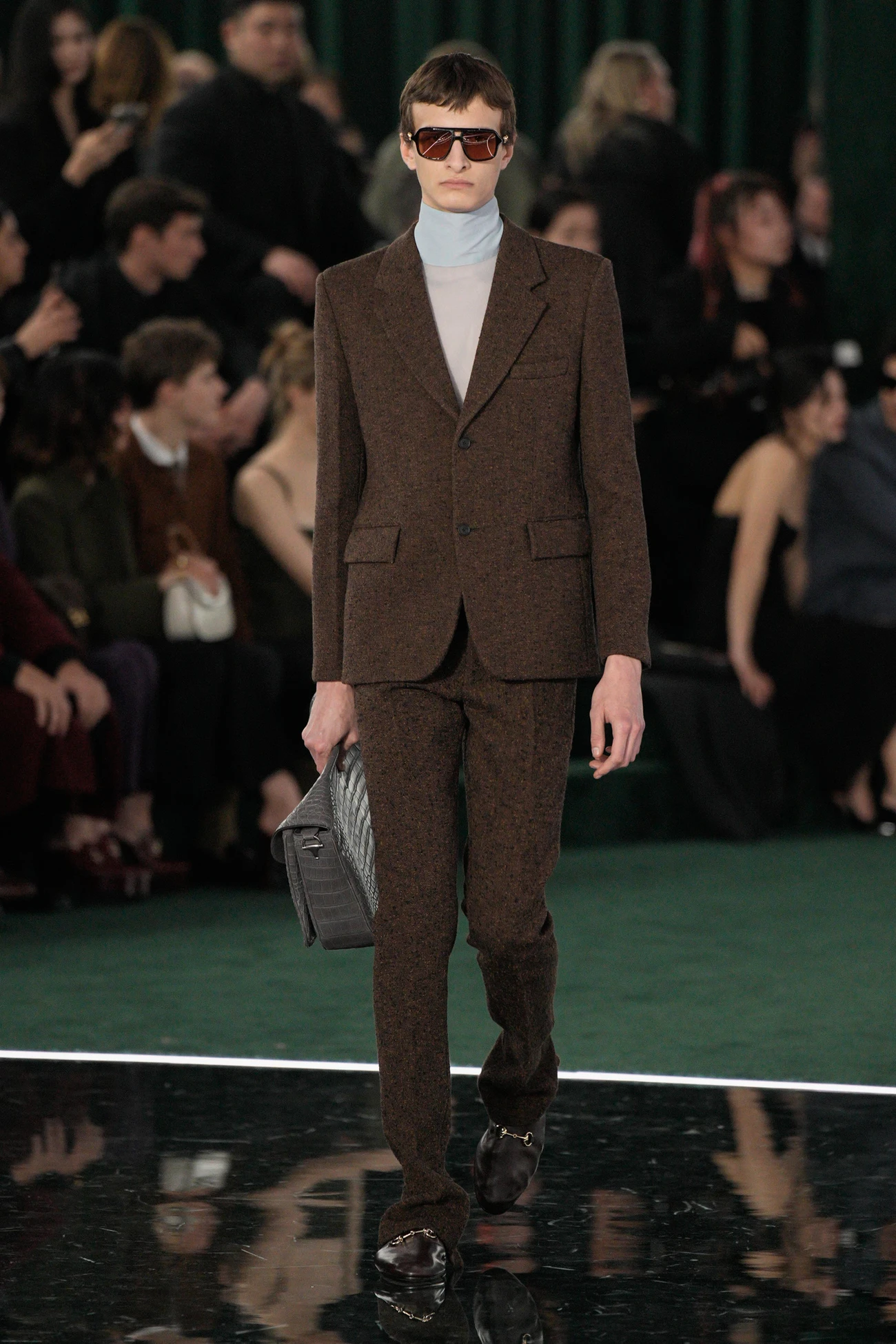
From Florence to quiet luxury: Gucci’s journey to the 2025/26 collection
No collection is created in a vacuum—especially when we’re talking about a fashion house with over a century of history. Gucci is not just a logo and classic motifs, but above all, a long journey through various aesthetics and creative visions.
From a leather workshop to global luxury fashion
It all began in 1921 in Florence, where Guccio Gucci opened a small leather workshop. The inspiration came from the equestrian world — hence the Horsebit motif, the Bamboo bag from the 1940s, and the distinctive Web stripe in red and green. These elements remain the foundation of the brand’s DNA to this day, even as the aesthetic changes radically.
From Michele’s maximalism to De Sarno’s structured vision
In 1994, Tom Ford ushered Gucci into an era of sensual, global success—his collections were bold, sexy, and impeccably tailored. He was followed by Frida Giannini (2006-2014), who softened the tone, focusing on a more feminine elegance. However, the true revolution came with Alessandro Michele (2015-2022)—maximalism, inclusivity, gender fluidity, and theatrical aesthetics transformed the brand beyond recognition.
The problem? After a few seasons, sales began to decline. Kering decided to make a change—hiring Sabato De Sarno, previously associated with, among others, Valentino. His vision is quiet luxury: Rosso Ancora as the new signature, structured tailoring, and a return to heritage without excessive embellishment. This very philosophy became the starting point for the fall/winter 2025/26 collection.
Sprezzatura in practice: the aesthetics of the fall/winter 2025/26 collection
Sprezzatura – this Italian word meaning “studied nonchalance” – is exactly what Sabato De Sarno brought to the table in his second collection for Gucci. This isn’t about flashy luxury, but about sartorial confidence, where ease meets precision.
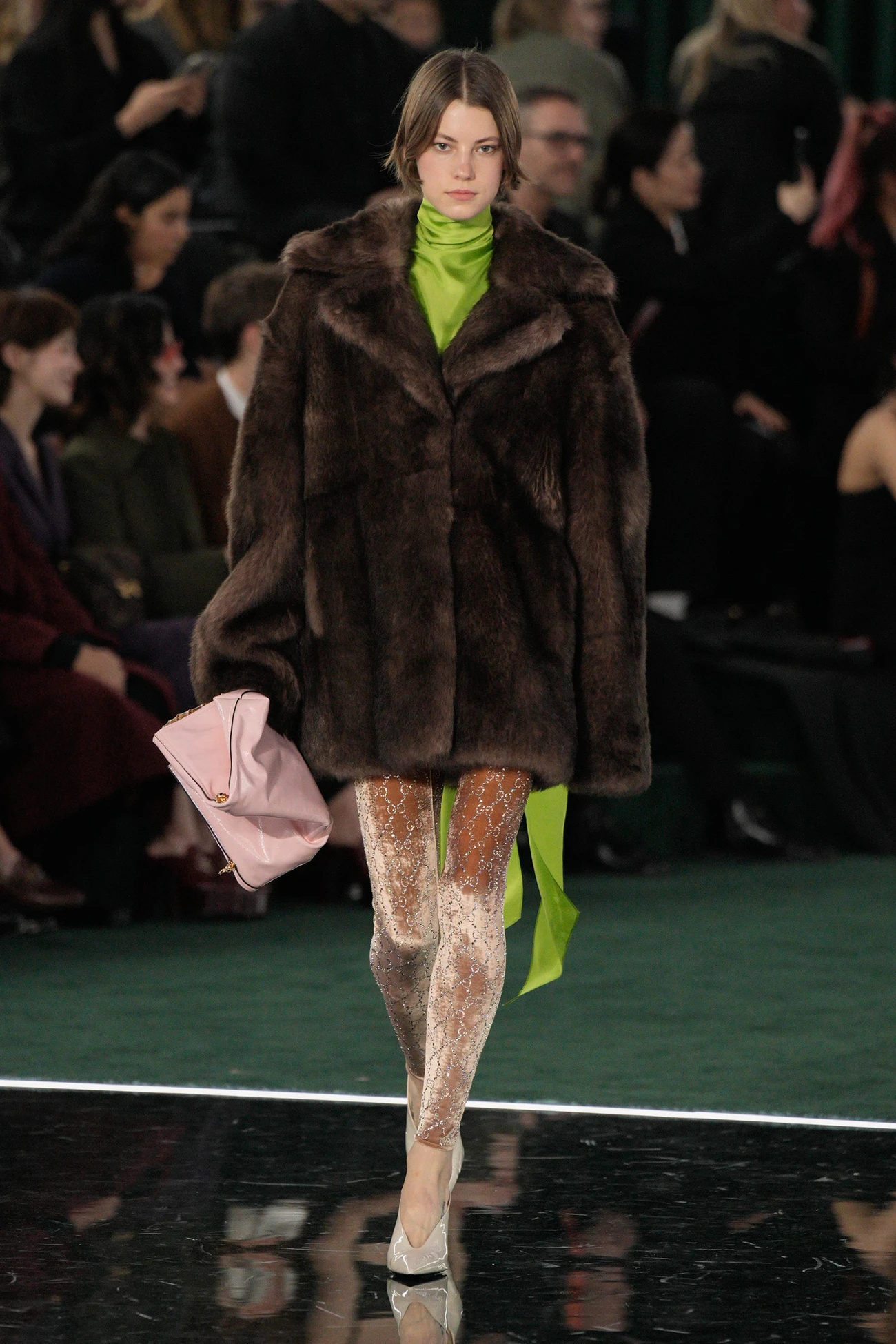
Silhouettes that define autumn/winter 2025/26
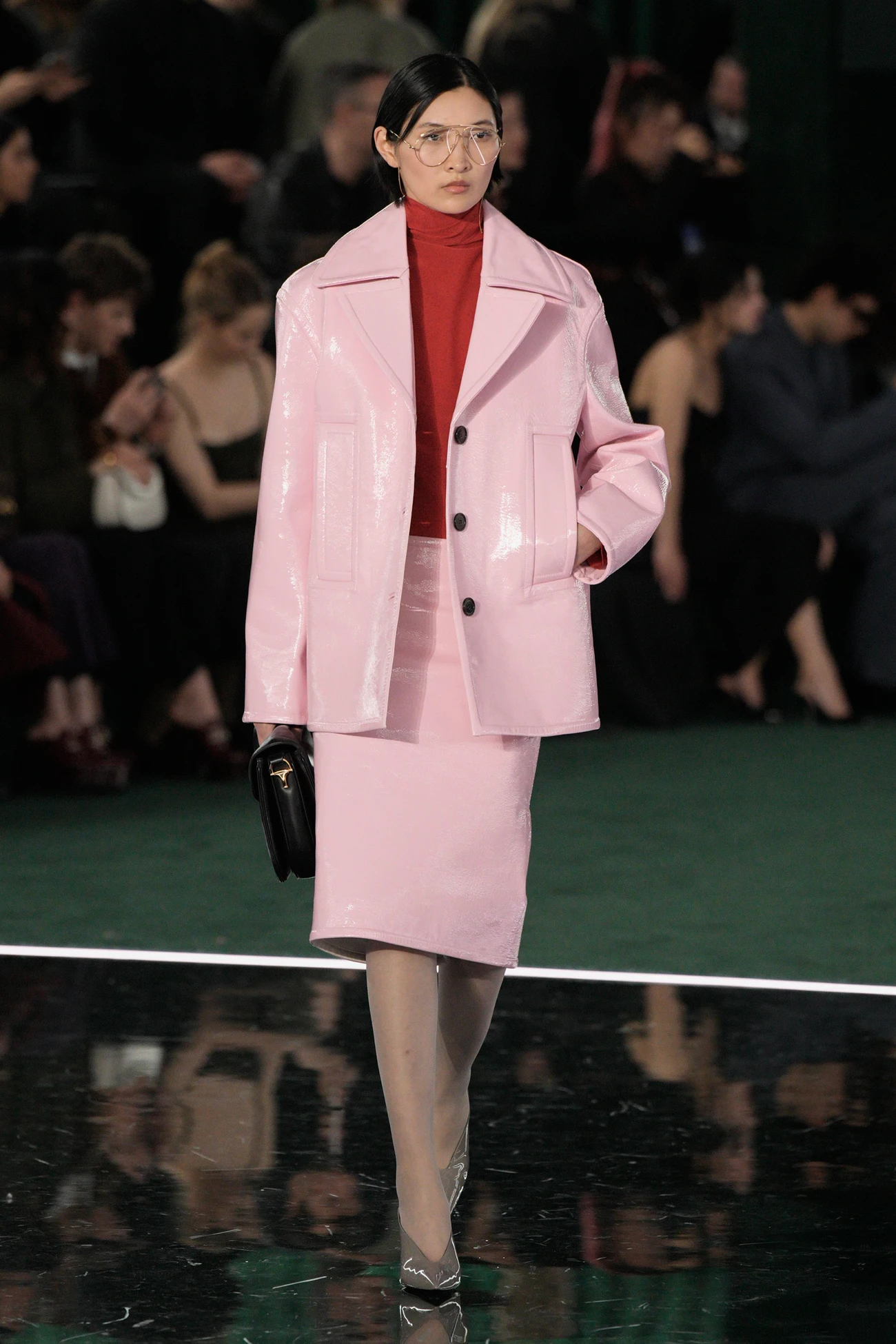
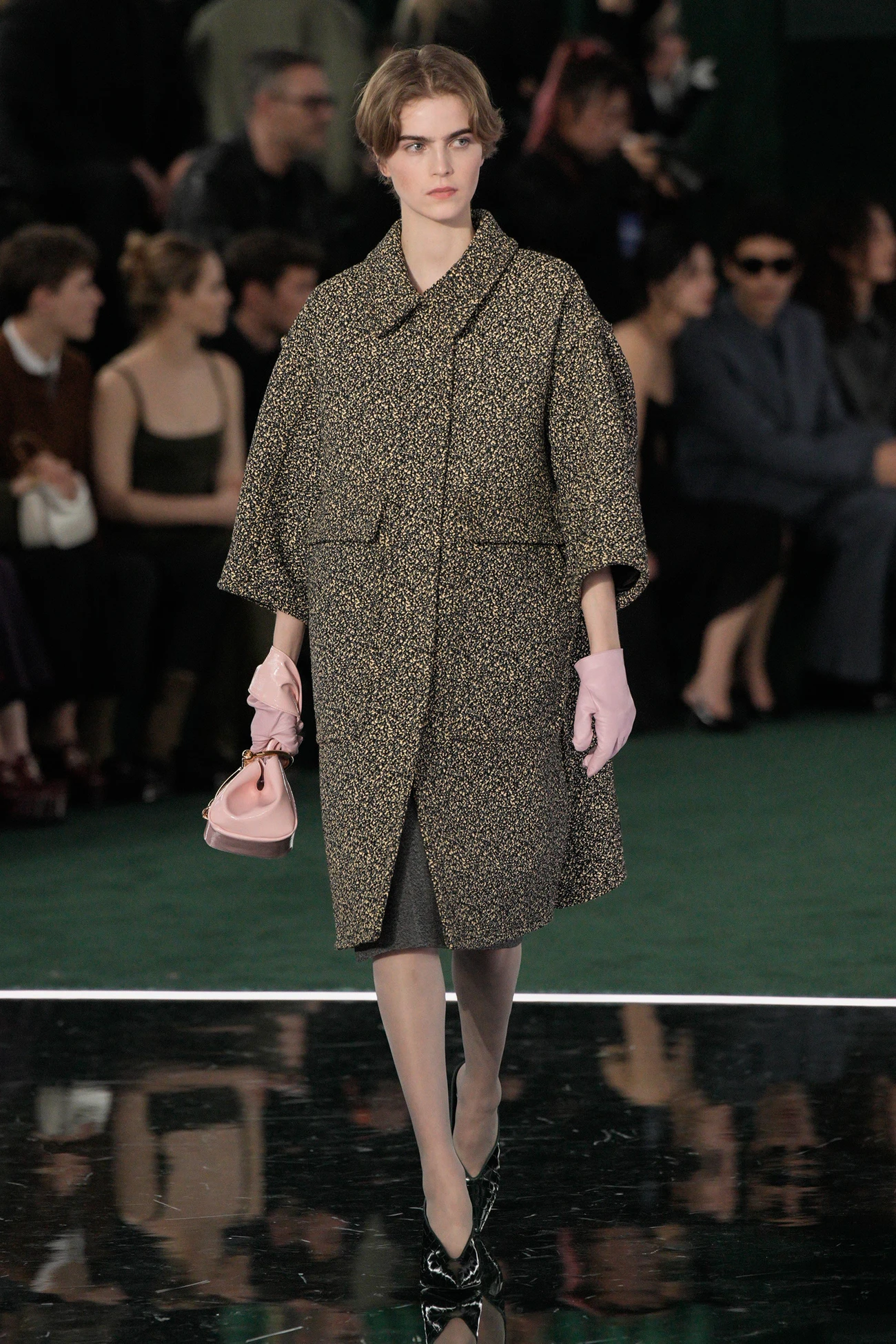
Oversized blazers with broad shoulders dominate here, strongly referencing the ’90s but with a touch of contemporary minimalism. The wide trousers—not in a masculine style, but with a distinctly cinched waist reminiscent more of the ’60s—create a silhouette that is both comfortable and elegant. The coats are bold and tailored, but not stiff; this is the so-called unrestrained suiting, which says: “yes, I’m dressed up, but I’m not overdoing it.” Underneath? Often a silk slip dress that looks like lingerie casually thrown over the body. It’s precisely this interplay—formal with intimate—that is key here.
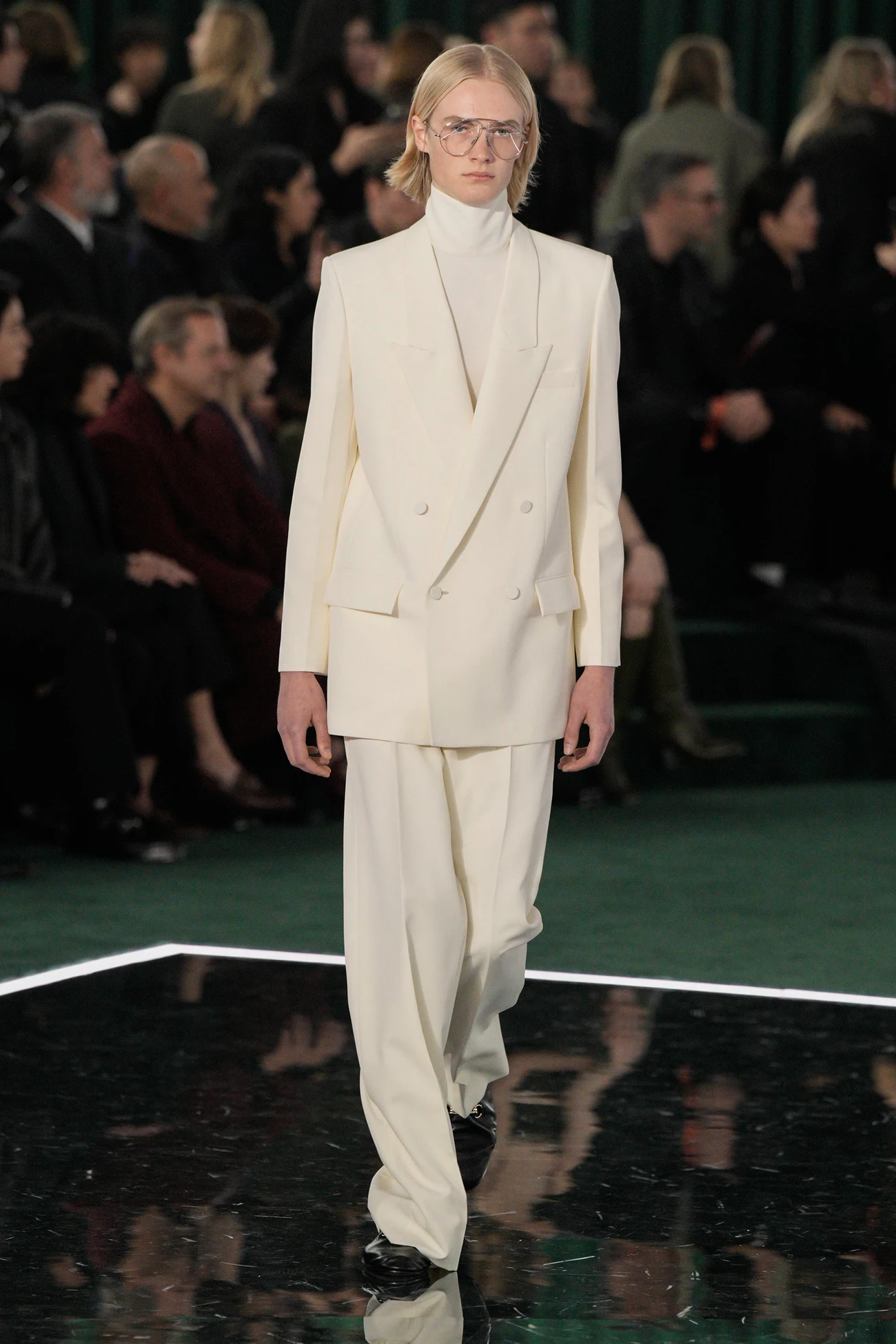
Materials, textures, and the play of light on the runway
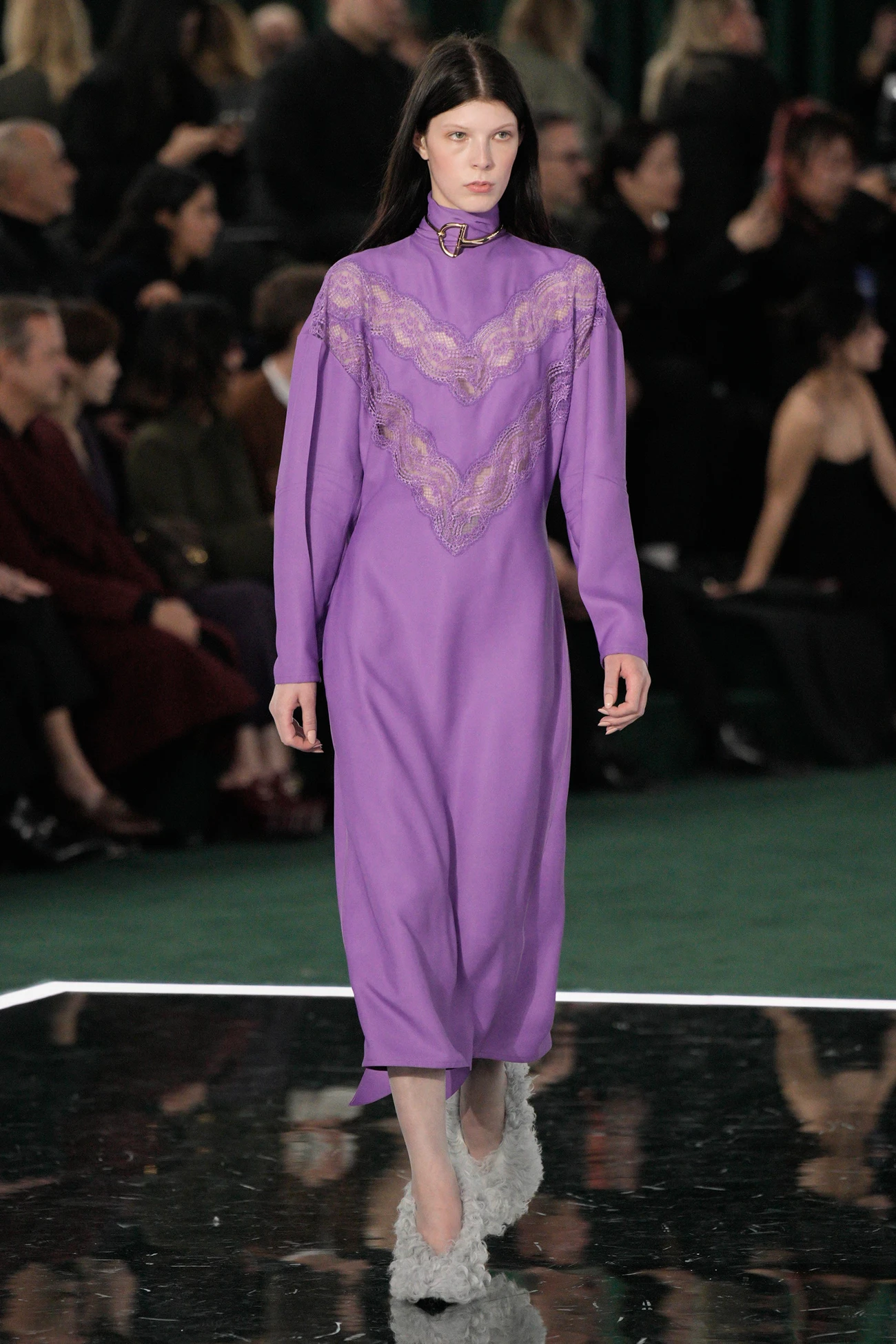
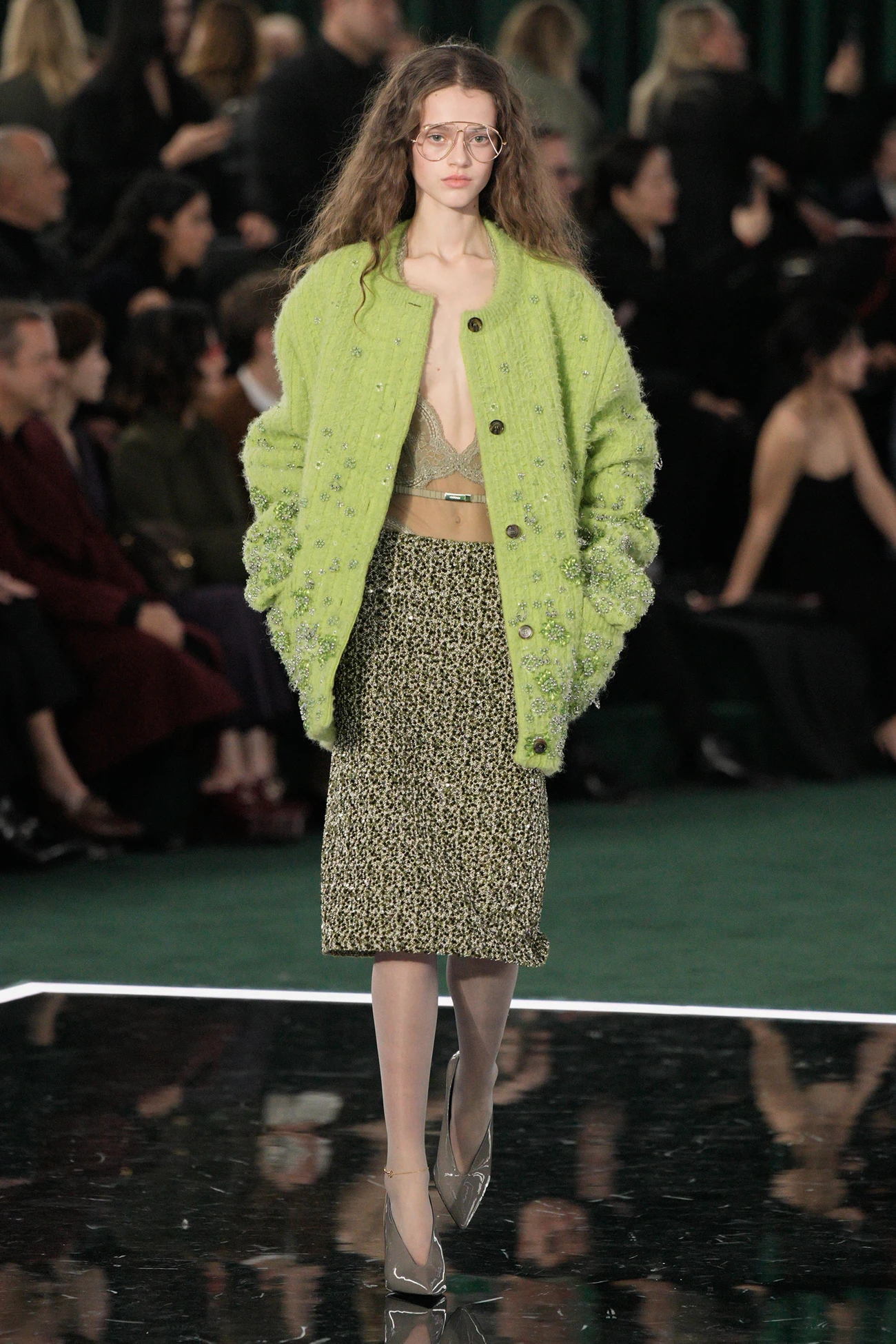
Tailoring wool sits alongside velvet (hello, Tom Ford), silk, and… sequins. Yes, sequins and beaded fringes appear on evening creations, but not in a gaudy way—rather as a subtle glimmer under the spotlight. Embroideries are delicate, and textures create a narrative of “practical luxury.” Reviewers described the collection as “sharp, sleek”—and indeed, every detail seems meticulously considered.
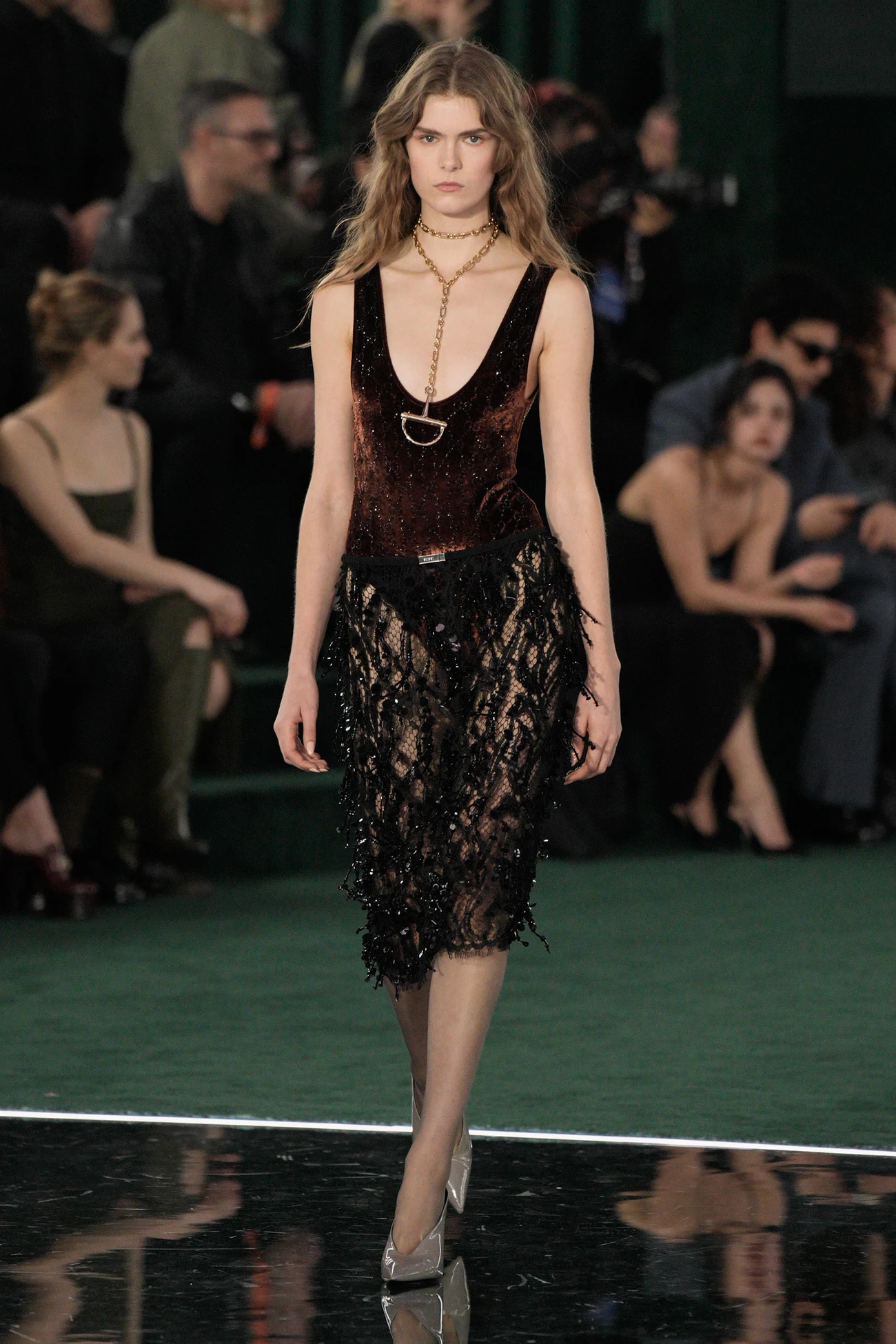
Rosso Ancora, GG and Horsebit: a dialogue with heritage
The color palette revolves around:
- Rosso Ancora – an intense, signature red by De Sarno (which, by the way, resonates perfectly with the Asian market)
- Black and neutral beiges
- Earthy tones of the ’70s – browns, oatmeal shades, burnt oranges
Heritage motifs—the GG monogram, the Web stripe, the Horsebit buckles—are present here, but filtered through contemporary minimalism. This is not a “nostalgic reinvention amid an era of transition” in the style of retro pastiche; it’s a more subtle nod to the archives that complements rather than dominates.
Behind the Scenes of Success: The Business Significance of Collections
Today, even the most beautiful collection must “deliver” results—revenue, reach, reactions. Gucci Fall/Winter 2025/26 was a test not only for Sabato De Sarno’s vision, but above all for the business strategy of the Kering group, which was aiming for stabilization after a challenging 2024.
RTW as a revenue driver for Gucci
The ready-to-wear category accounts for about 40% of the brand’s revenue—the largest share among all product lines. The FW 2025/26 collection was expected to generate a 5-7% increase in this category, which directly impacted the results of the entire group.
| Metrics | Value |
|---|---|
| Gucci revenue (2024) | approx. €4.9 billion |
| Asia-Pacific share | approx. 50% of sales |
| Y/Y growth (Q3 2025) | approx. 10% |
| Views @gucci (FW show) | over 500,000 |
The numbers are clear: after De Sarno’s vision was introduced, Gucci’s revenues rose by around 10% year-on-year in the third quarter of 2025. The Asia-Pacific region, crucial for the brand, generates half of its sales — and it was there that the collection faced its toughest challenge.
Viewership, social media, and press reactions
The show was broadcast by Vogue and WWD – total views reached into the millions. The @gucci profile on X exploded: posts from the show surpassed 500,000 views within the first 48 hours. Fan engagement was high, although – to be honest – more so among existing clients than Gen Z.
WWD summed up the collection with the words “continuity… awaiting rupture.” The industry praised its commercial appeal and wearability, but analysts noted: the brand still needs a stronger breakthrough to truly attract the younger generation. The lack of major controversy around the collection itself – in contrast to the discussions about layoffs at Kering the previous year – signals stabilization. The question is: will it be enough?
How to wear Gucci Fall/Winter 2025/26: a guide for her
The best suit or coat means little if it stays in the closet “for a special occasion.” The true beauty of this Gucci collection is that you can actually wear it—to work, to a business meeting, to dinner. You don’t have to be a celebrity at a gala to feel luxurious.
From the runway to the city: styling ideas
A blazer in Rosso Ancora (that distinctive dark red) pairs perfectly with simple dark jeans and a white shirt—elegant, but not over the top. For the evening? The same set plus heels.
The coat with a Horsebit buckle can be thrown over a suit for the office or worn on the weekend with a turtleneck and wide-leg trousers. If you’re wary of bold red, start with accents—a Web stripe handbag or a GG logo belt is enough to capture the brand’s spirit without looking like an advertisement.
How much does quiet luxury by Gucci cost?
Prepare for a price range of around 1,500–10,000+ USD. Coats will cost about 5,000 USD, suits around 3,000 USD. The most “investment-worthy”? A blazer in Rosso Ancora —versatile, timeless, something you’ll wear for years. Wide-leg trousers will also stay in style for several seasons.
You can buy at the Gucci boutique in Warsaw, through gucci.com, or at authorized department stores. If your budget doesn’t allow for new arrivals, check out resale platforms like The RealReal—you’ll find gems from previous collections.
And one more thing: about 80% of the materials in this collection come from the Gucci Equilibrium program—less impact on the environment. For the conscious client, that matters.
What’s next for Gucci? Trends set for Fall/Winter 2025/26
One collection can set the direction for years to come – and that’s exactly what Gucci Fall/Winter 2025 /26 does. De Sarno isn’t building for the “here and now,” but rather laying the foundation for what’s next. It’s worth taking a closer look at how this aesthetic is evolving and what you can take from it for yourself today.

From FW 2025/26 to Generation Gucci 2026
Spring 2026 show (September 2025) continues the Rosso Ancora themes and tailoring minimalism—no sudden shifts, rather a refinement of lines and proportions. Pre-Fall 2026 (presented on 12/04/2025) takes it a step further: in the lookbook “Generation Gucci: The Lookbook 2026″ you’ll see a bolder mix of the ’70s and ’90s, more GG and Web stripe motifs, and references to Tom Ford. WWD writes about an expected “greater aesthetic rupture”—perhaps De Sarno will allow himself a braver play with color and prints, while still maintaining a tailoring core.
For you, this means one thing: focus on timeless pieces—a well-cut suit, a coat, an accent in Rosso Ancora. Follow De Sarno’s upcoming shows, but filter them consciously. Because trends come and go, but a good foundation remains.
Sonia
fashion & lifestyle editorial team
High Class Fashion