
It’s fascinating how a single collaboration can cause such a stir in the world of luxury brands.
Within the first few hours after publication on 07.07.2025, the post was viewed 22,709 times
These aren’t typical numbers for the jewelry industry. People don’t usually flock to jewelry posts the way they do to the latest celebrity gossip. But something different is happening here.
The beginning of a new era in jewelry
Gucci and Pomellato—two icons of Italian style—have announced a partnership that could redefine the way we think about luxury jewelry. This isn’t just another limited edition collection or a seasonal trinket for wealthy clients. It’s something much bigger.
Gucci × Pomellato – the philosophy of collaboration
Actually… maybe it’s worth considering, why now? The luxury market in 2025 is undergoing some fascinating transformations. Customers are searching for something authentic, something with deeper roots than just a fleeting trend. And that’s where this Italian card comes into play—both brands share the same DNA, the same passion for craftsmanship, the same understanding of elegance.
For Gucci, entering the world of high jewelry is a natural step. It’s not their first, either—but this time, they’re doing it with a true partner, not trying to reinvent everything from scratch. Pomellato brings experience, Gucci brings vision. Sounds like a winning combination.
So, what can you expect from this article? First—we’ll dive into the history of both houses to understand where this chemistry between them comes from. Then, we’ll take a closer look at what they’ve actually created together—because design is one thing, but the philosophy behind it is something else entirely. Finally, we’ll discuss how this collaboration could impact the entire jewelry market.
But to understand all of this, we need to start at the beginning. From the moment when two Italian brands decided to join forces and create something the world hasn’t seen before.
Brand heritage and partnership strategy
Sometimes I wonder whether these major luxury brand mergers are truly the result of careful strategy, or if perhaps someone on the board just had a fondness for a particular piece of jewelry. In the case of Gucci and Pomellato, the truth lies somewhere in between.
The history of these two houses is essentially a tale of two different Italys. Gucci was born in 1921 in Florence, when Guccio Gucci opened his first store. Pomellato came into being much later—in 1967 in Milan, founded by Pino Rabolini. Two different eras, two different cities, but the same Italian flair.
| Year | Event |
|---|---|
| 1921 | The founding of Gucci in Florence |
| 1967 | The founding of Pomellato in Milan |
| 1999 | Gucci acquisition by Kering |
| 2013 | Kering’s acquisition of Pomellato |
| 2015 | Alessandro Michele promoted to Creative Director of Gucci |
Kering—formerly known as PPR—has its own way of building an empire. They don’t acquire brands at random. They approach it like a chessboard, where every piece has its role. Balenciaga brings the avant-garde, Bottega Veneta delivers understated luxury, and Saint Laurent embodies Parisian elegance.
But why Pomellato? Here, you have to look at the numbers. The luxury jewelry market was growing at about 7% annually at the time, and Kering didn’t have a strong enough position in this segment. Pomellato was the perfect fit—it already had 46 years of history, recognition in Europe and Asia, plus that distinctive Milanese style that set it apart from everything else Kering owned.
Alessandro Michele entered this equation as the third piece of the puzzle. When he took the helm at Gucci in 2015, he brought a completely new approach to luxury—more inclusive, colorful, and bold. And that’s when someone at headquarters came up with the idea to get these two worlds—fashion and jewelry—talking to each other.
The pandemic only accelerated these processes. Suddenly, traditional runway shows and brick-and-mortar sales weren’t enough. Clients wanted more—experiences, stories, connections between brands. Collaboration between houses within the same group became not just possible, but essential.
Kering realized one thing before the competition did. In a world where the boundaries between product categories are blurring, having just one strong brand isn’t enough. You need an ecosystem of brands that can strengthen and inspire each other.
And so, the idea was born to create something that would unite the Florentine giant with the Milanese master goldsmith.
Monili in detail: design, materials, craftsmanship
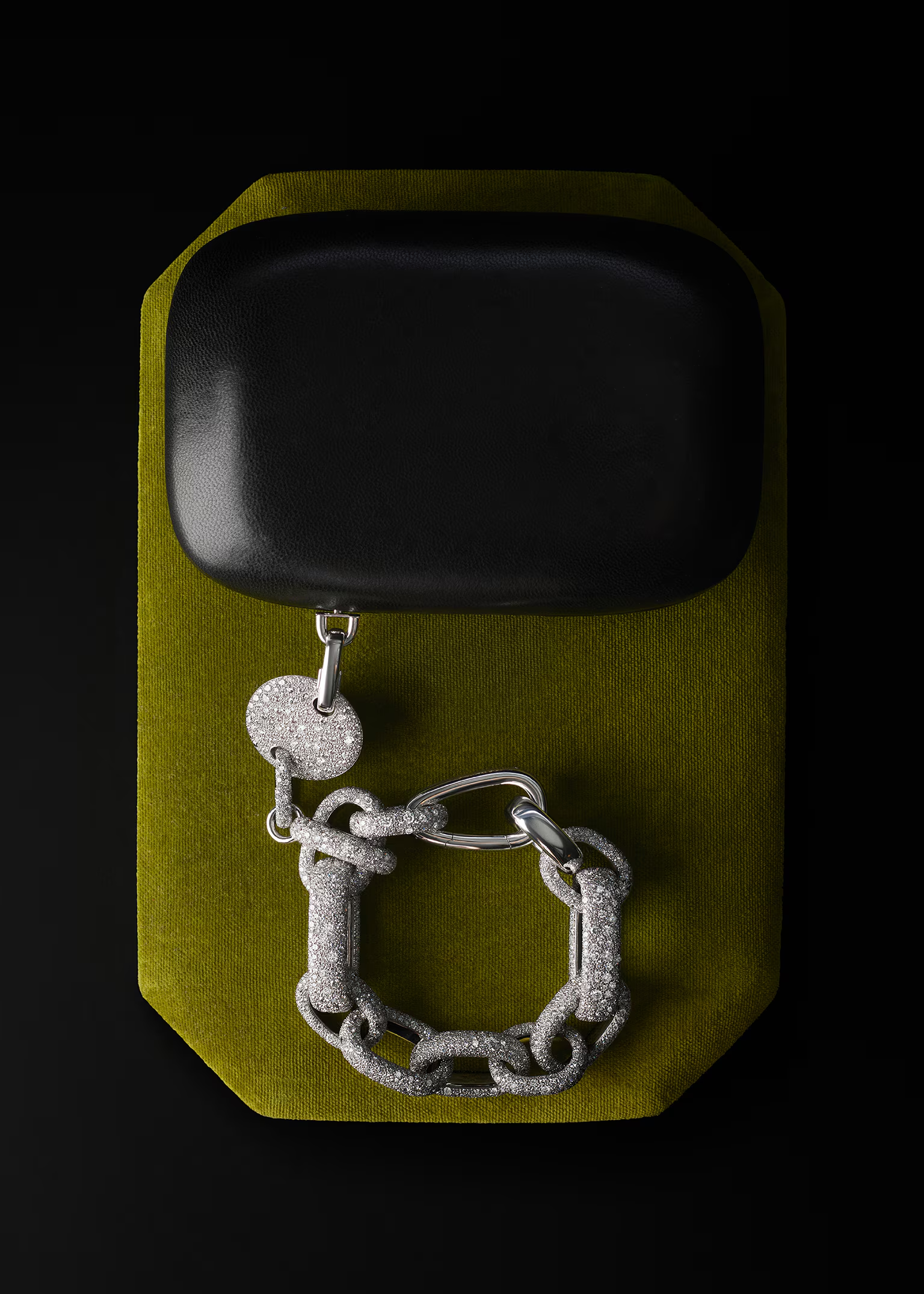
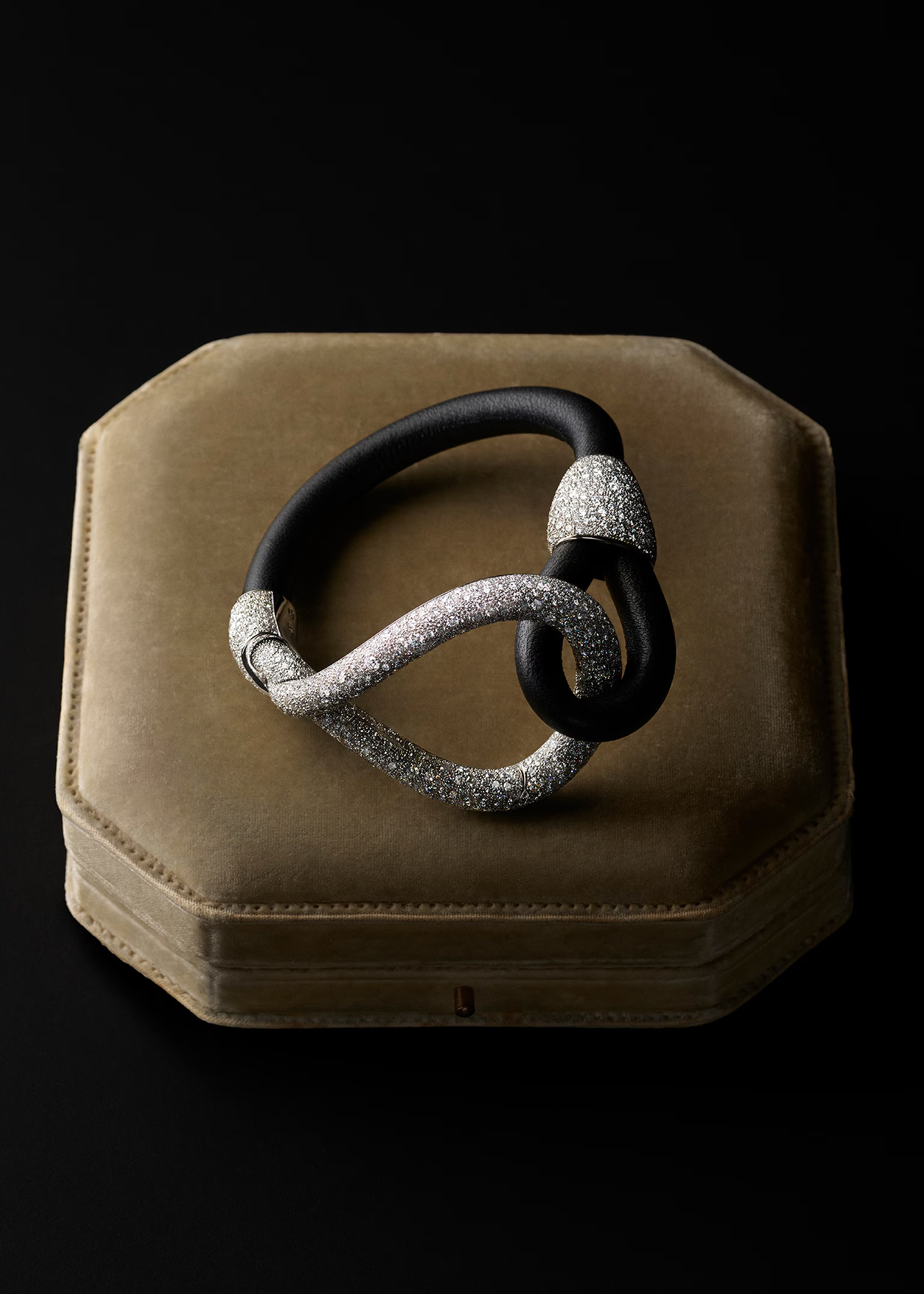
Do you see this ring from the Monili collection? The gold chain wraps around your skin like something you could wear on your hand or… really, wherever you want. That’s no accident—Pomellato is intentionally merging worlds that don’t usually meet.
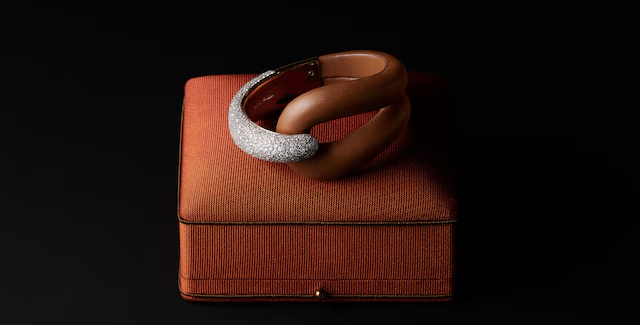
It all starts with the 1984 archive. Those distinctive chain links—chunky, bold, a bit rebellious—are back in a new version. Only now, they’re intertwined with 18-karat gold and pieces of soft leather. The leather is a nod to Gucci, since both brands are part of Kering.
The materials themselves already tell a story. Diamonds sit in gold as always, but the leather changes everything. Suddenly, the jewelry feels warm—something you can touch without the chill of metal. 18-karat gold has this quality: it softens when it meets the skin—both literally and figuratively.
In Pomellato’s Milan workshops, every stone is set by hand. Truly by hand—no machines at the final stage. Soldering, polishing, checking the leather-to-gold connections. The process goes like this: preparing the leather, shaping the gold links, joining the elements, final polishing.
Interestingly, leather requires a completely different approach than traditional stones. You can’t heat it the same way, you can’t use the same tools. The artisans had to develop new techniques so the gold wouldn’t damage the delicate surface.
In fact, this combination does more than just look good. It creates a new language in jewelry—something between luxury and everyday wear, between tradition and experimentation. And so far, the market is responding to this language very positively.

Market impact and emerging trends
Gucci stores scattered around the globe—529 locations—form a network that can truly accelerate sales of the new Monili collection. While this may sound a bit technical, the numbers speak for themselves.
Looking at the data from the first weeks, some interesting trends emerge. The first post about the collection garnered 22,709 views and 218 likes. That might not seem staggering, but let’s remember—high-end jewelry has its own specific audience.
| Store | Region | Sales potential |
|---|---|---|
| Milan | Europe | Tall |
| New York | North America | Very high |
| Tokyo | Asia | Medium |
| London | Europe | Tall |
Actually, what surprised me the most were the reactions on social media. One user wrote on X: “Finally jewelry that speaks to my minimalist soul but still screams luxury.” Maybe a bit exaggerated, but it captures the mood.
A 2022 ResearchGate study highlighted something important—digital marketing really does influence the purchasing decisions of young female consumers. They seek authenticity, but also want to feel special. And that’s exactly where the potential of this collaboration lies.
Market forecasts for the high jewellery segment look promising. Experts predict a 7.5 percent year-on-year growth for 2025-2026. That’s significant, especially in such a demanding segment.
A bar chart illustrating this projected +7.5 percent growth clearly points to an upward trend. Consumers are returning to investing in luxury accessories designed to last for years.
Interestingly, younger clients are increasingly viewing jewelry as a long-term investment. They don’t buy impulsively—they research, compare, and read reviews. This shift in consumer behavior could be crucial for the collection’s success.
Physical stores still matter, despite digitalization. People want to touch, try on, and feel the weight and quality. 529 Gucci locations make up a distribution network that many brands would envy.
Short-term sales effects will be visible in the coming months. The first signals are positive, though cautious.
What’s next for the Gucci × Pomellato alliance?
Alright, so what do we do with all this? After analyzing the Gucci partnership with Pomellato, three key takeaways emerge that are truly worth remembering.
- Heritage plus innovation is no coincidence – it’s a deliberate strategy. Both brands have shown that it’s possible to honor tradition while moving forward.
- Sustainable luxury is no longer an oxymoron. Demetra material, made from 75% plant-based components, is just the beginning—expect to see it in jewelry soon.
- The digitalization of luxury does not mean losing exclusivity. On the contrary, it enables even more personalized experiences.
But what can you do right now? First of all, follow their social media channels—this is where new collection announcements appear first. Both brands’ Instagram Stories often feature exclusive content that disappears after 24 hours.
Quick win: Sign up for both brands’ newsletters before the end of the month—they often send early access to limited editions.
When it comes to the future, I would bet on capsule collections inspired by the metaverse as early as 2026. These won’t be typical NFTs, but rather physical products with AR components. Imagine a handbag that reveals extra patterns in an app or jewelry that reacts to your location.
By 2027, Demetra material will likely appear in Pomellato’s small jewelry accessories as well. It’s a logical step—smaller surfaces make it easier to test customer reactions.
Honestly, I think this partnership is just the warm-up. Kering still has a few brands that could fit perfectly. What about you? Will you be watching these changes, or are you already trying to invest in sustainable luxury yourself? Because this trend isn’t going anywhere.
Nadine
business editor
High Class Fashion