
Table of Contents
- Entering the world of Hermès
- The Legacy of 24 Rue du Faubourg Saint-Honoré
- The flagship boutique experience: offerings and space
- More Than a Store: Economic Impact, Cultural Influence, and the Future
- The Future of Luxury – Strategic Insights
What do European aristocrats and tourists lining up at dawn have in common?
It’s the Hermès boutique at 24 Rue du Faubourg Saint-Honoré in Paris, operating continuously since 1880, which remains the brand’s global headquarters.
At the entrance to the world of Hermès
First impression: Entering the world of Hermès
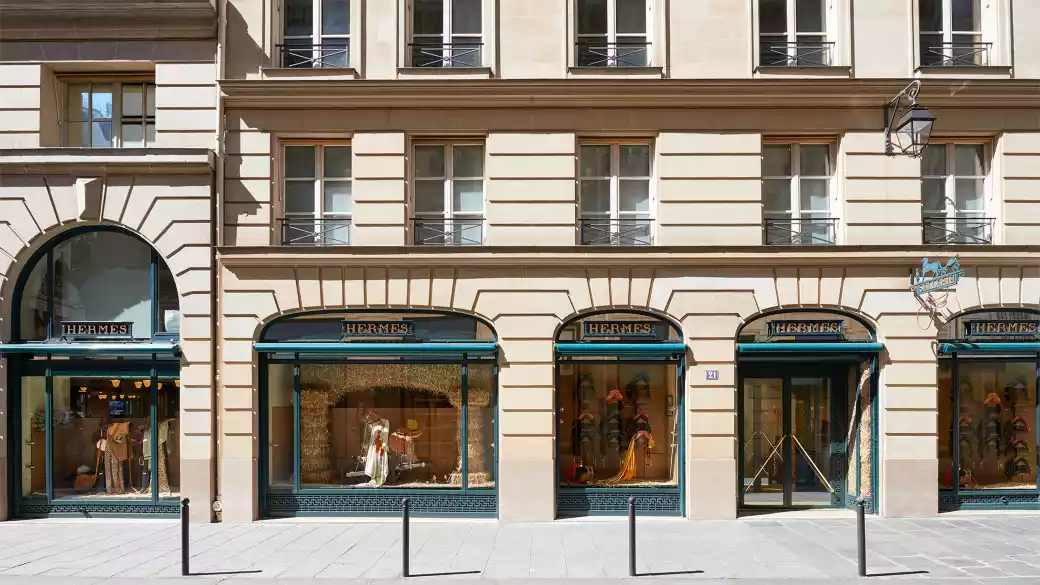
Crossing the threshold of this legendary address, visitors are instantly immersed in an atmosphere of luxury and craftsmanship. Axel Dumas, CEO of Hermès, described the company as a “seller of time,” emphasizing the importance of patience and mastery in creating its products.
A symbol of power and prestige
Hermès is not just a brand, but also a symbol of success. The company’s market value is estimated at around $214 billion, making it the wealthiest family-owned business in Europe. Since 1993, Hermès shares have increased five hundredfold, demonstrating its continuous growth and strength in the luxury market.
Why is it worth reading about this now?
In the face of global economic challenges, Hermès continues to deliver impressive financial results. In the fourth quarter of 2024, the company reported revenues of 4 billion euros, marking an 18% increase compared to the previous year. This is a testament to the brand’s unwavering position in the world of luxury.
In the following sections of the article, we will explore:
- Hermès heritage and history – from its beginnings in 1837 to the present day.
- The client experience – what makes shopping at Hermès so unique.
- Economic and cultural influence – how Hermès shapes the world of luxury and fashion.
Get ready for a fascinating journey through the world of Hermès, where tradition meets modernity and craftsmanship blends with innovation.
The legacy of 24 Rue du Faubourg Saint-Honoré
In 1880, on the bustling Faubourg Saint-Honoré street in Paris, Charles-Émile Hermès moved the family saddlery workshop to building number 24. This decision marked the beginning of the transformation of a small workshop into a global symbol of luxury. Over the following decades, this address witnessed the evolution of the Hermès brand, from a traditional saddlery to a modern temple of elegance.
Key milestones of Hermès (1837-2025)
| Year | Event |
|---|---|
| 1837 | Thierry Hermès opens a harness workshop in Paris. |
| 1880 | Relocation of the workshop to 24 rue du Faubourg Saint-Honoré by Charles-Émile Hermès. |
| 1918 | The introduction of the zipper to equestrian apparel. |
| 1922 | Expansion of operations to include the production of leather handbags. |
| 1937 | The launch of the first silk scarf. |
| 1978 | Expansion of the boutique into the adjacent building at number 26. |
| 1993 | Hermès goes public on the stock exchange. |
| 2007 | Another expansion of the boutique with the addition of the building at number 28. |
| 2025 | Opening of the 27th leather workshop, continuing the tradition of craftsmanship. |
Three generations of the Hermès family
Thierry Hermès founded a harness workshop in 1837, laying the foundation for the future brand. His son, Charles-Émile Hermès, moved the business to 24 rue du Faubourg Saint-Honoré in 1880, marking a pivotal moment in the company’s history. Later, Émile-Maurice Hermès, the founder’s grandson, introduced the brand to new markets, expanded the range to include leather goods for travelers, and brought innovations such as the zipper in equestrian clothing.
The evolution of architecture and symbolism
The façade of the boutique at 24 rue du Faubourg Saint-Honoré has preserved its 19th-century elegance while integrating modern elements such as contemporary automation. The interiors blend classic details with modern design, creating a space that reflects the spirit of the brand. On the building’s rooftop, there is a garden that has served various purposes since the 1920s—from growing vegetables during World War II to providing a place of relaxation for employees. In 1987, a sculpture of a horse and rider was installed there, referencing the brand’s 1950s logo depicting a carriage, symbolizing the fusion of tradition and modernity.
For over 140 years, 24 rue du Faubourg Saint-Honoré has remained the heart of Hermès, combining rich heritage with modernity, making it not only a retail space but also a symbol of French luxury and craftsmanship.
Flagship boutique experience: offer and space
Crossing the threshold of the flagship Hermès boutique at 24 rue du Faubourg Saint-Honoré, guests enter a world of refined luxury and top-tier craftsmanship. Nice brand automatic doors open smoothly, welcoming clients into a space where tradition meets modernity.
Boutique layout: from the ground floor to the top floor
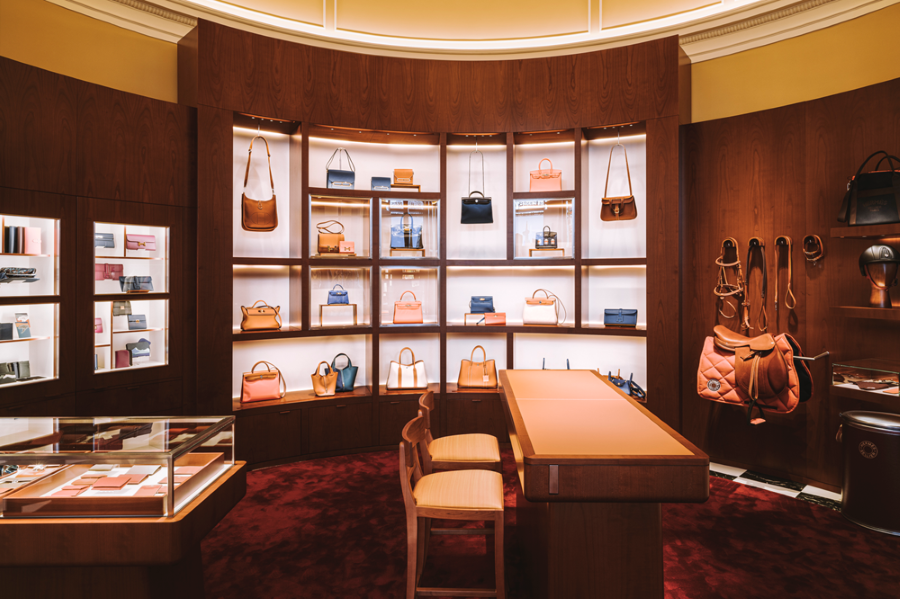
The ground floor is dedicated to leather goods, showcasing iconic handbags such as the Birkin and Kelly. Exclusive displays highlight these coveted models, emphasizing their uniqueness.
The first floor is a silk haven, where clients can admire a rich selection of scarves and ties, distinguished by vibrant patterns and colors.
The second floor features collections of perfumes, jewelry, and watches, allowing clients to discover the full range of Hermès accessories.
The third floor is dedicated to prêt-à-porter clothing, presenting the latest collections in women’s and men’s fashion.
How to buy a Birkin bag?
The process of purchasing a Birkin bag is unique and requires patience. Here are the steps you need to take:
- Building a relationship with the brand: Regularly purchasing other Hermès products may increase your chances of being offered a Birkin.
- Joining the waitlist: Due to limited availability, customers are often placed on a waitlist.
- Waiting time: It can range from several months to even several years, depending on the model and specifications.
- Personalization: After receiving the purchase offer, the client can choose the color, leather, and other details.
Visitor tips
- Book an appointment: To avoid long waiting times, it’s a good idea to schedule your visit in advance.
- Discover the offer: Before your visit, browse the latest collections online to get a better idea of the available products.
- Patience: The boutique’s popularity can result in queues, especially during tourist season.
- Personalization: Ask about the possibility of personalizing products, which can make your purchase even more special.
Technology and customer service
Hermès has implemented modern technologies such as Nice automatic doors and a queue management system, enhancing the boutique’s prestige and security. Customer reviews on TripAdvisor from February 2025 praise the service but note the long wait times: “Top-notch service, but the waiting time is too long.”
The Hermès boutique at 24 rue du Faubourg Saint-Honoré blends tradition with modernity, offering customers an unforgettable shopping experience.
More than a store: economic impact, cultural significance, and the future
Hermès, with a market capitalization exceeding $250 billion, is not only an icon of luxury but also a major player in the global economy. Its operations go beyond selling exclusive products, impacting employment, driving innovation, and shaping future trends.
Economic engine
In the first half of 2025, Hermès reported an operating profitability of 21.5% of revenue, despite a 24% drop in sales. ( pl.investing.com) The company continues to expand, creating around 1,000 new jobs annually. It currently operates 75 production facilities, 60 of which are located in France, highlighting its commitment to the country’s reindustrialization.
Facts and figures
- Operating profitability: 21.5% of revenue in 1H 2025
- Sales decline: 24% in 1H 2025
- New jobs: ~1,000 per year
- Production facilities: 75 (60 in France)
A touch of luxury
Despite its successes, Hermès is not free from controversy. In 2024, goods worth 1 million euros were stolen, raising concerns about security. Additionally, in 2025, 6 million shares belonging to the heir Nicolas Puech disappeared, sparking speculation about the company’s ownership stability.
What’s next?
Looking ahead, Hermès plans to open 2-3 new maroquinerie each year until 2030 to meet growing demand. The company is also investing in virtual reality (VR) technologies, offering customers immersive shopping experiences. Additionally, sustainability remains a key element of their strategy, with a strong focus on eco-friendly materials and production processes.
Hermès’ operations at Faubourg Saint-Honoré 24 are about more than just selling luxury products; they influence the economy, culture, and the future direction of the industry.
The direction of tomorrow’s luxury – strategic insights
Why does 24 Faubourg still define luxury? Hermès, headquartered at Rue du Faubourg Saint-Honoré 24, has remained a symbol of French ultra-luxury for years. Its success is built on three pillars: heritage as brand capital, the shopping experience as theater, and the economy of scarcity as a strategy.
Lessons for Leaders
– Control supply to boost demand: Limited product availability increases desirability and value.
– Create unique shopping experiences: Stores should offer not just products, but unforgettable moments.
– Build on brand heritage: History and tradition can be powerful marketing tools.
– Invest in sustainability: Consumers increasingly expect luxury brands to act responsibly towards the environment.
Scenario 2030+
By 2030, Hermès may implement VR technologies, offering customers virtual fitting rooms as well as interactive product presentations. Further local production will emphasize a commitment to sustainability and authenticity.
We encourage you to continue exploring Hermès’ strategy to draw inspiration from their approach to luxury in the modern world.