
Imagine a fashion designer faced with the challenge of creating a capsule collection in just 48 hours. In the world of fast fashion, where time is of the essence, such scenarios are becoming everyday reality. To meet these demands, the industry is increasingly turning to artificial intelligence (AI), which is revolutionizing the design process.
How is AI revolutionizing fashion design?
Why is AI crucial for the future of fashion?
According to a report by Cognitive Market Research, the European AI fashion market reached a value of USD 337.56 million in 2023 and is projected to grow at an annual rate of 40% through 2030. This rapid growth is driven by the need to personalize customer experiences and optimize the supply chain. Additionally, AI reduces design time by 50-70%, enabling brands to respond more quickly to changing market trends.

Virtual fitting rooms and AI models – the present of fashion
In 2025, technologies such as virtual fitting rooms and AI models have become standard in the industry. Companies like Perfect Corp. have introduced solutions that allow customers to try on clothes in augmented reality, increasing engagement and customer satisfaction. Additionally, AI helps create more sustainable collections by analyzing customer preferences and optimizing production, reducing overproduction and waste.
What’s next? A preview of upcoming topics
In the following sections, we will explore:
- The design process supported by AI
- The selection of appropriate programs and tools
- Generating patterns using algorithms
The integration of AI in fashion is not just a trend, but a necessity in the face of growing competition and evolving customer expectations. We are embarking on a fascinating journey through a world where technology meets creativity, opening up new possibilities for designers and brands.
Fashion design in AI
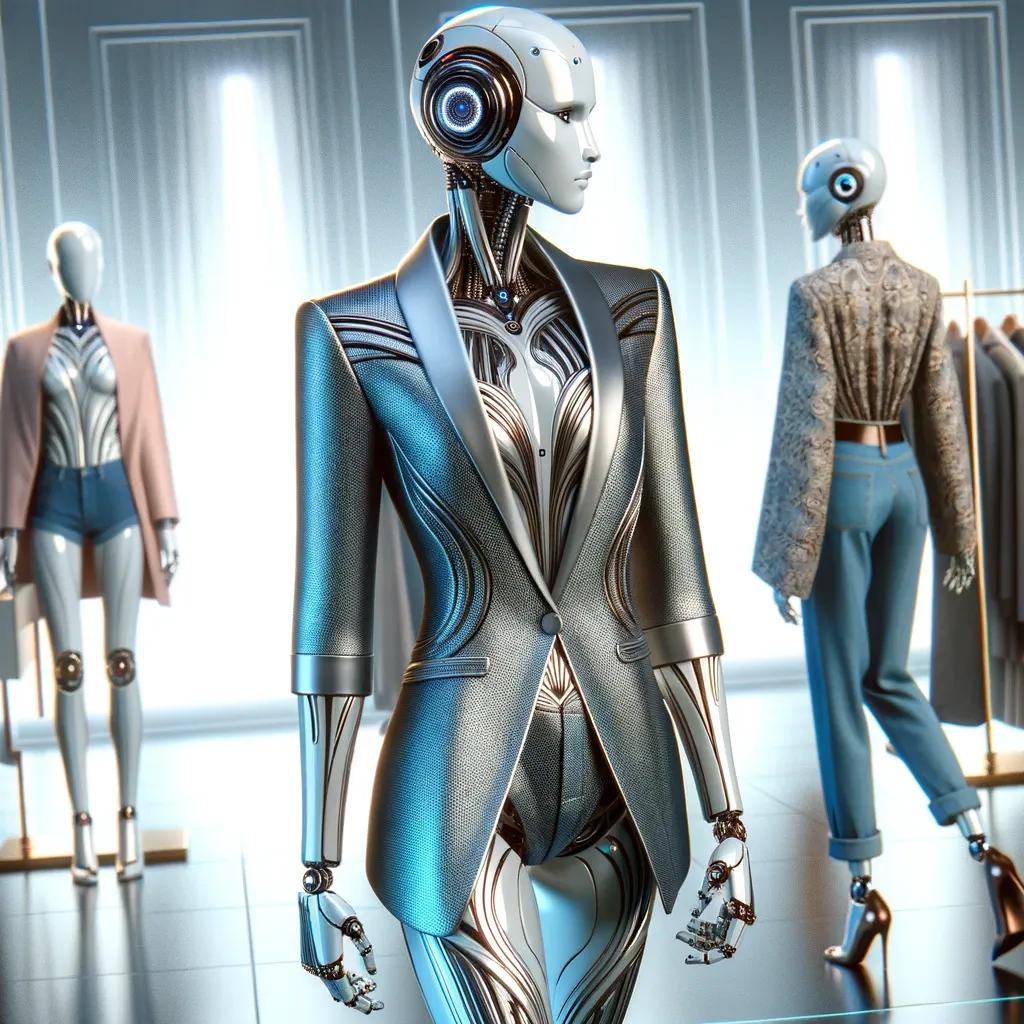
Clothing design has undergone a significant transformation with the integration of artificial intelligence (AI). Traditional methods, based on hand-drawn sketches and physical prototypes, are giving way to digital processes powered by AI. Below are four key stages of clothing design using AI, from ideation to digital prototypes.
1. Ideation: Using AI to predict trends and create moodboards
In the initial design phase, AI plays a key role in analyzing market data and forecasting upcoming trends. Tools like IBM Watson process vast amounts of information from social media, fashion blogs, and sales reports, identifying patterns and consumer preferences. Based on these analyses, AI generates mood boards that inspire designers to create new collections. For example, IBM Watson uses advanced algorithms to create trend boards that support designers throughout the creative process.
2. Pattern preparation automation: Automatic grading and zero-waste layout
After the ideation stage, AI supports the pattern-making process by automating size grading and optimizing fabric layout. Advanced algorithms analyze garment construction , automatically adjusting patterns for different sizes, which significantly shortens production time. Additionally, AI optimizes the placement of pattern pieces on the fabric, minimizing material waste. Research shows that using AI in this process can reduce fabric waste by 20-30%, contributing to more sustainable production.
3. 3D Prototyping: Simulations and Virtual Fittings
The next stage involves creating digital prototypes using 3D simulation tools such as CLO 3D. These advanced programs allow designers to visualize their creations in three dimensions, simulating fabric behavior and garment fit on virtual models. This enables virtual fittings, eliminating the need for physical prototypes and speeding up the design process. For example, CLO 3D offers realistic simulations that allow for an accurate assessment of a garment’s appearance and functionality before production.
4. Feedback loop: Refining the match with machine learning
The final stage involves using machine learning to analyze customer feedback data, such as product returns. AI examines this information, identifying patterns related to fit issues or wearing comfort. Based on these insights, designers can implement improvements in garment construction, leading to better fit and increased customer satisfaction. For example, return analysis may reveal that a particular model of trousers is frequently returned due to poor waist fit, prompting designers to adjust the pattern.
Integrating AI into the clothing design process brings numerous benefits, such as shorter production times, reduced material waste, and products better tailored to customer expectations. In the next section, we will discuss how to choose the right AI tools that best meet the needs of today’s fashion designers.
Which software is best for designing clothes?
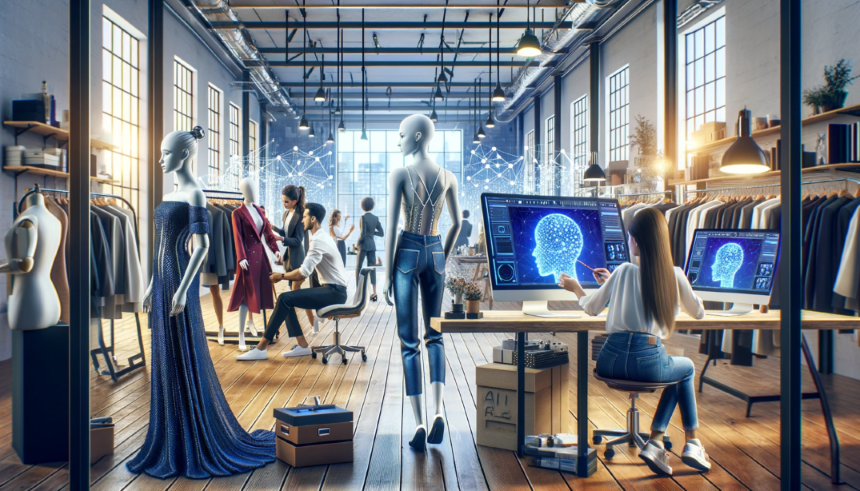
Choosing the right software for designing clothing is, of course, crucial for efficiency and creativity in the design process. There is a wide range of tools available on the market, from classic CAD programs to advanced 3D platforms offering AI-powered features. Below, we present a comparison of selected programs to help you make an informed decision.
Comparison of selected clothing design software
| Program | Type | AI features | Price/month | OS | Ideal user |
|---|---|---|---|---|---|
| Adobe Illustrator | 2D CAD | No | $20.99 | Windows, Mac | Freelancers, small brands |
| CLO 3D 7.3 | 3D | Yes | 50.00 USD | Windows, Mac | Small brands, corporations |
| Valentina/Seamly2D | 2D CAD | No | 0.00 USD | Windows, Mac, Linux | Freelancers, small brands |
| InvenTex | 2D/3D CAD | Yes | On request | Windows | Corporations |
Evaluation criteria
When choosing software, it’s worth considering the following aspects:
- User Interface (UI): Intuitiveness and ease of use can significantly impact work efficiency.
- AI functions: Automating design processes, such as pattern generation or fit analysis, can speed up work and improve precision.
- Licensing: Subscription or one-time purchase costs and trial availability.
- Ecosystem: The ability to integrate with other tools and access resources such as material libraries or community support.
Use cases
- Freelancer: For independent designers seeking budget-friendly solutions, Valentina/Seamly2D offers robust features at no extra cost.
- Small brand: Companies with limited budgets can use Adobe Illustrator for 2D design, with the option to expand to 3D in the future.
- Corporation: Large enterprises may invest in CLO 3D 7.3 or InvenTex for advanced 3D features and integration with other systems.
Pre-purchase checklist
- Operating system compatibility: Make sure the software works with your operating system.
- System requirements: Make sure your computer meets the minimum technical requirements.
- Technical support: Availability of technical assistance and updates.
- User community: An active forum or support group can be an invaluable source of knowledge.
The choice of the right software depends on your individual needs and goals. It’s worth carefully analyzing the available options to find the tool that best suits your working style and project requirements.
Is it possible to use artificial intelligence to design clothing patterns?
Artificial intelligence (AI) has revolutionized many industries, including fashion, by introducing innovative methods for designing fabric patterns. Thanks to generative techniques such as GANs and diffusion models, designers can now create unique patterns based on simple text descriptions or existing data.

Generative AI techniques in fabric pattern design
Generative neural networks, such as Generative Adversarial Networks (GANs) and diffusion models, play a key role in fabric pattern creation. GANs consist of two networks: a generator, which creates images, and a discriminator, which evaluates their authenticity. The competition between these networks results in the generation of realistic patterns. Diffusion models, on the other hand, work by gradually adding and removing noise from an image, allowing for precise reproduction of details. An example of the application of a diffusion model is Garment Diffusion, which generates three-dimensional tailoring patterns based on various inputs, such as text or images.
Tools supporting pattern generation
There are various AI-powered tools available on the market for creating fabric patterns:
- Flux: Specializes in generating fabric patterns based on text descriptions, enabling rapid creation of multiple pattern variations.
- Midjourney: This is an AI-powered image generation platform based on text prompts, which has gained popularity among fashion designers. In 2025, it reached a revenue of 500 million dollars and had 100,000 clients.
- Stable Diffusion: An open AI model that enables image generation based on text descriptions, used for creating unique fabric patterns.
- Adobe Substance: Includes generative plugins that enable creating and editing fabric patterns using AI.
Example of use: Flux in action
The clothing brand XYZ used the Flux tool to generate over 100 unique fabric patterns within a week. Thanks to AI, a process that previously took months was shortened to just a few days, allowing new collections to reach the market faster.
Legal and ethical aspects
The use of AI in fabric pattern design comes with certain challenges:
- ⚠ Intellectual property: Who owns a design created by AI?
- ⚠ Data bias: AI models can reflect biases present in training data, leading to unintended outcomes.
- ⚠ Transparency: It is important for users to understand how AI generates patterns and what data is being used.
To fully harness the potential of AI in fashion design, it is essential to understand both the capabilities and limitations of these technologies, as well as to take a mindful approach to their implementation.
From inspiration to implementation – your next step in the digital atelier
The integration of artificial intelligence (AI) with fashion design opens up new creative and operational possibilities for you. To effectively implement AI in your design process, consider taking the following steps:
1. Assessing your skills and resources
Start by analyzing your current technological competencies and available resources. Identify areas where AI can deliver the greatest benefits, such as trend analysis or optimization of production processes.
2. Choosing the right AI tools
There is a wide range of AI tools available for the fashion industry. Choose those that best suit your needs, such as for pattern generation or project personalization. Make sure these tools are compatible with your current systems.
3. Prototyping with AI
Start with small pilot projects to test AI capabilities in practice. This will allow you to assess the effectiveness of the tools and tailor them to the specifics of your work.
4. Introducing a feedback loop
Regularly gather feedback from your team and clients on projects developed with AI. Analyze this information to improve processes and products.
5. Scaling AI implementation
After successfully completing the testing phase, consider expanding the use of AI to other areas of your business, such as marketing or supply chain management.
Forecasts for the future
According to an analysis by McKinsey & Company, by 2030 generative AI could increase the operating profits of the apparel, fashion, and luxury sector by $150 to $275 billion.
Quick start: resource list
- Online courses: Platforms like Coursera and Udemy offer courses on AI in fashion.
- Communities: Join LinkedIn groups or industry forums to share experiences.
- EU grants: Check available support programs for technological innovation in fashion on the European Commission’s website.
The use of AI in fashion design is not just a trend—it’s the future of the industry. Start your journey today by experimenting with new technologies and exploring their potential.