
The global beauty market surpassed USD 500 billion in 2024 —that’s more than the entire GDP of Poland.
Honestly, I shouldn’t be surprised. I used to think that cosmetics were just an accessory to fashion. But now I see how wrong I was. LVMH, the owner of Louis Vuitton, made around EUR 86 billion last year—which means this entire fashion giant is just one-sixth of the global beauty market. Shocking, isn’t it?
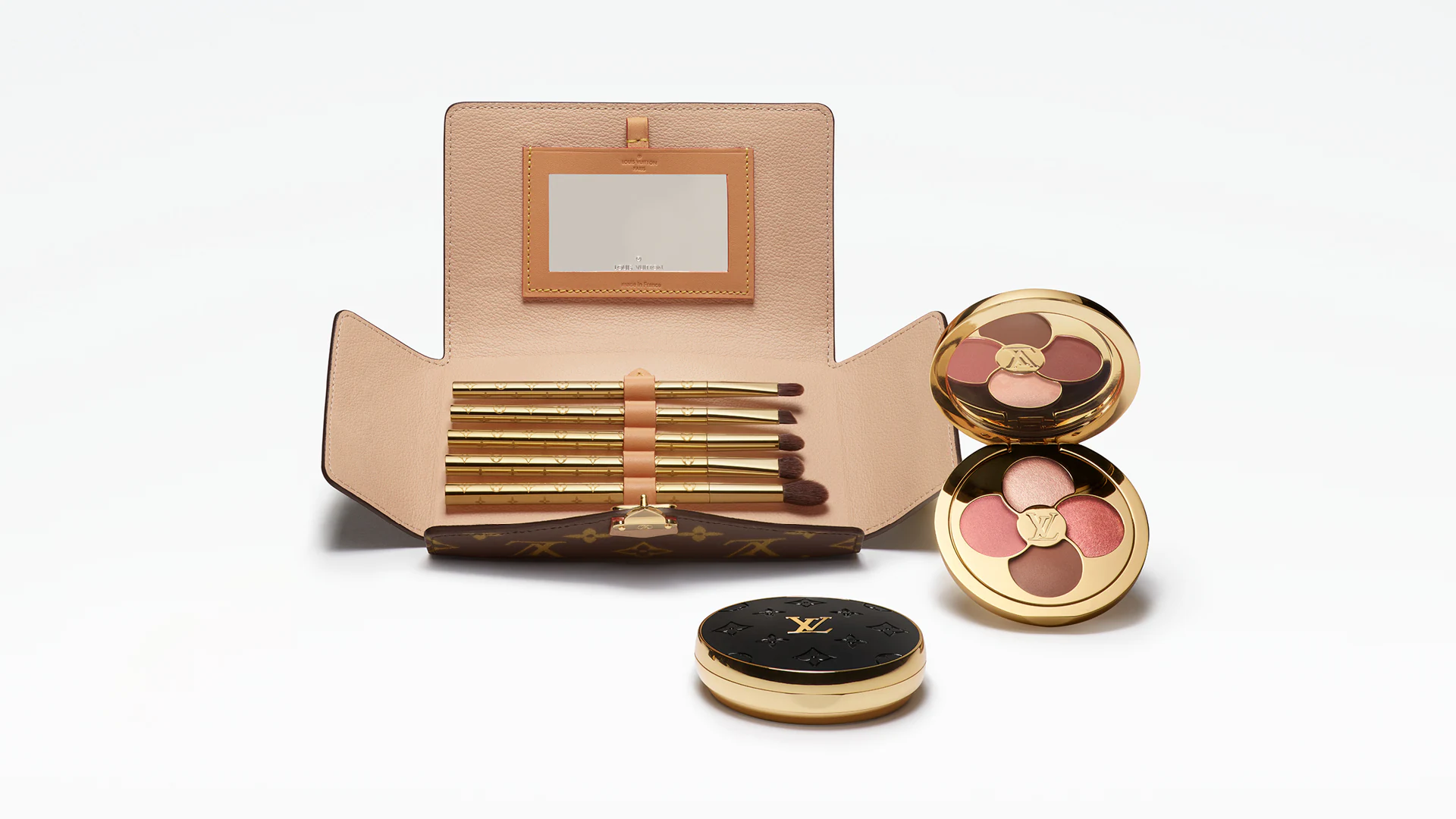
On August 25, 2025, Louis Vuitton officially enters the world of cosmetics with the La Beauté Louis Vuitton line. I’ve heard that in selected boutiques, the products sold out the very same day. I haven’t checked this personally, but industry friends confirm it.
How is Louis Vuitton entering the beauty segment?
It makes me wonder—do luxury fashion houses today have to offer lipstick to stay relevant? Chanel has been doing it for decades, so has Dior. Now Louis Vuitton. As if bags and dresses weren’t enough.
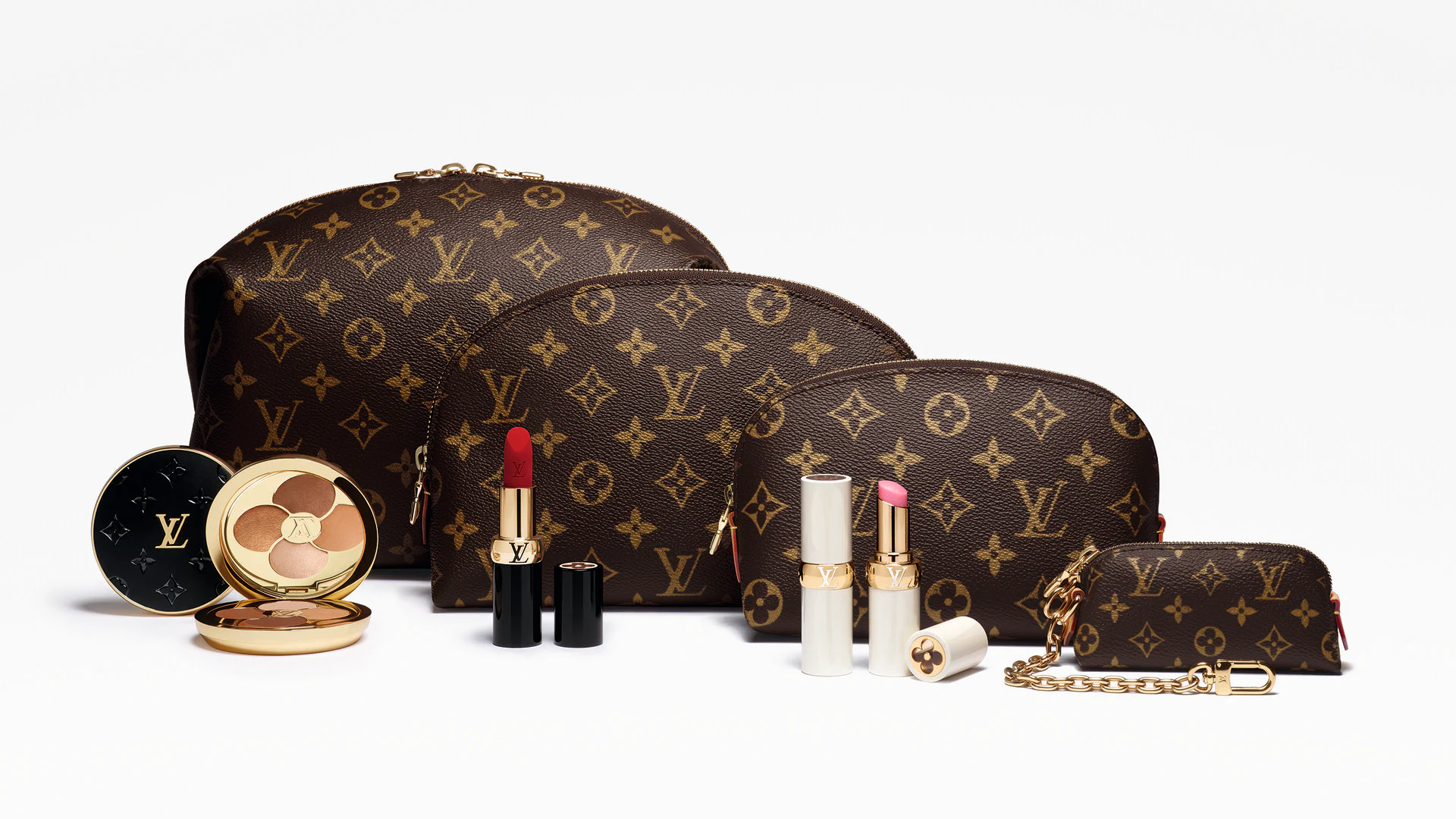
Not that I’m complaining. I’ve been watching this industry for years and I can see how it’s evolving. People expect more from their brands now. A beautiful handbag costing several thousand zlotys is no longer enough. You need an entire lifestyle, a whole philosophy of life wrapped up in a single logo.
In this article, I want to highlight three things. First—why Louis Vuitton even decided to go down this path and what it says about the brand’s history. Then—what exactly they’re offering and whether it makes sense. And finally—where all of this is heading and what it means for us, the everyday consumers.
Honestly, I think this is just the beginning. Maybe in a few years, we’ll be buying perfume from Apple or skincare from Tesla. Sounds absurd? Five years ago, no one believed Louis Vuitton would be making foundations.
But let’s start from the beginning—with how this situation even came about.
From vanity case to lipstick – the evolution and reasons for entering beauty
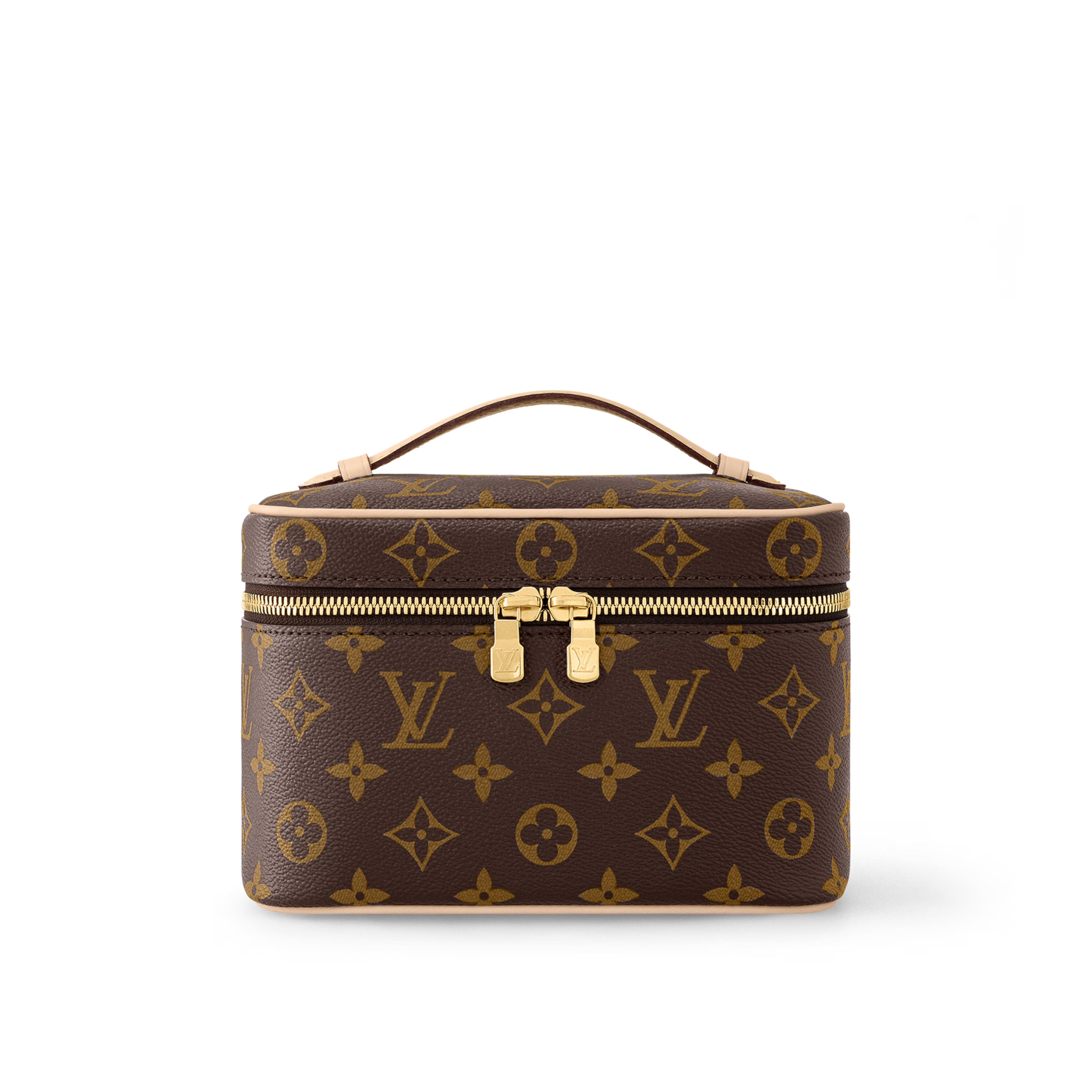
I still remember the first time I saw a Louis Vuitton trunk in a museum. It was more than just luggage—it was a true masterpiece of craftsmanship.
Timeline frame:
- 1854 – Louis Vuitton opens a trunk workshop in Paris
- 1866 – introduction of the anti-theft lock
- 1896 – creation of the iconic Monogram pattern
- 1987 – joined the LVMH group
- March 25, 2025 – Pat McGrath becomes the creative director of the beauty division
The story of Louis Vuitton is essentially a lesson in building a brand’s DNA. As early as 1854, Louis Vuitton wasn’t making ordinary trunks. Flat, lightweight, functional—completely different from those bulky, round cases everyone else was using at the time. Then came that lock in 1866… and finally, the Monogram in 1896. Those flowers, initials, geometric patterns—it all sounds familiar, doesn’t it?
The real breakthrough came in 1987. Becoming part of LVMH changed everything. Bernard Arnault had a vision—luxury isn’t just about handbags or perfumes. It’s an ecosystem. And he was right, because just look at what’s happening now.
The premium beauty market is booming. An 8-10% annual growth rate is no joke, especially compared to traditional fashion. I see it among my friends—everyone would rather buy a great lipstick than another dress. Maybe it’s because you use cosmetics every day, while a dress just hangs in the closet?
And here comes Pat McGrath. March 2025 was a bullseye. Not just because she’s a makeup genius—which is obvious. McGrath stands for something more. Inclusivity, diversity, real beauty. Louis Vuitton needed someone who understands that luxury today isn’t just about wealthy white women from Manhattan.
McGrath has worked with everyone—from Naomi Campbell to Gigi Hadid. She knows every skin tone, knows how to highlight every kind of beauty. That’s exactly what LV needed to break into the beauty market without looking like a grandpa at a nightclub.
Now the question is—how will all this translate into actual products? Because it’s one thing to have a brilliant strategy and a visionary creative director. It’s another to create something you’ll actually want to buy and use.
La Beauté Louis Vuitton in practice – products, innovations, market reception
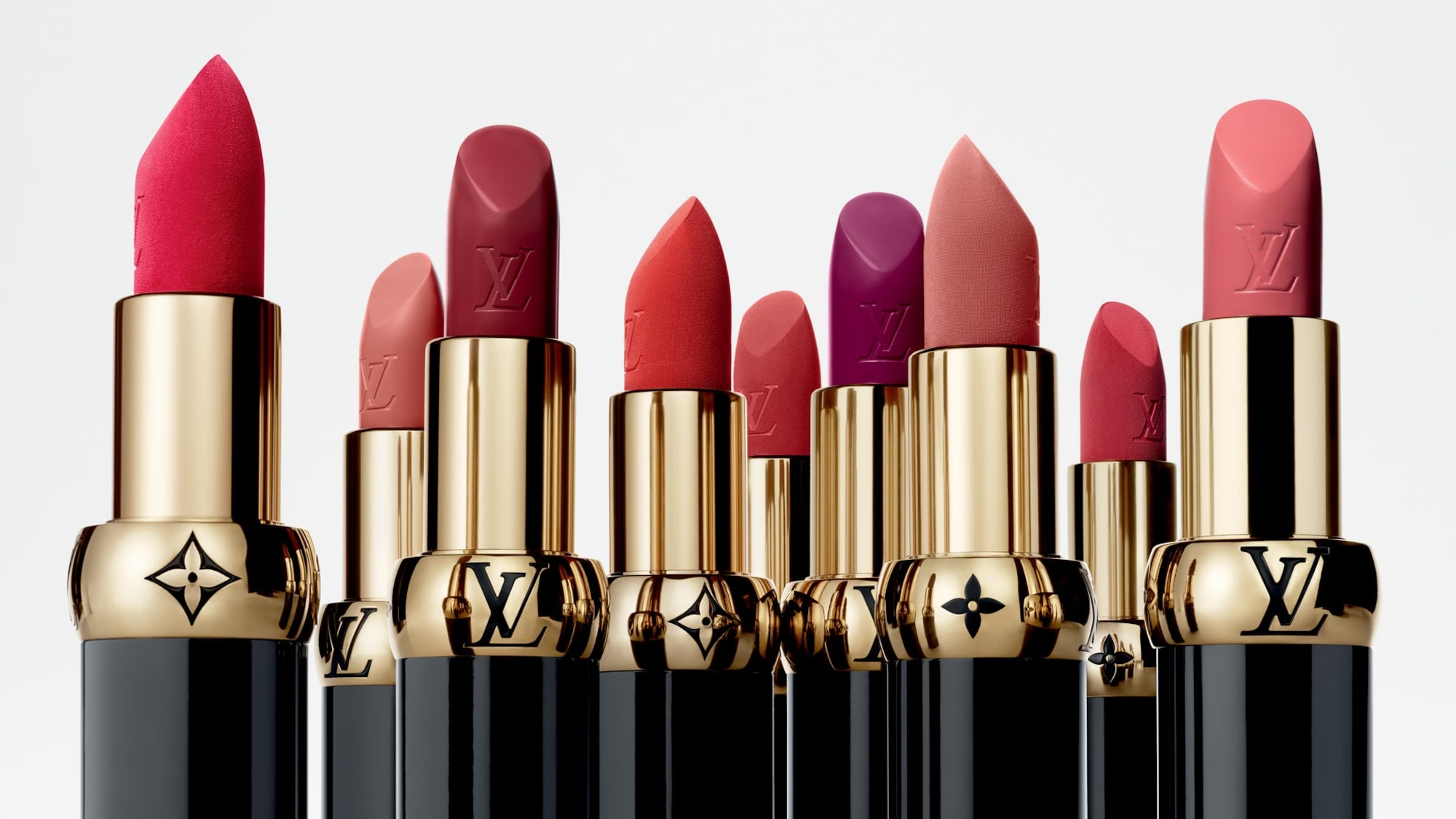
When I first picked up the Louis Vuitton Rouge lipstick, the feeling was… well, hard to put into words. The metal tube with its signature Monogram Canvas pattern felt heavy and substantial. The click when opening it sounds different than with regular cosmetics —deeper, more decisive. The color itself isn’t just a regular red. It’s somewhere between burgundy and cherry, with a sheen that makes your lips look as if they’re draped in silk.
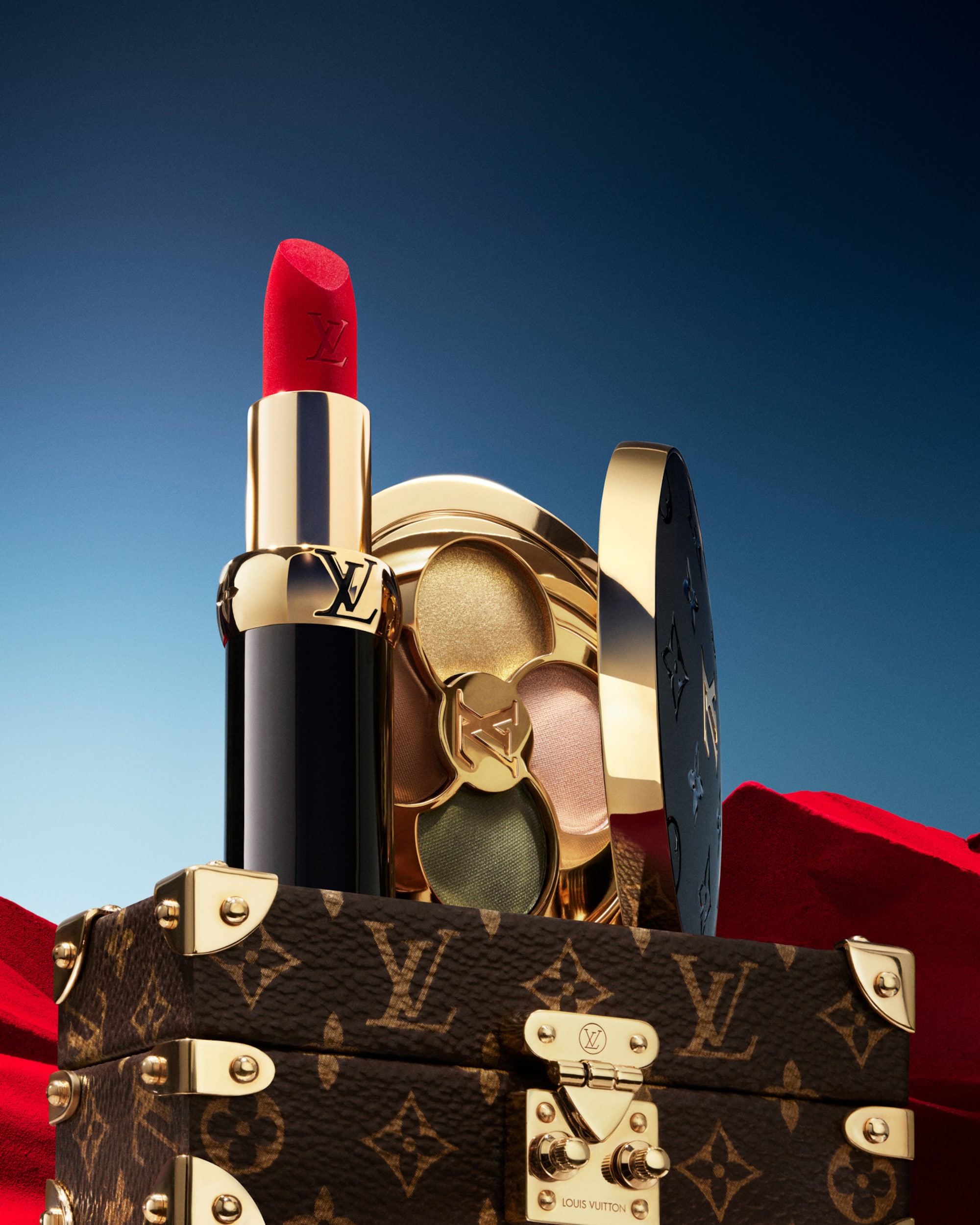
Actually, it wasn’t just this lipstick that caused a stir. Louis Vuitton launched over 20 products at once—from lipsticks to foundations, a full beauty arsenal in one package. Price range? From €80 to €250, which might not suit everyone, but the quality… well, more on that in a moment.
| Product | Price | Key feature |
|---|---|---|
| Rouge à Lèvres (lipstick) | 80 € | 12 shades, moisturizing formula with oils |
| Le Fond de Teint (foundation) | 120 € | 40+ shades, vegan formula, full coverage |
| Les Extraits (perfume) | 250 € | Limited edition, personalized bottles |
Packaging is a story in itself. We all know this Monogram Canvas motif, but here they’ve added “Cherry Blossom”—delicate pink flowers that look almost hand-finished. I’m not sure if it’s printed or what, but the effect is truly elegant. It’s a bit of a contrast to all that luxury that every formula is vegan—Louis Vuitton has gone for sustainability, which honestly surprised me.
When it comes to personalization, they have an app where you can test colors virtually. It might sound basic, but it actually works really well. I tried picking a foundation shade for my wife and nailed it. Those 40+ shades aren’t an exaggeration—there really is something for everyone.
The Louis Vuitton ambassadors didn’t waste any time—Zendaya wrote on X: “Finally, luxury beauty that matches the Louis Vuitton standards,” Lisa from Blackpink added: “The textures are unreal,” and Felix from Stray Kids simply posted a selfie with the caption: “LV beauty era begins.”
And those sales results… In Paris, sold out in 48 hours. Literally. A friend working at Galeries Lafayette said the lines were like for limited-edition bags. People were buying several products at once, some without even testing. It just shows the power of the Louis Vuitton brand—just the logo is enough to inspire trust.
It’ll be interesting to see what happens next. Because it’s one thing to launch with a bang, but quite another to stay on top in the long run.

What’s next – scenarios for LV’s growth in the beauty segment
You know what, watching LV’s recent moves in beauty, I get the feeling this is just the beginning of something really big. Those forecasts predicting a 15% annual growth in LV beauty sales through 2027 sound ambitious, but honestly? After seeing the reactions to their perfumes, I’m not surprised at all.
I see a few possible development scenarios. The optimistic one assumes that by 2026 we’ll see a full skincare line plus men’s cosmetics —that would be a real game changer. The cautious scenario is about a gradual rollout, maybe starting with creams, then the rest. But to be honest, LV doesn’t do things halfway.
Comparing the scenarios: 2026 will likely mean €200–250 million in beauty revenue, while 2027 could already surpass €350 million—a significant difference, depending on the pace of expansion.
What fascinates me is the VR and AI trend in personalization. Can you imagine picking shades in virtual reality? Sounds like science fiction, but apparently they’re already testing these solutions. And Asia… well, 20% market share in beauty is a number you simply can’t ignore. That’s where a real consumer revolution is happening.
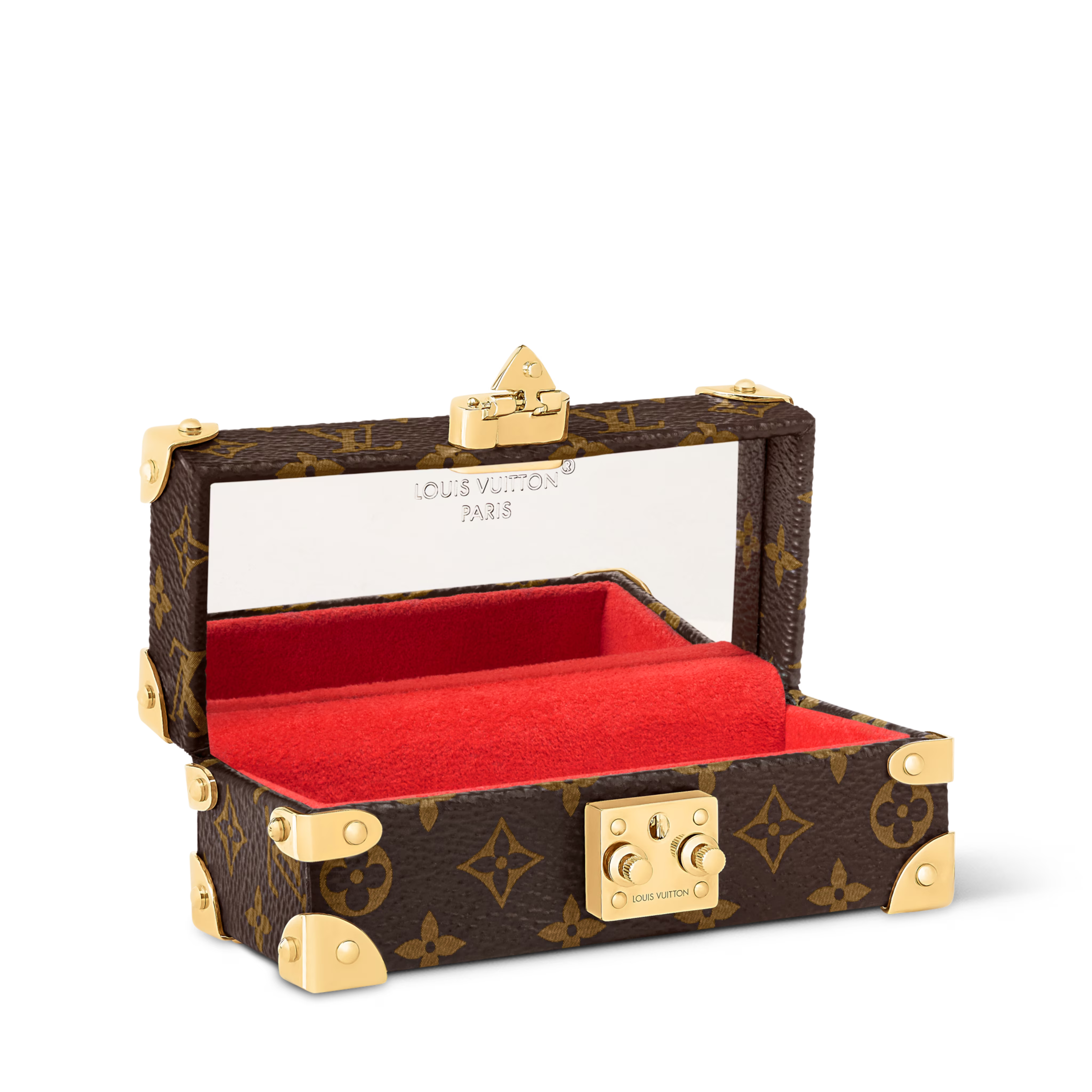
Here are a few practical tips for you:
• Track launches – sign up for the LV newsletter, but also follow beauty influencers from Korea and Japan. That’s often where the first hints appear
• For investors – keep an eye on LVMH’s quarterly results, especially the “Selective Retailing” segment where they hide beauty
• Personalization – if you get the chance, try out these new services. This will be the standard in a few years
The Asian region will be key. That’s where new formulas are tested, that’s where trends are born. Sometimes I think Europe is already just a secondary market in beauty.
One thing is certain – LV isn’t entering beauty just to be another brand on the shelf. They want to redefine luxury in this category.
Madamme
business & lifestyle editor
High Class Fashion