
70% of Generation Z representatives declare a preference for gender-neutral fashion. This statistic may sound surprising, but if you look back at history, you’ll see that unisex clothing is hardly a 21st-century invention.
In fact, it all started with the tunic. In ancient Rome and Greece, it was perfectly normal for women and men to wear similar garments. It was only later that society began dividing clothes into “his” and “hers.”
The 19th century tells a completely different story—a woman in trousers? Scandalous! But George Sand proved it could be done. And the world didn’t come crashing down.
How to build a unisex wardrobe? – from tunics to streetwear
The real breakthroughs, however, came in the 20th century. 1966 – Yves Saint Laurent unveils “Le Smoking,” a suit designed for women. It might seem like just clothing, but at the time, it was a revolution. A woman in a men’s suit suddenly appeared strong and independent.

The ’90s brought grunge. Kurt Cobain in a dress, girls in flannel shirts—the lines were blurring. And in Poland? The PRL era had its upsides. Practicality mattered more than gender. The same jackets, similar shoes—not by choice, but out of necessity. Who would have thought that one day this would become trendy?
Now it’s 2025, and the unisex clothing market could reach a value of $1.5 trillion USD. That’s no coincidence. The younger generation simply thinks differently about identity, about who they are and how they want to express themselves.
Have you ever wondered why a T-shirt is just a T-shirt? There’s nothing particularly masculine or feminine about it. It’s simply comfortable and practical. And maybe that’s the point—a return to what actually makes sense.
Today’s unisex is more than just fashion. It’s a way of thinking about yourself and the world. Maybe that’s why it’s catching on so quickly—because, at its core, it’s simply logical.

The anatomy of a unisex capsule wardrobe – key pieces and colors
A capsule wardrobe is essentially a collection of 10–20 carefully selected pieces that can be mixed and matched in various ways. Sounds simple, but the devil is in the details. Every item needs to work with several others—otherwise, it just doesn’t make sense.
Let’s get specific. A white T-shirt is an absolute essential. You can wear it under a blazer for work, with jeans on the weekend, layered under a sweater in winter, or on its own in summer. That’s one piece, seven different looks. Simple straight-leg jeans work the same way—polished with a shirt, casual with a hoodie, and versatile with almost anything.
I feel like people tend to overcomplicate this. A simple blazer in a neutral color will cover most formal occasions. A black skirt or chino pants will too. A white shirt—obvious. A sweater in grey or beige. Comfortable sneakers and one pair of dressier shoes.
Colors are a story of their own. Black, white, grey, beige—these are your best friends. Boring? Maybe a little. But that’s the point. These colors go together effortlessly. You can add one pop of color—deep green or navy—but no more. Otherwise, the whole concept falls apart.
| Element | Why it is crucial | Sample outfits |
|---|---|---|
| White T-shirt | Pairs with everything, seasonal | Under a blazer, with jeans, with a skirt |
| Simple blazer | Instantly elevates elegance | With jeans, over a dress, with trousers |
| Straight-leg jeans | A universal fit for every body shape | With a T-shirt, shirt, sweater |
I’ll show you a concrete example: 3 looks from 5 pieces—a white shirt, black trousers, a grey sweater, jeans, and a blazer.
First look: white shirt plus black trousers plus blazer. Elegant, perfect for the office or a meeting.
Second look: grey sweater, jeans, the same white shirt peeking out from under the sweater. Weekend-ready, but polished.
Third look: blazer plus jeans plus white shirt. Casual Friday or meeting up with friends.
Five pieces, three different outfits, zero trouble matching colors.
The number of items is also an individual matter. Some people need 15 pieces, others manage with 10. It depends on your lifestyle, work, and climate. There’s no universal formula. The important thing is that every item gets worn regularly—nothing should sit unused for months.
The key is the versatility of each piece. If you buy something that only goes with one other thing, that’s a mistake. In a capsule wardrobe, everything has to work together. It’s simple math—the more connections between items, the more outfit options you have.
Fabric quality and materials are a whole different story, which we’ll discuss in a moment. For now, let’s focus on building a solid foundation.
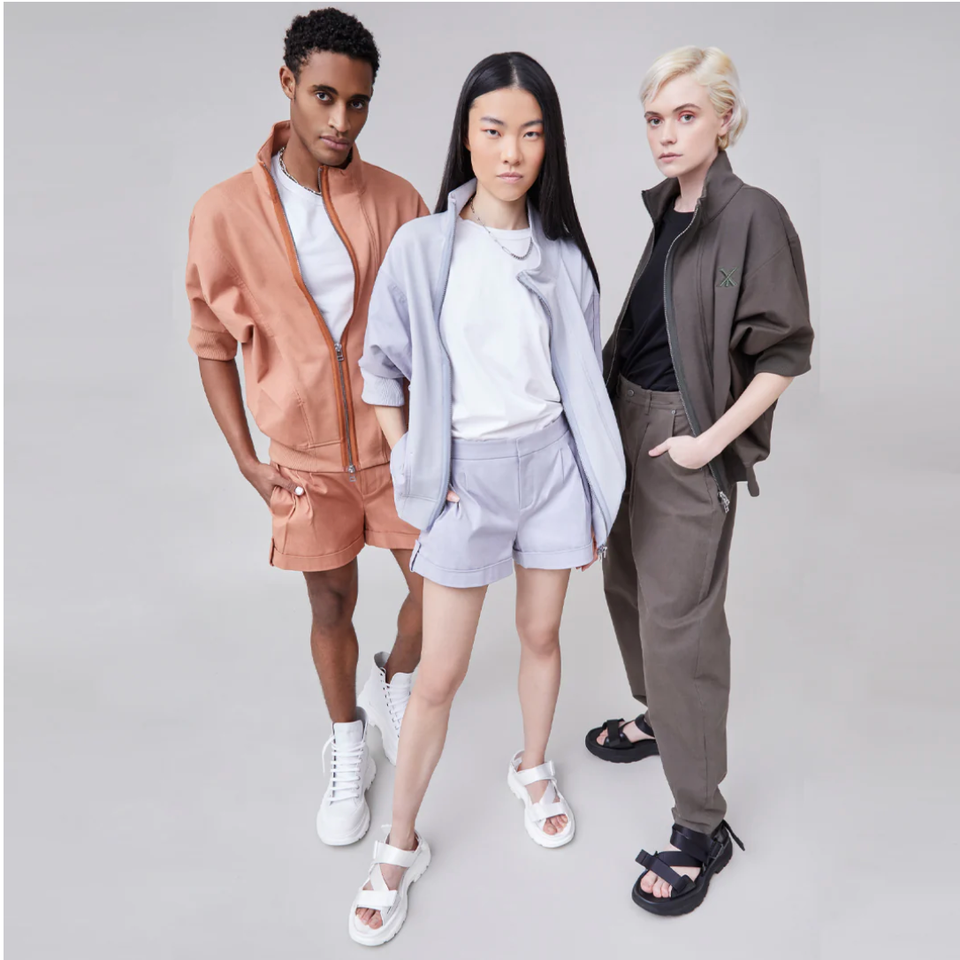
Planet- and body-friendly materials – a guide to unisex fabrics
Have you ever wondered how much water your favorite T-shirt uses? I hadn’t thought about it for years either. It was only when I started reading about the fashion industry that I learned things that completely changed the way I look at my wardrobe.
Producing a single basic cotton T-shirt requires as much as 2,700 liters of water. That’s more than the average person uses in a month! And that’s where the problems with fast fashion begin. But don’t worry—there are fabrics that don’t harm the planet and are just as comfortable.
The water footprint of different fabrics is truly staggering. Organic cotton needs 91% less water than conventional cotton. Tencel—a fabric made from wood fibers—is even more efficient. And recycled polyester? No new water is used at all to produce its fibers.
| Fabric | Water consumption per kg | Certificates | Durability |
|---|---|---|---|
| Conventional cotton | 10,000–20,000 l | – | Average |
| Organic cotton | 1,800 l | GOTS, OEKO-TEX | High |
| Tencel/Lyocell | 155 l | OEKO-TEX | High |
| Recycled polyester | 200 l | GRS | Very high |
Certificates were another thing that overwhelmed me at first. OEKO-TEX Standard 100 checks whether the fabric contains any harmful substances—they test for over 100 different chemicals. GOTS goes a step further and monitors the entire production process of organic fibers. To get this certificate, at least 70% of the fibers must be organic, and working conditions have to meet specific social standards.
It actually sounds complicated, but all you really need to do is look for these labels on the tag.
Zero-waste patterning is a technique that fascinates me. Designers arrange patterns to use every centimeter of fabric. Normally, the fashion industry wastes about 25% of the material! With zero-waste, you can reduce waste by 15-20%. Plus, the clothes often have interesting, geometric cuts.
Tencel deserves a special mention. The fibers are made from eucalyptus in a closed-loop process—the solvents are recycled. The fabric is antibacterial, breathes better than cotton, and has a natural sheen. It’s perfect for unisex clothing because it doesn’t cling to the body like some synthetics.
Recycled polyester has its downsides—it’s still plastic and can release microfibers during washing. But recycling is better than producing new plastic. Especially in jackets or sports pants, where you need weather resistance.
Organic cotton is finally becoming affordable. No pesticides are used, so the soil regenerates instead of degrading. It has one advantage over all other materials—after years of wear, it still looks natural. Synthetics, over time, develop this… plastic-like sheen.
Just to be clear—I’m not saying you should throw out your entire wardrobe and only buy eco-fabrics. But when you’re shopping for new clothes, it’s worth checking the label. These certificates really mean something and are often a guarantee that the material will last for years.
Checking the composition is a habit that pays off. Especially with unisex clothes, where durability and versatility matter—it’s better to choose something that will last in your closet for more than just one season.
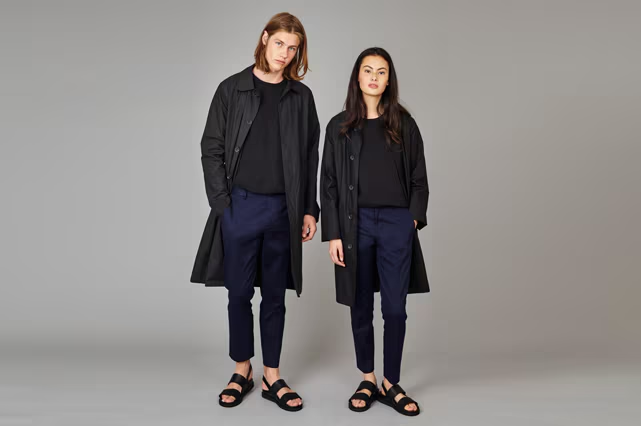
Shopping strategies – how to choose, try on, and invest wisely
How many times have you bought something on impulse, only to regret it later? I’ve lost count. That’s why I now treat clothes shopping as a small investment.
Budget is key, but not the only factor
First, decide how much you can spend on clothes each month. I’m not talking about a rigid limit—life is unpredictable. The point is to be aware of your financial capabilities.
In Poland, prices can be surprising. A basic T-shirt ranges from 35 to 449 PLN. A premium hoodie? Even 699 PLN. These price brackets show just how varied quality standards and brand positioning can be.
Sometimes it’s better to buy one more expensive item than three cheap ones. But that’s just theory—let’s see how it works in practice.
Size and fit—mistakes here are costly
Measuring your body vs. brand size charts. It’s an eternal dilemma. Size charts often don’t match reality, so it’s better to measure yourself carefully. Bust, waist, hips—these three measurements are the minimum.
When shopping online, pay attention to 360° photos and detailed descriptions. Return policies matter, too. Some stores offer 30 days for returns, others only 14. That can be crucial if you’re buying “just to try.”
In physical stores, you can touch the fabric and check the quality of the seams. Seams should be even, with no loose threads. If the fabric puckers at the seam—that’s a bad sign.
Cost-per-wear analysis—the numbers don’t lie
Here’s the heart of the matter. The formula is simple:
Cost-per-wear = Price ÷ Number of wears
A real-life example: a dress for 200 PLN that you wear 50 times costs you 4 PLN per wear. A blouse for 80 PLN worn only 8 times? That’s 10 PLN per use.
A spreadsheet will help you keep track of these numbers:
- Column A: item name
- Column B: purchase price
- Column C: assumptions counter
- Column D: cost-per-use (formula B÷C)
Update the counter every month. After a year, you’ll see which purchases were truly worthwhile.
When assessing quality, pay attention to the details. Double stitching will withstand more washes. Buttons should be securely sewn on—give them a gentle tug to check. Test zippers several times before buying.
Online shopping has its perks—a wider selection, the ability to compare prices. But you can’t see the true color or feel the fabric. In a brick-and-mortar store, it’s the opposite—less choice, but you can check everything in person.
The truth is, the best purchases are the thoughtful ones. It doesn’t matter if it’s online or in-store. What matters is knowing what you’re looking for and how much you’re willing to pay.
All these calculations lead to one thing—making conscious choices. And conscious choices are the first step to building a wardrobe that truly works for you.
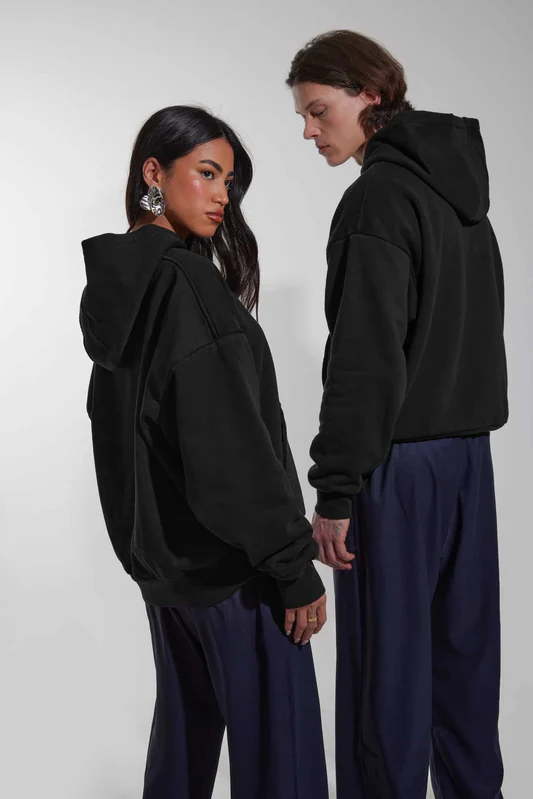
Polish brands and inspirations – the local unisex landscape 2025
The Polish unisex scene is really just getting started, but there are already a few brands that are truly worth keeping an eye on. We may not have the same recognition as Scandinavian brands yet, but we do have something else—authenticity and a fresh approach to local production.
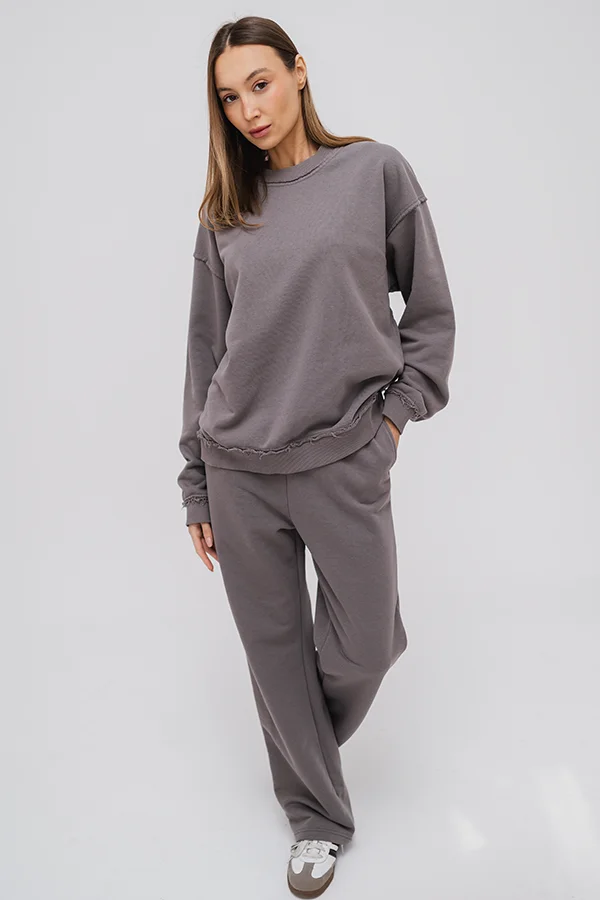
NAGO is probably the most consistent brand when it comes to a unisex philosophy. Everything is made in Poland, they have a GOTS certificate, and their starter kit costs around 400-500 PLN. It’s not the cheapest, but you can really feel the quality. They sell mainly online and in a few boutiques in Warsaw and Krakow. I’ve been wearing their sweatshirts for a year now and I can say—they hold up in the wash and don’t lose their color.
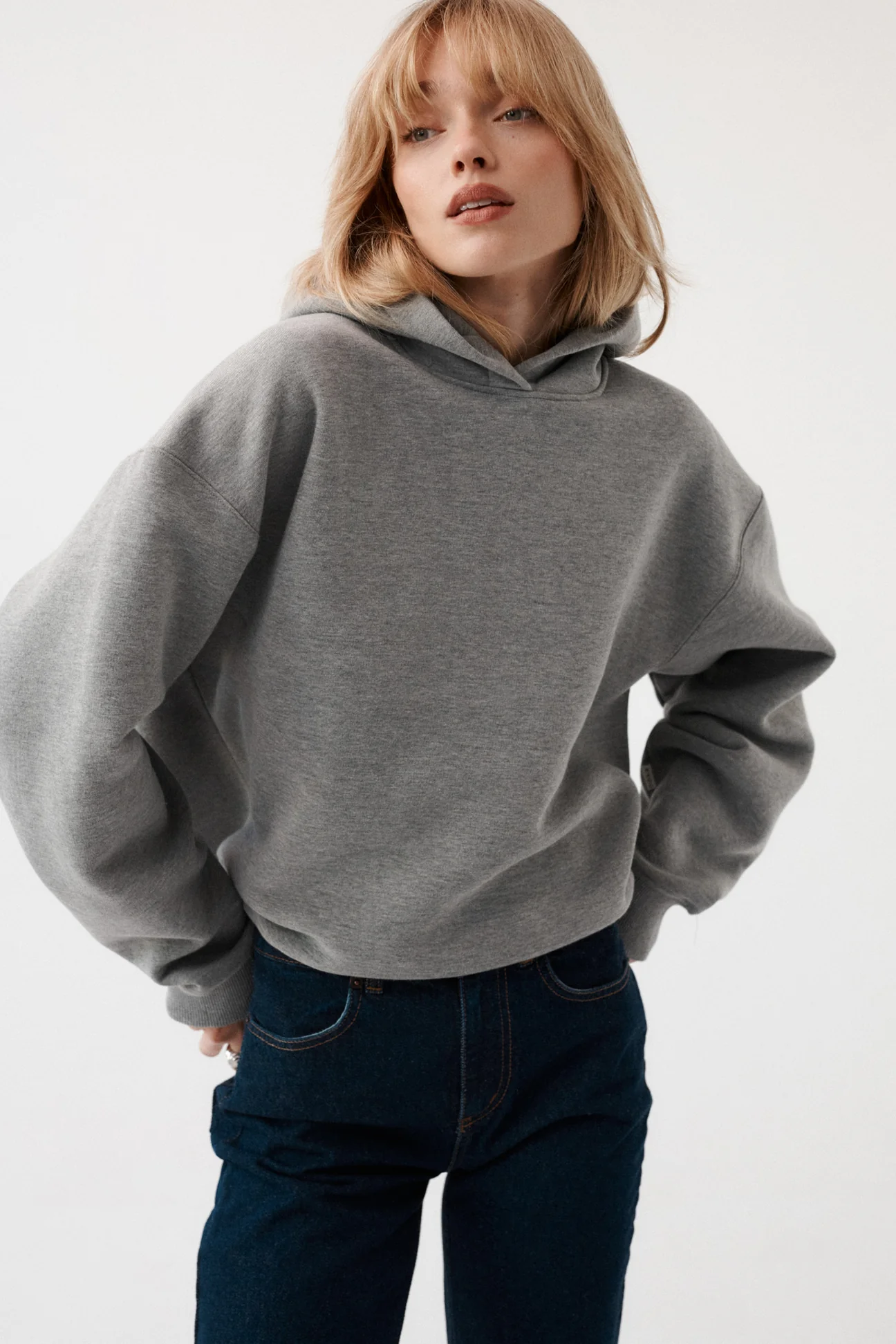
BYNAMESAKKE, on the other hand, has taken a completely different approach. Their dyeing technology really does save water—apparently up to 70% less than traditional methods. It sounds like marketing, but I checked and they actually have certifications. Prices start at 200 PLN for a t-shirt, which is reasonable by Polish standards.
| Brand | Philosophy | Price range | Sales channels |
|---|---|---|---|
| NAKED | Local production, eco certificates | 200-800 PLN | Online, boutiques in 3 cities |
| BYNAMESAKKE | Water conservation, slow fashion | 150-600 PLN | Own online store |
Completely by chance, I stumbled upon the “Regulated Modernity” exhibition at the Museum of Warsaw last year. I thought it would be some boring communist-era talk, but it turned out to be a source of inspiration for today’s designers. Those simple cuts, minimalist colors—all of that is making a comeback in unisex collections now.
“Communist-era minimalism wasn’t a conscious aesthetic choice, but material shortages created a style that now feels incredibly modern”, said the exhibition’s curator.
Polish brands have another advantage—you can actually write to them, ask about sizes, materials. Have you ever tried contacting H&M? Exactly.
It’s also worth checking out local events—Warsaw Fashion Weekend is increasingly showcasing unisex designs. Next time, we’ll talk about how to personalize and adapt all these pieces to your own style.
Genderless personalization – accessories, details, and layering
Imagine you have the perfect unisex base—simple trousers, a white T-shirt, maybe a grey sweater. Now comes the best part: you can turn this into dozens of different outfits without buying anything new.
Layering isn’t just about warmth—it’s a way to express your personality.
The “rule of three layers” technique works really well. Take a hoodie as your base, add an overshirt (a loose shirt worn like a jacket), and top it off with a lightweight bomber or denim jacket. Inner layer → mid layer → outer layer. You can take off the overshirt and stick with the hoodie plus jacket. Or remove the jacket for a casual look. Three pieces, five different styles.
My friend does this and always looks like she has a massive wardrobe. In reality, she owns maybe ten basic items.
Accessories are where the real math magic happens. Studies show that five accessories can boost the number of possible outfits by 40 percent without buying a single new top. A scarf can be worn around the neck, tied at the waist like a belt, or wrapped around a bag handle. One scarf, three functions.
Belts are a whole separate topic—they can completely change your silhouette without compromising the unisex vibe. A crossbody bag for one person, a belt bag for another. Same bag, different ways to wear it.
Now, monograms—this is where the debate starts. Some people think personalizing with initials undermines the gender-neutral aspect of a wardrobe. That it’s too individual. But is it really? Letters are just letters. They don’t have a gender. The problem comes when someone picks pink embroidery for “women’s fashion” or navy blue “for men.”
In my opinion, a monogram can be totally neutral if you choose the right color and a simple font. Silver, black, white embroidery—why not?
Another view: a monogram immediately says “this belongs to a specific person,” so it stops being universal. You can borrow a jacket without a monogram, but with one, it’s harder.
Five quick personalization tricks: a watch worn loosely, a scarf as a hairband, pins on lapels, colorful socks as the only accent, a bag worn in different ways.
The key question—how do you keep all these layers and accessories in good shape so they last for years?
Wardrobe maintenance and evolution – repair, recycling, rotation
My favorite wool sweater is already seven years old. Honestly, it looks more like three, because I’ve learned how to take care of it. I used to think clothes just wore out and that was it—I’d just buy new ones. Now I know that’s nonsense.
Most things can be fixed. I’ve done dozens of small repairs myself—sewing on buttons, mending holes, shortening pant legs. It’s really not hard. All you need is a needle, some thread, and a bit of patience.
The French seam is my latest discovery. It sounds very elegant, but it’s simply a sewing technique that reinforces the fabric. When you mend a hole with this seam, the repaired spot becomes stronger than the rest of the material. Research shows that a French seam increases the durability of the repaired section by 30 percent.
Not everything can be done at home. Sometimes you need to go to a tailor. It usually costs 15-50 złotych, but for that price, you’ve saved your favorite dress or the perfect-fitting pants. It’s always a worthwhile investment.
Recycling isn’t just about sorting trash. Old T-shirts can be cut up for cleaning rags. I turn jeans into shopping bags—just sew up the legs and add handles. Sweaters with holes become decorative pillows. Yarn from unraveled sweaters is great for knitting.
Some things really do belong in the trash. But before you throw them out, check if there are textile containers in your area. Many cities also have clothing collection points for those in need.
Wardrobe rotation is an art in itself. I follow the three-month rule—every quarter, I review my closet. I take out anything I haven’t worn in the last three months. Some things I set aside for the next season, others I give away.
In the fall, I put away summer dresses and sandals. Sweaters and boots come back in their place. In spring, I reverse the process. It’s simple but effective. My closet isn’t overcrowded, and I can see all my options.
An interesting thing—online stores have noticed that returns drop by 15 percent when customers better match unisex models. That means people are starting to make more conscious clothing choices. They buy less, but better.
My review system looks like this: every quarter I check the condition of my clothes, every six months I do a major clean-out, and once a year I plan bigger purchases. I’ve been doing this for three years, and I really save money.
The worst thing you can do is buy on impulse. You see a nice blouse, buy it, and then it just hangs in your closet. It’s better to wait a week and think about whether you really need it.
Taking care of your clothes isn’t just about ecology. It’s about economy, too. One well-maintained jacket lasts five years instead of two. A snag-free sweater looks new for years. And properly repaired pants are indistinguishable from new ones.
Your role in fashion without borders – action plan for the upcoming season
Actually, over the past few months, I’ve noticed just how much my wardrobe has changed. I used to shop impulsively, but now I think long-term. Fashion without borders isn’t just a trend—it’s a way to create a wardrobe that truly suits you.
The key takeaways? First, quality always beats quantity. Second, personalization is the key to a unique style. And finally—taking care of your clothes can add years to their life.
What’s interesting is that experts are predicting a real revolution. By 2030, around 50% of fashion collections could be unisex. That means the lines between women’s and men’s fashion will blur. Frankly, I already see this among younger friends—they buy oversized shirts from the men’s section, and guys wear pink hoodies.
The fashion-tech industry isn’t sleeping, either. Virtual try-on apps, AI-powered styling, recycled materials—all of this will be the norm in a few years, not the exception.
“Fashion isn’t about what you wear—it’s about how you live.”
You know what excites me most about all this? The fact that each of us can be a pioneer. You don’t have to wait for big brands or designers. Start with yourself, experiment, mix styles.
I have a favor to ask—once you’ve created your unique look, share it online. Use the hashtag #ModaBezGranic and show others your interpretation of this trend. The best inspiration comes from authentic outfits like these, not from fashion shows.
Sometimes I think it’s these small changes in our wardrobes that can spark a bigger shift in the entire industry. And you are part of that change.
Xenia C
lifestyle editorial
High Class Fashion