
Can a single designer carry the entire legacy of Dior? This question is now on the minds of everyone following the fashion world. Jonathan Anderson is set to take over three lines of the legendary house at once — it sounds like madness or genius.
Dior is not just an ordinary brand. It’s a symbol of French elegance that has endured for decades and through fashion revolutions. When someone new enters this temple of haute couture, the whole world watches. And this time, everyone is truly watching.
Jonathan Anderson takes the helm at Dior
Twitter exploded after the announcement. One tweet about Anderson and Dior garnered 262,927 views within just a few hours. People are sharing, commenting, arguing in the replies. Some call it a breath of fresh air, others say it’s the end of an era.
But the most interesting are the stock market numbers. LVMH shares soared by 2% immediately after the official announcement. Investors clearly believe in this move. Or maybe they’re just buying on speculation—it’s hard to say.
I remember how a few years ago there was similar buzz around other changes at major fashion houses. Back then, everyone was also talking about a breakthrough. The difference is that Anderson is not a random choice. He has successes behind him, but are they enough for such a challenge?
Three main questions are circulating in the industry right now. First—does his vision fit the DNA of Dior? Second—how will he handle media pressure and customer expectations? Third—can he balance all the lines without losing coherence?
Anderson’s story reveals the origins of this decision. His path to Dior was no coincidence.
From Loewe to Paris – Jonathan Anderson’s journey
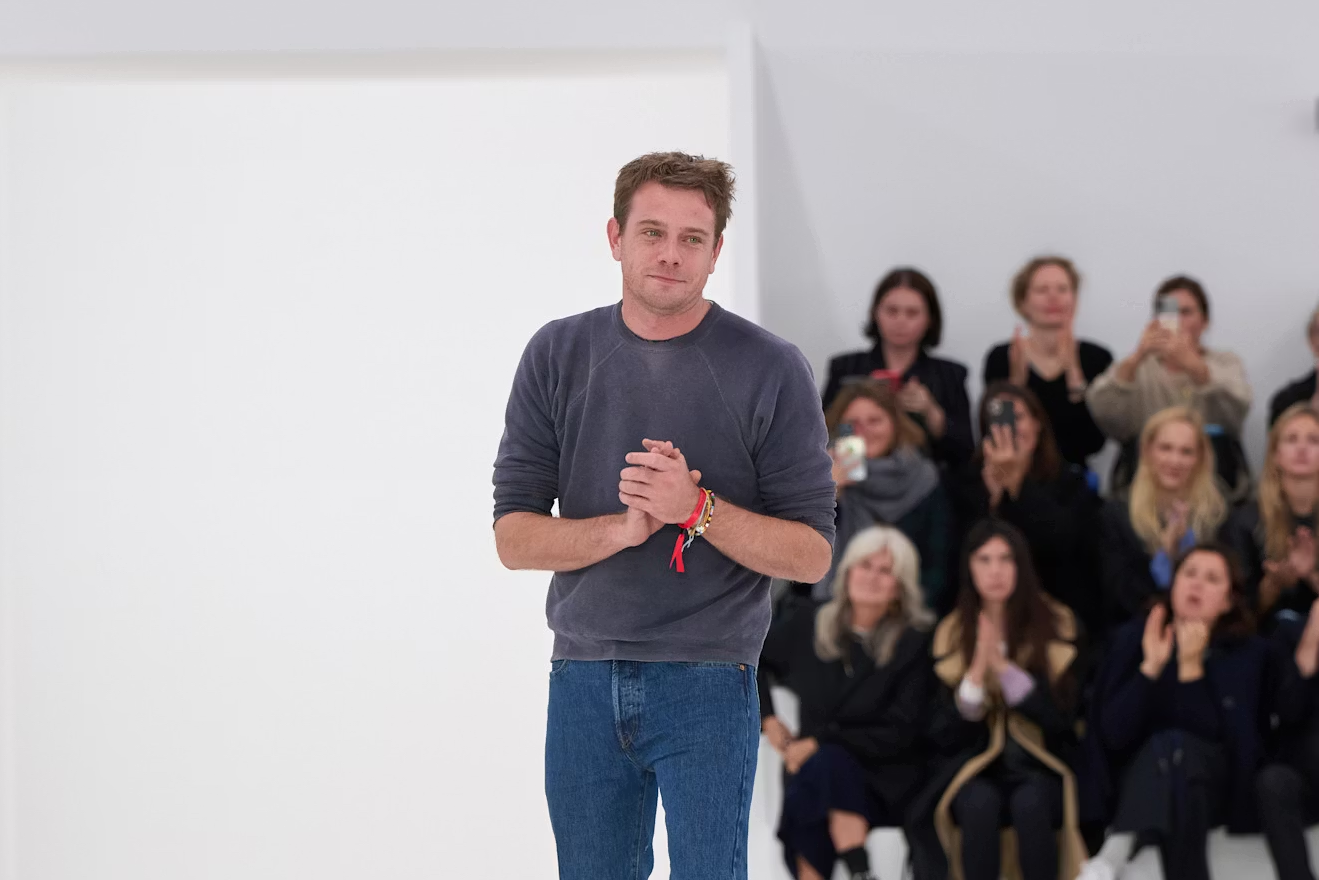
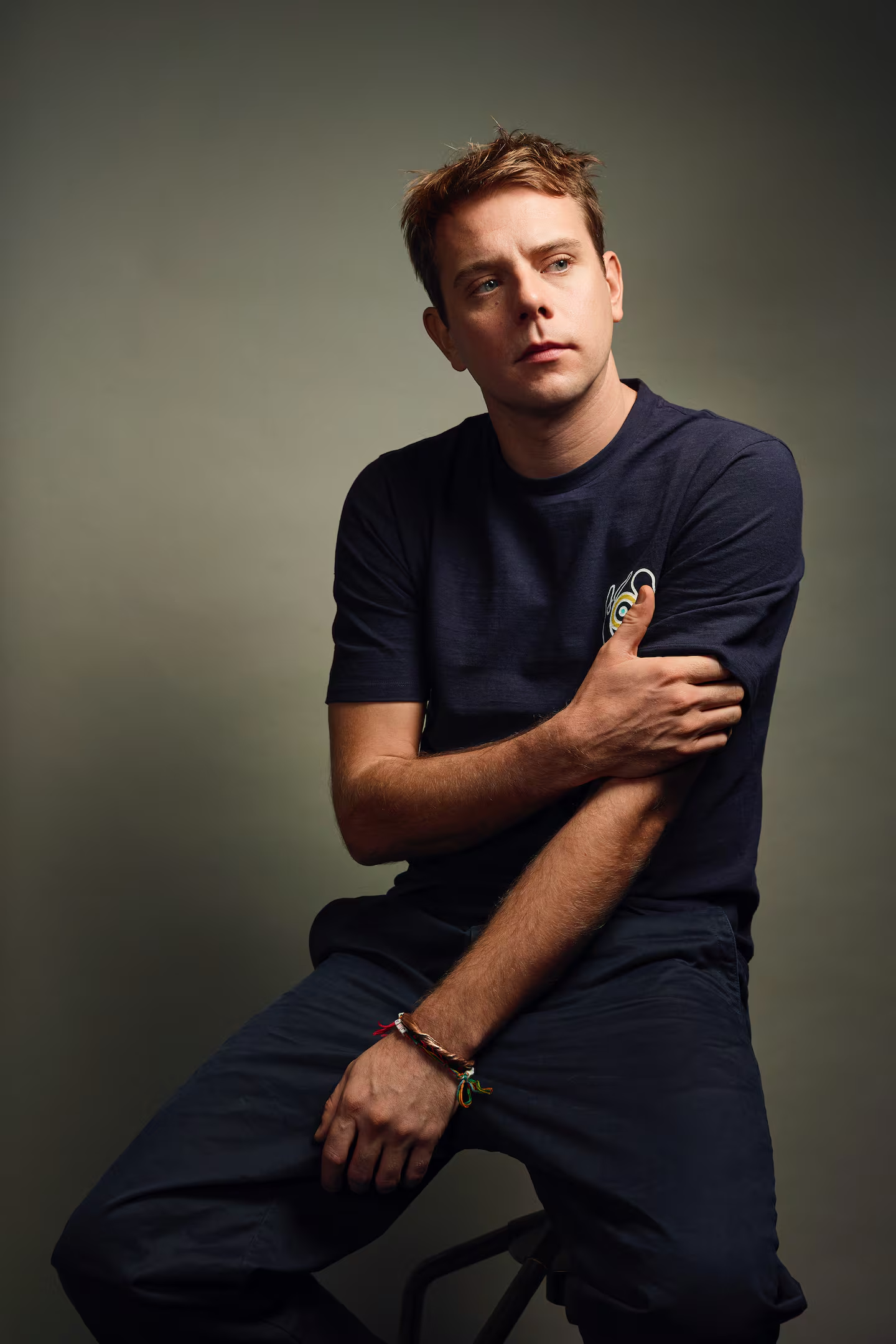
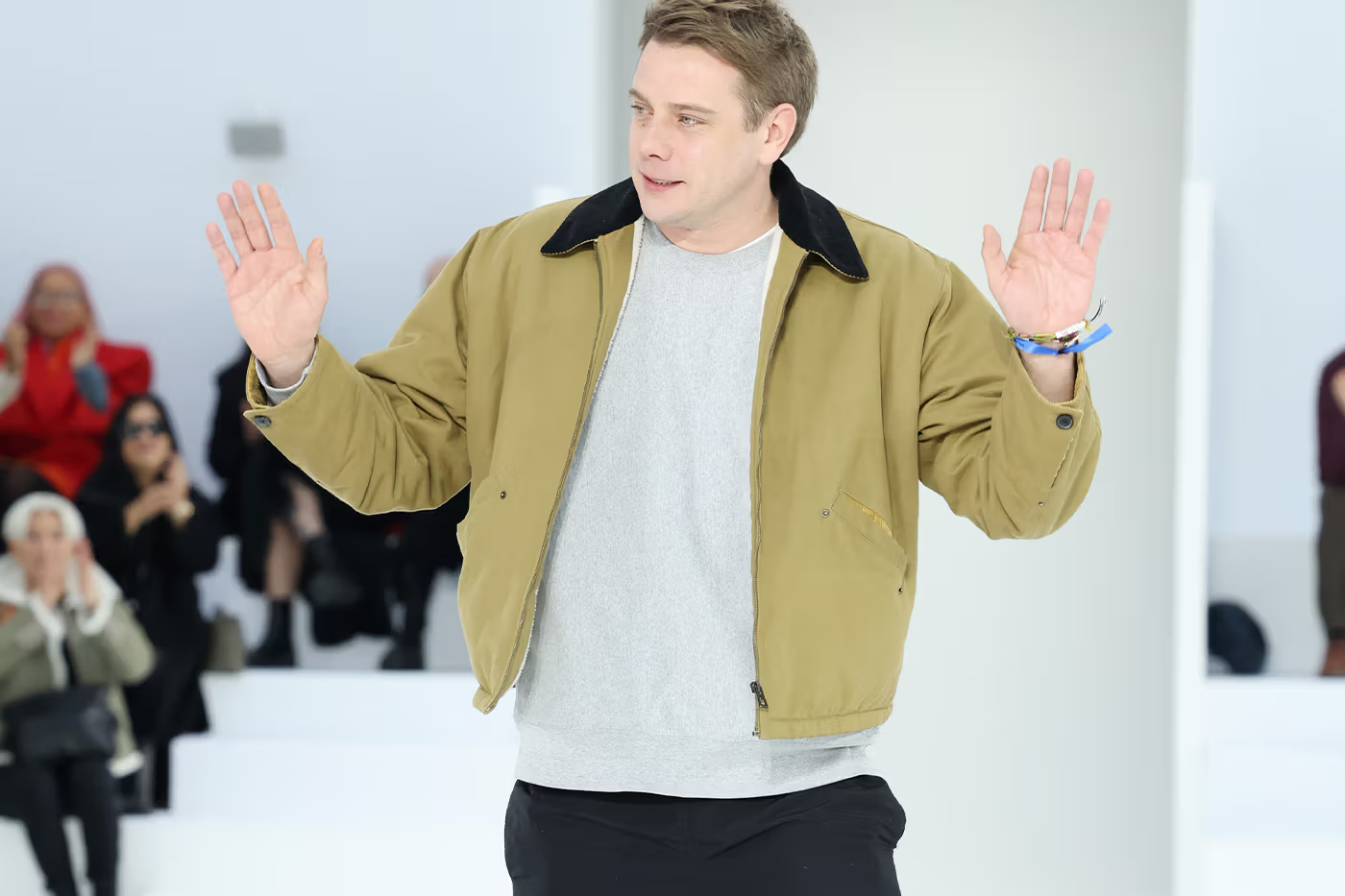
I remember that moment from the Loewe show in 2023, when Anderson came on stage in his signature, slightly nervous style. Back then, no one knew he would be negotiating with Dior a year later. Or maybe he already knew?
His journey is truly an unusual story. He started in theatre, which is evident in every one of his collections—the narrative elements, the way he builds tension during a show. London College of Fashion gave him technique, but theatre gave him something more.
| Year | Event |
|---|---|
| 2008 | The founding of the JW Anderson brand |
| 2013 | Taking up the position at Loewe |
| 2024 | Nomination for Dior |
| 17/04/2025 | The first Dior men’s show |
| 02/06/2025 | Debut women’s show |
JW Anderson was actually created by accident. Anderson was 24 at the time, with designs that didn’t fit into any category. Gender-fluid sounds trendy today, but in 2008 it was simply considered strange. I remember his first bags—those metal rings that looked like sculptures.
Loewe was a whole different league. A Spanish brand with tradition, but a bit dusty. Anderson did something incredible there over 11 years. The numbers show sales growth of over 30% annually, but those are just figures. What mattered more was how he changed the perception of craftsmanship in luxury.
Now at Dior, he has full control over all lines—the first designer since Christian Dior himself to hold such authority.
I sometimes wonder whether Anderson planned this path or if it simply unfolded on its own. From theatrical beginnings, through gender-fluid experiments, Spanish craftsmanship, all the way to French elegance. Each stage has left its mark on his style.
These 2025 dates are already set in stone. On April 17, we’ll see theatricality meet the heritage of Dior. June promises to be even more exciting—women’s collections are a whole different game.
This whole story shows that in fashion, it’s not just talent that matters, but also the ability to adapt. Anderson managed to stay true to himself in three different worlds.
Business revolution – implications for Dior and the luxury market
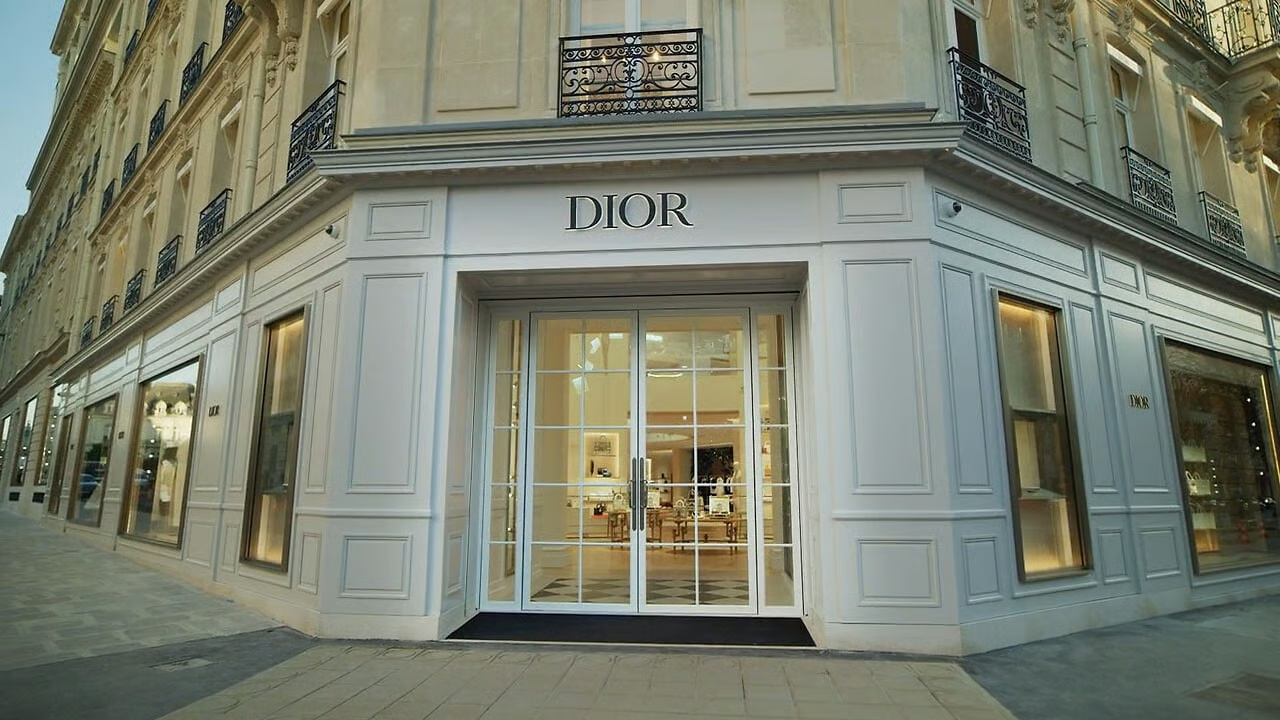
When I looked at Dior’s latest figures, one number caught my eye – over 6 billion euros in annual revenue. This is no longer just a luxury brand; it’s an empire with more than 200 boutiques worldwide. Anderson’s takeover wasn’t just a change in the creative seat, but a true business revolution.
This is most evident in the change of ambassadors. Previously, Dior focused mainly on classic fashion icons. Now we have Kylian Mbappé and Mikey Madison—sports and cinema. It’s a clear sign that Anderson is targeting new markets. I admit, I was initially skeptical about this strategy. But the numbers don’t lie.
Compared to what happened during Kim Jones’s tenure, the difference is striking. Jones achieved a +20% increase in sales of the men’s line, which at the time seemed like a phenomenal result. Anderson, however, is playing on a larger scale—not focusing on just one line, but redefining the entire brand.
| Metrics | Before Anderson | After the announcement |
|---|---|---|
| Revenue (bn €) | 5.2 | 6.1 (2024 forecast) |
| Number of ambassadors | 12 | 18 |
| LVMH share price (€) | 685 | 742 |
What surprised me was the stock market’s reaction. LVMH shares surged almost immediately after the announcement. Analysts predict a 10-15% increase in revenue by 2026. That might sound modest, but in the luxury sector, it’s actually quite significant.
The competition is already responding. Chanel has increased its marketing budgets, Gucci is changing its communication strategy. This shows that Anderson is not only transforming Dior, but also influencing the entire market. His approach to ambassadors—combining sports with pop culture—is something other brands will try to emulate.
Not everything is going smoothly, however. Some traditional clients complain about overly aggressive expansion. But looking at the hard financial data, it’s hard to argue—Anderson’s strategy simply works.
What’s next? Future collections, technologies, and the brand’s direction
Milan, October 2026. Anderson stands at the end of the runway, watching as his latest women’s collection receives a standing ovation. It’s been a year since that groundbreaking show in October 2025. Back then, no one was sure it would succeed.
I personally remember those speculations. Everyone was wondering—would Anderson manage with women’s fashion? After all, for years he only did menswear. And then suddenly, such a change.
This debut women’s collection from 01.10.2025 turned out to be a hit. Anderson didn’t try to be someone else. He simply translated his vision into womenswear silhouettes. Clean lines, unexpected cuts, no loudness.
What surprised me the most? Those digital extras. Every piece in the collection had its own NFT. Not just some silly image, but a real digital certificate with the material’s history and production process. Anderson said at the time, “This isn’t just playing with technology, it’s transparency for a new generation.”
Right, I forgot about that movie. “Artificial” by Guadagnino from July 2025. Anderson designed the costumes there. It was strange to see his clothes on the big screen. But it opened up new markets for him.
Sustainability is no longer a trend—it’s a necessity. Anderson doesn’t talk about it much. He just does it. Fewer collections per year, better materials, production in Europe.
Analysts predict a 10-15% increase in sales in 2026. Maybe that will happen. But I think Anderson has a bigger impact than just the numbers. He’s changing the way young people think about clothes.
Sometimes I wonder if he himself anticipated such success. Or maybe he was just doing his thing, not paying attention to trends.
Either way, the coming years will be interesting. Anderson already has a plan through 2028. I won’t reveal any details, but there will definitely be plenty to write about.
Mark
fashion & business editor
High Class Fashion