
Did you know that one corporation sets beauty trends in 130 countries?
Yesterday, I stood in front of my bathroom mirror, holding a mascara in my hand. Suddenly it hit me—this little tube connects me with millions of women around the world. And probably with a single company whose influence we rarely think about in our daily lives.
L’Oréal is not just a cosmetics brand. It’s a global giant that has been shaping our idea of beauty for over a century. When Eugène Schueller mixed his first hair dyes in a small laboratory back in 1907, he probably never imagined he was creating an empire worth 220 billion zlotys today.
L’Oréal among the most influential companies – from dye to phenomenon
But why is it worth paying attention to this right now? Because L’Oréal has become more than just a cosmetics company. It’s a barometer of social change, a pioneer of sustainability, and a role model for other corporations.
In this article, I’ll show you three key aspects of this remarkable story:
- 1907-2010: how a small company from Paris conquered the world and survived wars, crises, and social revolutions
- Contemporary impact: why decisions made at L’Oréal headquarters in 2022 could change your everyday choices
- Vision 2030: how the corporation plans to address the climate and social challenges of the coming decade
I think you’ll find inspiration here for your own business, concrete examples of responsible action, and strategies you can apply to your personal growth. Because the truth is—L’Oréal is not just a story of success, but also a lesson in how to adapt to a changing world.
So let’s start at the beginning, with that small laboratory in 1907, where it all began…
From safe paint to global dominance
I remember when I used to think that cosmetics were just about marketing and packaging. It wasn’t until I started digging deeper into the history of L’Oréal that I realized how wrong I was.
It all began with a young chemist, Eugène Schueller, who in 1907 had enough of seeing women poisoning themselves with toxic hair dyes. Back then, dyes contained lead and other harmful substances—people were literally risking their health for beauty. Schueller came up with a safe formula and called it “Oréal.”
| Year | Event |
|---|---|
| 1907 | The invention of a safe hair dye by Eugène Schueller |
| 1909 | Formal registration of the company; first sales in Parisian boutiques |
| The 1960s | Debut on Euronext Paris under the symbol OR, entry into the CAC 40 index |
| 2013 | Launch of the “Sharing Beauty With All” program |
What fascinates me is how every step built towards something greater. In 1909, Schueller officially founded the company and began selling his hair dye in Parisian salons. It sounds modest, but it was a revolution—at last, women could change their hair color without fear.
Jump to the 1960s, and it’s a whole new league. The company goes public on Euronext Paris under the symbol OR and joins the prestigious CAC 40 index. Suddenly, a small chemical business becomes a public company whose shares anyone can buy.
But the real turning point comes in 2013. The “Sharing Beauty With All” program signals that L’Oréal is no longer focused solely on profit. Sustainability, social responsibility—things Schueller probably never even dreamed of.
Sometimes I wonder if that old chemist ever foresaw that his safe hair dye would lead to the rise of a global giant. Every decision, from the first sale in a Parisian salon to going public, laid the foundation for what we see today.
These historic choices have shaped the way modern L’Oréal influences the world. And it’s this impact that’s worth analyzing now across five key dimensions.
Five dimensions of L’Oréal’s contemporary influence
Yesterday, I saw my sister taking a selfie with that new L’Oréal filter. The app perfectly matched the lipstick shade to her complexion. It wasn’t just for fun—it was technology showing just how much this company influences our lives today.
L’Oréal is more than just cosmetics on the shelves. It’s an ecosystem shaping five dimensions of our reality.
1. Economic dimension
The numbers speak for themselves. L’Oréal’s dermocosmetics segment grew by 23.8% in the first half of 2022. That’s a huge leap, especially considering the post-pandemic market.
“Dermocosmetics is currently the fastest-growing segment in L’Oréal’s portfolio” – Q2 2022 financial report
I think this shows how the company anticipated the trend. People want products that not only enhance their appearance but also care for their skin’s health. L’Oréal took advantage of this.
2. Cultural dimension
I remember a time when beauty standards were very narrow. Now, L’Oréal promotes diversity in its advertising campaigns. We see models of different skin tones, ages, orientations.
It’s not just marketing. It’s a cultural shift that the company is helping to create. It influences how we perceive beauty.
3. Social dimension – diversity and inclusivity
Thomson Reuters ranked L’Oréal 19th in the 2016 D&I Index among more than 5,000 companies. That’s a high position, although… it could be better.
“Diversity is not an option, it’s a business necessity” – Jean-Paul Agon, former CEO of L’Oréal
The company introduces mentoring programs for women and supports minorities. But is that enough? That’s a question for later.
4. Environmental Dimension
The “L’Oréal for the Future” program from 2020 aims for climate neutrality by 2030. An ambitious goal, especially for a company producing billions of packages annually.
They’re developing biodegradable formulas and reducing plastic. I’ve seen their new recycled bottles—they look identical to the traditional ones.
5. Digital Dimension – beauty tech
This is where L’Oréal truly shines. Apps with virtual makeup try-ons use artificial intelligence and augmented reality. ModiFace, which they acquired, is a technological breakthrough.
You can see how you’ll look with different lipstick shades without leaving your home. It’s changing the way we shop.
“AI in beauty isn’t the future, it’s the present” – tech industry expert
These five dimensions create a powerful ecosystem of influence. L’Oréal doesn’t just sell cosmetics—it shapes the economy, culture, society, environment, and technology. It’s an impressive scale of impact.
But not everything in this picture is as rosy as the perfect shade of lipstick…
Limits of power – challenges and controversies
Sometimes I wonder if business giants can ever truly keep a clear conscience. L’Oréal is a perfect example of this dilemma—on one hand, innovation and jobs, on the other, controversies that have dragged on for years.
When I look at the ownership structure of this corporation, I immediately see potential problems. The Bettencourt family holds 27.5% of the shares, while Nestlé owns another 26.4%. That means two groups control more than half of the company. Is that healthy? I doubt it. In 2018, Business Insider wrote about seven conglomerates that control most of the cosmetics industry. Sounds like a monopoly in disguise.
Market consolidation itself raises concerns for me. Less competition means higher prices and less innovation. I remember when cosmetics used to be much cheaper years ago—maybe it’s no coincidence that now we pay a fortune for a cream that once cost half as much?
| Strengths | Threats |
|---|---|
| Global presence | Market monopolization |
| R&D budget | Ethical controversies |
| Brand recognition | Historical shadows |
| Financial resources | Activist pressure |
What irritates me the most is the approach to animal testing. Officially, L’Oréal claims it does not test on animals. But NGOs have a different opinion. “It’s hypocrisy—they sell in China, where animal testing is required by law” —I heard these words from an activist at a conference. Is she right or not? It’s hard for me to judge, but the doubts remain.
Greenwashing is another issue. Now everyone is eco and natural. How much of that is true, and how much is just marketing? I get the impression that companies are taking advantage of our good intentions to sell more products in green packaging.
Historical shadows also linger. Eugène Schueller, the founder, held controversial views during World War II. The company tries to downplay this, but the internet remembers everything. Can you separate the past from the present? Some say you can. I’m not so sure.
L’Oréal tries to respond to criticism. They publish sustainability reports, invest in alternatives to animal testing. But is that enough? Society’s standards keep rising. What was acceptable ten years ago now sparks protests.
The problem is, influence always comes at a cost. The bigger the company, the more controversy. Maybe it’s inevitable? Or maybe that’s just how big business works—everything has its price, even success.
The company’s responses often remind me of a cat-and-mouse game with critics. One scandal dies down, another emerges. The cycle repeats. In the following paragraphs, it’s worth considering what lessons can be drawn from this for the future.
What’s next? Lessons we can apply today
If one brand can change the way we think about business responsibility, it means that each of us holds that power within ourselves. I’m not talking about big corporations—I’m thinking about you, about me, about people who make decisions in their companies every day.
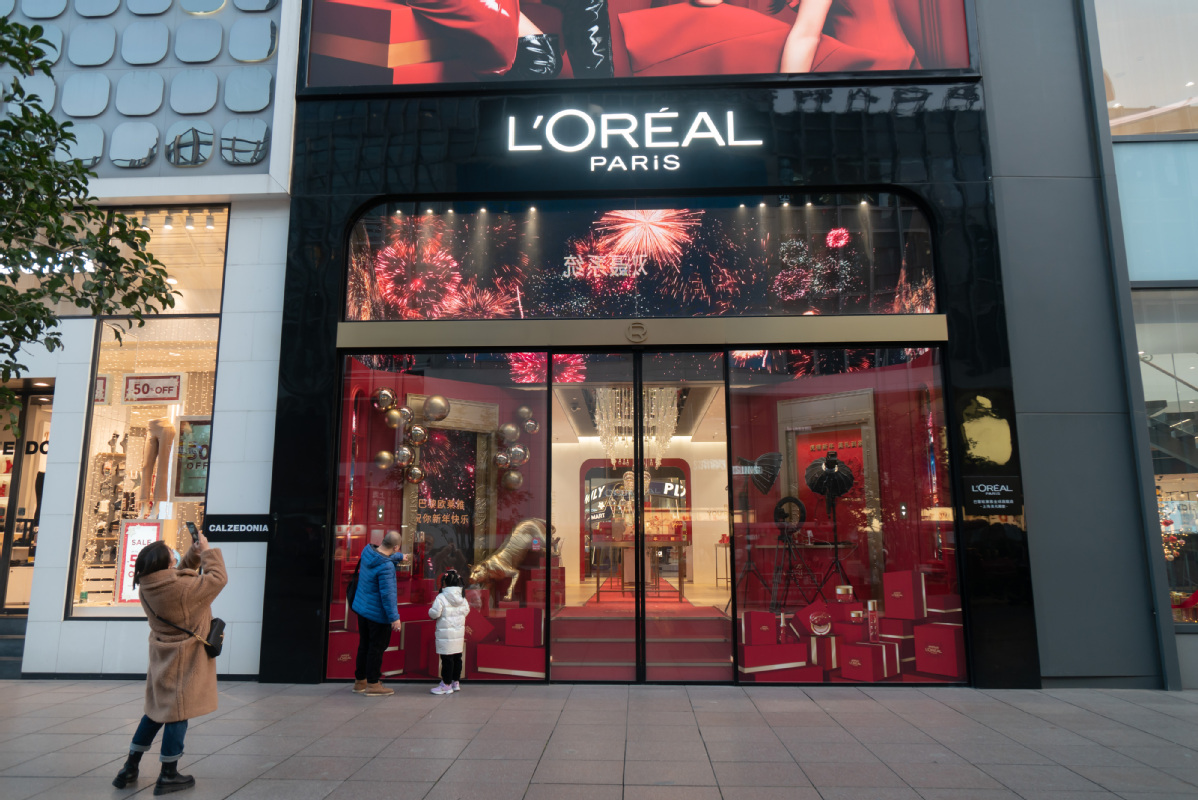
Three things stuck with me after this whole analysis:
• Innovation doesn’t have to be revolutionary —sometimes it’s enough to do something simple, but do it consistently
• Localization is more than just language on your website; it’s about understanding people’s mindset
• Social responsibility is no longer optional—it’s become a condition for survival
Actually, that last point… no, let me take that back. All three are equally important, but I can see how things are changing right before my eyes.
The future is knocking at the door, bringing clear trends with it:
• AI personalization will become the standard by 06/2027—every customer will expect a tailored experience
• Zero-waste packaging will dominate the market by 03/2029—companies that don’t prepare for this will fall behind
• Expansion in the Asia-Pacific region will peak by 12/2030—that’s where the biggest opportunities will be
What can you do right now? I encourage you to look at your business through the lens of “conscious impact”:
• Ask yourself: do my actions improve my customers’ lives?
• Introduce one element of social responsibility—even a small one
• Start personalizing your communication with customers, even if it’s just using their name in an email
You don’t have to change everything at once. Sometimes, one step is enough.
The “conscious impact” model isn’t a marketing strategy—it’s a mindset for business, where every decision matters. For your clients, for the environment, for the future.
Ann
business editor
High Class Fashion