Marcus Schenkenberg – from Rollerblading Discovery to Men’s Modeling Icon
Marcus Schenkenberg – from Rollerblading Discovery to Men’s Modeling Icon
I imagine myself strolling down Nowy Świat in Warsaw when suddenly, on one of the monumental billboards, the silhouette of a man in white jeans appears—hypnotizing with his gaze and self-assurance. An image that breaks all previous patterns—a new kind of male model, whose face becomes the symbol of an era. In that moment, I feel a new era in men’s fashion is beginning: the era of Marcus Schenkenberg.
When men’s fashion got a face – the arrival of Marcus Schenkenberg
Men’s fashion before Marcus’s breakthrough
Before Schenkenberg appeared on the runways and magazine covers, the world of male modeling looked completely different. There were no male superstars who could rival icons like Cindy Crawford or Naomi Campbell.
Male models received significantly lower rates than women, and their presence was mostly limited to catalogs and background campaigns. In the fashion world, men were almost anonymous, treated more as a backdrop than the main focus of an ad.
“Until the late ’80s, the male model was almost invisible. It was women who set the rules, captured the media’s attention, and ruled the runway world.”
In a world where male models were virtually anonymous and posters featuring their faces failed to stir much excitement, someone suddenly emerged who turned everything upside down.
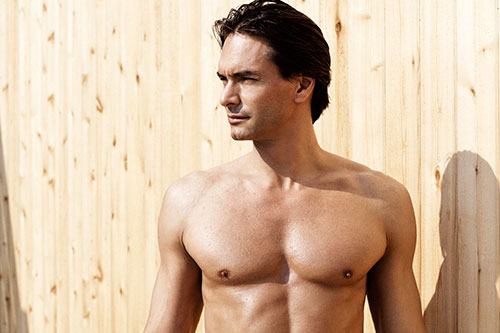
photo: hunksover40.com
Short intro: Marcus Schenkenberg – who was that guy from the billboard?
Born on August 4, 1968, in Stockholm, Marcus Lodewijk Schenkenberg van Mierop, standing 191 cm tall, did not initially plan a career in fashion. Discovered while rollerblading, a chance encounter in the park and his striking, distinctive looks quickly propelled him onto international runways and into campaigns for legendary brands.
Overnight, he became recognizable on every continent, and his face and physique set new standards of masculinity in 1990s pop culture.
Three main directions in history: what to expect next?
In this article, I will show how Marcus ushered in the golden era of runways, when the male model achieved a status never before reached by anyone else. I will also discuss his career beyond the world of fashion: acting, music, and sports, which expanded both his influence and stature.
Finally, I will look at Schenkenberg’s legacy and his role in shaping modern ideals of masculinity, as well as the future of modeling.
In a moment, I’ll take you back to the 1990s, when a male billboard in the city center began to symbolize not just advertising, but a revolution in how men were perceived in pop culture.
The 90s on the runway – the golden era and groundbreaking campaigns
As someone who has followed the evolution of men’s fashion in the nineties, I have always been fascinated by how Marcus Schenkenberg set new standards on the world’s runways. His presence was not only synonymous with success but also a symbol of a shift in the perception of male beauty and the media power of the industry. In this section, I want to highlight the most important campaigns that paved his way to legendary status and show how he influenced the culture and economy of fashion.
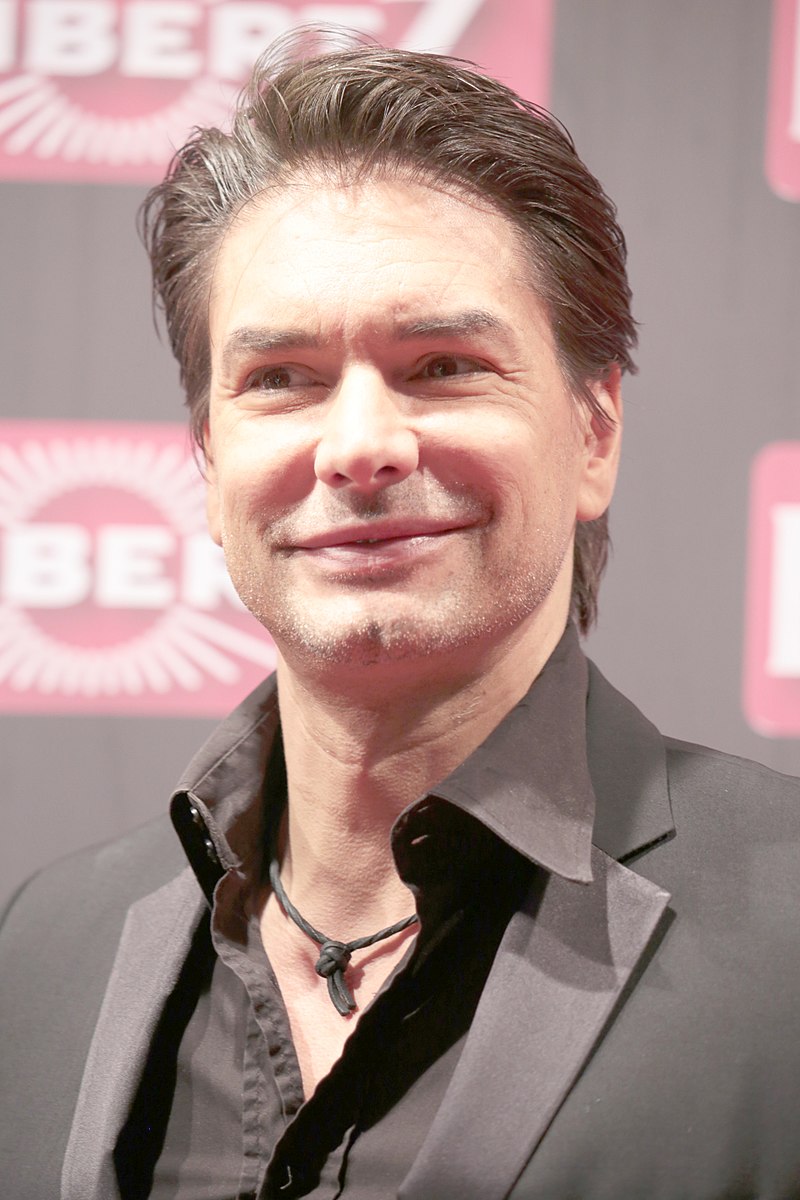
photo: commons.wikimedia.org
Record-breaking Calvin Klein Underwear campaign – global buzz and high rates
You can’t talk about Marcus’s golden era without mentioning his collaboration with Calvin Klein. The Calvin Klein Underwear campaign featuring Schenkenberg broke all previous records: the budget exceeded $2.5 million (over 8 million PLN at the time), and its photos and commercials appeared on billboards in more than 60 countries. The reach of this advertising campaign became truly global, making Marcus a recognizable face on almost every continent. That was when I first appeared on the streets of New York and saw my own photo in Times Square—an indescribable feeling.
In 1993, the Calvin Klein campaign featuring Marcus was the most expensive advertising campaign involving a male model and permanently changed the image of masculinity in the media.
Fashion in theatre: the role of Icarus during Givenchy couture 1997
One of the most unforgettable moments was my appearance as Icarus during the Givenchy couture spring/summer 1997 show. Taking on the role of the mythological hero, I took to the stage in a costume with dramatic wings, surrounded by light and classical music. This event not only caused a sensation but also demonstrated how theatricality can amplify the power of the male silhouette, giving it a new, artistic dimension. Designers have since increasingly incorporated elements of spectacle to give their presentations a unique character.
Success statistics: over a hundred covers and the status of the highest-paid model
My position at the top was confirmed by hard numbers. In the 1990s, I appeared on over 100 covers of the most prestigious magazines, including “Vogue Hommes International,” “GQ,” “L’Uomo Vogue,” and “Arena Homme+.” I repeatedly signed contracts that set new rates in the industry—in 1995, I reached $1.2 million per year as the “highest-paid per-year male model.” For me, it wasn’t just about the earnings, but also about breaking stereotypes regarding the role of men in advertising and fashion.
Table: Marcus Schenkenberg’s Most Iconic Campaigns
Year
Brand
Media effect
1992
Calvin Klein
Global recognition, record-breaking budgets
1994
Versace
The rise in prestige of male modeling
1996
Iceberg Jeans
A new, bold vision of the male silhouette
1997
Givenchy
An artistic breakthrough, a source of inspiration for designers
Thanks to moments like these, I realized how one person can influence not only what men wear all over the world, but also the way they see themselves. Today, I know that success on the runway isn’t everything; what truly matters is the inspiration you pass on, opening doors for others to a world of possibilities beyond fashion.
Beyond the lens – music, acting, and business ventures
It’s astonishing how a model can unexpectedly end up on… the music charts. While most people associate Marcus Schenkenberg solely with runway shows and photo shoots, I see him as a creator constantly seeking new challenges. After reaching the peak of my career in the ’90s, I didn’t confine myself to a single role—on the contrary, I began to explore other fields where I could push boundaries. I want to show just how multidimensional this journey has been—from music, to books and the screen, to business ventures and inspiring support for young talents.
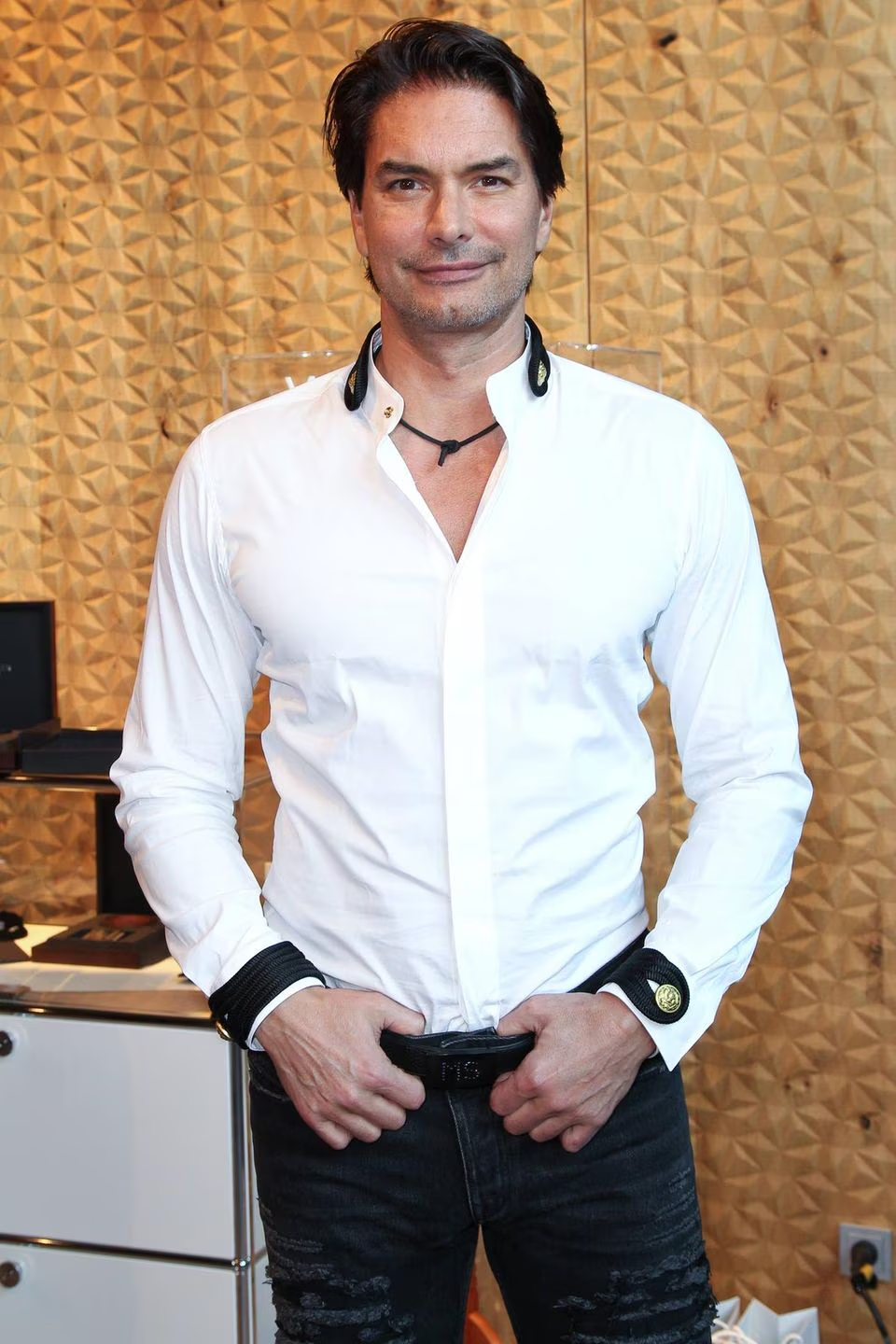
photo: gala.de
Timeline: Schenkenberg’s Artistic and Business Milestones
Year
Event
Description
1997
Book release
Original photo album; family support during creation
1999
Single (EMI)
Latino-pop, artistic experiment; positive reception in the media
2000+
Acting roles (,, TV)
Auditions in film, television, and reality shows; debut away from the spotlight
2010+
Investments, mentoring young models
Supporting talent, providing guidance, and growing business beyond the runway
Music: from a dream to your own single
I remember when the idea to record La Chica Marita first came up—an approach filled with excitement, but also anxiety. EMI offered me a chance to step into the world of music, and I couldn’t refuse such an adventure. The Latin vibe of the song was completely different from what I knew from the runways. Pablo Cepeda co-wrote the lyrics and melody, and the track quickly made its way onto the charts, especially in Germany and also in Italy. Reviewers described it as energetic, danceable pop with a southern flair.
Book publication: a family project
The year 1997 brought an extraordinary opportunity—the release of the album Marcus Schenkenberg: New Rules. This was not an ordinary autobiography, but a carefully designed coffee table book, filled with photographs and personal anecdotes. The most important thing for me was the support of my family—when selecting photos, arranging the chapters, and even during the editing process. This publication was a tribute to the fans who wanted to see my life from a different perspective.
Film, television and the world of show business
I didn’t limit myself to modeling or music. I acted in Flawless (1999) alongside Robert De Niro, appeared in the production Książę Waleczny, as well as in TV series and soap operas. Reality TV cameras tempted me with new challenges—a cameo in Germany and Sweden let me experience show business from a different perspective. Each of these roles tested my flexibility and courage.
Business, mentoring, and new directions after 2010
When fashion began to change, I felt the need to share my experience. I got involved in investing and mentoring young models. I often met with guys who were just starting out, shared practical advice, and helped them make their first industry connections. I believe that success is born from openness and support, which is why I pass on what I’ve learned over the years.
Every new project outside the runway gave me strength and courage to pursue new dreams. Pushing the boundaries of my own abilities becomes addictive—and that’s exactly the feeling I want to carry into the future.
Legacy, lessons, and what’s next – what Marcus tells us today
I sit in my imagination on a New York street, looking at a simple billboard featuring a boy in a leather jacket, standing on roller skates. That’s how Marcus Schenkenberg’s story began—unassumingly, yet with a potential that would transform the industry. Now, with the perspective of years, I wonder what his path tells me today, as the world of male modeling is changing rapidly and demands more than just good looks on a poster.
Why is it important to understand the economic impact?
I always thought modeling was more of a passion than a way to make a fortune. Marcus proved otherwise. Breaking through the glass ceiling of rates, he built a fortune of $14 million. That’s clear proof that a personal brand strategy can deliver real profits. Today, model rates are much higher and the market is more open. Should you consider the financial side of your career before you even step onto the runway? Absolutely—diversifying your income and taking care of your image pays off long after you leave the catwalk. If I’m planning my own path, I need to learn to spot economic opportunities where others see only the flash of cameras.
What are the benefits of normalizing male beauty and embracing multiculturalism?
Thanks to Marcus, male attractiveness has ceased to be a taboo subject in mainstream advertising. For the first time, I felt that a man’s image doesn’t have to be limited to a single type—it can be gentle, ethereal, and strong at the same time. This is a message that is spreading widely across the world. Equally important is the ability to communicate in five languages. This is not just a fun fact, but a real advantage in the global fashion world. Today, I know that investing in my language skills and being open to different cultures makes me more resilient to market changes. The generation of models growing up now must be able to adapt to any context and feel at home everywhere.
What trends are shaping the future of male modeling?
I feel that the future is no longer just about individual success, but about the ability to share knowledge. Marcus is increasingly choosing the role of mentor—offering guidance, inspiring, and encouraging others to find their own path. The new decade also means venturing into previously unknown territories: virtual shows, digital avatars, and above all, sustainable fashion. The growing importance of ecology demands a fresh approach that combines style with responsibility. Am I ready to embrace authenticity, transparency, and support the growth of others? The secret to success lies in merging technological innovation with genuine care for the world and its people.
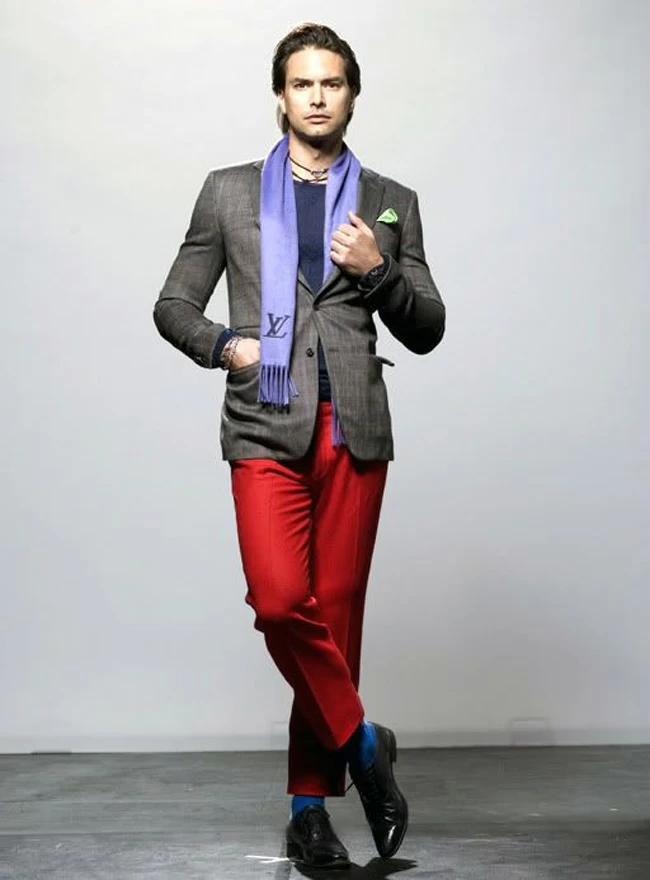
photo: made-to-measure-suits.bgfashion.net
The value of the male modeling market has multiplied several times over the past decades, demonstrating the significant potential in changing perceptions of men’s roles in advertising and culture.
If I want to build my own legacy, I need to not only shape my image, but also inspire others to be courageous, to grow, and to constantly push boundaries.