
The men’s down jacket market is currently growing at a rate of 6-8% per year — because the Polish climate is no joke. Winters with temperatures below −20°C in the northeastern part of the country and even down to −15°C in the center can overwhelm anyone who steps outside in an ill-fitting jacket. The quilted puffer jacket has ceased to be just a technical gadget for mountaineers. It has become a must-have without which it’s hard to imagine an ordinary day in the city between December and March.
Men’s quilted puffer jackets – a winter revolution in a man’s wardrobe
The modern men’s puffer jacket features distinctive quilting that divides the filling (usually goose down or synthetic) into smaller chambers—this prevents heat from escaping. At the same time, the jacket is lightweight, often weighing just 500-800 g, yet insulates as well as thick wool. It’s warmth compressed into a light form. That’s why puffer jackets have earned the status of the “new winter suit”—in streetwear, casual styles, and even urban elegant looks.
What will you gain from this article? You’ll understand how modern filling and membrane technologies work, learn how to choose the perfect model for the Polish winter, discover ready-to-wear outfits, and pay attention to production ethics. Now it’s worth taking a step back and asking: where did this jacket actually come from?

From Bauer’s patent to Polish streets – the history of the puffer jacket
From winter expeditions on Nanga Parbat to Warsaw’s Złote Tarasy – the down jacket has come a long way. Today, we see it as an obvious wardrobe staple, but just 90 years ago, it was a groundbreaking outdoor innovation.
From Eddie Bauer to Moncler – the birth of the puffer jacket
Official birth date? 1936. Eddie Bauer, an American fisherman and hunter, barely survived a winter fishing trip—his wool jacket soaked through and he nearly froze. That’s when he came up with the Symphony Down Quilted Jacket —the first jacket with down filling and quilted stitching to keep the down in place. The patent solved the problem. For years, down jackets remained the domain of mountaineers (Edmund Hillary wore them on Mount Everest in 1953) and the American army.
The breakthrough? Moncler, founded in 1952 in France, began outfitting Himalayan expeditions and later launched urban collections. The 1980s and 1990s saw a boom—down jackets hit the runways (Moncler, The North Face) and became staples of hip-hop street fashion. Around the same time, Patagonia (since 1958) introduced synthetic fillings—cheaper and less finicky.
Polish context: from PRL sheepskin coats to shiny puffers
In the PRL era, a down jacket was a Western commodity—expensive and rare. We wore sheepskin coats and windbreakers. The transformation after 2000 changed everything: H&M, Zara, and Reserved flooded the market with cheap down jackets. Suddenly, everyone could have one (or three).
Since 2022, we’ve seen another shift—shiny, oversized puffers have returned as a retro trend inspired by the ’90s. An interesting detail: the Polish Army is now introducing modern down jackets for soldiers as part of equipment modernization for the 2025/2026 season.
But to appreciate why this jacket keeps you warmer than that one, it’s worth looking beneath the quilting to see what’s actually inside.
Heat technology – filling, quilting, and parameters
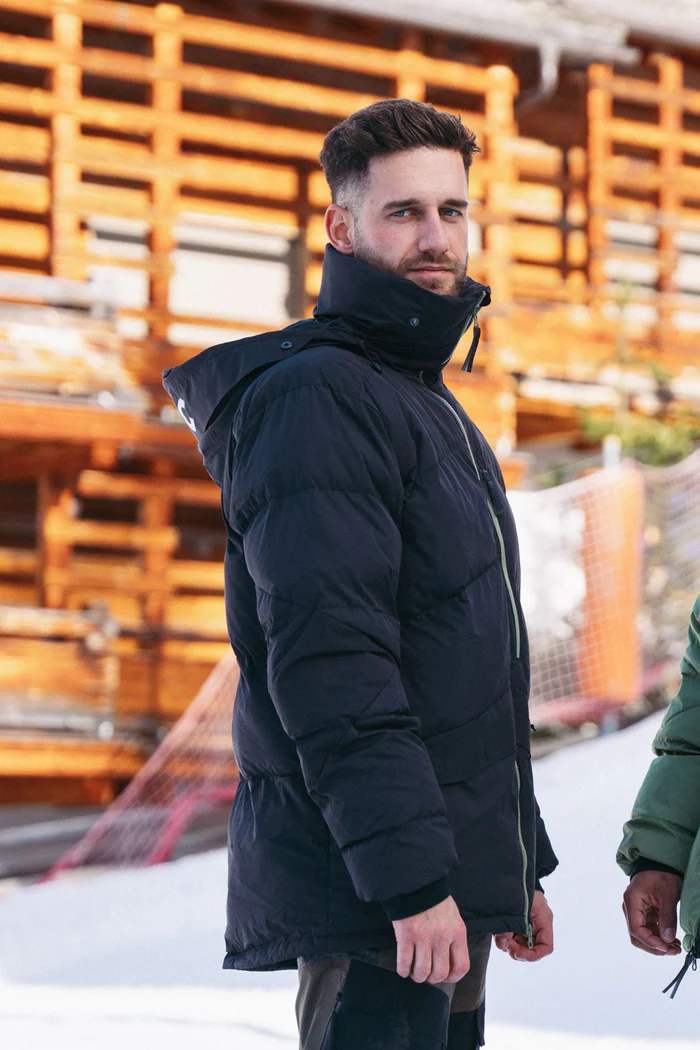
Before you choose a down jacket based on its cut or color, it’s worth understanding what really happens between the layers of fabric. Because it’s the technology—the type of filling, the quilting method, the fabric parameters—that determines whether you keep the frost at bay or end up wearing just a fashionable shell instead of real warmth.
Down or synthetic – what really keeps you warm?
Natural down (usually 80/20 goose/feather) creates microscopic air traps and, at equal weight, insulates 3× better than synthetics. The problem? If it gets wet, it loses its properties and takes 6-8 hours to dry. Synthetics (PrimaLoft, Thinsulate) handle moisture without drama, dry up to 5× faster (2-3 h), but weigh more and take up more space in your backpack. Down wins in terms of weight and compressibility, while synthetics win for versatility and budget.
Fill power, quilting, and membranes in practice
Fill power is the volume occupied by one ounce of down (28 g) — the higher the rating, the more warmth with less weight. A jacket filled with 800 FP easily protects down to −25/−30°C and weighs about 500–700 g; cheaper 550 FP models weigh 800–1,000 g with poorer insulation. Box quilting with 10–15 cm squares (sewn-through) is lighter, but thermal bridges let in the cold; welded chambers eliminate seams — expensive, but airtight. Outer nylon or polyester with a DWR (durable water repellent) coating causes water to bead off; Gore-Tex membranes (HH >10,000 mm, MVTR >8,000 g/m²/24 h) offer serious waterproofing and breathability — less useful in the city, but always valuable in the mountains.
How to choose a men’s down jacket for winter step by step
When you’re standing in front of a rack of down jackets, searching for the one coat for the next few winters—the question isn’t “which one looks best,” but “which one will handle Polish weather and not break the bank.”

Length, cut, and purpose of the jacket
A short down jacket to the hips works great in the city – you hop on the bus, head to the office, wear a backpack. A longer knee-length model makes sense if you spend hours at bus stops or go hiking in the mountains. Slim-fit looks elegant under a blazer, while oversize gives you room for a thicker sweater. There’s no universal solution; think about where you actually spend your winter.
As for warmth: lightweight down jackets (about 500-600 fill power, 80-120 g/m²) work at −5°C, especially with an extra layer underneath. When winter can drop below −20°C, look for 700+ fill power and thicker panels. In Poland, most seasons are a mix – that’s why many men choose a medium option with a good membrane and add a fleece when it gets really cold.
Budget, brands, and online shopping in Poland
Indicative price ranges are as follows:
- 300-800 PLN – chain stores, mass-market brands; sufficient for typical Polish winters
- 800-2,000 PLN – mid-range segment with better technologies, often already goose down
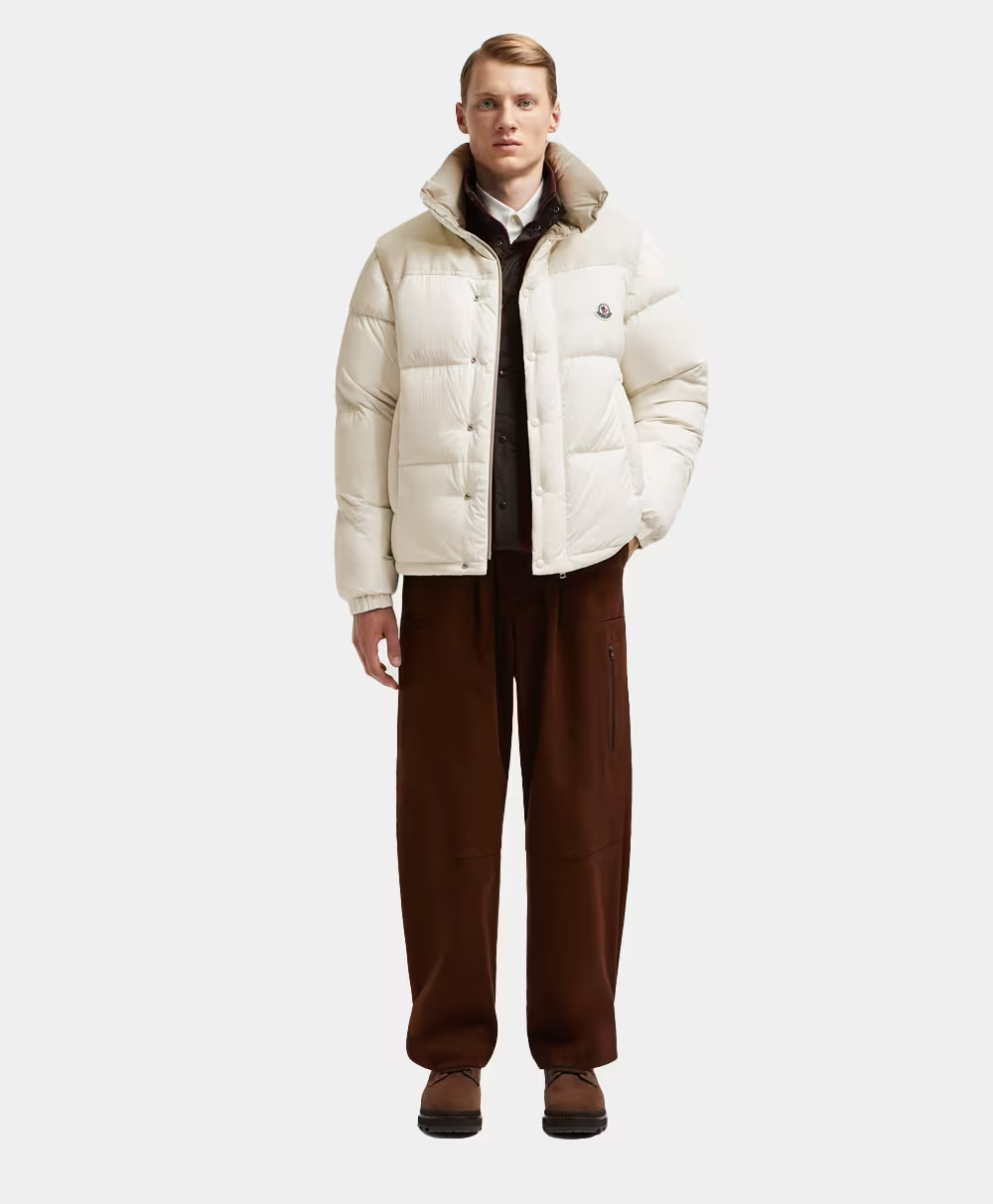
- 2,000+ PLN – premium (Arc’teryx, Canada Goose, Patagonia); room for extreme conditions
E-commerce is growing – many people buy winter jackets online, reading reviews on Reddit or outdoor blogs. Check community opinions before you spend; that’s where you’ll find out whether a particular model actually keeps you warm or if the zippers tend to break quickly. The brand examples are for illustration, not a ranking – there are gems and flops in every price range.
The question of “how to style it all well” – that’s a different story.
Style, colors, and trends – how we wear puffer jackets in 2025/2026
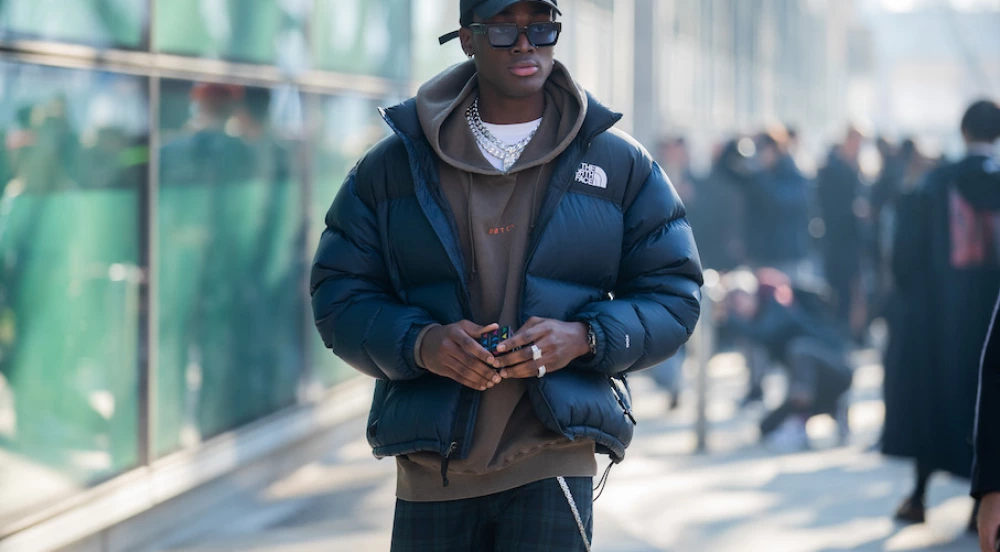
A winter street in a Polish city today looks like a showcase of diversity – some wear shiny, oversized down jackets that reach the knees, while others opt for fitted, matte models in subdued colors. One thing is certain: the men’s down jacket is no longer just a practical choice; it has become a tool for shaping one’s image.
Shiny, oversized, or classic? Trends for 2025/2026
The 2025/2026 season brings several clear trends. The top ones are:
- Shiny nylons – reflect light, catch the eye, and evoke both streetwear and high fashion at the same time
- Long knee-length cuts – warmer, but controversial (comments from X: “do I look like a walking duvet?”)
- Oversize – loose, comfortable, but you need to be careful not to lose your proportions
- Slim-fit – narrower, more classic, popular among fans of elegant minimalism
Not every trend suits everyone. The question is: what do you need from a jacket — a wow effect or discreet elegance?
From streetwear to smart-casual – how to style a puffer jacket
Specific sets for various occasions:
- Casual weekend: oversized puffer jacket + slim jeans + leather ankle boots – a tried-and-true combination according to LekkoWear
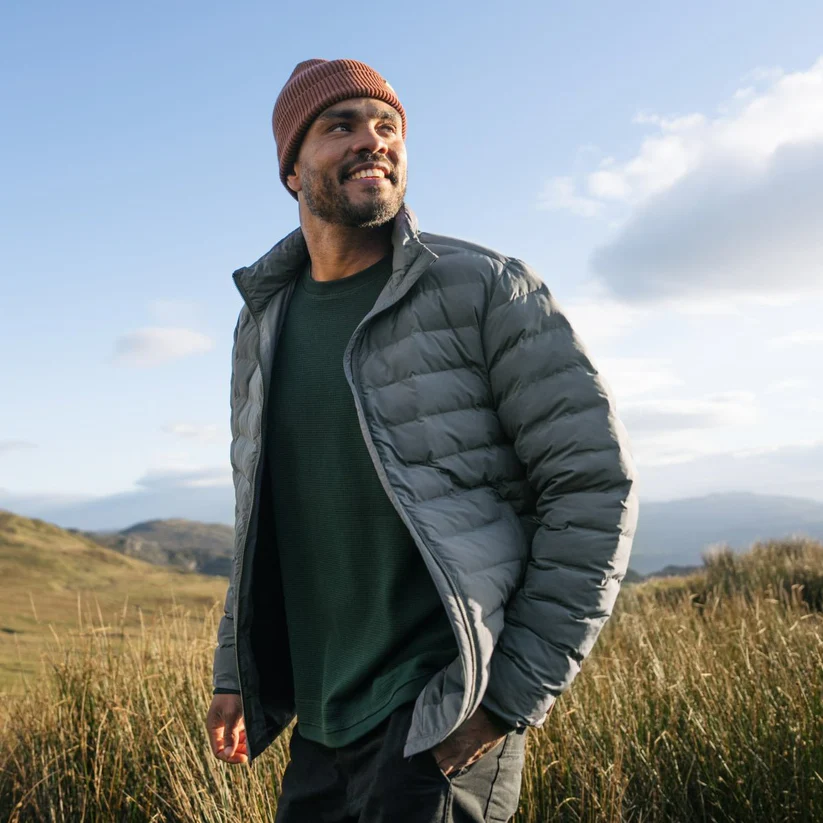
- Smart-casual for work: understated slim puffer + chinos + turtleneck + derby shoes – works in offices with a more relaxed dress code
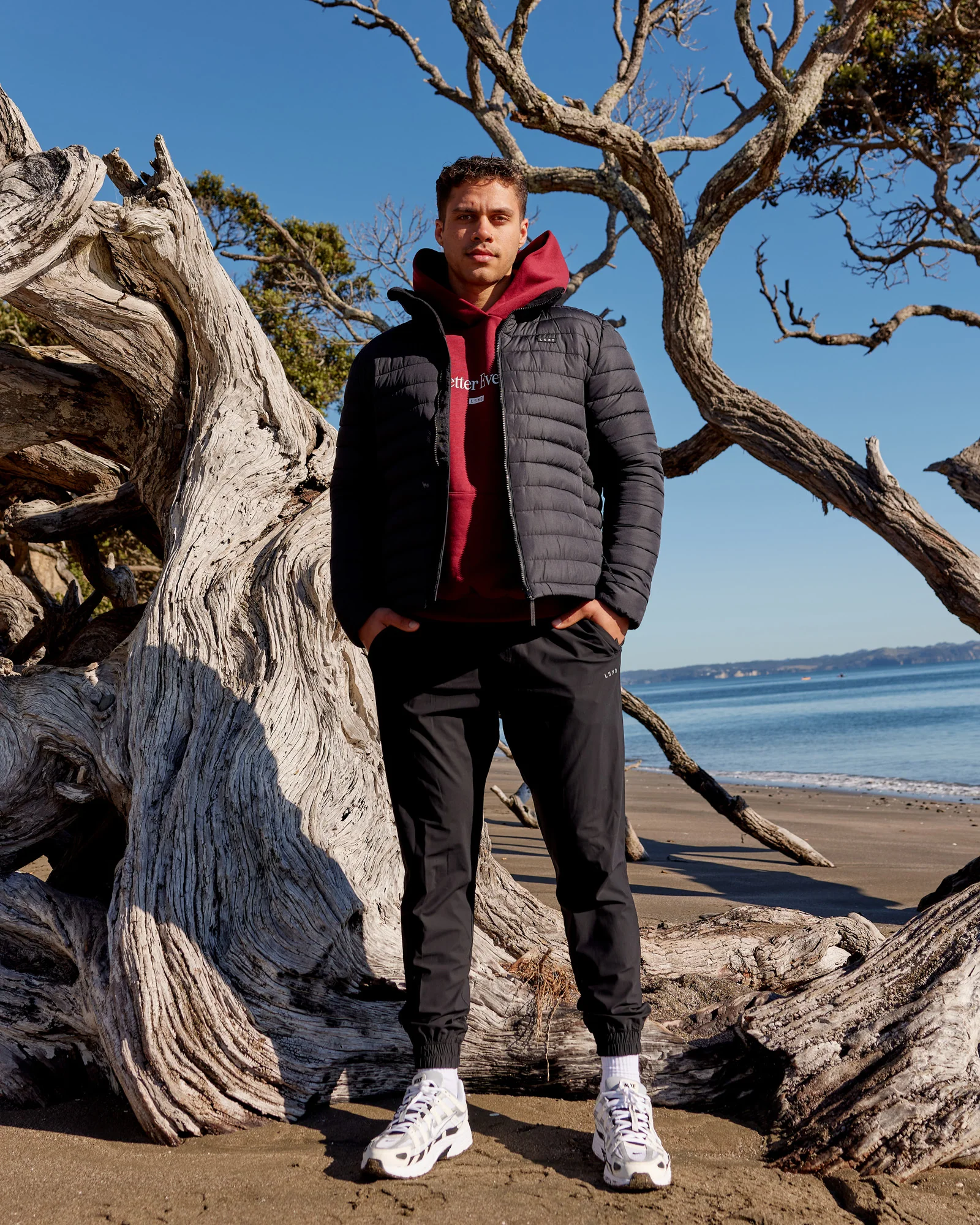
- Sporty look: cropped puffer + hoodie + sneakers – a streetwear classic
The difference between streetwear and classic style? The former focuses on bold colors, logos, and oversized silhouettes. The latter emphasizes subdued tones, simple quilting, and clean lines. You can combine both worlds, but do so carefully—too many oversized elements at once can look chaotic.
Ethics, ecology, and care of men’s down jackets
Before you put on a down jacket – maybe it’s worth asking: how was it really made? Because natural down is a topic few people want to talk about openly. Organizations like PETA have been warning for years: some down comes from farms where geese are plucked while still alive. Not all brands – some use RDS (Responsible Down Standard) certificates, which are supposed to control this. The only problem is that verification can be… well, inconsistent. In response, some companies are giving up natural down altogether. Patagonia, The North Face – are switching to synthetics or recycled materials.
Synthetic, recycling, and what next?
Synthetic PET down from recycling sounds eco-friendly – and indeed, some brands promise 100% recycled materials by 2030. The problem? Synthetic insulation loses its effectiveness in extreme cold, needs to be washed more often (because it absorbs sweat), and washing releases microplastic particles. So “eco” has its limits. On the other hand, it doesn’t require animal farming and dries faster.
Washing, drying, and storing a down jacket in practice
Specifically: temperature 30°C, detergent without fabric softeners (they ruin the down), spin at the lowest speed. After washing – dryer with tennis balls (they break up the down so it regains its loft). Natural down dries for up to two days, synthetic – a few hours. Off-season? Not in a vacuum bag – the down will get crushed. Hang it loosely in the closet, preferably in a linen bag.
Many men don’t wash their down jackets for two or three seasons. That’s not a sign of toughness – it’s simply neglect that shortens the jacket’s lifespan and… well, doesn’t smell great. Good care is conscious consumption: one jacket for ten years instead of three in five. The environmental footprint matters.
Your next down jacket – how to get ready for the coming winters

A good down jacket isn’t just an expense for one season—it’s an investment meant to last through several winters. Advanced fabric technology, conscious eco-friendly choices, and timeless style make today’s men’s down jacket much more than just a warm coat. It’s a wardrobe essential that combines functionality with responsibility.
The future of men’s down jackets – technologies and trends
The coming years will bring further innovations. Manufacturers are already testing materials made from 100% recycled content, hybrids with app-controlled electric heating, and even sensors that monitor body temperature. Modular designs—for example, detachable sleeves that turn a jacket into a vest—may become the norm. Long, shiny silhouettes reminiscent of futurism are gaining popularity among younger men.
Online sales are growing at a staggering rate in Poland, and technologies such as virtual fitting rooms (AR try-on) make it possible to buy down jackets without leaving home. Despite milder winters, winter jackets won’t disappear—their designs and uses are simply evolving.
How to use this knowledge during your next purchase
After reading this guide, it’s worth analyzing your wardrobe: is your current down jacket suitable for renovation, or is it time for a new one? Plan your purchase consciously—pay attention to certifications, the origin of the down, and a versatile cut. Take care of what you already own: regular washing and proper storage will extend your jacket’s life for many more seasons. Invest wisely, and your down jacket will serve you for years.
Marcin Y
fashion editor
High Class Fashion