
“Sometimes I think fashion is the only language everyone understands, no matter where they come from.”
The global women’s fashion market is now worth $1.7 trillion. That’s more than the GDP of most countries in the world. So here’s the question—how did a young woman from post-communist Albania claim a significant slice of that pie?
From Tirana to the world’s runways
I remember the first time I saw a Nensi Dojaka creation on the red carpet. I thought to myself—where did she come from? Because in the ’90s, when she was growing up in Tirana, Albania was only just opening up to the world. Fashion? That was an abstract concept. People were more concerned with basic needs than with looking stylish.
Nensi Dojaka – from Tirana to the world’s runways
And today, Dojaka dresses the biggest stars in Hollywood. That’s a leap that’s hard to imagine.
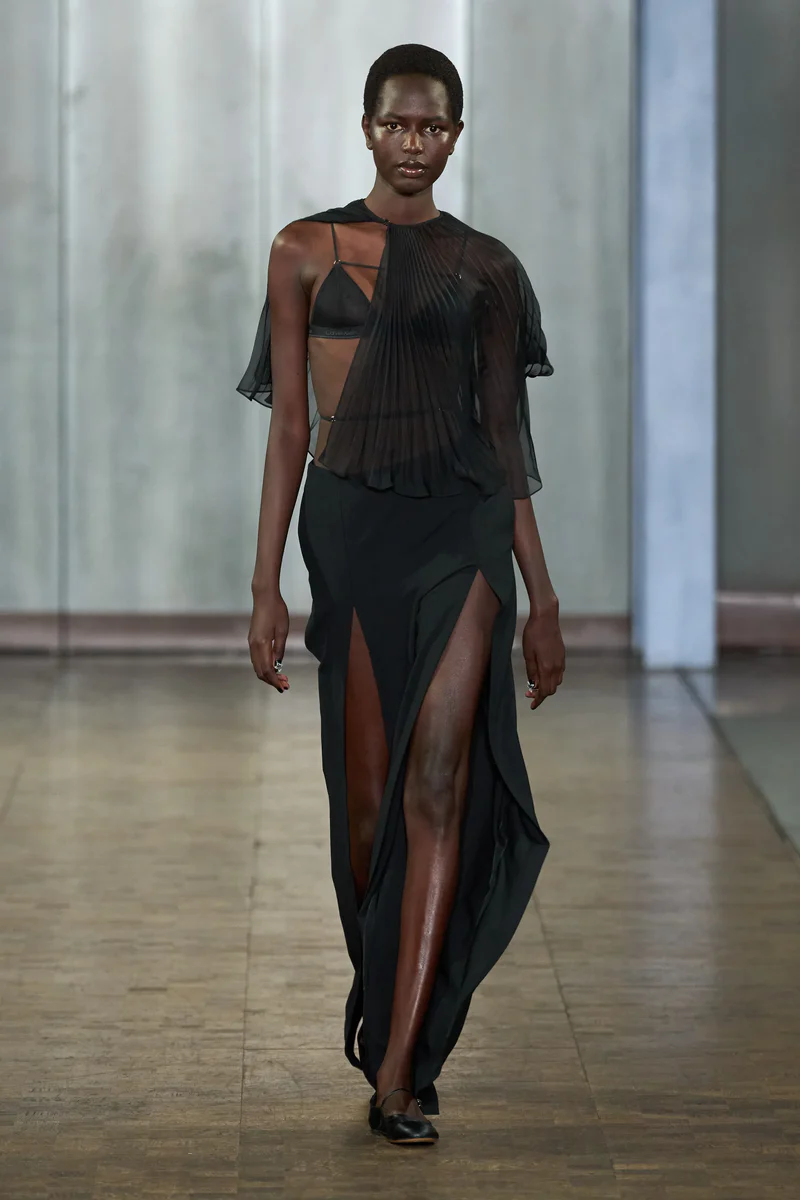
Her move to the UK was a turning point. London gave her something she couldn’t have at home – access to the best fashion schools, to inspiration, to people who thought alike. But more importantly, it gave her the freedom to experiment.
Dojaka doesn’t make ordinary dresses – she creates something between fashion and art.
Her body-conscious, lingerie-inspired aesthetic is no accident. It’s a deliberate strategy. And what she calls digital craftsmanship – a blend of traditional techniques with modern technology – puts her a step ahead of the competition.
In fact, her story weaves together three threads. The first – the milestones of her career, those moments that defined her place in the industry. The second – her unique aesthetic, the way she sees the female body and how she dresses it. The third – what comes next, because she’s only 28.
But can anyone really predict where this path will take her, the one that began in a small apartment in Tirana?
Career milestones
Nensi Dojaka’s rise is truly a fascinating story—especially when you look at the specific dates. I’ve always thought that the most interesting moments are those when everything suddenly changes.
| Date | Event |
|---|---|
| 1993 | Birth in Tirana |
| 2009 | Moving to Concord College in England |
| 07.2019 | Establishing your own brand in London to obtain a work visa |
| 30/08/2020 | Bella Hadid in a Dojaka mini dress at the MTV VMA – searches for her name surged by 300% |
| 07/09/2021 | Winning the LVMH Prize (€300,000 and mentoring) |
| 11.2021 | BFC Emerging Designer Award |
What strikes me most about this timeline? That leap between July 2019 and August 2020. A year is hardly any time at all in the fashion industry, yet she went from a brand founded mainly for a visa to having her creation worn by Bella Hadid at one of the biggest galas in America.
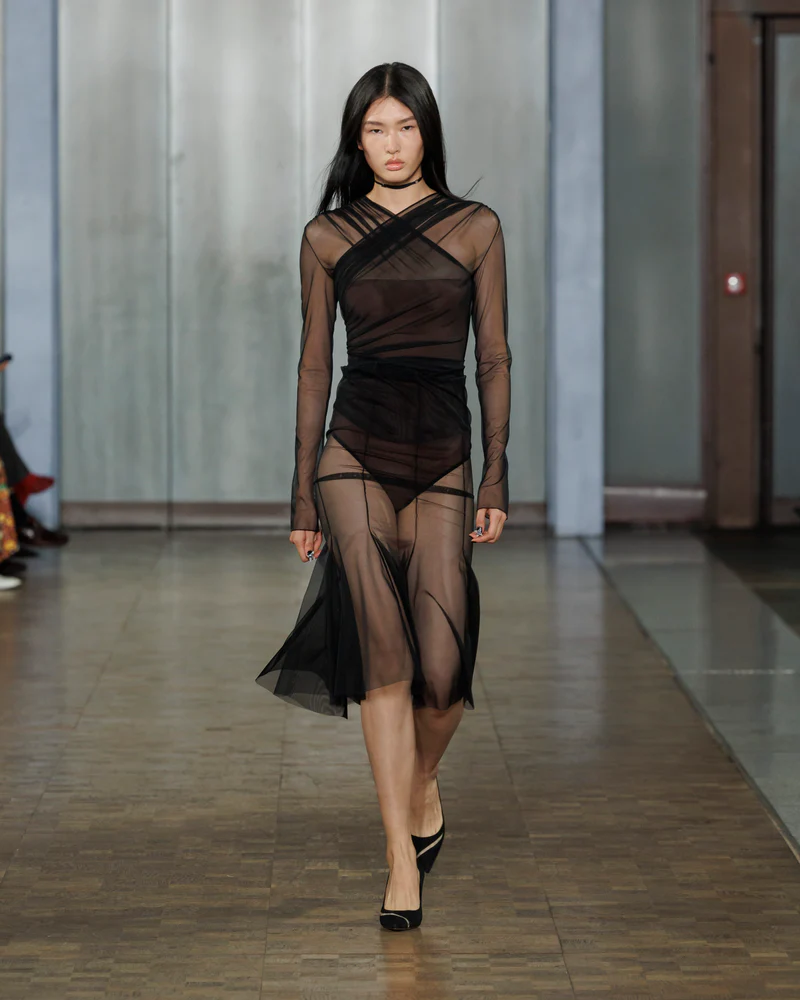
I remember how the media covered that appearance—it was a breakthrough moment. One red carpet, and suddenly everyone wanted to know who Nensi Dojaka was. A 300% increase in searches within a week is every designer’s dream.
But the real boom came a year later. The LVMH Prize isn’t just about the money, though €300,000 is enough to let a brand grow comfortably for years. Above all, it’s about prestige and mentorship from people who understand this industry like no one else.
And then, just two months later, the BFC Emerging Designer Award—that shows that juries from different competitions saw something truly special in her.
I think the key to her success was a combination of luck, talent, and perfect timing. That dress at the MTV VMAs appeared just when everyone was stuck at home during the pandemic, looking for something fresh on their screens.
How each of these milestones shaped her creative vision—we’ll get to that in a moment.
Aesthetics that break the mold
Her dresses look as if someone took silk and mesh, then forgot to finish sewing them. But that’s exactly what’s brilliant about Nensi Dojaka’s creations—the sense of incompleteness is her signature.
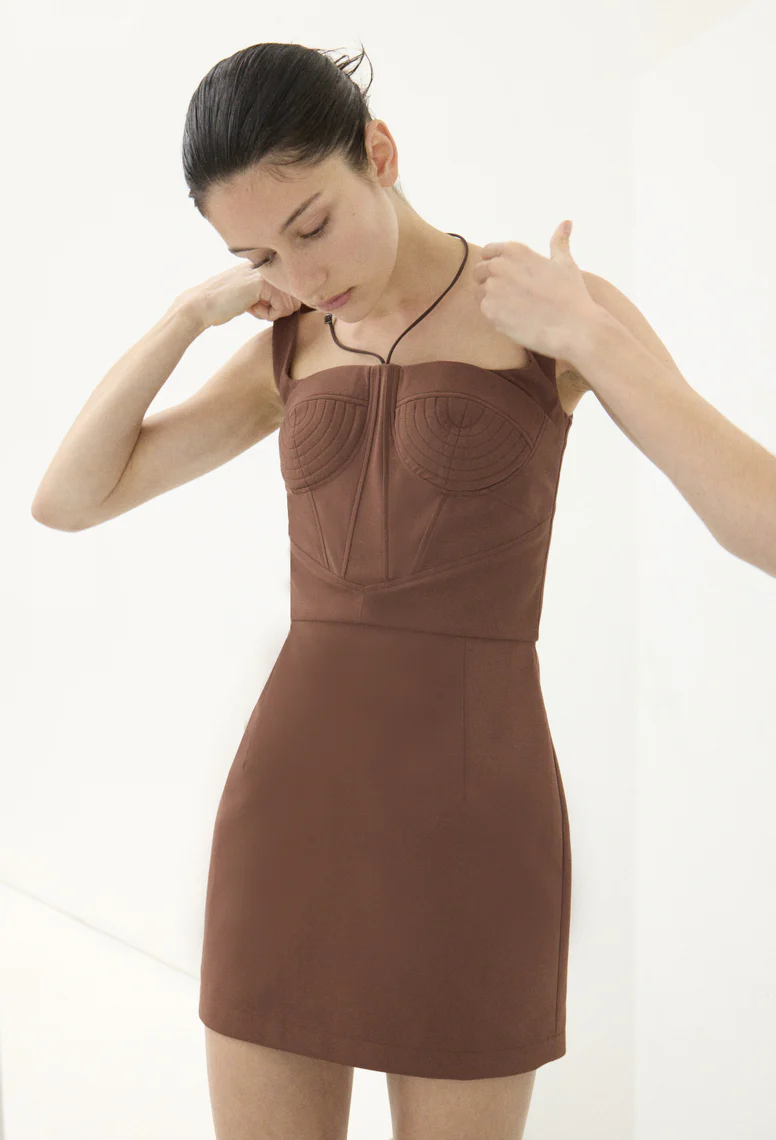
Material and construction
The core elements of her style are things that other designers consider mere accessories:
- Transparent mesh layers applied one over another
- Silks in natural shades, mainly beige and ecru
- Braided leather used as binding straps
- Asymmetrical cuts leaving one shoulder exposed
- Complex strap systems replacing traditional seams
What fascinates me is how she uses “digital craftsmanship.” It might sound a bit pretentious, but it’s really about designing in 3D software to maintain tailoring precision. Every strap, every fold is virtual first. Strange, but effective.
Philosophy and Social Impact
Dojaka combines minimalism with what you might call controlled sensuality. Her clothes don’t shout, but they speak clearly. They don’t reveal everything, but they suggest a lot. It’s an intelligent approach to the female body—not as an object, but as something that has the right to be beautiful on its own terms.
Her sizing from XS to XXL isn’t just a marketing move. In her 2025 collection, she introduces adaptive tactile elements—straps can be adjusted, mesh adapts to different body shapes. It’s a practical solution to a problem half the industry struggles with.
Inclusive fashion for her doesn’t mean aesthetic compromises. On the contrary—her dress looks just as good on a size S model as it does on a woman wearing XXL. The construction simply allows for it.

Impact on trends? I can already see imitators. Mesh is no longer reserved for lingerie, asymmetry has become the norm, and straps replacing seams are showing up in other brands. Sometimes I think that in a year, half of the designers will be doing similar things.
This aesthetic also sets the direction for the brand’s further expansion towards more democratic fashion.
What’s next for the Nensi Dojaka brand?
Nensi Dojaka has already proven she can blend provocation with commercial success. Now it’s time for the next stage—a transformation into a global fashion powerhouse.
Market forecasts for the coming years
I see three key directions that could define the future of the brand. The first is technology—d_archive platform is already testing VR try-ons for the designer, which could boost online sales by 15%. It may sound abstract, but imagine being able to try on those iconic cut-outs at home, with no risk of disappointment.
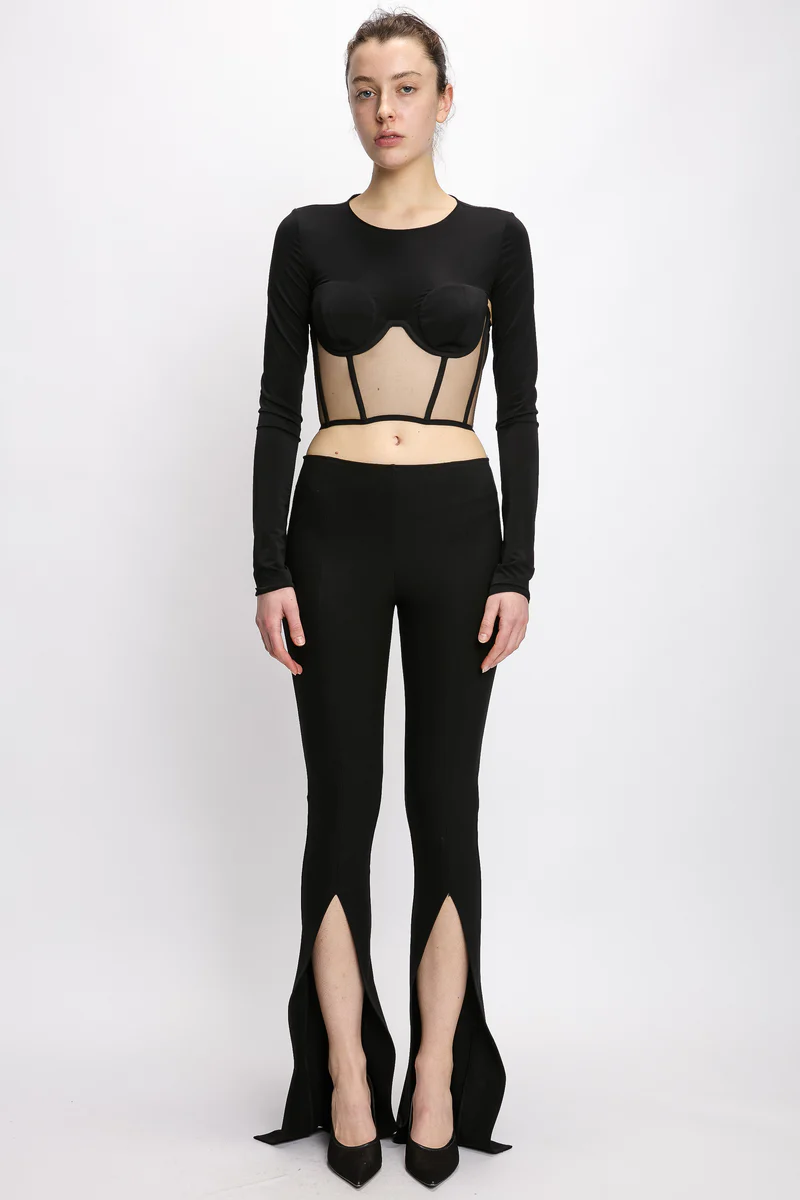
The second trend? Adaptive fashion. Since the S/S 2025 season, Dojaka has been experimenting with Braille labels and sensory fabrics. It may seem niche, but the accessible fashion market is growing by 20% annually.
The third point is capital. Analysts are speculating about a potential LVMH investment or even an IPO within five years. With current revenues, these are far from fantasies.
And what about expansion beyond Europe? Asia seems like a natural direction—consumers there love bold cuts, and the brand already has fans in South Korea and Japan.

Honestly, I’m curious to see how Dojaka will balance her artistic vision with the commercial expectations of investors. This will be a true test of the brand’s maturity.
One thing is certain—the next five years will be crucial. We’ll either witness the rise of a new global fashion powerhouse, or the designer will be swallowed by the system, losing her unique identity.
Will Nensi Dojaka be able to maintain her artistic integrity in the face of global expansion?
Nadia 1980
editor, High Class Fashion