
Table of Contents
- Why the premium suit without a tie is taking over offices
- From Savile Row to smart casual – how we got to the suit without a tie
- What does “premium” mean in a suit without a tie
- How to Wear a Suit Without a Tie and Still Look Professional
- For which occasions is a suit without a tie a perfect choice
- Create your own signature look without a tie
You step into an elevator in a Warsaw office building—next to you, two men in suits. One is fully suited up with a tie, the other without. And guess who looks more confident? The latter. That’s exactly why the premium suit without a tie has become the new standard in Polish corporations.
Why is the premium suit without a tie taking over offices?
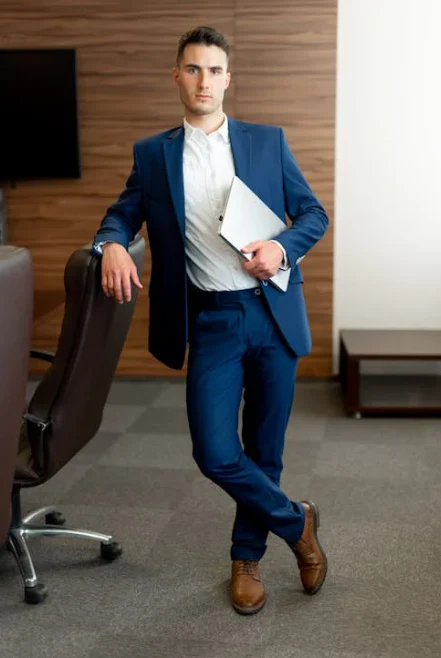
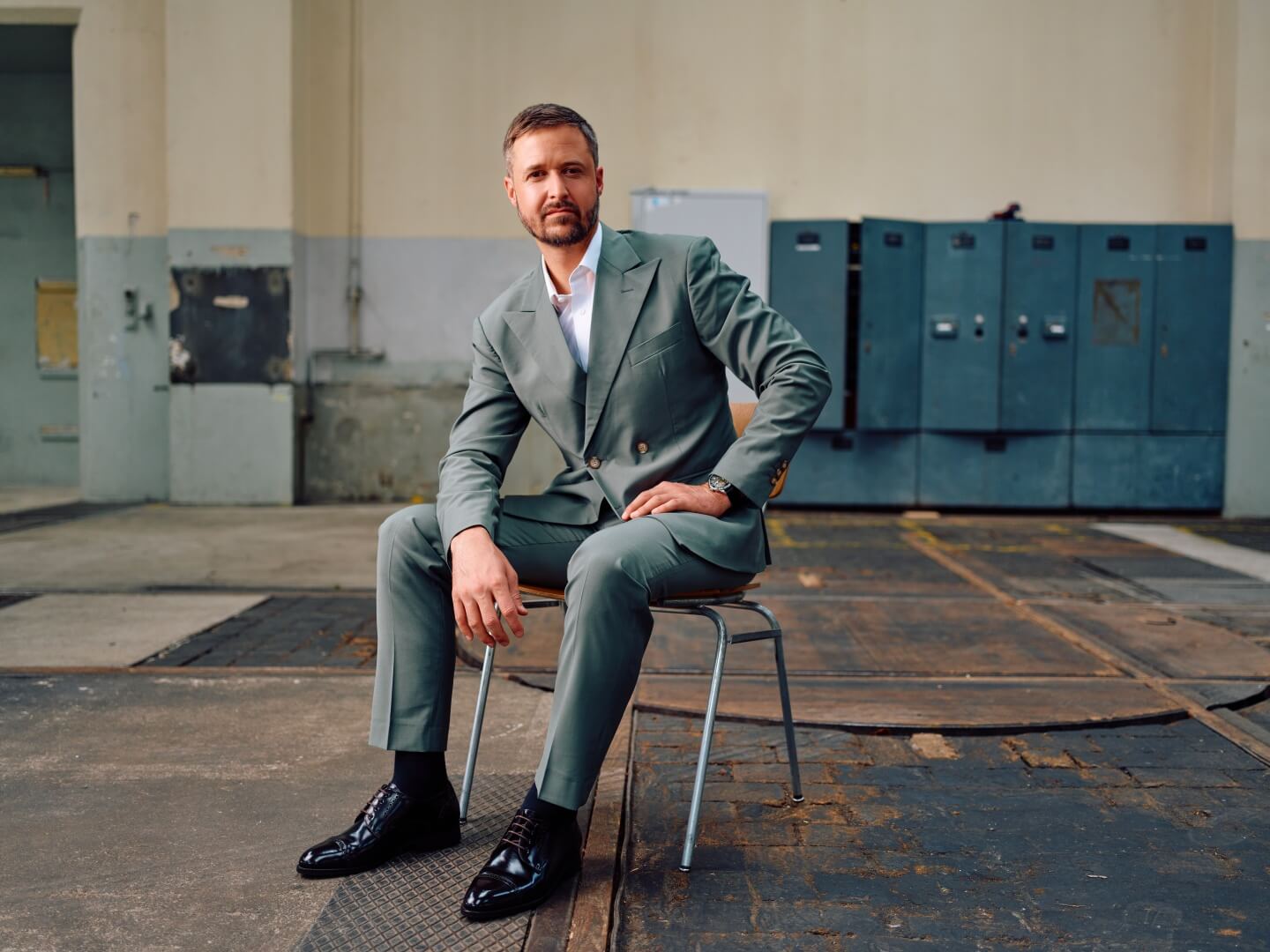
This isn’t a random relaxation of the dress code. It’s a deliberate style choice that says: I’m professional, but not rigid. A premium men’s suit—often custom-tailored, crafted from Super 120s wool or a silk blend—paired with an open-collared shirt signals modernity. It’s perfect for:
- business casual at the office
- networking after hours
- casual Friday in the corporation
- events until 6:00 PM
Brands like Giacomo Conti, Lancerto, or Zegna offer such sets in the range of 1500-8000 PLN. And no, skipping the tie isn’t sloppy—it’s a deliberate choice.
The new normal in Polish offices
The pandemic changed everything. According to LinkedIn research from 2023, as many as 67% of companies in Poland relaxed their dress codes after switching to a hybrid model. People returned to offices, but not to stiff suits and ties. They want comfort and professionalism at the same time.
Later in the article, you’ll find the history of this trend, the definition of ” premium “, specific styling rules, and a list of occasions where this look fits perfectly. Because this isn’t a passing fad—it’s a new standard for years to come.
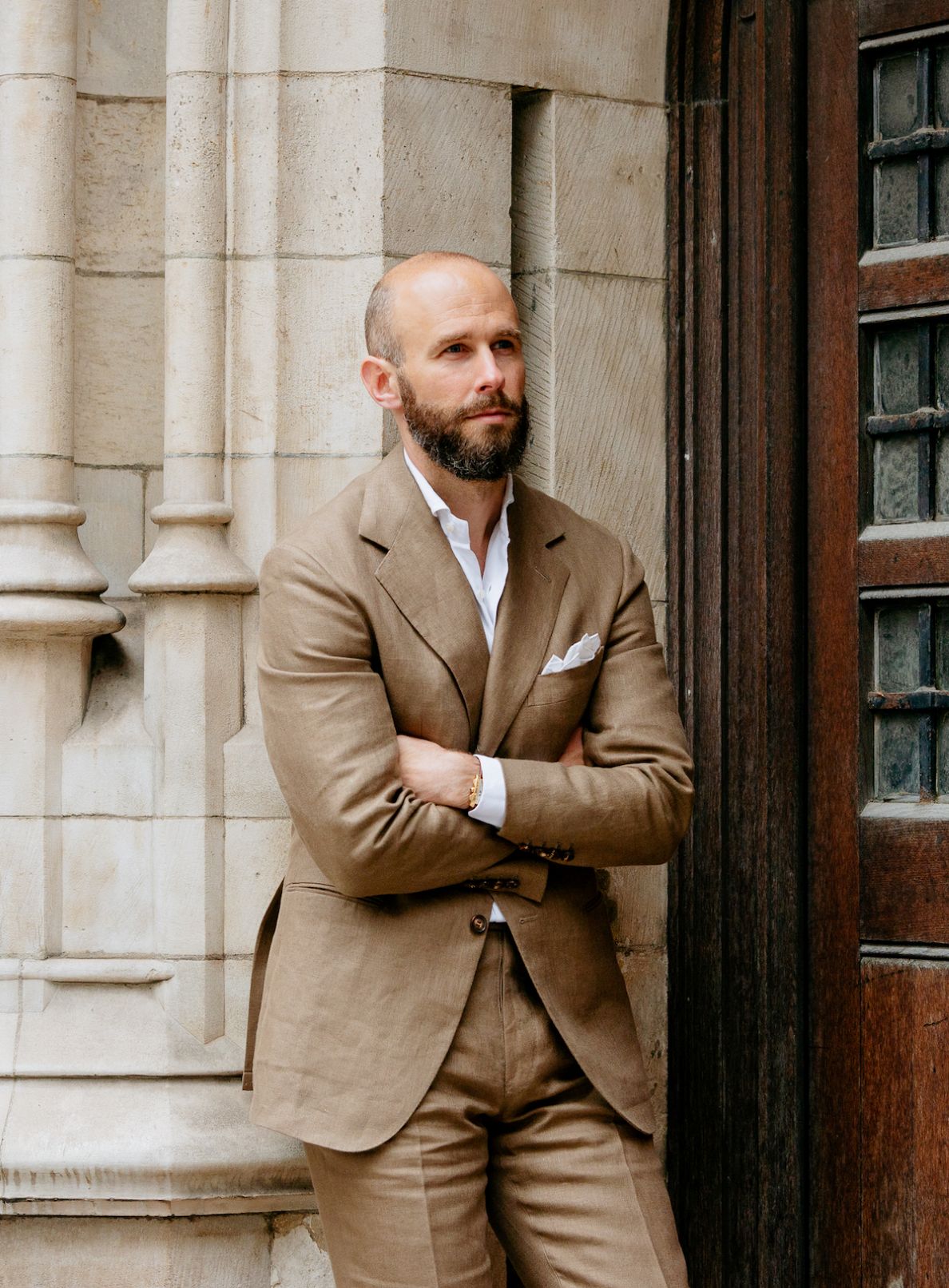
From Savile Row to smart casual – how we arrived at the suit without a tie
Back in the 1950s, no one would leave the house in a suit without a tie—it would be like wearing slippers with a tuxedo. A suit from Savile Row or Wall Street automatically meant a silk scarf, tied with precision. Cary Grant, Fred Astaire, the pioneers of the lounge suit—they all wore a tie like a second skin. It was a sign that you were a serious, professional man.
Silicon Valley, Italians, and the pandemic – who loosened the collar?
The 60s and 70s began to break down this dogma. The Beatles in laid-back blazers, hippies, wide lapels—elegance was no longer monotonous. The power suits of the 80s still held their shape, but the 90s brought a breakthrough: Steve Jobs in a black turtleneck proved you could be influential without a silk scarf. The Italians went even further—Luciano Barbera and Armani championed soft tailoring, with jackets that felt almost like cardigans, free from stiffness.
The pandemic accelerated this shift. Remote and hybrid work made ties disappear from wardrobes —sales dropped by double digits. Business casual became the norm, not the exception. In Poland, the journey was unique: from the accidental (not stylish) Hawaiian shirts of the communist era, through the boom of Vistula, Bytom, and Giacomo Conti in the 2000s, to today—where corporations are happy to embrace smart casual.
A suit without a tie isn’t a revolution. It’s a natural evolution—a bridge between the heritage of Savile Row and the freedom of start-ups. And probably the most comfortable spot along that line.
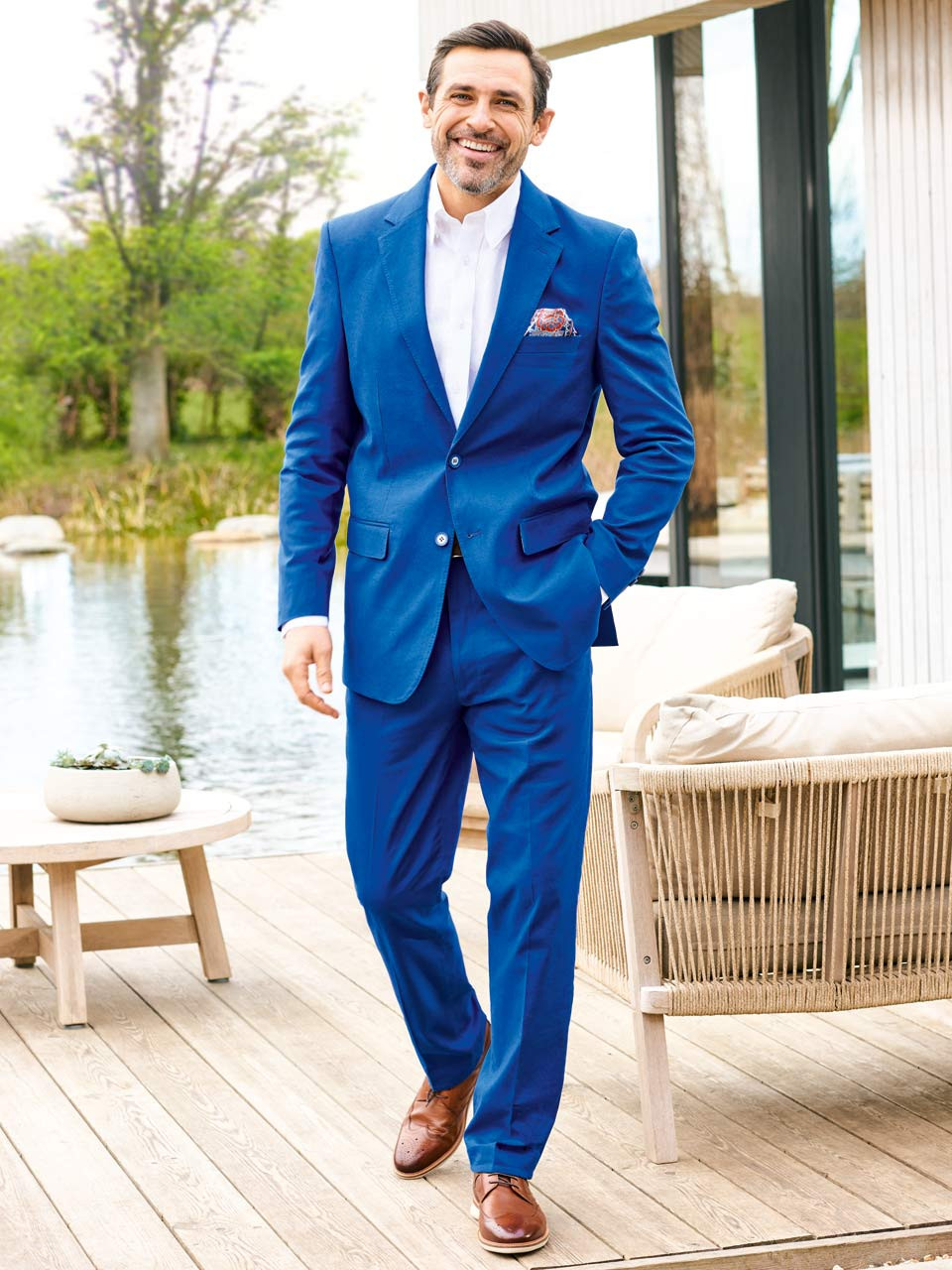
What does “premium” mean in a suit without a tie
“Premium”—this word tends to get slapped onto everything, from coffee to shoe polish. But when it comes to a suit without a tie, it actually means something specific: a cut that fits perfectly without endless alterations, fabric that breathes and looks as valuable as its price tag, and construction that holds its shape for years. Especially when you wear a blazer without that “anchor” around your neck—that is, a tie —the silhouette has to stand on its own.
Cut and construction of a premium suit
A premium suit is usually a slim or regular fit with a so-called drop 6-8 (the difference in centimeters between chest and waist measurements). The key difference: canvas construction instead of a fused lining. It’s the canvas that allows the jacket to drape naturally over the body, avoiding that stiff, armored look and still looking sharp even without a tie—because you don’t need a knot to hide a poorly fitting collar. When you unbutton the collar, a premium cut simply handles it.
Fabrics that look great without a tie
Premium starts with materials:
- Merino wool Super 120s-150s (fibers approx. 10-12 microns) – soft, wrinkle-resistant, with a natural sheen
- Cashmere, silk, or blends with linen—for more casual yet refined ensembles
- Tweed, fleece textures or subtle patterns – for 2025, “earth tones” (olive green, terracotta) are in the spotlight.
Thanks to these fabrics, the suit looks luxurious even without a tie—a simple cotton button-down or spread collar shirt appears elegant against quality wool.
Key elements of a no-tie outfit:
- Shirt made of lightweight Oxford or poplin cotton
- Trousers without a belt (suspenders or elastic waistband)
- Loafers or monk straps instead of stiff Oxfords
- Optional: turtleneck or V-neck sweater, pocket square for a touch of finesse
Brands such as Giacomo Conti, Lancerto, Cafardini (Polish) and Zegna, Canali (Italian premium) offer suits priced between 3,500 and 8,000 PLN—featuring hand stitching, limited-edition fabrics, and tailored cuts. The market is growing—premium suit sales in the “no tie” segment have increased by about 18% in Poland over the past two years. People want to invest in something that works both in the office and at dinner.
How to wear a suit without a tie and still look professional
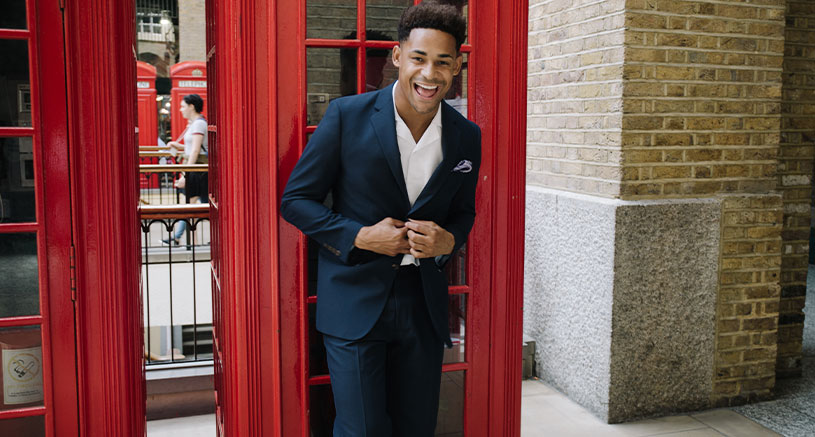
When you skip the tie, your silhouette and style become more prominent—there’s nothing left to hide behind that strip of fabric. That’s why the rules matter even more. A well-chosen shirt and accessories have to speak for themselves.
Shirt and collar – how many buttons should you undo?
The collar does all the work here. A button-down or a wide spread looks much better without a tie than a narrow Italian one—the latter simply “collapses” and appears sloppy. In the office, you should unbutton no more than one button, maybe two in a more casual environment, but never more—otherwise, you cross into club territory rather than professional. The shirt should be fitted, always tucked into your trousers, and ideally seamless at the collar to avoid any bulkiness.
Shoes and accessories that replace the tie
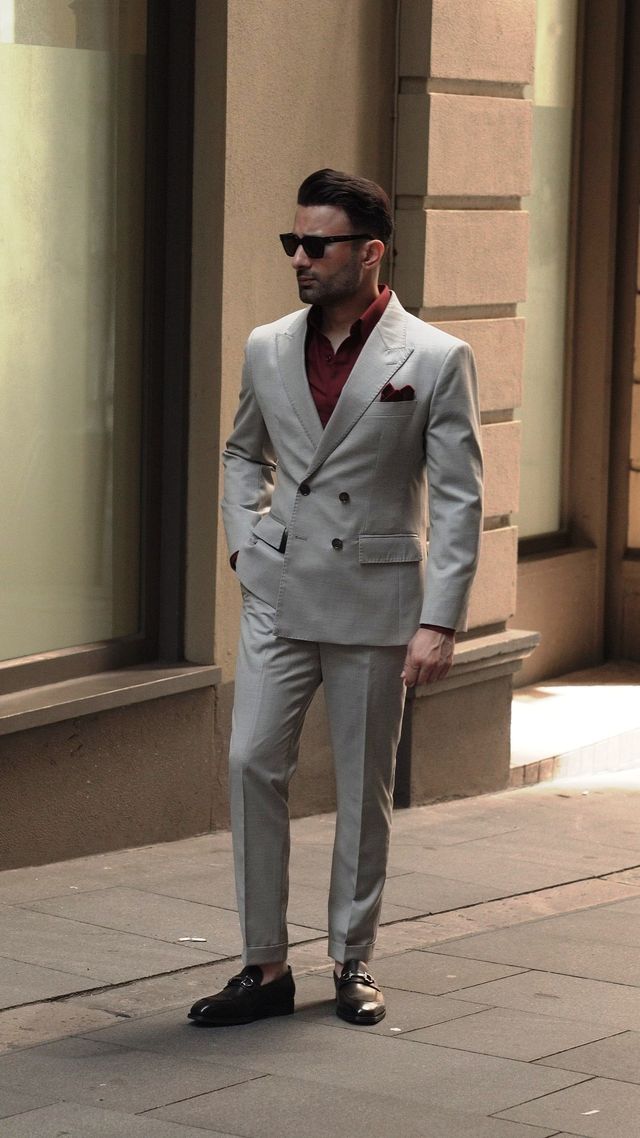
Shoes make all the difference. Loafers (penny loafers or tassel), monks, or the less formal derbies instead of oxfords are natural choices for a suit without a tie. A pocket square in the breast pocket works as a subtle accent and is more effective than a tie. You can also add a sweater (turtleneck or V-neck) under the blazer—it fills the space nicely and adds a touch of elegance. Instead of a belt, consider suspenders or trousers with an adjustable waistband—it’s a bit old-school, but it fits perfectly with the whole look.
Ready-made sets for every occasion
- Everyday office look: navy suit + white button-down shirt + brown loafers
- Smart casual: grey tweed suit + navy V-neck sweater + brogues
- Weekend elegance: beige tailored trousers + blue oxford shirt + loafers
The most common mistakes include trousers that are too short (socks visible when standing), a shirt unbuttoned too low, casual plaid flannel instead of Oxford, sneakers worn to a formal meeting, and a jacket sagging due to the wrong size.
The key is consistency throughout the outfit and matching it to your industry—the more conservative the environment, the simpler and more understated your no-tie look should be.
For which occasions is a suit without a tie a perfect choice
I always wonder whether I can skip the tie in a given situation and just wear a suit with a shirt. And I guess I’m not alone in this—many men face this dilemma every morning or before an important meeting.
Where does a suit without a tie fit in the dress code hierarchy?
To understand when it’s safe to take off your tie, you first need to know how the whole pyramid of elegance is structured. At the very top, there’s white tie and black tie —here, a tie (or bow tie) is absolutely mandatory. Below that is business formal, where a suit and tie are the standard. It’s only at the business casual and smart casual levels that there’s room for a suit without a tie. This is the zone—somewhere between strict formality and everyday casual.
Office, wedding, networking – when is it the right choice?
In my experience, a suit without a tie works best in a few specific situations:
- Everyday office work – especially in IT, advertising, media, or start-ups, where the dress code is more relaxed
- Conferences and networking events – a less formal look makes it easier to connect with others
- Meetings until 6:00 PM – daytime business settings are usually less formal
- Semi-formal weddings and receptions – if you are not an immediate family member
- (Note: in banking, law firms, or public administration, a tie is still often strongly recommended)
The data shows the scale of change: in Poland, over 60% of tech companies already have a relaxed dress code, and in the Fortune 500, business casual prevails in 7 out of 10 corporations. In Polish business centers, smart casual has become almost the norm.
Conservatives vs. Gen Z – the tie debate
It’s getting heated here. The older generation often says, “A tie shows respect; without it, you look unprofessional.” Social media is full of criticism toward politicians or CEOs who show up without a tie at official events. On the other hand, younger people argue that the dress code is evolving and that skipping the tie makes you seem more authentic and approachable.
How do you decide if a suit without a tie is appropriate for a specific occasion? Analyze the industry (conservative or modern?), the age of your audience (boomers or millennials?), and the importance of the event (lunch or gala?). And always keep a tie in your pocket or bag—just in case.
Create your own signature look without a tie
A suit without a tie isn’t just a simple wardrobe change—it’s a mindset. It’s the shift from “I have to” to “I want to look good on my own terms.” That’s why this trend is worth seeing as an opportunity to create something more: your own distinctive style that works in 2025.
Small steps to greater freedom in a suit
You don’t have to revolutionize your entire wardrobe overnight. Start with one quality premium suit—let it be your playground for experimentation. Choose days with a more relaxed dress code and try out different shirt, shoe, and watch combinations. Pay attention to your colleagues’ reactions and see how you feel without a tie around your neck.
What’s next for the suit without a tie?
The future? Even more comfort blended with elegance. Recycled materials (recycled wool), hybrid cuts leaning towards casual, AI helping you match a shirt to your skin tone. Companies are relaxing dress codes—because they know employee comfort pays off.
And here’s where you come in. Instead of blindly copying influencers, create something of your own. A suit without a tie gives you space—use it. That’s your signature style, not someone else’s copy.
Modny Miki
lifestyle editorial team
High Class Fashion