
The luxury resale market has just surpassed $30 billion globally—and it’s growing three times faster than sales of new handbags or premium watches. This is no longer a niche “thrift shop for insiders.” It’s a fully-fledged fashion segment that’s changing the game.
The second-hand luxury market – the new face of premium fashion
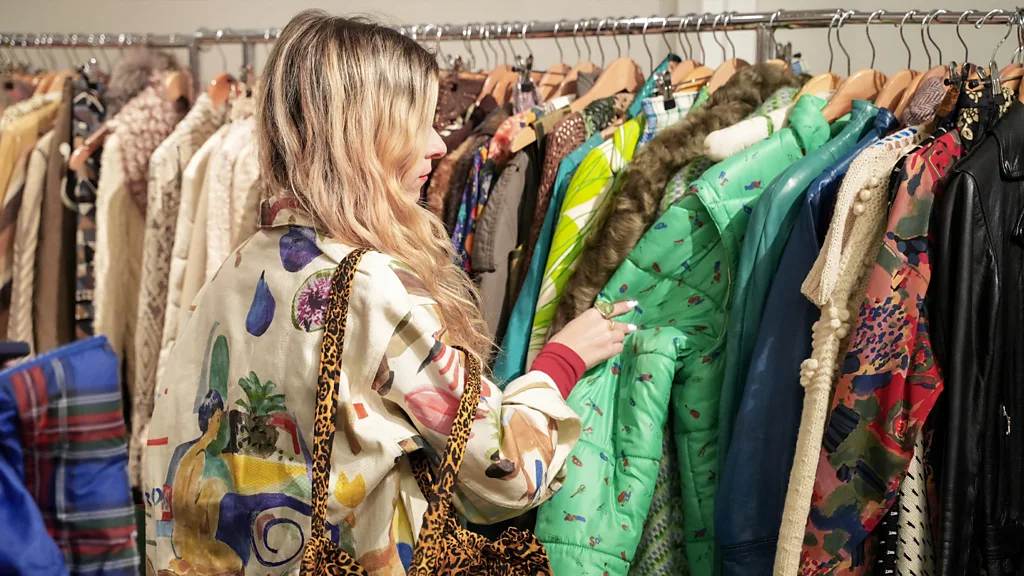
It’s simple: you buy an authentic Chanel bag, use it for a few seasons, then sell it on a platform like Vestiaire Collective or The RealReal—often for 60-70% of the original price. Someone else gets access to luxury for half the cost. You recover part of your expenses. The planet benefits from one less item produced.
Why is second-hand luxury such a hot topic right now?
Because the attitude has changed. Just a decade ago, a pre-owned designer bag was a taboo topic—associated with failure or lack. Today, it’s:
- A conscious choice – ecology is no longer just a slogan, it has become a reason to buy
- Financial prudence – inflation has made even affluent clients want to optimize their spending
- Archive access – vintage Dior from the 90s is not available in the boutique, only through resale
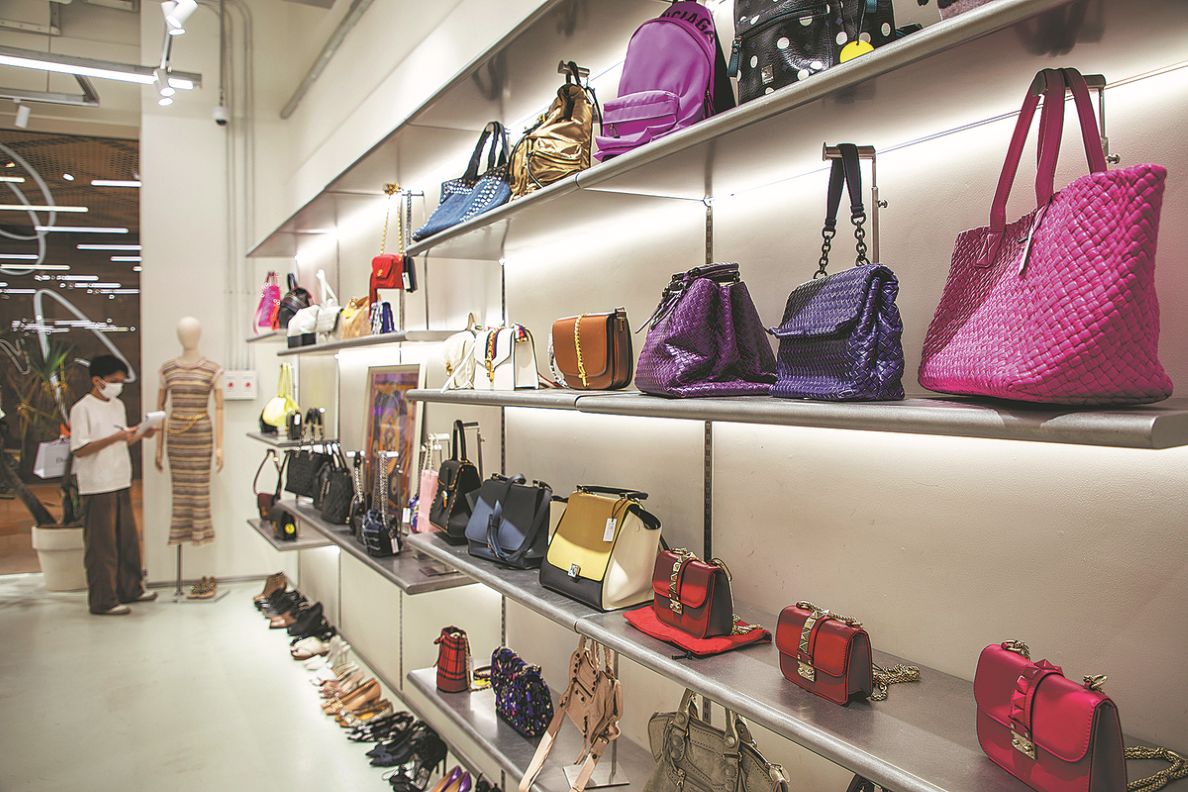
Poland, as one of the larger premium markets in the region, fits into this trend—especially younger female consumers are increasingly asking: “Why overpay?”
Later in the article, we’ll take a closer look at the exact definition of this market, its development history, specific figures illustrating the scale of the phenomenon, the main players and platforms, the factors driving growth, controversies surrounding authenticity, and future forecasts. Let’s start with the basics.
What exactly is the pre-owned luxury market?
The pre-owned luxury market is a space where used premium brand products circulate—mainly Chanel, Louis Vuitton, Gucci, Hermès, or Rolex. It includes clothing, footwear, iconic handbags, accessories, jewelry, and watches that have already been worn, but still represent the high quality and prestige of the brand.
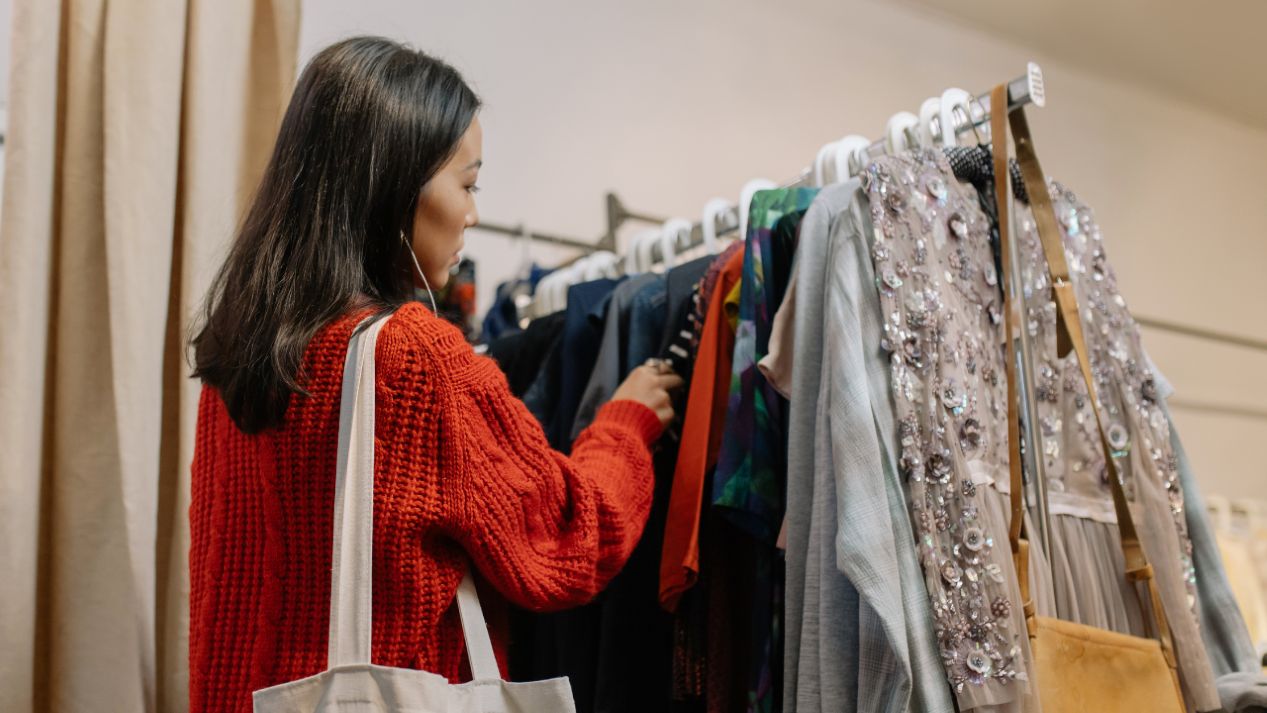
Luxury resale vs. a regular thrift store – key differences
To be clear: this isn’t your typical second-hand shop. The key differences? First and foremost, the curated selection—platforms and consignment stores meticulously verify the authenticity of every item, eliminating the risk of counterfeits. The service is also on a different level: professional descriptions, haute-quality photos, and often authenticity certificates. Prices are higher than in a thrift store, but still much lower than in a boutique —usually 30-70% of the original price, depending on the condition, rarity of the model, and current demand.
What products are included in second-hand luxury?
We mainly talk about:
- Handbags and leather accessories (icons like Birkin or Boy Chanel)
- Haute couture and prêt-à-porter clothing from limited collections
- Luxury watches from top brands (Rolex, Patek Philippe)
- Designer footwear (Louboutin, Jimmy Choo)
- Fine and costume jewelry from major fashion houses
Typical players can be divided into several categories: specialized online platforms (Vestiaire Collective, The RealReal), premium brick-and-mortar consignment stores, and global marketplaces with a luxury section such as Vinted or Allegro. Understanding this framework will make it easier to follow further market analysis—because this is not a single monolithic piece, but a complex ecosystem with its own rules of the game.
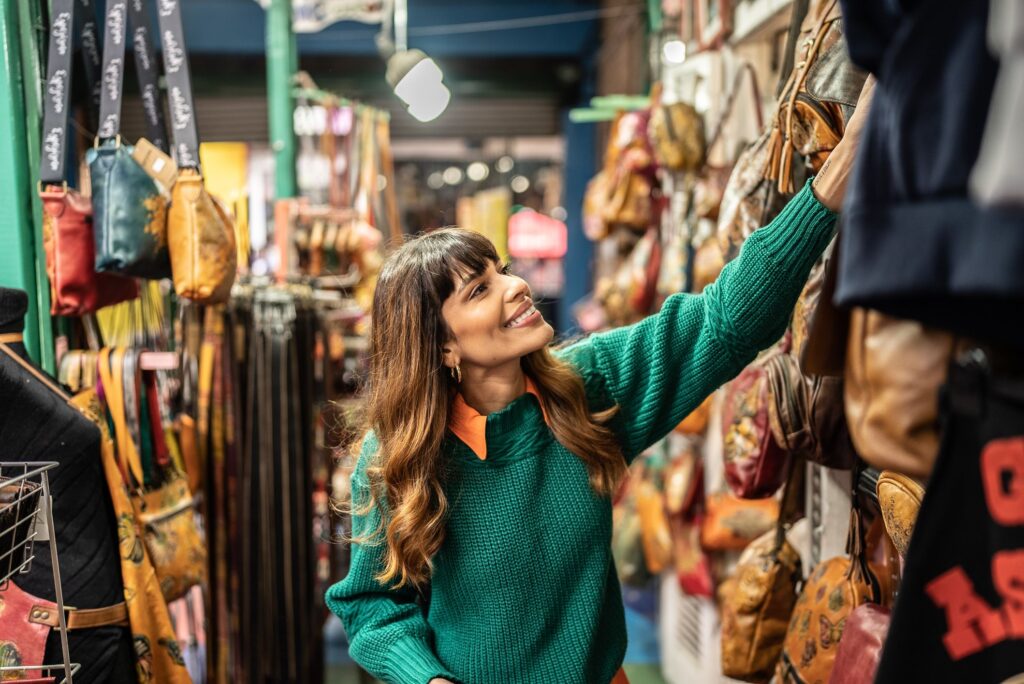
From collector auctions to apps – how this market has evolved
Once, to buy a second-hand Chanel bag, you had to sit at Sotheby’s and bid against collectors. Today? You scroll through Vinted on the tram. This transformation didn’t happen overnight—it’s the result of several decades of evolution.
The ’90s: strictly for insiders
In the 1990s and early 2000s, second-hand luxury existed in the world of auctions. Christie’s, Sotheby’s—mainly Rolex watches and the iconic Birkin from Hermès. Sales were in-person, and buyers were collectors with money and expertise. The average person? They never even considered stepping inside.
2010+: turning point – platforms enter the game
The decade from 2010 to 2020 changed everything. In 2011, The RealReal (USA) launched, followed by Vestiaire Collective (France) and Depop (UK) a year later. Suddenly, you had an app, authenticity verification, and fast shipping. It was no longer niche—luxury second-hand went mainstream.
The COVID-19 pandemic accelerated this even more. E-commerce exploded, people cleaned out their closets and listed items online. The global resale market grew by around 200% between 2020 and 2022. A boom no one had talked about before.
The Polish path – from shame to prestige
In Poland, the 1990s were associated with “ciuchlandy” and poverty. Second-hand shopping wasn’t cool—it was a necessity. The shift happened around 2020, when the younger generation started talking about ecology and slow fashion. Suddenly, hunting for vintage Prada in a thrift shop became trendy, economical, and responsible. This also applies to the luxury segment.
Understanding this history makes it easier to interpret today’s numbers—because this isn’t a trend, but the result of a long evolution.
Numbers and dynamics – how fast the luxury resale market is growing
The second-hand luxury market is growing about three times faster than sales of new high-end bags or clothing. And that’s no coincidence—in 2024, the traditional luxury market saw only about 4% growth, while the global luxury resale market has already reached a value of around 50-60 billion dollars (according to Bain & Company). In other words: what was once a niche has now become a significant segment of the economy.
The global scale and growth rate of the luxury resale market
Consulting firms have been highlighting this boom for several years. 85% of luxury industry professionals recognize the growing importance of second-hand (Ifop Luxury Trend Report), and the 2024/2025 holiday season brought another signal—the “secondhand gift boom,” a trend of buying pre-owned premium gifts instead of new ones.
Poland: a growing market for luxury and fashion versus second-hand
In Poland, the situation is also evolving, although the data is less detailed. The overall luxury goods market was worth around 30 billion PLN in 2021 (KPMG report), and the latest 15th edition of this report from December 2024 indicates continued growth in most segments. For broader context, the entire Polish fashion market is estimated at around 65 billion PLN (forecast for 2023), and Poland ranks as the 11th largest clothing exporter in the world—which provides a solid foundation for the development of resale.
| Segment | Value / Growth rate |
|---|---|
| Global luxury resale market | 50-60 billion USD, growing about three times faster than new luxury |
| Luxury market in Poland | ~PLN 30 billion (2021), growth in most categories |
| The overall Polish fashion market | ~PLN 65 billion (2023 forecast) |
Specific business models and technologies are behind these numbers — more on that in the next section.
Players, business models, and verification technologies
Behind every pre-owned Hermès bag sold, there is an entire network of platforms, technology, and logistics. The luxury resale market is not just a treasure-filled closet—it’s a complex infrastructure that must guarantee one thing: authenticity.
The most important luxury resale platforms – globally and in Poland
A few giants dominate the global market. The RealReal and Vestiaire Collective (France) operate as premium consignment stores with professional authentication. Rebag and Fashionphile (USA) focus on handbags and accessories. Meanwhile, Depop and Vinted are peer-to-peer marketplaces where users sell directly to each other—although Vinted is growing globally, it has gained massive popularity in Poland. Locally, there’s also Allegro with its “Vintage and Lux” section, as well as brick-and-mortar boutiques in Warsaw and Krakow, where you can physically inspect items before buying.
How do online consignment stores and marketplaces make money?
The consignment model means that the platform receives the item, authenticates it, photographs it, and sells it on behalf of the owner—for a commission of 20-40%. A peer-to-peer marketplace works differently: users list items themselves, and the platform charges a small fee (sometimes offering optional authentication for an extra charge). Premium brick-and-mortar boutiques buy items from clients for cash or take them on consignment, aiming for a higher margin thanks to their offline expertise.
AI and blockchain in the service of authenticity
This is where the magic of technology begins. Authenticity experts remain the gold standard, but AI solutions like Entrupy claim 99% accuracy in detecting counterfeits based on micro-detail photos. Blockchain—for example, Aura Blockchain Consortium (Louis Vuitton, Prada)—creates a digital product passport that tracks its history from the boutique to subsequent owners. In Poland? Mobile apps with virtual try-ons (AR) and parcel lockers lower the entry barrier—you can buy Chanel and pick it up on your way home from work.
What’s driving the boom in second-hand luxury
Why choose a pre-owned Chanel bag over a brand-new dress from a high-street store? Or, on the flip side—why sell your wardrobe instead of letting it sit in your closet? The answers vary, but a few motivations come up time and again.
Ecology and ESG – sustainable fashion in practice
Growing environmental awareness is more than just a marketing slogan. Many women genuinely worry about textile waste and the journey of clothes to landfills. By purchasing luxury items second-hand, they feel they are extending the life of products rather than fueling further production cycles. Interestingly, around 50% of luxury companies in Poland identify ESG as part of their strategy (KPMG report), so the industry itself also feels the pressure. Resale thus becomes a natural extension of this philosophy—the consumer supports a circular economy, while the brand can demonstrate that its products are “made to last,” not just for a season.
Inflation, saving, and capital recovery
The decline in real purchasing power has made access to premium brands at original prices simply disappear for many. Resale allows you to buy a Dior bag or a MaxMara coat for 40-60% less. But there’s another aspect: selling your own items. A woman who bought Gucci ankle boots two years ago can recover part of her investment and put it toward something new—or pre-owned. This is financial flexibility that fast fashion doesn’t offer (because after the season, no one will buy a worn-out blouse for 30 zł).
Quiet luxury and the growing acceptance of second-hand items
The “quiet luxury” trend—understated, high-quality clothing worn every day—fits perfectly with the resale market. After all, a good cashmere sweater looks great whether it was bought in a boutique or secondhand. Additionally, 2025 is seeing the rise of the “secondhand gift boom”: more and more people are no longer embarrassed to give a loved one a pre-owned, yet beautiful item. Social norms are shifting, and resale is no longer seen as “cheap”—it’s simply becoming the smart choice.
Market shadows: counterfeits, fur, and the loss of exclusivity
The rapid growth of the resale market isn’t just about successes and positives—behind the impressive forecasts lie real risks that every buyer should be aware of. After all, what’s the point of saving on Chanel if the bag turns out to be a counterfeit?
The risk of counterfeits and the trust dilemma
Despite experts, AI, and blockchain, some consumers still worry about buying counterfeits. And this fear is justified—the counterfeit market is worth billions of dollars each year. Critics of resale emphasize that even the best platforms can’t offer a one hundred percent guarantee. For many Polish women, the lack of certainty about authenticity is the main reason to avoid luxury second-hand shopping altogether.
Does resale take away brands’ exclusivity?
The “quiet luxury” trend has made Chanel an everyday choice, not just for galas. However, as “Rzeczpospolita” points out, the widespread wearing of premium brands and easy access through resale are causing them to lose their aura of exclusivity. Some commentators openly state: democratizing access marks the end of true luxury. The brands themselves recognize the issue—some prefer to control distribution rather than see their products in thrift stores.
Fur coats in second-hand shops and the shift in ethical standards
In Poland, second-hand shops are overflowing with furs (associations with the communist era, shifting norms), while in China, fur production dropped from 22 million to around 10 million between 2022 and 2023 (ACTAsia data). The result? High supply with zero demand, ethical tensions, and growing reluctance among younger buyers.
Other issues? Rising prices in thrift stores—sometimes close to those of new clothes—and “cherry-picked” gems by regular customers, which limits access for casual visitors. On a global scale: weak demand for luxury in China is forcing brands to rethink their distribution strategies.
Where is sustainable luxury headed – opportunities through 2030
The luxury second-hand market is growing faster than the new premium goods segment—but what does this mean for Polish women in a few years? Let’s be realistic: there are challenges, but even more opportunities.
Resale as 10-20% of the luxury market? Scenarios through 2030
Ken Research forecasts that by the end of the decade, resale could account for as much as 10-20% of the entire luxury goods market. Growing ESG pressure, supply chain transparency, and technologies such as AI and blockchain mean that circular luxury will no longer be a niche—it will become the standard. Brands are launching their own buy-back programs (Gucci, Burberry), partnering with major marketplaces (Vinted, Allegro), and testing virtual fitting rooms in VR. This isn’t an overnight revolution, but the direction is clear.
Opportunities for Polish Women – From Conscious Consumer to Entrepreneur
Poland is the 11th largest clothing exporter in the world—we have a strong manufacturing and logistics base (parcel lockers, advanced e-commerce). The growth of ESG and increasing consumer awareness are creating perfect conditions for local resale platforms, curated boutiques, and premium repair and alteration services. If you have an eye for fashion and the drive to act—there’s room for you.
The future? Realistically optimistic. The market will grow, but there’s no guarantee of profit for everyone. Those who enter consciously and with a clear concept have a real chance to benefit.
Sonia editorial team High Class Fashion