
Did you know that searches for “Victorian-style blouses” have increased by 340% in search engines over the past two years?
It’s no coincidence. We live in times when the world is changing so fast, it’s hard to keep up. Inflation, wars, uncertainty about the future—all of this makes more and more women seek refuge in a romantic style that evokes a return to roots and calmer times.
A touch of Victorian elegance
Blouses with high collars, delicate ruffles, and pearl-like buttons are more than just fashion. They’re a way to find yourself amid the chaos. When you put on something so feminine and elegant, you instantly feel different. As if you’re more… yourself? Or maybe that version of yourself who has everything under control.
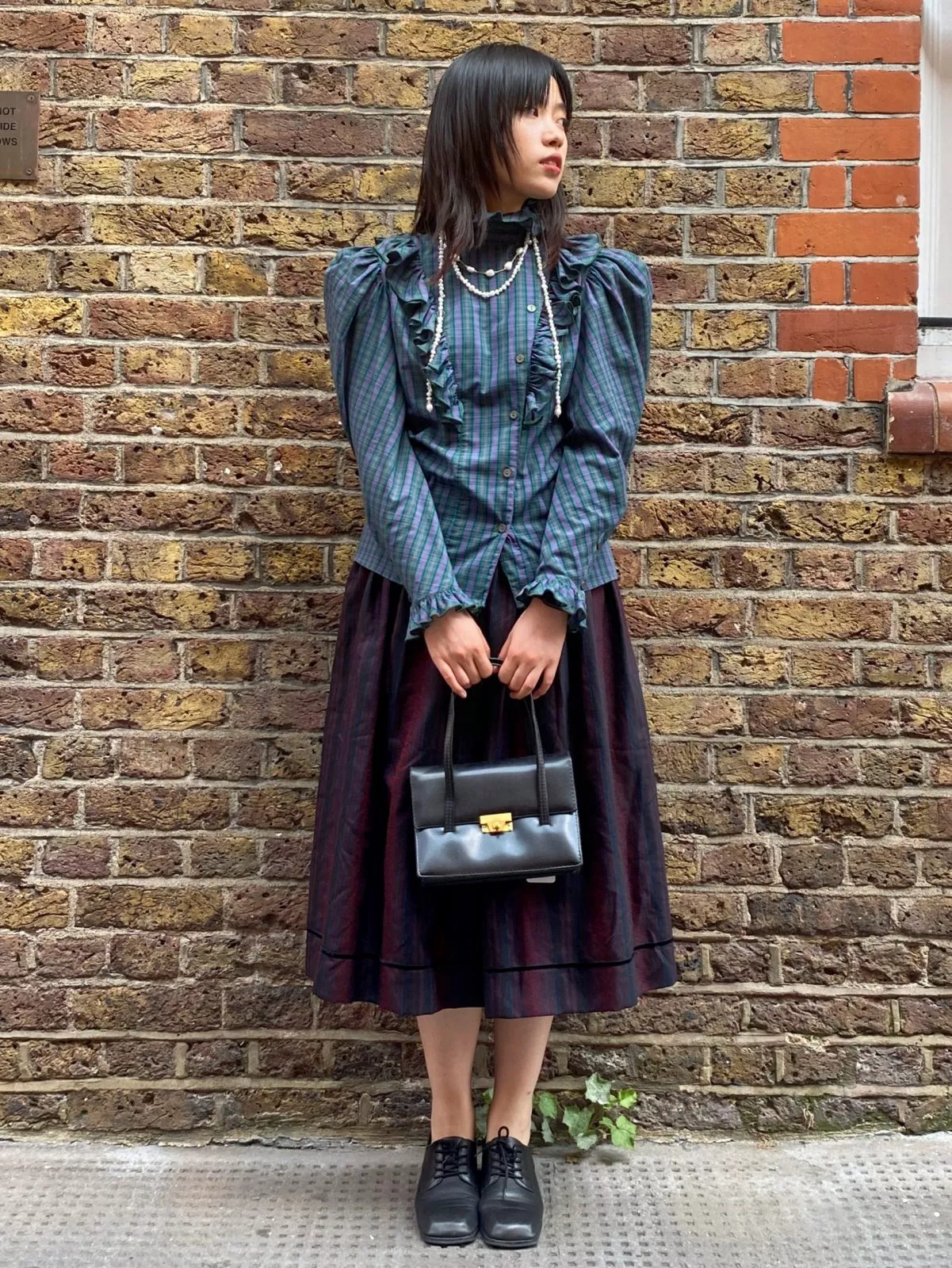
This trend didn’t come out of nowhere. Designers from Gucci to small Polish brands are incorporating Victorian elements into their collections. Instagram influencers pair them with jeans, and more and more women are showing up at the office in blouses that look like they’re from another era.
But where did this fascination actually come from? And why now?
It’s not just about clothes. This is a story about how fashion helps us cope with reality and express our deepest needs.
So let’s start at the beginning—with the moment when the blouse first appeared and changed the way women dressed forever.
From crinoline to gigot – the history and evolution of the silhouette
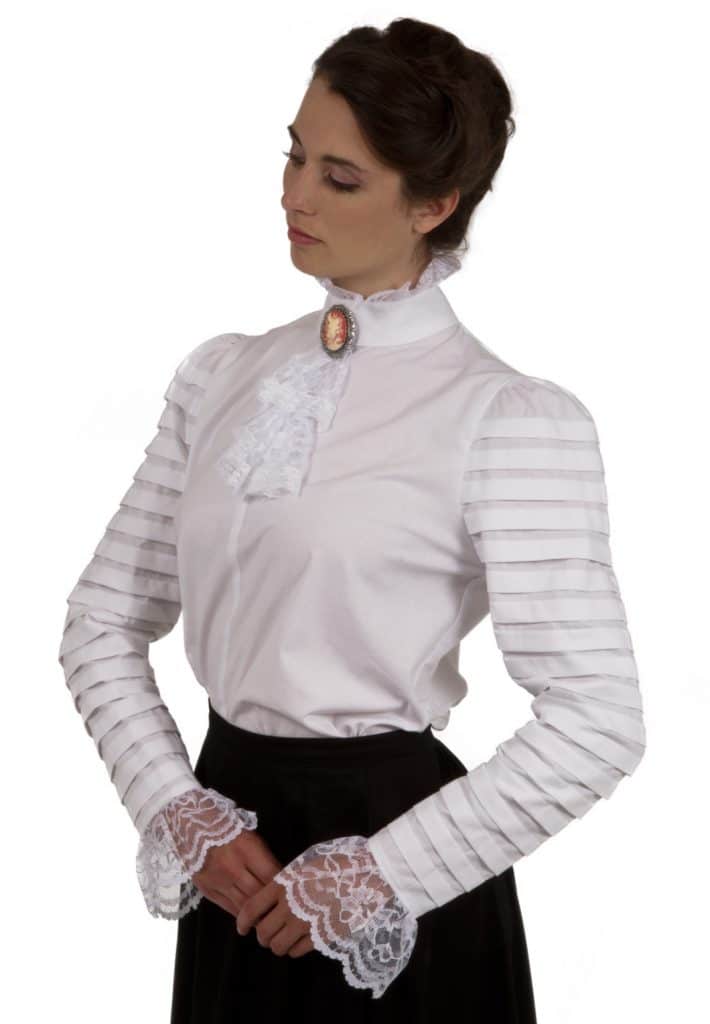
I sometimes wonder why Victorian blouses fascinate us so much. Perhaps it’s because their history is, in fact, the story of women’s emancipation—from stiff crinolines to the freedom of gigot sleeves.
TIMELINE – KEY MOMENTS
- 1837-1850: Early Victorian era – modesty and simplicity
- 1860: Invention of the Singer sewing machine
- 1856: The first synthetic dyes (aniline purple)
- 1870-1890: Middle era – experiments with form
- 1890-1901: Late era – gigot sleeves in all their glory
- 1950s, 1970s, 1990s: The Great Comebacks of Victorian Style
The early Victorian era (1837-1860) was quite austere, to be honest. Blouses featured simple lines, high collars, and long sleeves. Women mostly wore white or cream designs—colorful ones were considered improper. Everything was sewn by hand, so an elegant blouse was a luxury few could afford.
The real revolution came with the sewing machine. Suddenly, production became faster and cheaper. At the same time, chemists discovered synthetic dyes—I remember reading about that first purple shade, which became so fashionable it was called the “mauve decade.” The mid-Victorian era (1860-1880) brought bolder cuts. Ruching, ruffles, and various collar styles appeared.
The late era (1880-1901) was all about extravagance. Gigot sleeves—those huge, puffed tops—dominated the streets. The bigger, the better. It was a time when fashion truly went wild. Blouses became more fitted at the waist, accentuating the silhouette.
Interestingly, the Victorian style kept coming back like a boomerang. In the 1950s, women fell in love with romantic ruffles again. The 1970s brought a hippie interpretation—loose blouses with lace. The 1990s saw another revival, this time with a more gothic twist. And now? The Instagram and TikTok era has young women rediscovering the charm of dark academia and cottagecore—modern takes on Victorian aesthetics.
It’s fascinating how technology has changed the accessibility of fashion. From hand sewing, to machines, to today’s mass production. But the basic styles? Still the same as 150 years ago.
Now it’s time to take a closer look at how these historical patterns function in today’s wardrobes.
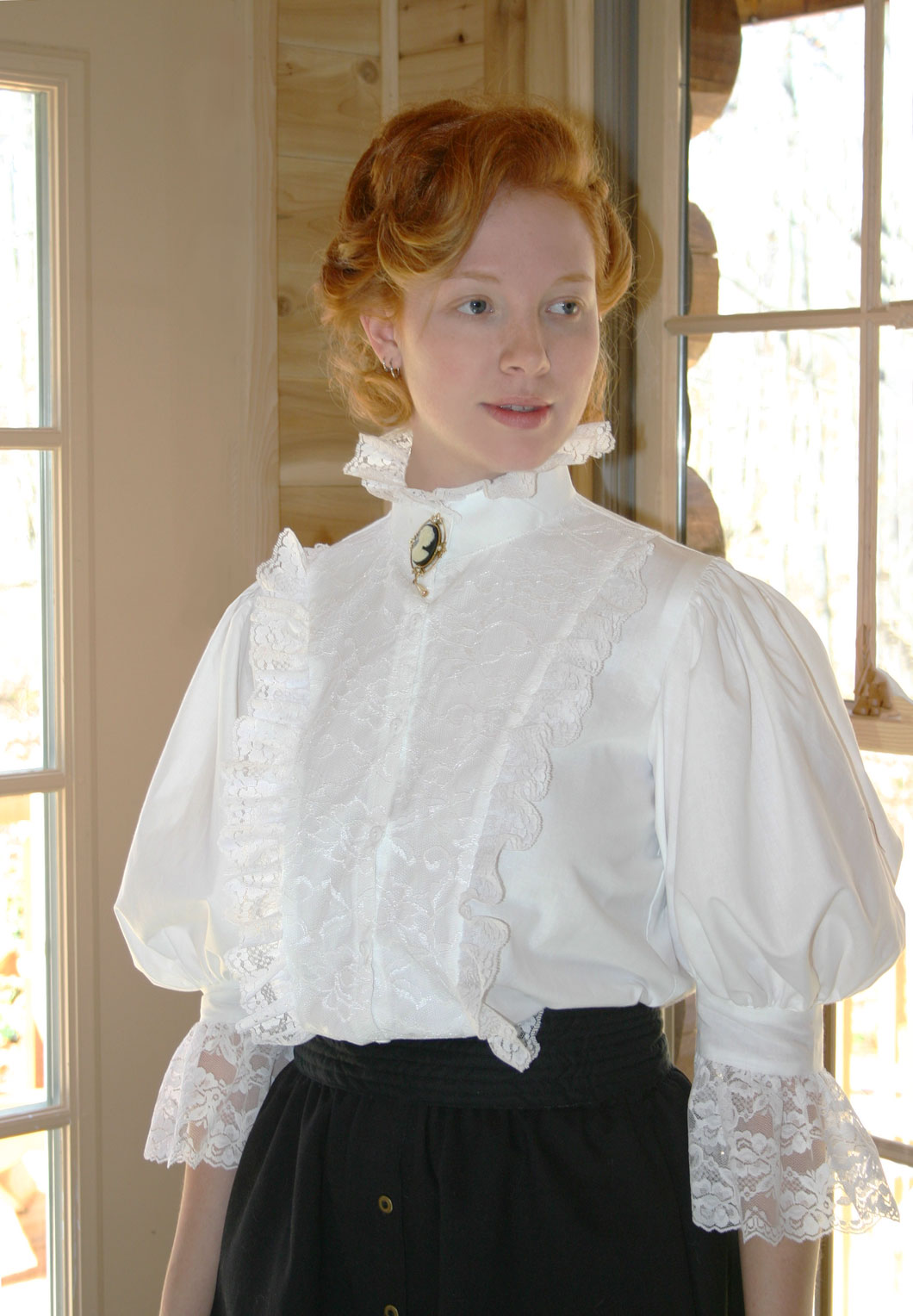
Lace, puff sleeves, and collars – how to style a Victorian blouse today
The Victorian blouse is making a comeback—not just in ballrooms, but on the streets. You don’t have to be a fan of historical costumes to appreciate the charm of high collars and puffed sleeves. All you need is to know how to wear them.
| Feature | How to wear |
|---|---|
| High collar | Unbutton the top button for a relaxed look, pair with long earrings |
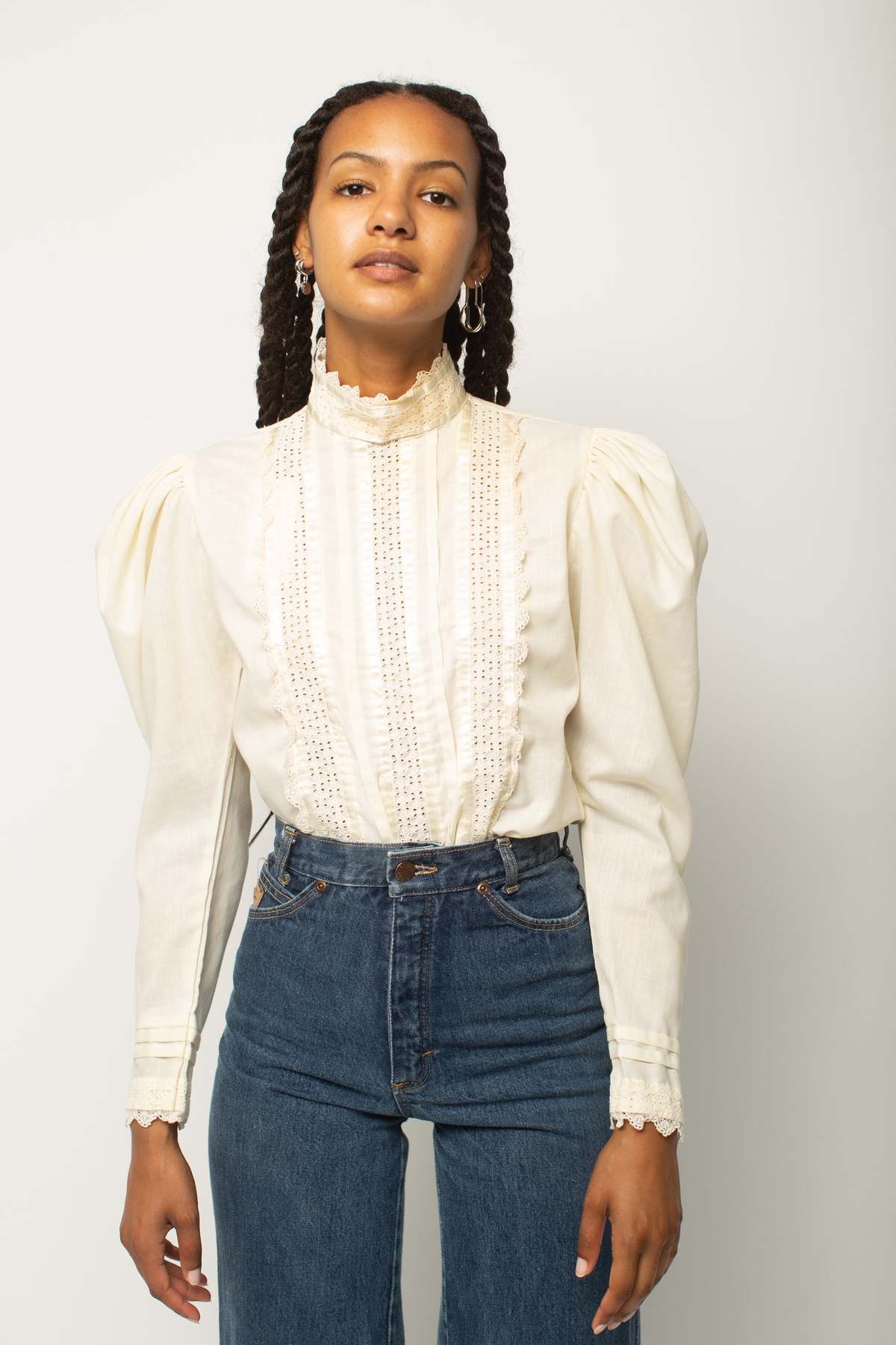
| Puff sleeves | Balance your silhouette with a fitted bottom |
| Pintucks | Treat it as a decorative element – don’t cover it with a jacket |
| Lace inserts | Emphasize contrast – dark pants with a light blouse |
Material matters. Organic cotton is perfect for summer, but it can wrinkle easily. Nylon with lace is a great compromise for autumn—it’s easier to care for. In winter, opt for thicker fabrics with a touch of wool.
3 tried-and-true sets for any occasion:
- Casual weekend: cream blouse + boyfriend jeans + white sneakers. Roll up the sleeves to the elbows and leave a few top buttons undone.
- Elegant date: black blouse with lace insert + plaid midi skirt + heeled ankle boots. Put your hair up to show off the collar.
- For the office: white blouse + navy suit + minimalist jewelry. Drape the blazer loosely over your shoulders.
The biggest mistake? Trying to look like you’re from a different era. Mix styles with confidence.
🧺 Care – because a ruined blouse is a shame
Lace yellows from sunlight and high temperatures. Hand wash in lukewarm water with a bit of baking soda. Dry only in the shade, preferably flat. Iron through tissue paper to avoid melting synthetic fibers. Store hanging on soft hangers—folding damages pintucks.
Not all of us have time for such rituals. So before you buy, check the fabric composition—the more cotton, the easier the care.
A Victorian blouse is more than just a piece of clothing. It’s a way to express yourself in a world that often forgets about subtlety.
Elegance with a Message – Cultural Significance and Tomorrow’s Trends
You know what, it’s truly fascinating — recent social media analyses show a 340% increase in hashtags related to Victorian fashion in just the past two years. That’s no coincidence.
Looking through data from Instagram and TikTok, I noticed something interesting. #VictorianCore now has over 2.8 million posts, and sentiments are almost evenly split — 52% positive versus 48% critical. The positive comments often include words like “feminine,” “elegant,” “powerful” — as if these blouses give women a sense of strength through delicacy.
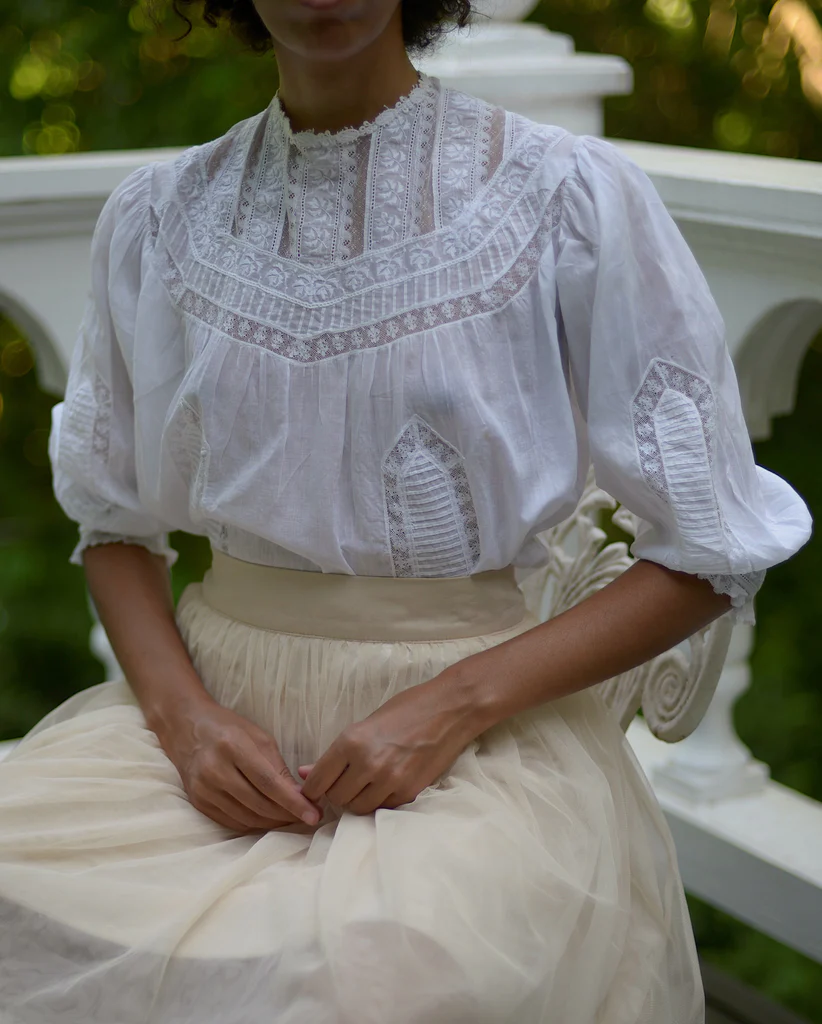
But this is where the real debate begins. On one hand, some say it’s nostalgia for a time when women were “more feminine.” On the other, feminists argue that you can be strong and wear lace at the same time. Maybe… both sides have a point? Maybe the issue lies elsewhere.
What really surprised me is how much this trend impacts sustainability. Small ateliers have started buying up vintage fabrics en masse. Upcycling has become not just fashionable, but essential—original materials from the era cost a fortune. This is transforming the entire textile industry.
Forecasts for the coming years? Take a look:
➜ Digital printing will enable mass production of Victorian-inspired patterns
➜ AI design will personalize cuts to individual needs
➜ The luxury market in this segment will grow by 15-20% annually
➜ Sustainable fashion will find its premium niche here
Technology is already changing the rules of the game. Brands like Zimmermann and Simone Rocha use algorithms to predict which Victorian elements will be most coveted. It’s strange that artificial intelligence is designing… romance.
“Fashion is a way to express yourself without having to speak,” Rachel Zoe once said, and that’s exactly what’s happening with this trend.
Economically speaking, the renaissance of Victorian blouses isn’t just a whim. It’s a response to the need for authenticity in a world of fast fashion. Women are searching for something with history, meaning. Even if that history is reinterpreted.
Start your own lace revolution
Victorian romanticism isn’t just a trend—it’s a way to express your femininity and rebel against the monotony of modern style. It’s time to start your own lace revolution.
Here are the four key takeaways from our conversation about Victorian romanticism. First, you don’t have to dress in a full period costume—just one distinctive element is enough to give your whole look a romantic twist. Second, fabric quality matters—synthetic lace from chain stores will never have the same effect as genuine materials. Third, this style calls for confidence, because not everyone dares to wear a lace top on a regular day. And finally—Victorian romanticism isn’t just about clothes, it’s a whole way of being.
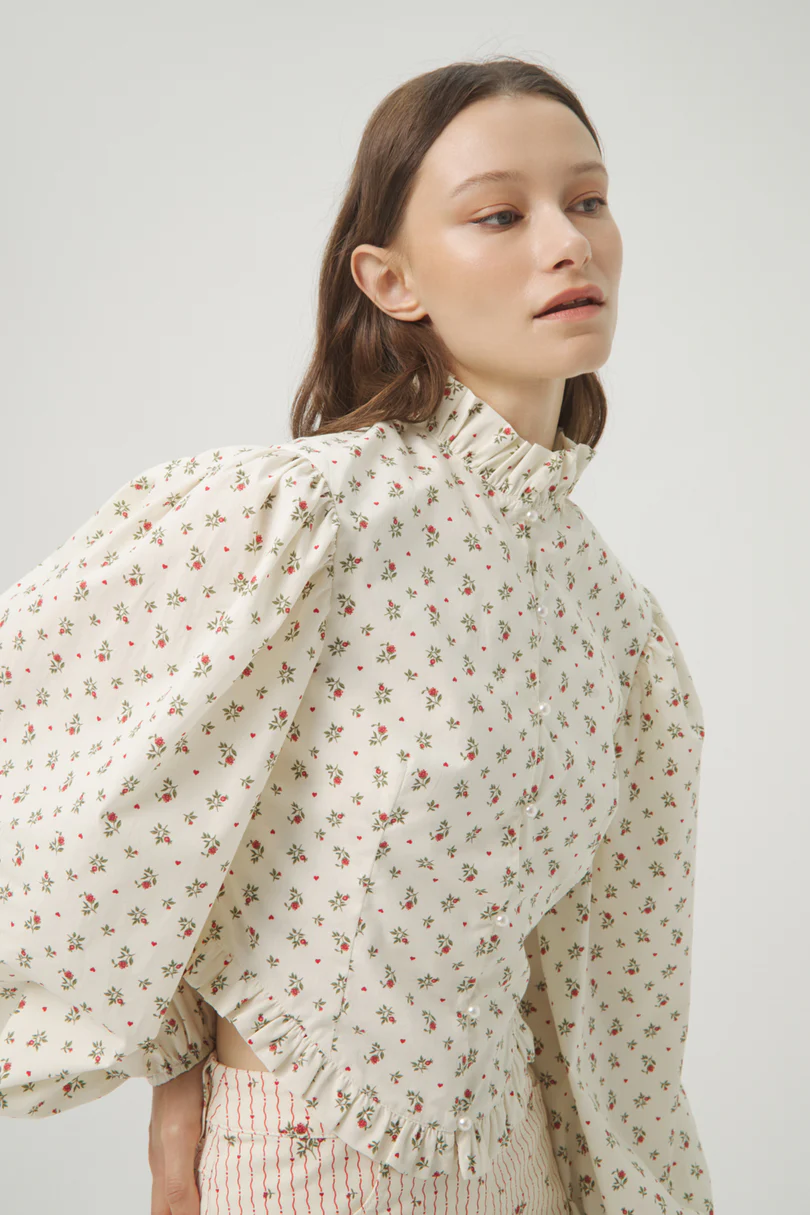
Now, let’s get specific. What can you do today?
⭐ Your next step
Start with one thing—buy a vintage brooch or a lace shawl. Follow brands like Zimmermann or Needle & Thread, which regularly draw on Victorian inspirations. Try some DIY—add lace cuffs to a plain blouse or sew on pearl buttons. Check out local vintage shops; you’ll often find real treasures there. Join Facebook groups dedicated to retro fashion—the girls there are great at sharing where to find specific pieces.
Or maybe start with something even simpler. Treat yourself to a good hand cream in a beautiful package. Victorian romance is also about attention to detail.
Fashion always comes back around, but this time you can be one step ahead. In a few years, lace will be everywhere, and you’ll already have your signature style. This isn’t about chasing trends—it’s about building your own aesthetic that will last for seasons to come. Your wardrobe can become a statement against dullness and uniformity.
Remember—every big change starts with a small step. Your lace revolution can begin tomorrow.
Monii
fashion & style editor
High Class Fashion