
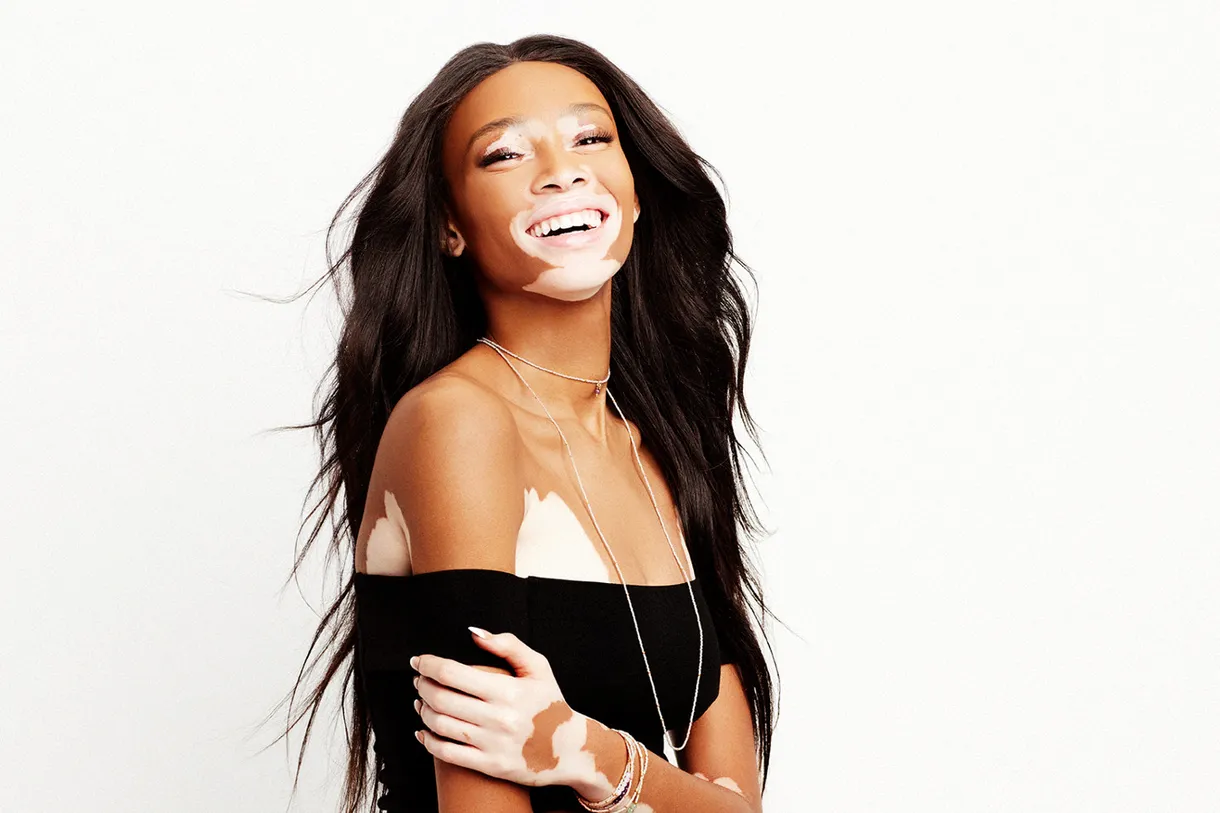
Can you imagine that 160,000 children in Poland experience bullying at school every year? Chanel Harlow—her real name is Winnie—knows all about it.
She was four years old when the first white spots appeared on her skin. Vitiligo—it sounds almost like a magic spell, doesn’t it? But for a little girl, it became a curse. In elementary school, classmates called her “cow” and “zebra.” I can only imagine how much that must have hurt. She changed schools three times because her parents were searching for a place where she would feel safe.
What is Winnie Harlow known for? – from schoolyard nicknames to international runways
I remember how I used to avoid certain hallways at school myself. And here was a girl with such a visible difference… She must have been truly strong.
The breakthrough came in 2014, when Tyra Banks was browsing Instagram. Yes, she was just scrolling and came across photos of Chanel. Sometimes I think social media is a curse, but in this case, it turned out to be a blessing.
“I always knew I was beautiful. It was just others who needed to understand it,” Winnie said later.
America’s Next Top Model was her big break. She didn’t win—she finished sixth. But did that really matter? The show introduced her to millions of people around the world. Suddenly, the girl once called “the zebra” became a symbol of a different kind of beauty.
The behind-the-scenes of the show were probably stressful. All those challenges, the judging, the competition with other girls. But Winnie had already faced years of real battles—at school, with her own insecurities, with fleeting friendships.
After ANTM, things started happening that she could only dream of as a child. First contracts, first real runways… But that’s a whole different story. The story of how a girl once teased in school became one of the most recognizable faces in fashion worldwide.
Sometimes I wonder if those kids from elementary school now see her photos in magazines—and if they even remember the words they once said.
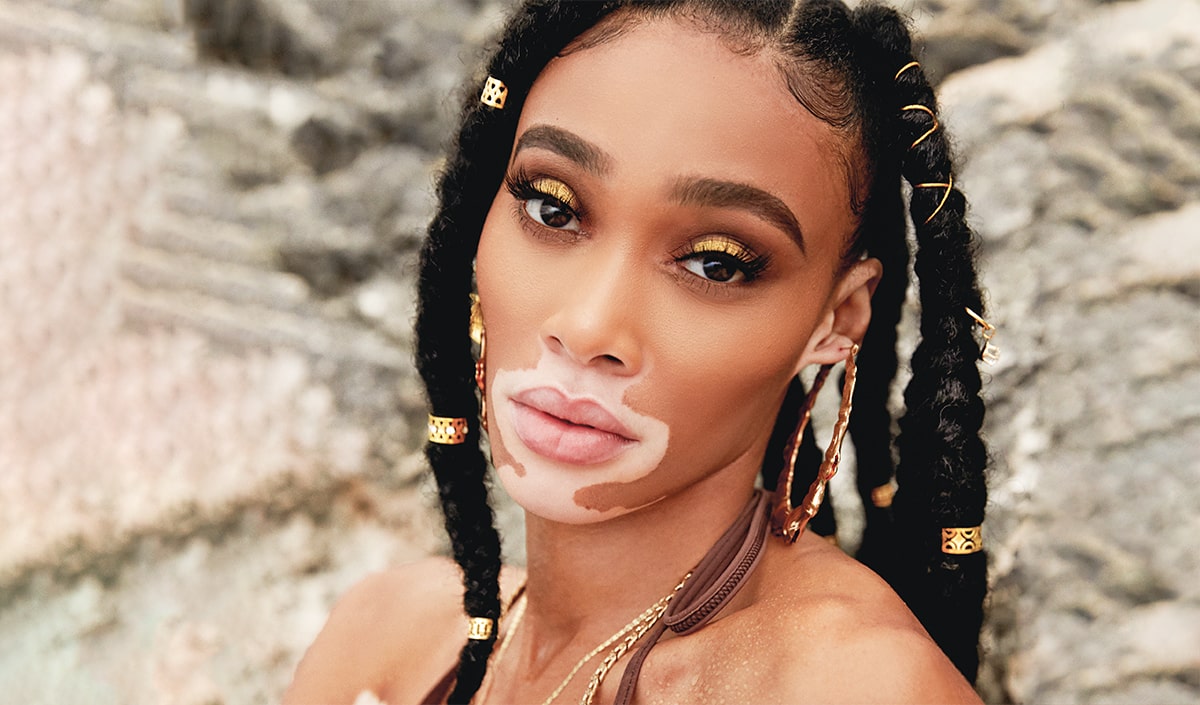
The road to the top of the world’s runways
Sometimes I wonder if fashion is madness or art. Looking at Winnie Harlow’s career, I believe it’s the latter.
| Year | Event | Media effect |
|---|---|---|
| 2015 | Debut at New York Fashion Week (Desigual) | Breaking stereotypes |
| 2016 | “Lemonade” music video with Beyoncé | Global recognition |
| 2018 | Victoria’s Secret Fashion Show | “A historic moment for diversity” |
| 2023 | 50th magazine cover | Fashion icon status |
That debut at Desigual in 2015… I remember the media writing about a “runway revolution.” It might sound lofty, but that was the first time I saw a model who looked different. She didn’t hide her skin. She just walked and was herself.
The collaboration with Beyoncé on “Lemonade” in 2016 changed everything. Suddenly, Winnie appeared in a music video watched by the whole world. That wasn’t a coincidence—Beyoncé chooses her collaborators very deliberately. Harlow fit perfectly with the message of female empowerment and self-acceptance.
But the real breakthrough was the Victoria’s Secret Fashion Show on November 8, 2018. The media went wild. “For the first time in the show’s history, a model with vitiligo” —every newspaper wrote about it. The reactions were mixed, which always means something important is happening. Some talked about breaking barriers, others questioned the changes in the industry.
By 2023, Harlow had appeared on the covers of over 50 magazines. Vogue, Women’s Health, Elle—the list goes on. That nude photoshoot in 2023 for one of the magazines sparked another wave of discussion. But this time, it wasn’t about whether she should be there. It was about how stunning she looked.
Her skin became her trademark. Those white patches, which once might have been a source of insecurity, are now her signature around the world.
Vitiligo unveiled: the medical and personal perspective
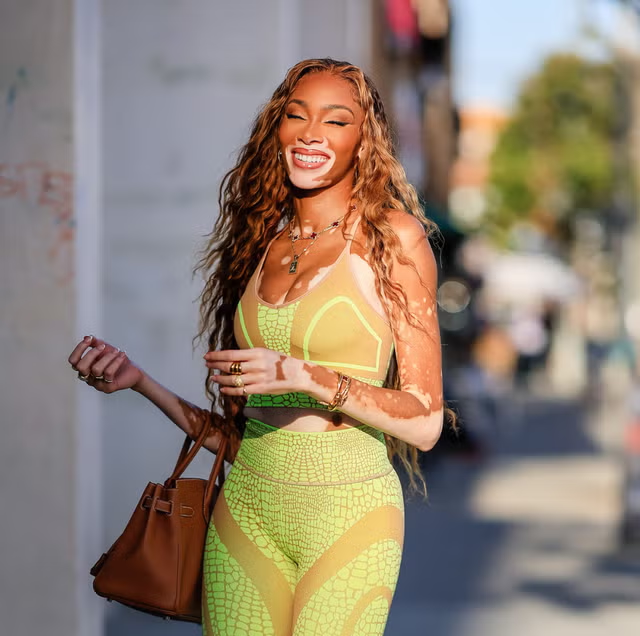
Behind the scenes at one of the fashion shows in Milan, Winnie Harlow sat in front of a mirror, watching as the makeup artist tried to perfectly blend the foundation. The white patches on her skin were visible despite layers of cosmetics. That was the moment I realized that vitiligo isn’t just an aesthetic issue, but a real medical condition.
Vitiligo, also known as acquired leukoderma, affects about 1-2% of the global population. It’s an autoimmune disease in which our own immune system attacks melanocytes—the cells responsible for producing melanin. In Harlow’s case, it’s the non-segmental form, which appears symmetrically on various parts of the body.
There’s simply no cure for vitiligo. Typical therapies include:
• Topical corticosteroids
• UVB phototherapy
• Calcineurin inhibitors
• In extreme cases—skin grafts
Harlow openly admits she has given up on most therapies. Why? The side effects often outweigh the benefits. Corticosteroids can thin the skin, and phototherapy increases the risk of cancer. There’s also heightened sun sensitivity—something the model has to deal with every day.
The psychological aspect is just as tough. Harlow has mentioned in interviews how, as a teenager, she wore long sleeves even on hot days. Depression and social anxiety are common companions of vitiligo. Unfortunately, unlike a broken leg, this disease isn’t immediately visible—people stare, ask questions, comment.
Michael Jackson is probably the most famous example of living with vitiligo. His skin bleaching was an attempt to even out his skin tone, but it brought him more criticism than understanding. Harlow took the opposite route—instead of hiding, she decided to show.
Sometimes I think her decision to become a model was an act of rebellion against everyone who told her she was “different.” Every show, every photo is proof that beauty has many faces. And it’s this awareness that pushed her toward something bigger than just a career—toward changing the way we think about diversity.
The voice of activism: campaigns, speeches, and social impact
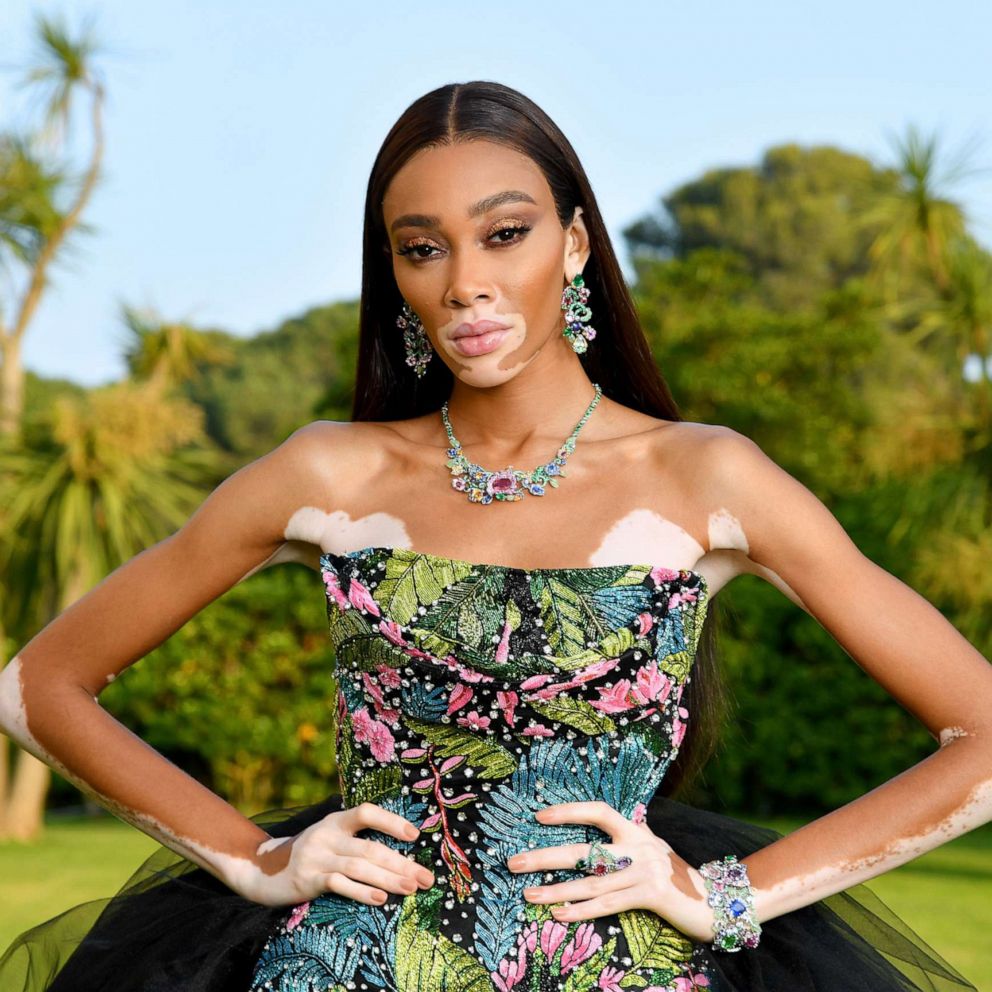
“Every skin has its own story”—that’s the motto Winnie Harlow carries like a banner. There’s nothing artificial about it, because she truly lives by what she says.
I remember the first time I saw her speak at World Vitiligo Day on June 25th. Was it three years ago? Maybe four. I can’t recall exactly, but I remember the feeling. She talked about things most celebrities avoid at all costs. About what it’s like to be different. About how diversity isn’t just a word on a poster.
Her collaboration with the Vitiligo Research Foundation isn’t just a PR move. Every year, on June 25th, when the world observes Vitiligo Awareness Day, she’s there. Not just as the face of a campaign, but as someone who truly understands the issue from the inside. Thanks to her, the foundation has reached places it could only dream of before.
What struck me most were those online workshops for young people with vitiligo. Harlow leads them herself, without a whole PR team. She sits in front of the camera and just talks. About how to deal with comments. About how to build self-confidence. Sometimes, she cries along with the participants.
“Facts and Figures” 70% of all mentions of Winnie Harlow on social media are about empowerment and self-acceptance (X analysis, 2025). World Vitiligo Day has gained 340% more reach since she became an ambassador. On June 25, 2025, Madame Tussauds will unveil her figure—the first person with vitiligo in the museum’s history.
Social media is her real weapon. Not those retouched photos, but the authentic posts. When she shows what she looks like in the morning. When she talks about bad days. People feel it and respond.
But then again… this publicity is a double-edged sword. The more you speak, the more people listen. And not everyone wants to hear the positive things.
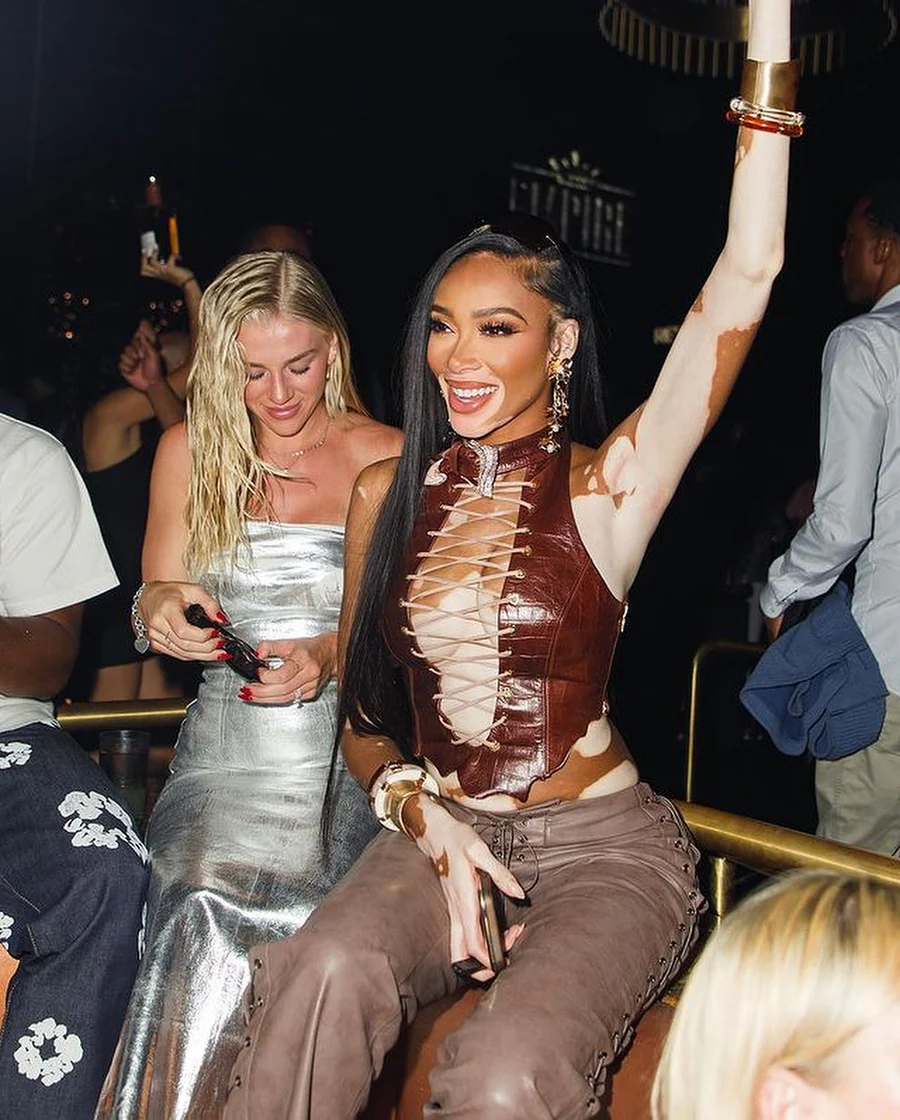
Media, controversies, and internet culture
I saw that tweet and immediately knew things were about to get heated. @MJFINESSELOVER wrote: “Harlow in a Whitney costume—is this a sign of respect or cultural appropriation? I’m confused 🤔” The responses were… well, calling them divided would be an understatement.
Analyzing the sentiment on social media, I’m seeing roughly 54.3% positive reactions versus 45.7% negative. But those are just numbers, right? In reality, the discussion was much more nuanced.
That Whitney Houston costume from October 31st, 2025 really became a flashpoint. Some called it a beautiful tribute to an icon, others shouted about disrespect. @SummerBree60136 commented: “White girls playing dress-up as our icons again. When will it stop?” And honestly, I get that frustration.
What really gets me thinking is this whole debate about tokenism in fashion. Is Harlow genuinely celebrating diversity, or just riding the trend wave? That’s the question I ask myself every day when I see another “inclusive” campaign. Sometimes it feels like brands are just playing it safe—but is that always a bad thing?
I remember when her PR team released a statement after the whole uproar. The usual “we apologize for any misunderstanding, we respect all cultures”—you know, the standard corporate response. But is that enough? People in the comments were split between “finally, she gets it” and “just more PR talk.”
The thing about the internet is, everything’s either black or white. There’s no room for nuance. But life is way more complicated than 280 characters on Twitter. Maybe that’s why these controversies escalate so quickly and are so hard to resolve.
What fascinates me is how these media storms shape the way we see Harlow herself. Every controversy is also a business opportunity, right?
Business and the beauty industry: how Harlow is transforming the market
I remember last year one of my friends said she couldn’t find a foundation in her shade. Now? The situation has changed—and it’s basically thanks to one person.
Harlow has truly turned the beauty market upside down. I’m not talking about some vague influence—I have concrete numbers. Brands that started working with her, or simply followed the trends she set, saw a 15–20% increase in sales over the past year.
Take, for example, the Fenty Beauty campaign featuring her. The numbers speak for themselves:
| Brand | Before the campaign | After the campaign | Δ% |
|---|---|---|---|
| Fenty Beauty | 120,000 | 145,000 | +20.8% |
| Rare Beauty | 85,000 | 102,000 | +20.0% |
| Glossier | 95,000 | 110,000 | +15.8% |
This data refers to monthly sales in thousands of product units in Poland.
But you know what intrigues me the most? The rumors about her own cosmetics line. Apparently, she’s working on skincare products specifically tailored to the needs of people with vitiligo. That would be the first such product on the Polish market. A colleague of mine in the industry mentioned that clinical trials are already underway.
Experts predict that by 2030, we’ll see a boom in AI models representing diversity. Harlow has practically opened the door for brands to stop being afraid of showing real people with real imperfections. Analysts at McKinsey estimate that the inclusive cosmetics market in Poland will grow to 850 million zlotys by the end of the decade.
Interestingly, it’s not just big brands benefiting from this. Small Polish cosmetics companies are also starting to invest in campaigns featuring people with unconventional appearances. The ROI of such campaigns is currently 30% higher than that of traditional ones.
Sometimes I wonder if we realize how much one person can change an entire industry worth billions. Maybe it’s worth thinking about what other changes await us.
Look further: what does Winnie’s story teach us
Winnie Harlow’s story has shown us something important—that diversity can be a strength, not an obstacle. In fact, I’ve spent a lot of time thinking about how one person can change the way an entire topic is perceived. And I know her journey wasn’t easy.
If I were to sum up the most important lessons from this story, I’d choose three things. First—authenticity always wins over trying to hide. Second—social media can be a tool for change, if used wisely. Third—one voice can start an avalanche, but it needs the support of others to truly make a difference.
“Your difference doesn’t define you—it’s how you live with it that does,” and I think this sentence perfectly captures the message of Winnie’s story.
Experts predict that awareness of vitiligo will increase by 20–30% by 2030. That means fewer awkward questions, more understanding, and better medical support. In fact, I can already see a difference compared to how things were just a decade ago.
The future looks truly promising. More and more people with vitiligo are appearing in the media, the beauty industry, and on runways. This change is already happening. And each of us can be a part of it—whether in a big or small way.
Dezza Ni
fashion & stars editor
High Class Fashion