What’s new at Hugo Boss – digitalization, sustainability, and brand challenges
What’s new at Hugo Boss – digitalization, sustainability, and brand challenges
Can you imagine a brand that has evolved from a small tailoring workshop into a global fashion empire worth billions of euros? Hugo Boss is exactly such a case.
From suits to the metaverse – why are we talking about Hugo Boss again today
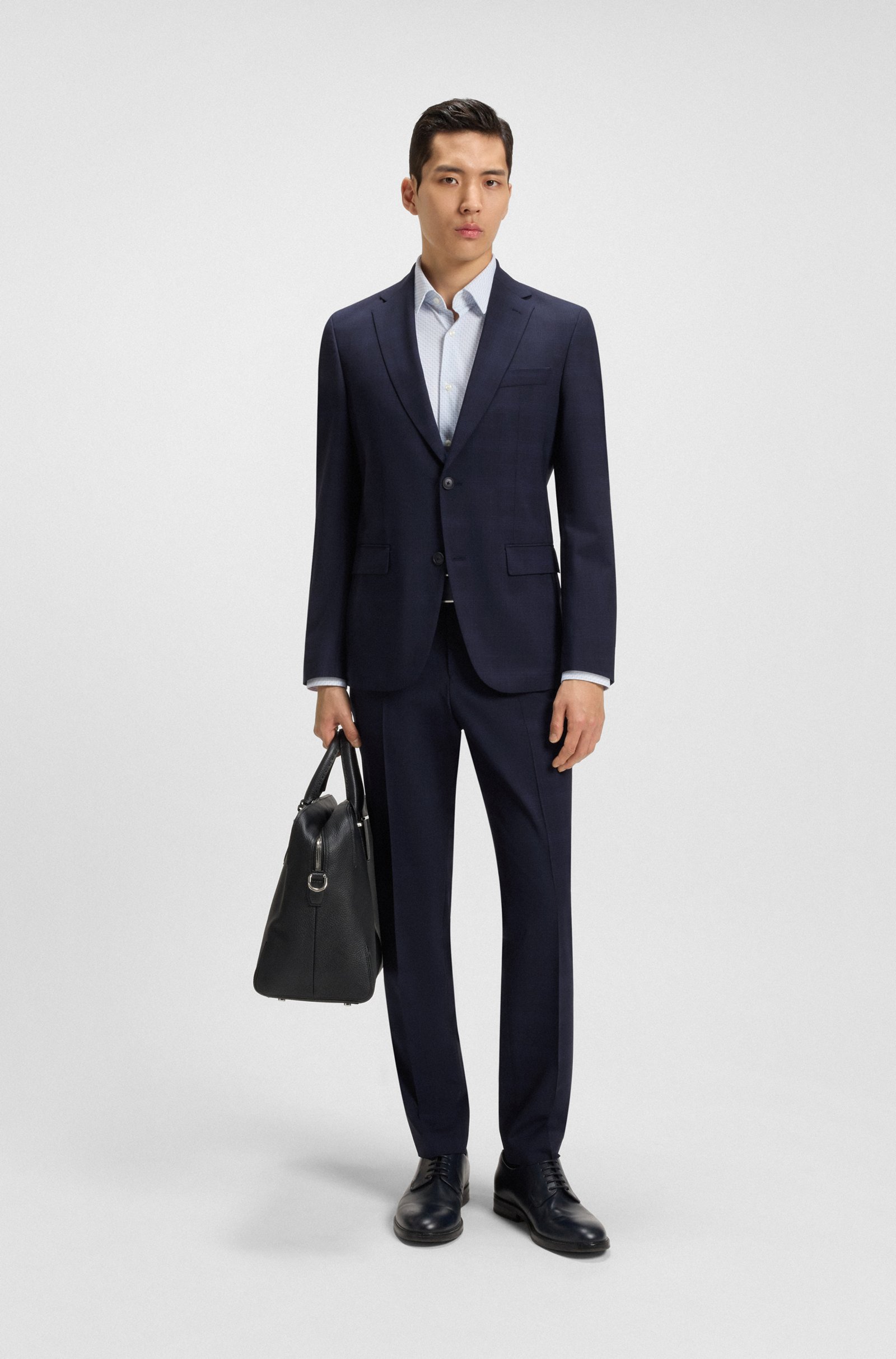
Let’s imagine a modern-day scene: a manager in Warsaw tries on a suit using an augmented reality app, while his colleague in Tokyo buys the exact same model in a virtual store. This isn’t science fiction—it’s everyday reality for the Hugo Boss brand in 2025.
photo: hugoboss.com
The numbers speak for themselves. The company’s revenues exceeded 2.4 billion euros, even as the world faced various economic upheavals. This demonstrates just how strong the brand is.
The story began in 1924 with a small tailoring workshop in Metzingen. Today, Hugo Boss has a presence in over 120 countries and employs around 15,000 people. From a modest German business, it has grown into a global giant that sets trends worldwide.
But why is everyone talking about Hugo Boss again right now? There are a few key reasons:
The digital revolution that’s transforming the way we shop for clothes
Focus on sustainability and environmental responsibility
The need to confront a difficult history and build a new reputation
These three pillars are the foundation on which the brand builds its future. Each deserves separate discussion, as each tells a different part of a fascinating story of transformation.
Traditional tailoring meets the metaverse here, and classic suits gain new life in the world of virtual reality.
It’s actually intriguing how a brand mainly associated with elegant suits suddenly became a pioneer of digital innovation. This is no coincidence—it’s a well-thought-out strategy that deserves a closer look at how exactly this digital revolution is unfolding.
Digital revolution and e-commerce: how Boss is conquering the Internet
Hugo Boss didn’t wait for the pandemic to force them online. They already knew the future was digital.
The numbers speak for themselves:
Category
2020
2024
Share of online sales
12%
28%
Digital revenues
287 mln €
756 million €
Active app users
1.2 million
4.8 million
E-commerce conversion
2.1%
5.7%
It’s no coincidence. Boss has invested in technologies that truly work. Their app with AR functionality lets you try on a suit without leaving your home. It sounds like science fiction, but it works better than I expected.
AI chatbots now handle 60% of customer inquiries. Not those dumb bots that make you pick from a menu. These actually understand what you want and can recommend a specific shirt model to match your style.
photo: hugoboss.com
“Personalization is no longer a luxury—it’s a necessity. Our clients expect us to show them exactly what they’re looking for.” – Sarah Mitchell, Head of Digital Experience at Hugo Boss
They use blockchain to track the supply chain. Every product has its own digital history—from raw material to the store. Customers can check where their shirt comes from.
Remember the campaign with Chris Hemsworth on Instagram? It was a huge hit. The actor showcased the new sports collection in his stories, and the link led directly to the store. Within 48 hours, they sold 15,000 pieces from that line. Social commerce at its purest.
Boss also took advantage of the moment when Hemsworth was training for his role as Thor. They showed him wearing their training clothes during his preparations. People bought not just the clothes, but a piece of that lifestyle.
They use social platforms like showrooms. TikTok, Instagram, even LinkedIn—they showcase their products in real-life situations everywhere. No staged photo shoots, just real people in real moments.
The Boss mobile app has become their single biggest sales channel—even surpassing flagship stores in Berlin and New York.
But digitization is only half the puzzle. The other part is something the company is talking about more and more…
Sustainability in practice: ambitious goals for 2045
In the world of fast fashion, everything moves at lightning speed—new collections every month, cheap materials, mass production. Hugo Boss is taking a completely different approach.
The company has set itself a rather ambitious goal: climate neutrality by 2045. It may sound like the distant future, but their plan is broken down into specific stages:
• 2025 → 30% emissions reduction compared to 2019
• 2030 → 50% of materials from certified sustainable sources
• 2040 → 90% emissions reduction across the entire supply chain
• 2045 → full climate neutrality
The truth is, numbers can be boring, but here they show real action. Instead of regular polyester, they use recycled polyester—mainly from PET bottles. One jacket equals about 25 recycled bottles. Organic cotton replaces traditional cotton, which consumes huge amounts of water and pesticides.
photo: hugoboss.com
Facts and figures:
45% reduction in CO₂ emissions achieved as early as 2023 (that’s 12,450.5 tons less)
60% of materials now come from sustainable sources
15 million liters of water saved thanks to new dyeing technologies
Boss is not acting alone in this matter. They collaborate with the Better Cotton Initiative—an organization that certifies cotton farming in line with sustainable development principles. They also have partnerships with Cradle to Cradle Certified and the Global Recycled Standard.
The results of this cooperation? In 2023, they managed to reduce emissions in the production process by 23.7% compared to the previous year. That translates to 8,234.2 tons less CO₂ released into the atmosphere.
Sometimes I wonder if customers even pay attention to these things when choosing clothes. Maybe most people just want to look good and don’t think about where the fabric for their blazer comes from.
But the company clearly believes that the future lies in this very approach. They invest in recycling technologies, train suppliers, and change production processes. All of this comes at a cost, but apparently, it’s worth it.
Will such actions be enough to change the entire fashion industry? We don’t know that yet. But one thing is certain—Hugo Boss is building its future on foundations meant to last for decades to come.
Legacy and controversy: how the brand deals with a difficult history
History can be uncomfortable, especially when it concerns brands now associated with luxury. Hugo Boss is one of those cases where the past casts a long shadow over the present.
A brief historical note
Hugo Ferdinand Boss founded his company in 1924. In the 1930s and 1940s, the company produced uniforms for the SS and SA, employing around 180 forced laborers—mainly prisoners of war and workers from Eastern Europe. These are not facts that are easily forgotten.
FAQ – most frequently asked questionsDid Hugo Boss actually design Nazi uniforms?
The company produced the uniforms but did not design them. The designs came from other designers; Boss was responsible solely for manufacturing on behalf of the authorities.
When did the brand first acknowledge its past?
For the first time publicly in 1998. A full apology was published in 2011, along with an official statement from the board.
Did the company pay compensation?
Yes, in 1999 Hugo Boss joined the German compensation fund “Remembrance, Responsibility and Future,” contributing significant funds.
How does the company address this history today?
Openly and transparently. It runs educational programs, collaborates with historians, and does not hide the difficult facts of its past.
Can the brand be trusted after such a history?
That’s a question everyone must answer for themselves. The brand demonstrates that it is possible to confront the past and learn from it.
“The Hugo Boss case shows how important it is for companies not to run from their history, but to confront it,” says Dr. Klaus Wiegrefe, a historian specializing in the economy of the Third Reich.
Corrective actions
Contemporary Hugo Boss runs educational programs in schools, funds historical research, and ensures full transparency in its supply chains. The company regularly publishes reports on business ethics and human rights.
None of this changes the past, but it shows that lessons can be learned from it. Some consider this sufficient, while others see it as too little, too late.
How does the past influence the brand’s plans?
A difficult history has paradoxically become part of the DNA of modern Hugo Boss. The company knows that every business decision will be judged through the lens of its past. This demands greater caution and ethical responsibility.
The past cannot be changed. All you can do is show that you’ve learned from it.
The future direction – what’s next for Boss and Hugo?
The situation of Boss and Hugo Boss is not as straightforward as it might seem. After all the turmoil and attempts to rebuild its image, the brand now faces a real test—whether it can find its place in a world that is changing at lightning speed.
A few things seem crucial to me in the coming years:
Circular fashion will become the standard, not an option – by 2030, premium brands that don’t offer recycling and repair programs will simply be out of the game.
The metaverse is no longer science fiction. The boss must decide whether to have a real presence there or just a symbolic one.
Gender-neutral design is no longer just a trend—it’s becoming an expectation for entire generations of customers.
ESG reports will be read by ordinary people, not just investors – transparency will become a necessity.
Premium competition never sleeps – Armani, Zegna, and even newer brands like Stone Island are outpacing Boss when it comes to innovation.
When it comes to practical steps for each of us – it’s worth learning how to read companies’ ESG reports, keeping track of their real innovations (not just PR), and making responsible purchases. It may sound like a cliché, but it truly matters.
photo: hugoboss.com
Forecast for 2025-2030? Boss will likely maintain its position, but may lose some growth momentum. Compared to premium competitors, their price advantage might not be enough if they fail to keep up with innovation.
It will be interesting to see whether the brand can balance its heritage with the expectations of younger consumers. That’s no easy feat.
Sometimes I think that fashion brands are like people—they have to come to terms with their past to have a future.