
When a designer in a €2,000 tracksuit walks into a room full of directors in suits, who truly embodies luxury? This scene has played out in the offices of the biggest fashion houses for a decade, ever since streetwear stopped being a form of rebellion and became the language of the elite.
Who is Demna Gvasalia?
Demna Gvasalia is a Georgian name that half the editors at Vogue can’t pronounce, but anyone who follows fashion knows it well. The designer from Georgia who led Balenciaga for years and is now set to take the helm at Gucci. He’s the man who made a 3,000-zloty bag look like an Ikea shopping tote—and people still line up to buy it.
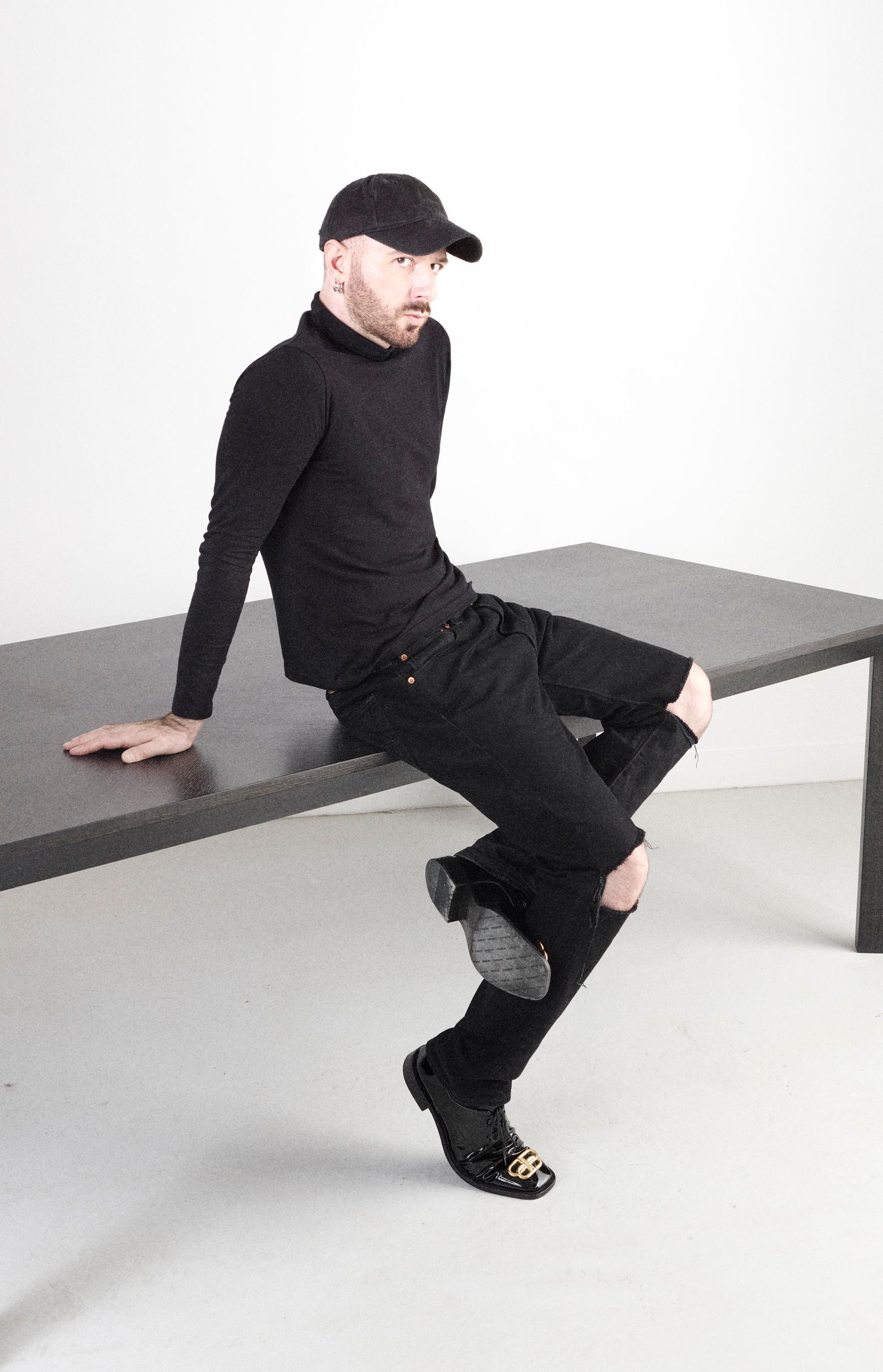
His signature style is all about oversized everything, irony in every detail, and a constant question—are we still talking fashion, or is this already a commentary on society?
Why is everyone talking about him right now? Because
People either love or hate what he does. There’s no middle ground. While other designers look for inspiration in archives, he draws from what’s happening outside his window. Sweatshirts with grocery store logos selling for thousands? That’s his idea. Platform boots so high that walking in them takes courage? His, too.
It may sound strange, but in a world where an influencer earns more than a professor, his approach to fashion makes sense. He doesn’t pretend that luxury is something serious and unattainable. Quite the opposite.
To understand where this provocative aesthetic comes from and why the fashion industry bows before it, we need to go back to the beginning. To Georgia, where it all started.
From Sukhumi to Paris: Biography and Career Path
Sukhumi, 1981. Demna Gvasalia was born in the capital of Abkhazia, at a time when no one could foresee the conflicts to come. His childhood in the Georgian city on the Black Sea lasted until 1993, when his family was forced to flee the civil war. This escape—dramatic, yet typical for thousands of families from the region—shaped his view of fashion as a universal language that transcends borders.
1997-2001: economics studies in Tbilisi. It seemed that life would follow a traditional path. But something was pulling in a different direction. In 2002 came the decision to move to Antwerp, to the renowned Academy of Fine Arts. There, among students from all over the world, a true passion for design was born.
The first real professional milestone came in 2006 with a job at Walter Van Beirendonck. Then followed several years in various places, leading up to 2009 and Maison Martin Margiela. This was where the real training happened—four years spent observing how fashion operates at the highest level. In 2013, it was Louis Vuitton, where he learned the inner workings of luxury fashion.
2014 changed everything. Vetements—a collective founded together with his brother Guram, who took charge of the business side. This collaboration proved to be crucial. As CEO, Guram was able to turn artistic vision into commercial success. The brand grew rapidly, but in 2019, there was a departure from the role of creative director.
In parallel, since 2015, the adventure with Balenciaga was underway. Being appointed creative director of this house was a leap into the deep end. The brand’s transformation took place in several stages:
- The revival of haute couture in 2021 after a 53-year hiatus
- A radical redefinition of streetwear aesthetics in the context of luxury
- Expansion into new product categories
- Increasing the brand’s revenue by over 300% within a decade
2023 also saw the exhibition “Cristóbal Balenciaga, Couturier” in Paris, showcasing the fusion of history and modernity.
March 2025 marks another milestone – the nomination as creative director of Gucci. Officially, this means responsibility for all product lines, from ready-to-wear to accessories, as well as overseeing the brand’s visual communication. The first collection is set to debut in February 2026.
This journey from Sukhumi to Paris shows how the experience of migration can shape one’s perspective on fashion. Each stage built something more—from technical craftsmanship, through understanding the business, to mastering the art of transforming historic brands. Now it’s time for Gucci and new challenges ahead.
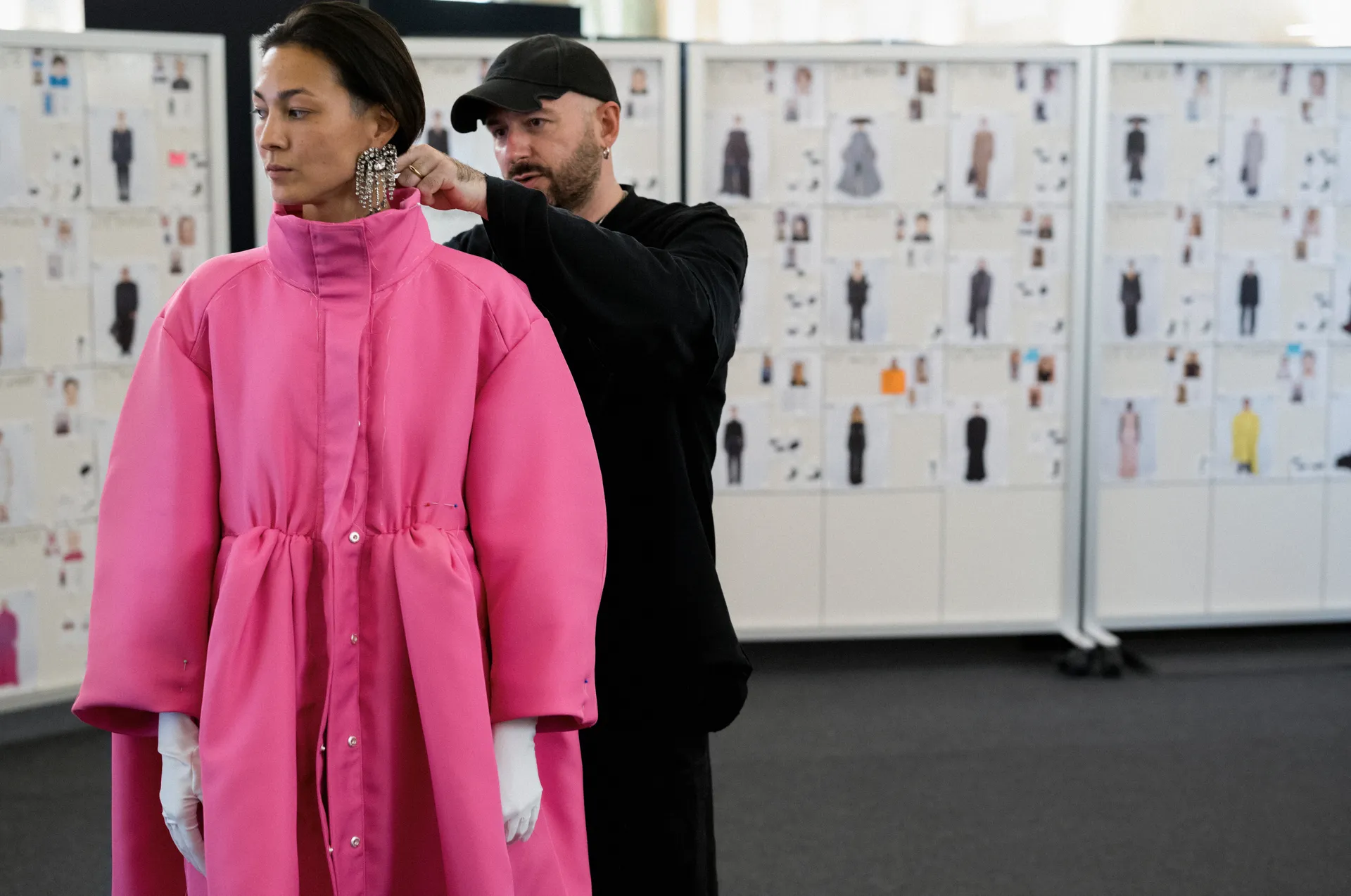
Aesthetics, innovation, and impact: how Demna set fashion on a new course
Demna’s aesthetic is essentially built on three pillars that have turned the fashion world upside down.
• Oversize as the new elegance – proportions so exaggerated they become an art form in themselves
• Couture deconstruction – breaking down classic cuts to their core and reassembling them anew
• “Ugly chic” – deliberately seeking beauty in ugliness, in everyday objects
I remember the first time I saw those bags that looked like IKEA bags. I thought—what is this supposed to be? And then I realized, that’s exactly where the genius lies. Taking an ordinary blue shopping bag and turning it into a coveted item worth $2,140.
Material innovations were a chapter of their own. The bio-synthetic “Intestina” fabrics from 2025 sounded like science fiction, but they worked. Shows using VR and 3D transformed the way collections were presented. These were no longer just shows—they were experiences. Recycling stopped being a dull necessity and became an artistic method. One of the jackets made from recycled plastic cost around $3,800, but people were buying them.
The numbers speak for themselves – Balenciaga’s revenues increased by over 20% during Demna’s most active period. The Triple S became an icon, even though everyone initially called them ugly shoes. Crocs with heels? An absurdity that turned into a must-have.
The cultural impact went beyond the boundaries of
Casting at fashion shows has changed as well. Diversity is no longer just a slogan—it has become reality. Refugee models, the “mud show” where models walked through mud, a show for Ukraine—all of this has created a new language of fashion. Fashion that addresses social issues, not hiding from them.
This provocative aesthetic does have its limits. Sometimes, pushing boundaries raises questions about where artistic freedom ends and responsibility begins. Yet it is precisely these tensions that reveal just how profoundly Demna has shaped what luxury means today.
Disputes and Responsibility: Controversies Surrounding Demna
Controversy in fashion is nothing new, but some cross the line of good taste in ways that shake the entire industry. Demna Gvasalia learned this the hard way.
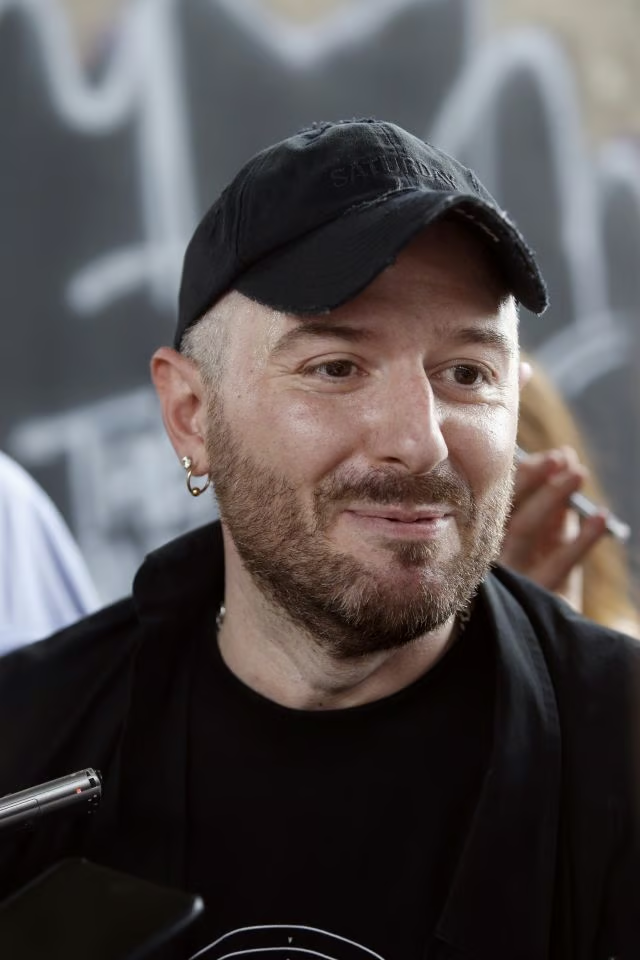
The 2022 case was a real earthquake. Balenciaga’s advertising campaign featured photos of children with teddy bear-shaped bags styled in fetish harnesses. In the background, there were court documents related to child pornography. The reaction was immediate and merciless. Social media erupted, celebrities distanced themselves from the brand en masse, and Kim Kardashian—one of the main ambassadors—officially condemned the campaign.
The business impact was immediate. Balenciaga lost several key contracts, Kering’s shares dropped, and calls for a boycott spread online. The brand filed lawsuits against the agencies responsible for the production, but the damage had already been done.
In February 2023, Demna broke his silence in an interview with “Vogue.” He spoke in a tone full of remorse—mentioning “trauma,” “responsibility,” and the “need to learn from mistakes.” He announced changes to creative processes and greater oversight of marketing materials. It sounded sincere, though some perceived it as PR-driven damage control.
That wasn’t the only front of criticism he had to face.
For years, there have been accusations of cultural appropriation—especially when the brand released expensive versions of everyday items associated with working-class or immigrant cultures. Bags resembling shopping totes costing several thousand dollars sparked controversy. Critics spoke of “poverty fetishization” and exploiting the aesthetics of people who cannot afford luxury brands.
Paradoxically, even Demna’s eco-friendly statements were met with skepticism. How can one reconcile fighting for the planet with encouraging people to buy more expensive gadgets? This question still remains unanswered.
Relationships with celebrities were rebuilt gradually. Some returned after a few months, while others kept their distance. The process was slow and cautious—no one wanted to be the first to forgive publicly too soon.
This whole situation has shown just how fragile reputations are in the age of social media. One bad decision can destroy years of building an image. But it also highlights how important it is to take responsibility for your actions, even if not everyone will be convinced.
What’s next for Demna and Gucci: insights and perspectives
Demna Gvasalia leaves behind an incredible legacy of brand transformation. His move to Gucci is a moment that could redefine not only the fashion house but the entire luxury industry.
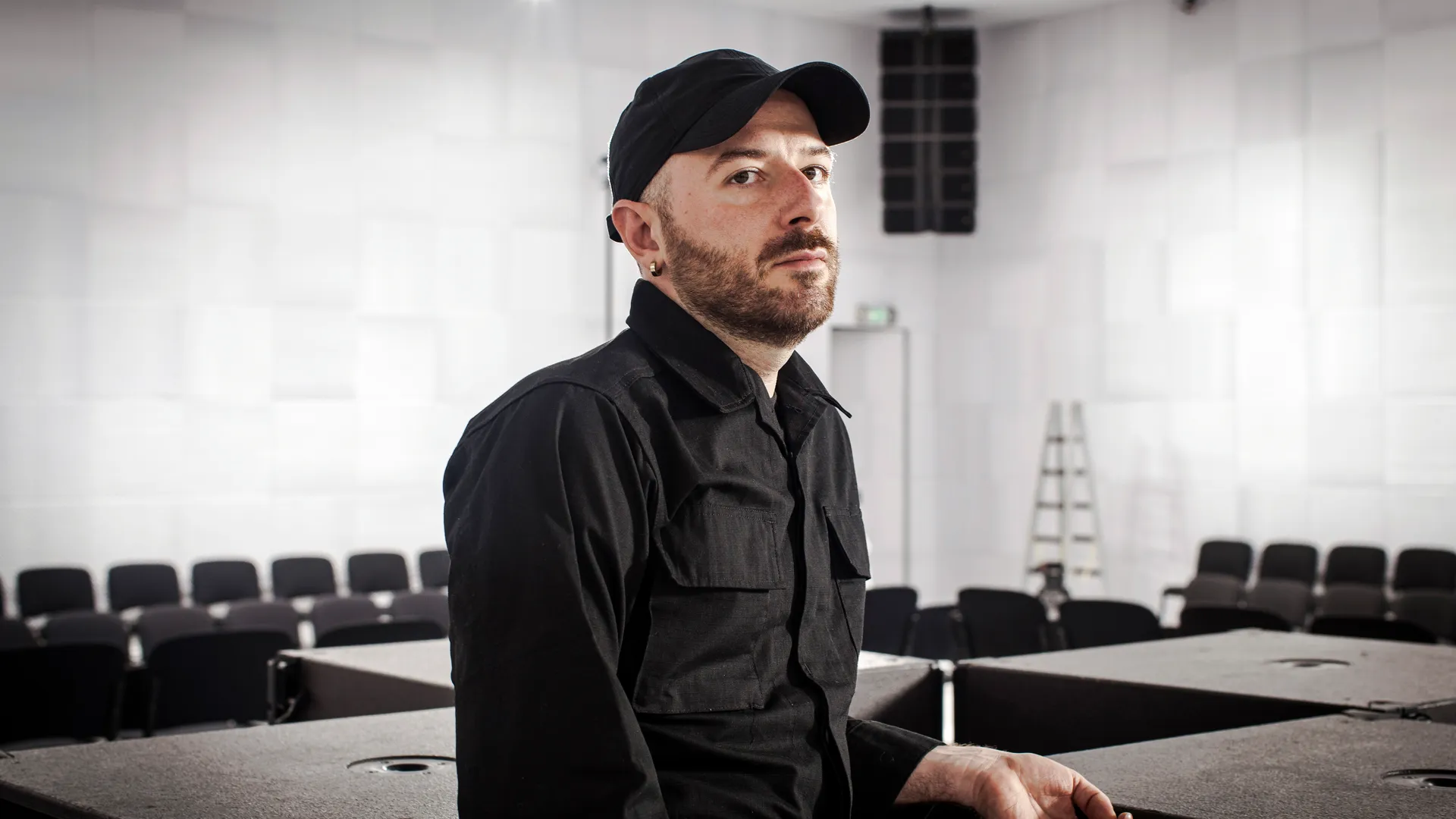
Key lessons emerge from his journey so far. First—he managed to radically transform brands while preserving their DNA. Under his leadership, Balenciaga never stopped being Balenciaga, but became something more. The second lesson is about social storytelling—his designs always carried a commentary on reality. The third is the ability to manage creative risk. Controversy? Yes, but always deliberate.
What could this mean for Gucci? I see several possible scenarios unfolding.
The conservative scenario assumes a gentle evolution—the GG iconography will remain, but will gain new contexts. Italian craftsmanship will meet his minimalist aesthetic. This may be a safe path, though not necessarily a groundbreaking one.
The hybrid option sounds more intriguing. Here, Demna’s street idiom could intertwine with Florentine heritage in a way we haven’t seen before. I’m thinking of collections that would look just as good on the red carpet as they do on the street.
The boldest scenario is a complete deconstruction of what Italian luxury truly means. But is Kering ready to take such a risk?
The risks are obvious. Striking the right balance between provocation and responsibility will be crucial. Investors’ expectations for immediate results may clash with the need for time to build a new brand identity. The timing of the first collection also matters—move too quickly and it may lack refinement, wait too long and the momentum could be lost.
Watching this transformation is like witnessing fashion history unfold in real time. Demna has the opportunity to write a new chapter not only for Gucci, but for the entire luxury segment. The question is—are we, as the audience, ready for what he will create?
Michael High Class Fashion