
Every year, a bottle of Chanel No. 5 is sold somewhere in the world every thirty seconds—have you ever wondered who is behind this phenomenon?
The question “Who is the face of Chanel?” is especially intriguing today. In an era of social media and rapidly shifting trends, a brand that has endured for over a century still manages to surprise us with its choice of ambassadors.
The concept of a “brand face” in the world of luxury is much more than simple advertising. It’s a person who not only wears the clothes or uses the perfume—they embody the very spirit of the brand. They become a living symbol of the values the company wants to convey. In the case of Chanel, we’re talking about elegance with a hint of rebellion, classic style with a touch of provocation.
Who is the face of Chanel? And why is it so important
Why is this topic so important right now? Chanel is reaching record revenues—surpassing $15 billion in 2022. At the same time, 94% of consumers worldwide recognize the double C logo. This doesn’t happen by chance. Behind this success are specific individuals who have shaped the brand’s image for decades.
It must be said that Chanel’s choices often spark controversy. Sometimes they go for established Hollywood stars, other times for young talents from TikTok. This unpredictability is actually part of their strategy.
In this article, we’ll take a closer look at three key aspects:
- How the faces of Chanel have changed over the decades
- Who currently represents the brand and why were these particular individuals chosen
- What trends will shape future ambassador selections
Each of these aspects demonstrates how the brand balances tradition with modernity.
To understand Chanel’s decisions today, it’s worth going back to the very beginning. The history of the brand’s ambassadors is a fascinating journey through evolving standards of beauty and fame.
From Coco to Lagerfeld – the historical evolution of ambassadors
Imagine a small atelier on rue Cambon in 1920. Gabrielle Chanel personally fits a dress for a client, her movements as precise as a surgeon’s. She didn’t know then that she was becoming the first informal face of her brand—no strategy, no plan, simply living what she created.
| Date | Event and ambassador |
|---|---|
| 1909-1971 | Coco Chanel – the founder as the natural face of the brand |
| 1931 | Samuel Goldwyn’s offer – 1,000,000 USD for collaboration with Hollywood |
| 1983 | Karl Lagerfeld takes the creative helm |
| 1987 | Inès de la Fressange – the first official Chanel muse |
| 2019 | Virginie Viard replaces Lagerfeld, a new era of ambassadors |
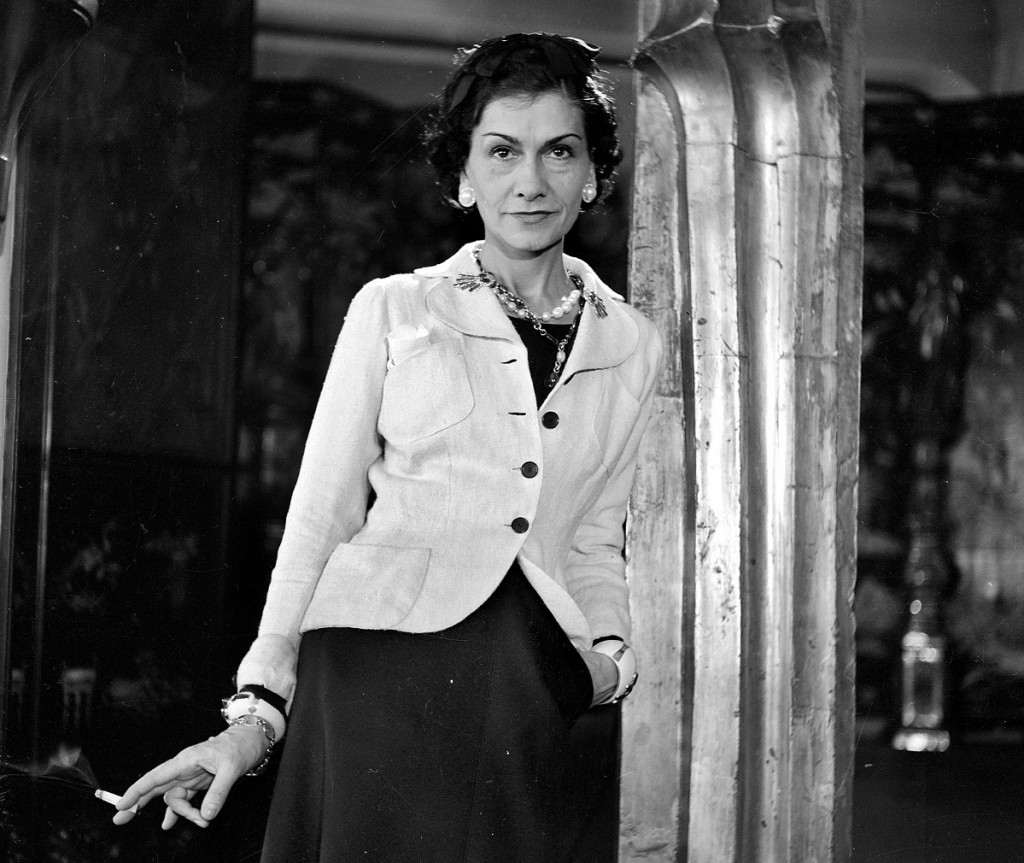
Coco was… well, it’s hard to call her an ambassador in today’s sense of the word. She simply was the brand. Her way of dressing, her views on women’s emancipation, even the way she held a cigarette—all of it shaped the image of Chanel. I remember reading her biography and thinking that today, someone like her would have a whole PR team planning every public appearance.
The breakthrough came in the 1930s, when Samuel Goldwyn offered her a million dollars to design costumes for Hollywood stars. That was an astronomical sum—back then, you could buy half of Manhattan for that kind of money. Chanel accepted the offer, but the collaboration didn’t go smoothly. She designed for real women, not for the cameras.
The real revolution only began with Karl Lagerfeld in 1983. This man had an instinct for people—he knew who fit the brand before they even realized it themselves. In 1987, he chose Inès de la Fressange as the first official muse. It was a brilliant move, because Inès had something of Coco in her—that French nonchalance, but in a modern version.
Lagerfeld formalized the entire ambassador system. It was no longer random—every choice was deliberate, every face represented a different aspect of the brand. He understood that in the age of global communication, you need more than one face. One person can’t reach every market, every generation.
His era lasted 36 years and essentially shaped the way we see the relationship between brands and their ambassadors today.
When Karl passed away in 2019, Virginie Viard faced a tough challenge. She inherited not just a fashion house, but an entire system of people connected to the brand. Her first decisions regarding ambassadors were cautious—she didn’t want to revolutionize what had worked for decades.
It’s fascinating to see this evolution from a single person to an entire system of faces. Coco was a brand in her own right. Today, we have dozens of ambassadors across different markets and age groups. It shows just how complex the world of communication has become.
Virginie Viard left some gaps in this system—spaces that needed fresh blood, new faces who could speak to contemporary audiences. These spaces would soon be filled by a whole new generation of ambassadors.
Today’s Faces of the Brand – Current Chanel Ambassadors
I remember that spring of 2021—the Chanel SS campaign with Charlotte Casiraghi caused such a stir in the media. Suddenly, everyone was talking about the return of royal elegance to fashion. It was a perfect move, as people were longing for something more refined after the pandemic.
| Ambassador | Year of announcement | Line/product |
|---|---|---|
| Marion Cotillard | 2020 | Chanel No. 5 |
| Charlotte Casiraghi | 2021 | Cruise |
| Penélope Cruz | 2018/active until 2024 | Cruise |
| Ola Rudnicka | 2020 | Pre-collections, shows |
| Gaspard Ulliel | 2020-2022 | Bleu de Chanel |
Actually, it’s interesting how they choose these names. Marion Cotillard as the face of No. 5 was a truly well-thought-out move—her French elegance was a perfect match for the classic. And you could see the results immediately, with sales rising by 20.0% in the very first year of the collaboration. Not every brand could boast such numbers in 2020, when the perfume market took a major hit.
Charlotte Casiraghi, on the other hand, brought something different—that aristocratic chic, but without going overboard. Her presence in the Cruise campaigns made the collections feel more accessible to younger clients. And that wasn’t a given—the Monaco royal family could have easily been intimidating.
It was similar with Penélope Cruz—her Spanish temperament combined with Parisian sophistication created a truly powerful narrative.
Ola Rudnicka represents a completely different direction—a focus on Eastern Europe and the younger generation. It’s clear that Chanel is thinking strategically about different markets. Gaspard Ulliel with Bleu de Chanel showed how you can refresh the men’s line without losing that distinctive brand DNA.
It all comes together as a cohesive mosaic. Each name plays its part—from classic elegance to aristocratic chic to modern diversity. These aren’t random choices, but a carefully considered strategy for building the brand’s image on multiple levels.
How do these names lay the groundwork for the next decade? I think they’re creating a foundation for even bolder experiments with the brand’s image.
What’s next for the face of Chanel? – perspectives and conclusions
I’ve been wondering lately what the future of Chanel’s ambassador strategy will look like. The luxury sector is evolving rapidly, and the brand needs to keep up with trends that just a few years ago seemed like science fiction.
Trend: Virtual ambassadors on the horizon
Digitization is already impacting every industry, but in luxury, it’s just the beginning. Virtual influencers are no longer just a curiosity—they’re becoming a real alternative. Imagine a Chanel ambassador who never ages, is free from scandals, and can be in Paris and Tokyo at the same time. Sounds absurd? Maybe. But in the metaverse, things like this will be the norm.
This doesn’t mean the end of real faces—rather, a complement to them. Chanel will likely experiment with a hybrid approach, where real people collaborate with virtual personas.
Forecast: Asia rules everything
“By 2030, the Asian market will account for around 50% of global luxury purchases” – this is no longer just a prediction; according to McKinsey analysts, it’s almost a certainty.
For Chanel, this means one thing – even greater investment in ambassadors from this region. China, South Korea, and Japan are not just large markets. These are places where global beauty and fashion trends are born.
Some might think this is obvious. But the scale of change will be greater than we expect. Asian ambassadors will no longer be an addition to European strategies – they will become their core.
What you can do as an industry observer
If you want to keep up with these changes in real time, you have several options. First—Chanel’s official channels on LinkedIn and Instagram. That’s where the first hints about new collaborations appear.
Second, it’s worth following Bain & Company’s luxury reports. They’re published quarterly and provide a broader perspective. Third—social listening. Tools like Brandwatch or Mention will show you what people are talking about before mainstream media picks it up.
Don’t forget about Asian platforms, too. WeChat, Weibo, TikTok—information often surfaces there before it reaches Western media.
A look at 2030
In seven years, the world of luxury may look completely different. Virtual ambassadors will likely be the norm, not the exception. The Asian market will set the pace globally. And us? We’ll be watching as traditional French elegance adapts to the digital reality.
One thing is certain – Chanel has always known how to reinvent itself. Now, it’s facing perhaps its biggest transformation since the days of Coco.
Riki
fashion editor
High Class Fashion