
$31 million for a single watch—that’s what someone paid in November 2019 for the Patek Philippe Grandmaster Chime at a charity auction.
Sounds crazy, right? But when I look at what’s happening in the world of luxury in 2025, I start to see the logic. In times when inflation is rampant and traditional investments feel uncertain, people are searching for more than just money sitting in an account.
Patek Philippe isn’t just an ordinary watch brand. It’s a phenomenon that defies the usual market rules. Imagine this—they produce only about 60,000 to 70,000 pieces a year. For comparison, the mass watch industry churns out billions of units.
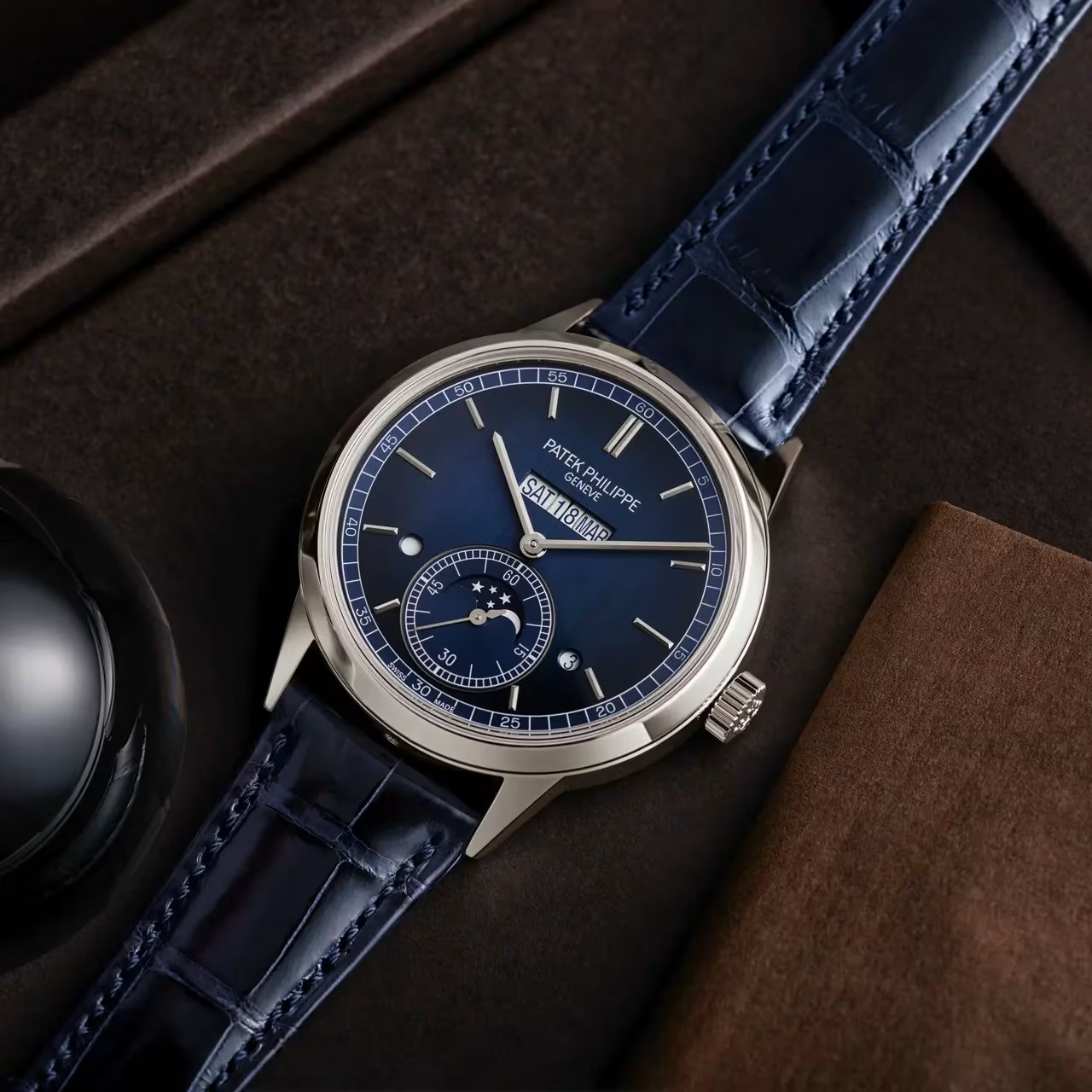
Why is Patek Philippe so expensive? – a manufacturer with true watchmaking flair
The owners of the brand have their own philosophy about this. “You never actually own a Patek Philippe. You merely look after it for the next generation.” It sounds lofty, but perhaps there’s some truth to it?
I sometimes wonder why this particular Swiss company stirs up so much emotion. Why are wealthy people willing to pay more for their watches than for an apartment in the center of Warsaw?
The answer isn’t simple. It’s a blend of several factors that together create something truly unique:
- Craftsmanship and technical innovation passed down from father to son for generations
- Social prestige and status that come with owning such a watch
- The secondary market, where prices are rising faster than on the stock exchange
Each of these elements tells its own story. Some are obvious, others are full of surprises.
Let’s start with what lies beneath the dome of every Patek Philippe—the meticulous craftsmanship that, by all rights, shouldn’t exist in the 21st century.
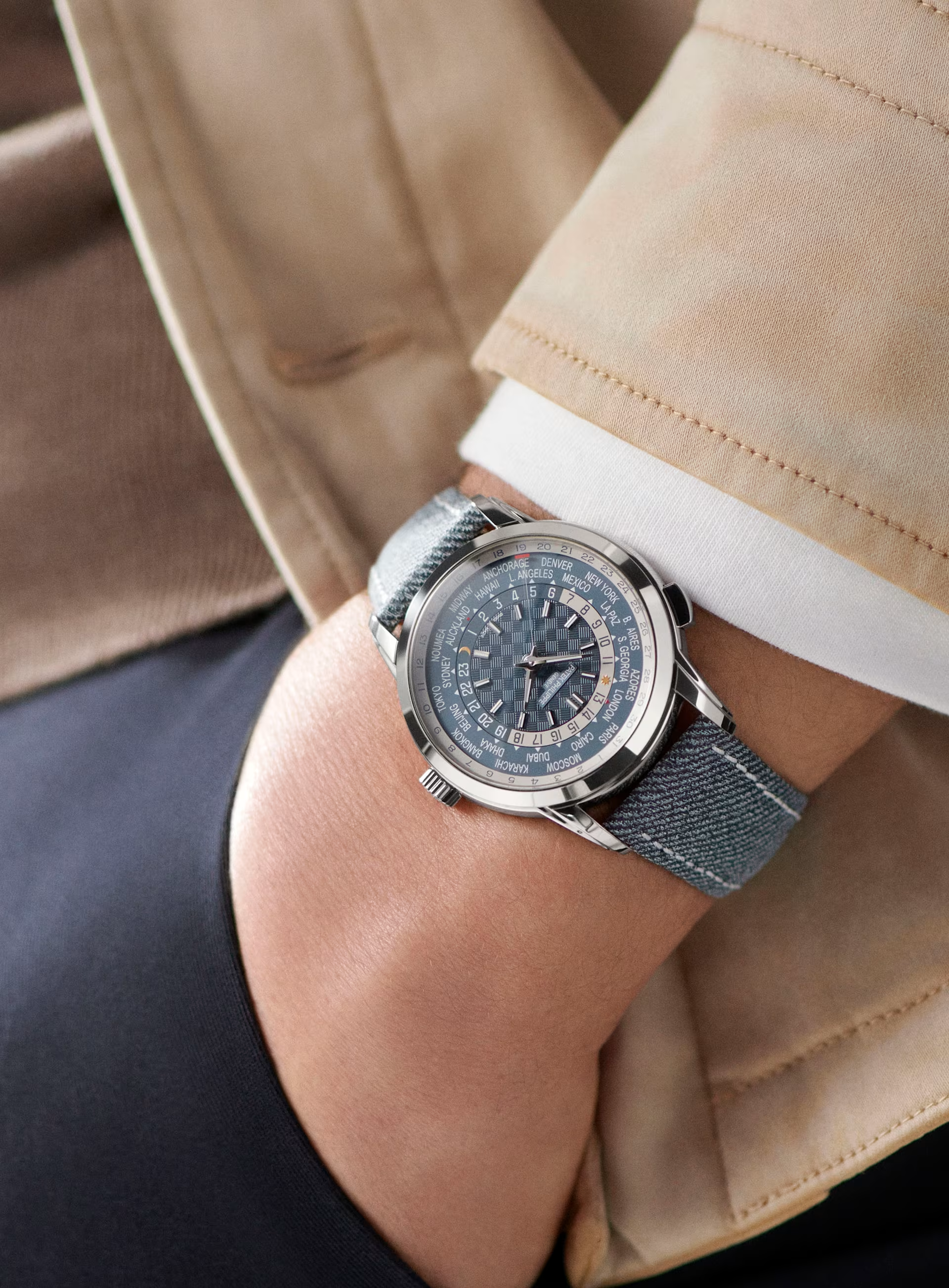
Craftsmanship and innovation – the heart of costs
Microscopic tolerances of 0.01 mm. It sounds abstract, but this is exactly where the real magic behind Patek Philippe’s astronomical prices begins.
I remember the first time I visited a watchmaker’s workshop. I thought it would be like a car mechanic’s shop, just smaller. I was completely wrong. It’s much more like a surgeon working under a microscope.
18-karat gold is just the beginning. Patek Philippe uses platinum, which costs more than gold but has one major advantage—it doesn’t react with anything. Literally anything. Diamonds are selected by hand, each one inspected under a loupe. Raw materials often account for 30% of the final price of the watch.
But the real magic happens during assembly. One master works on a single movement for months. Hundreds of microscopic components must work together with the precision of a Swiss reference meter. Every part is checked three times—before assembly, during, and after completion.
| Complication | Function | Lead time |
|---|---|---|
| Perpetual Calendar | Calendar until 2100 | 7-10 years |
| Minute Repeater | Striking the hours | 5-8 years |
| Split-Second Chronograph | Double seconds hand | 4-6 years |
A perpetual calendar is truly remarkable. The mechanism “remembers” different month lengths, leap years—everything, with no adjustment needed until the year 2100. Why until then? Because that’s when the Gregorian calendar has a minor inconsistency. The Swiss anticipated this three centuries ago.
Minute repeater is even more astonishing. The watch plays a melody, chiming the hours and minutes. The sound must be pure, loud, but never harsh. Adjusting this mechanism is pure artistry. The watchmaker needs an impeccable ear.
And the split-second chronograph? Two second hands on a single axis. One can stop while the other keeps running. Then the first instantly catches up with the second. Mechanics that look like magic.
Nautilus Ref. 5712/1R-001 is a perfect example of this philosophy. 18-carat rose gold, perpetual calendar, moon phases, day and month indicators. The price? Around 300,000 PLN. Sounds crazy, but when you break it down…
Just the movement platform takes 6 months to build. Finishing each component—another 3 months. Quality control—an additional month. Then there are raw materials, machine depreciation, master watchmakers’ salaries. Suddenly, that 300,000 doesn’t seem so abstract.
There are no shortcuts in this industry—every component must be flawless, because a single defect ruins the whole.
It’s this relentless pursuit of technical perfection that lays the foundation for something more than just a watch. It creates a symbol of prestige that goes far beyond the watchmaker’s workshop.
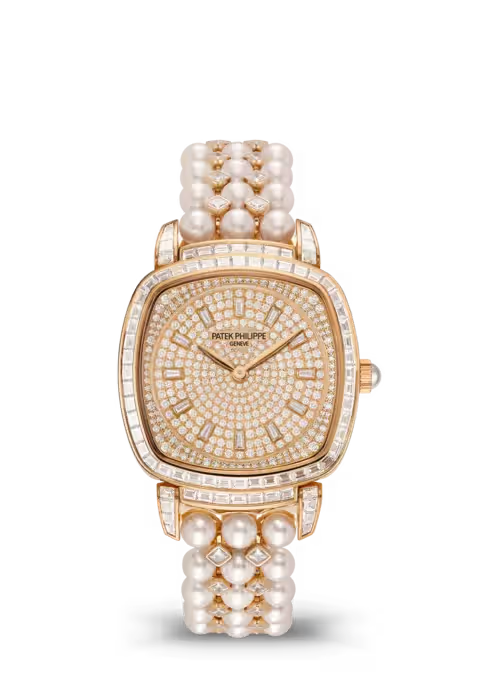
Heritage and prestige marketing
I once saw a sketch by Antoni Patek in a museum—he was drawing the mechanism of his first watch. Those delicate lines, every gear rendered with precision… You immediately sense this was about more than just business.
That’s how the story began for a brand that now turns people into collectors willing to wait years for a single watch. Antoni Patek and Franciszek Czapek founded the company on 01.05.1839 in Geneva, but that Polish connection has always fascinated me. It wasn’t by chance—Patek fled Poland after the November Uprising, so you could say Patek Philippe has roots in Polish history.
Key moments in the brand’s history:
- 1839 – Patek & Czapek begin producing pocket watches with a Polish vision of craftsmanship
- 1851 – Adrien Philippe joins with the invention of the winding crown, the company becomes Patek Philippe
- 1932 – The Stern family takes over the brand, ensuring continuity for generations to come
- 2024 – The launch of the Cubitus collection sparks controversy, but confirms the brand’s boldness
It’s this very continuity that creates intangible value. When I see the slogan “You never actually own a Patek Philippe. You merely look after it for the next generation,” I immediately recognize it as marketing genius. The “Generations” campaign isn’t selling watches—it’s selling emotion, heritage, and a sense of responsibility for the future.
I remember the scandal that erupted in 2024 over the Cubitus collection. Collectors shouted betrayal of tradition, and Philippe Dufour publicly criticized the new models. And CEO Thierry Stern? He calmly defended his vision. He said something along the lines of: ” A brand must evolve to survive.” And he was right—the controversy only fueled more interest.
That’s exactly how prestige marketing works at Patek Philippe. They don’t shout about themselves on every corner, they don’t sponsor athletes. Instead, they craft a narrative about heritage and responsibility for tradition. Every watch is more than just a mechanism—it’s a piece of history started by a Polish émigré.
This emotional storytelling is the foundation of the price people are willing to pay. Because they’re not just buying a watch—they’re buying a place in a story that’s been unfolding for nearly 185 years.
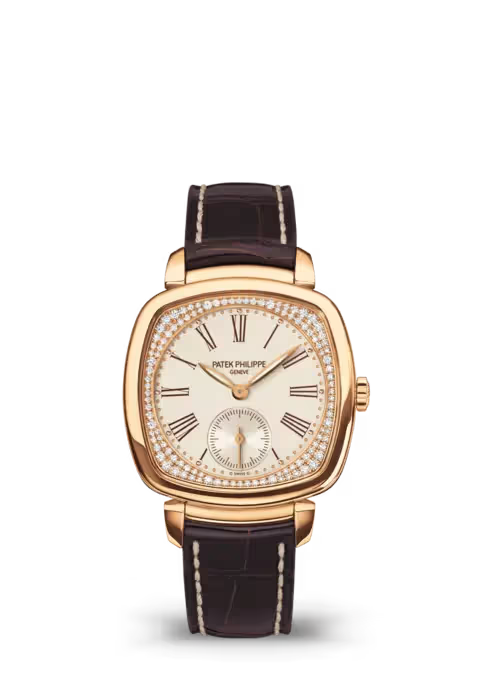
Market, scarcity, and investment value
I’ve always wondered why people pay millions for a watch that costs a fraction of that in the store. Patek Philippe is the perfect example of how artificial scarcity works.
The manufacturer releases around 60,000 pieces a year. That’s ridiculously low given global demand. In Warsaw, London, or New York, waiting lists for popular models stretch on for years. Some clients wait a decade for a call from the boutique.
The best example is the Nautilus Ref. 5711. The retail price was around 150,000 PLN. On the secondary market, the same piece would fetch over a million PLN. That’s a sixfold difference! I’ve seen auctions where prices skyrocketed just because someone absolutely had to have that specific model.
Auction data is even more shocking—70% of the hundred most expensive watches ever sold at auction are Patek Philippe.
Let’s compare the retail and auction prices of three models from 2022:
- Nautilus 5711: 150,000 PLN vs 1,200,000 PLN
- Aquanaut 5167: 85,000 PLN vs 450,000 PLN
- Calatrava 5227: 120,000 PLN vs 280,000 PLN
These numbers show just how disconnected the market had become from reality.
But between 2023 and 2025, a correction took place. Prices dropped by 20-30 percent. Suddenly, it turned out the emperor had no clothes. Investors who bought at the peak lost a fortune. I remember talking to a collector—he bought a Nautilus for 900 thousand, and now it’s maybe worth 600 thousand.
That doesn’t mean the madness is over. Demand still exceeds supply. The difference is, people are more cautious now. Some models are still gaining value, others are losing. The market has become more unpredictable.
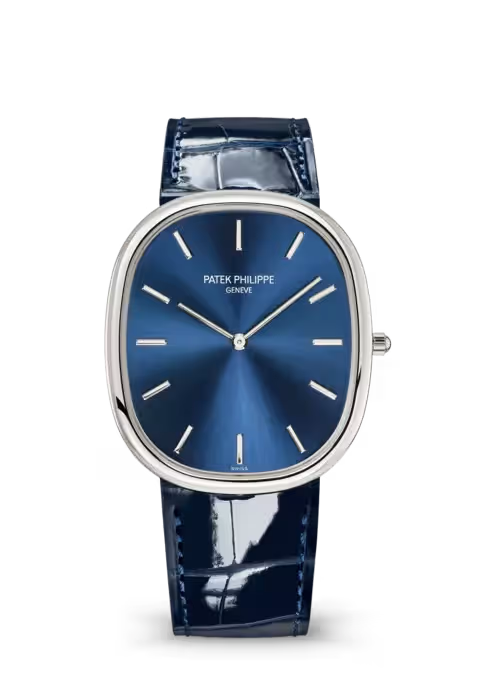
Interestingly, the decline mainly affected sports models. Classic, elegant watches are holding their value better. This could signal a shift in tastes, or simply be a correction after years of frenzy.
Where is luxury headed? Conclusions and forecasts
I sometimes wonder if I truly understand why we pay a fortune for watches. These three pillars of high prices are actually quite simple concepts—craftsmanship means hundreds of hours of manual work, prestige gives us a place in the social hierarchy, and the market simply rewards rarity with a high price. But is that really enough to justify astronomical amounts?
Ethical controversies are gaining momentum. On X, you can increasingly read comments like, “while people are starving, someone buys a watch for the price of a house.” Another post read: “Patek Philippe is a symbol of what’s wrong with capitalism—artificial scarcity for the wealthy.” It’s hard to deny that exclusivity has its dark side.
Growing social inequality makes luxury more and more controversial. On the other hand… maybe that’s exactly what drives demand? I’m not sure about that logic, but the market seems to play by its own rules.
Future trends in the high-end segment look interesting:
- Sustainable materials will become the norm – Patek is already experimenting with gold recycling
- NFT watches are no joke, even if it sounds absurd
- Asia is taking over the market, especially young collectors from Singapore
China is changing everything. Millionaires there buy watches like stocks—quickly and without sentiment. This is impacting the entire industry.
If you’re considering an investment in 2026, first check the history of a specific model. Avoid the latest limited editions—they’re often just a marketing trap. It’s better to go for classics with a proven track record of growth over several years. And don’t forget about insurance costs.
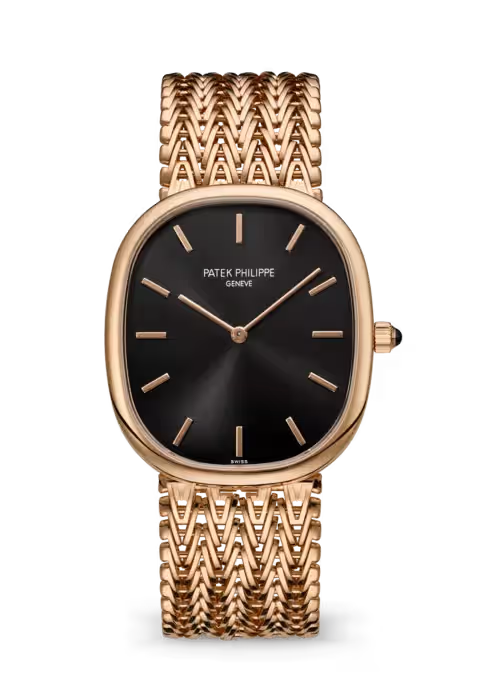
Service also comes at a price. Sometimes higher than you expect.
In ten years, will we still be wearing watches on our wrists, or will they become mere collector’s items locked away in safes?
Xen
editor inspirations & lifestyle
High Class Fashion