
In winter, around 80% of women complain about dry skin—redness, burning, and a feeling of tightness. Frost outside, dry radiators inside. Our skin really goes through a tough time. That’s when home turns into a little spa—only in a premium version.
Winter skincare at home – in a premium dimension!
It’s not just a few drugstore masks and a candle in the bathroom. We’re talking about a true relaxation space: high-end products (the kind with active ingredients you can barely pronounce), professional-grade beauty devices, and carefully curated experiences—aromatherapy, the right music, perfect lighting. The whole setup feels like a luxury spa, only it’s in your own home.
After the COVID-19 pandemic, the at-home spa market exploded—globally, it’s worth around $150 billion. Sales of “spa kits” soared because we discovered we don’t need to book a salon appointment to feel truly pampered.
In the next parts of this article, I’ll show you how winter affects your skin’s physiology, which premium ingredients make a real difference, which technologies are worth having at home, and how to draw inspiration from Polish spa traditions. All without breaking the bank, but with results that rival professional treatments. Because you deserve more than just average skincare.
How winter changes your skin – the science behind the spa ritual
In winter, your skin faces a true endurance test—and it’s not just about how it feels. When temperatures drop below zero, specific, measurable changes occur in the epidermis. The most important one? The weakening of the hydrolipid barrier—this microscopic “protective coat” made of lipids and keratin that keeps moisture in your skin and irritating factors out.
What does winter do to your hydrolipid barrier?
TEWL (transepidermal water loss) — sounds scientific, right? In practice, it’s simply a measure of how much water your skin loses. In winter, TEWL can increase by as much as 25-30% compared to summer. Why? Because several factors hit you at once:
- Frost outside (vasoconstriction, reduced oxygenation)
- Dry air from radiators (humidity drops below 20%)
- Sudden temperature changes: street → subway → office → home
- The wind that literally “strips” lipids from the skin’s surface
The result? Roughness, burning, red patches, flaking around the temples and chin. The skin reacts like cracked porcelain—it feels like nothing will help anymore.
Why premium spa rituals really work
This is where research comes in. Regular use of layered, rich (occlusive) formulas can reduce TEWL by up to 70%—within just 4-6 weeks. Reportedly, 70% of participants noticed improvement after consistent “spa rituals” lasting 45-90 minutes, several times a week. Why does it work? Because skin needs time to absorb active ingredients and to be “compressed”—literally like in geology, layer by layer.
Designing my home spa – space, ambiance, and technology
Imagine this: outside the window, evening has fallen, the temperature hovers near zero, and you step into the bathroom where soft, warm lighting awaits, a hint of lavender oil lingers in the air, and your favorite Lo‑Fi playlist is playing. No need to book a spa appointment—you’re creating it here and now, on your own terms. Premium at home is all about a carefully crafted atmosphere and a few clever technologies that elevate your evening ritual to a whole new level.
The atmosphere of a five-star spa within your own four walls
First rule: order and minimalism. Clear the clutter from your countertop, leaving only the essentials. Then:
- Light – turn off the fluorescent lamp, light a candle or switch on a lamp with a warm, dimmed source (LED 2700 K)
- Fragrance – diffuser with essential oils (lavender, eucalyptus, cedar), avoid making it too intense
- Sound – relaxing music or nature sounds, barely audible in the background
- Humidity – humidifier set to 50-60% (winter heating drops this level to 20-30%, which your skin feels immediately)
- Soft textiles – fluffy towels, a bathrobe, a small rug under your feet
Premium technologies that elevate the ritual experience
And this is where the subtle magic of gadgets begins:
| Device | Effect on the skin |
|---|---|
| Sonic toothbrush (e.g. Foreo Luna) | Deep cleansing, micro-massage |
| LED mask (red light) | Regeneration, collagen stimulation |
| Microcurrents (Foreo Bear 2) | Tightening, needle-free lifting |
| Chilled jade roller | Boosting circulation, reducing swelling |
| Dyson Airwrap | Hair spa – gentle drying + volume |
Let me also mention AI apps: Neutrogena Skin360 analyzes skin photos, while L’Oréal Perso dispenses serum tailored to your current needs. This isn’t science fiction—it’s real support, especially when winter changes the conditions and you’re unsure whether to boost hydration or add vitamin C.
Treat preparing your space as an important ritual—because that’s what transforms the evening from a “mandatory routine” into your daily oasis.
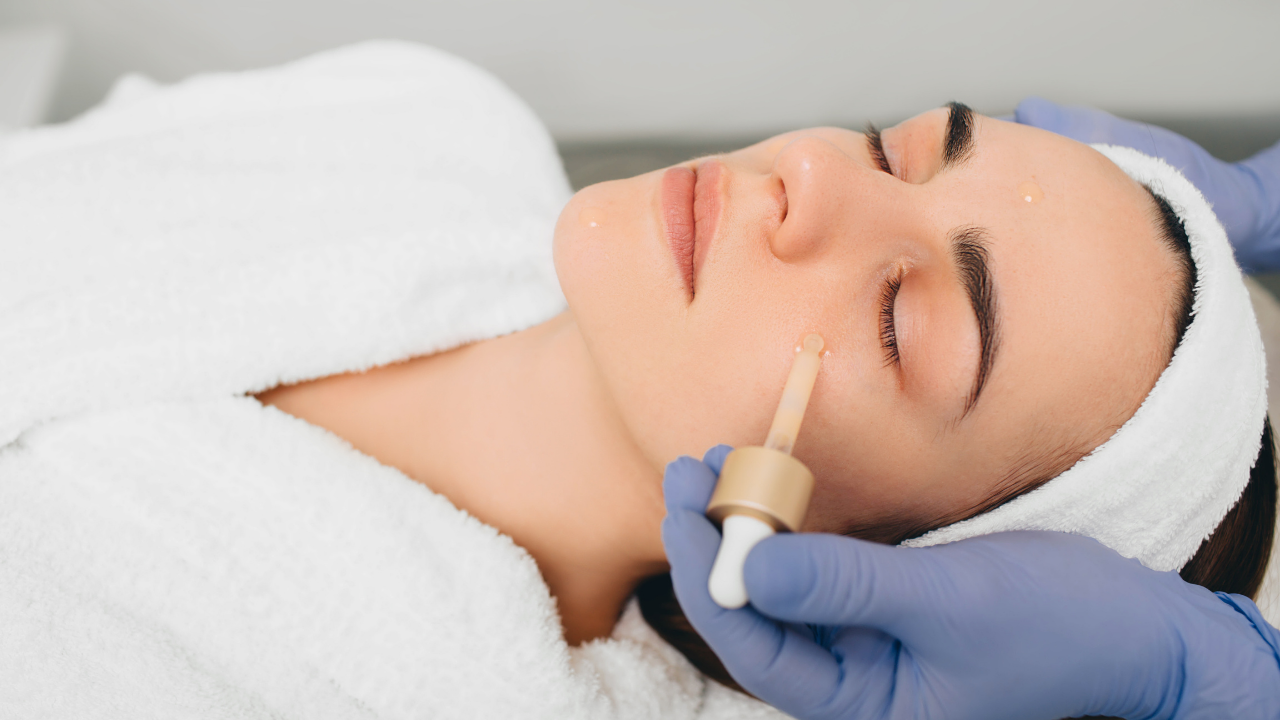
At the heart of the ritual: step-by-step winter facial care
In winter, your skin doesn’t need more steps, but rather greater precision—and a bit more time. Luxury isn’t about exclusive products, but about consistency: setting aside a calm 60 minutes in the evening, establishing a routine, and sticking to it throughout the season. The following routine is a premium version, but flexible—you can shorten it to 30 minutes or expand it with a massage.
Winter face ritual from A to Z
- Cleansing (daily) – use a gentle milk or oil with a pH of around 5.5. In winter, avoid foams as they can dry out your skin even more.
- Enzymatic exfoliation (1-2 times a week) – papain or bromelain is gentler than mechanical scrubs. Sensitive skin? Once a week, no longer than 5 minutes.
- Serum (daily) – hyaluronic acid 2% and peptides. Apply to damp skin.
- Devices – a chilled jade roller (around -5°C) after serum boosts circulation, while gua sha offers a moment of relaxation and lymphatic massage.
- Mask (1-2 times a week) – alginate, peat, or thermal brine. At this stage, you can also use an LED mask with red light (collagen!).
- Occlusive cream (daily) – ceramides + squalane lock moisture beneath the skin.
- SPF 50 (morning only, even in winter) – frost doesn’t block UV.
Note: Retinoids in winter can be controversial—they often cause redness for many people. If you use them, reduce the frequency and always apply under occlusion.
You don’t have to do everything every evening—adjust the pace to how your skin feels.

The ingredients of luxury: what really works in winter skincare
What are you really paying for when you buy a cream for 1,200 PLN instead of a pharmacy one for 80? Sometimes it’s for caviar and gold, which sound luxurious but don’t outperform ceramides from a more affordable line. Other times, it’s for a genuine difference in the formula and user experience.
Foundations: ceramides, squalane & company
In winter, ingredients that help rebuild the hydrolipid barrier are essential. Ceramides have shown around 85% effectiveness in epidermal regeneration in clinical studies, squalane provides up to 92% hydration, and hyaluronic acid—depending on its molecular weight—works either on the surface or deep within the skin. Niacinamide at a 5-10% concentration evens out skin tone and reduces water loss, while Centella Asiatica soothes redness caused by frost. You’ll find these ingredients just as readily in CeraVe as in La Mer.
| Ingredient | What does it do for your skin in winter |
|---|---|
| Ceramides | Barrier restoration, 85% effectiveness |
| Squalane | Hydration up to 92%, lightweight texture |
| Hyaluronic acid | Different textures – from the surface to the deepest layers |
| Niacinamide 5-10% | Even skin tone, less TEWL |
| Centella Asiatica | Soothing irritations and redness |
Between caviar serum and pharmacy cream
The premium segment focuses on caviar extracts, 24K gold, rice ferments, rare plants—and Polish spa ingredients: peat, brines from Krynica or Połczyn-Zdrój. Often, you’re paying for encapsulation technology, elegant packaging, and the ritual of application itself. Is the effect really twice as good? Not always—but premium can mean a more pleasant texture, better scent, and a more stable formulation.
Controversies:
- Premium vs. budget – CeraVe vs. La Mer: price doesn’t always equal results
- Greenwashing – 60% premium consumers in Poland choose “natural” products, but new EU regulations expose vague claims
- Sustainable packaging – algae, less waste – the trend is growing, though still niche
In winter, always check the ingredients list from the start: if the first five items are water, glycerin, and silicones, even the most expensive cream might not deliver on its promises. But if you spot ceramides + squalane + niacinamide—regardless of the price—it will work.
Polish inspirations and sample winter home spa rituals
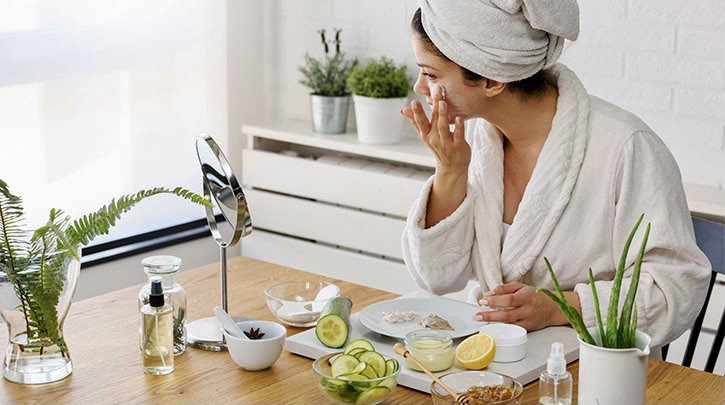
30-Minute Evening Reset Ritual
You light a candle, play some calming music—and suddenly, a small corner of your bathroom transforms into your own private spa. It doesn’t take hours at all. After a long day, just half an hour is enough to revive your skin: oil cleansing (2 minutes), a warm towel compress (1 minute), a serum with niacinamide and ceramides (a moment to pat it in), and a rich night cream. Simple, quick, and you’ll see the results by morning—your face feels less tense, your eyes look refreshed.
A weekend spa inspired by Polish health resorts
On weekends, you can treat yourself to something extra—a 90-minute ritual inspired by the traditions of Krynica-Zdrój or Połczyn-Zdrój. Start with a mineral or peat bath (15 minutes of relaxation in the tub), followed by a gentle body scrub (soothing, not abrasive), an alginate face mask (20 minutes with cucumber slices on your eyes—classic!), a rose oil facial massage, and finally, a nourishing serum. The theme is “health through nature”—just like in the spa parks.
Sample premium starter sets? La Mer Spa Kit (around 1,500 PLN, includes nourishing cream and oil), Sisley Winter Glow (approx. 1,200 PLN, mask + illuminating fluid), or the Polish Eris VIP (approx. 400 PLN, winter-dedicated creams). These are inspirations, not ads—you can create your own set.
Fun fact: after the pandemic, the boom for such sets skyrocketed—Douglas.pl reported a 40% increase in winter set sales during Black Friday 2025. People discovered that luxury can be brought home. And really—why not?
Your year-round plan for winter skin – from ritual to habit
You’ve come a long way—from understanding why winter skin needs extra care, to creating your own home spa oasis, and discovering Polish ingredients. Now comes the most important part: how can you turn this winter ritual from a one-time experiment into a lasting habit that stays with you for years?
From a one-time evening to a winter ritual habit
Premium winter spa is about more than just soft skin—it’s a form of self-care after the turbulent past years, when we truly needed ways to quiet our minds. Psychologically, a regular beauty ritual acts as an anchor—this is your time, and no one else’s.
Implementation plan:
- Start with one evening a week (Sunday?)
- Take photos of your skin every 2 weeks – apps like Miiskin will help you spot any changes
- After 6 weeks with no improvement? Consult a dermatologist, as there may be a deeper issue
- Monitor what works – your skin tells the truth
The future of home spa: personalization and technology
Soon, AR mirrors will show how ingredients work on your skin in real time. Virtual consultations will become the norm. Forecasts predict that around 80% of products will be customized—DNA tests will match the perfect serum to you. Biohacking combines collagen supplements with topicals, and the men’s segment is growing by +30% annually. At-home spa kits with Polish brines? They’re already here.
Just one thing: make sustainable choices. Check packaging, avoid greenwashing, support brands using local ingredients and genuinely caring for the environment. Your skin and the planet—both will benefit.
Zosia
beauty & lifestyle editor
High Class Fashion