
Have you ever noticed how a single gesture—like slipping off your gloves as you enter a restaurant—can transform your entire look? Women’s leather gloves are exactly the kind of accessory that speaks louder than your whole wardrobe. It’s not just about warmth. It’s about cultivated elegance, the language of your hands shaping your image before you even say a word.
Women’s leather gloves – discover luxury brands
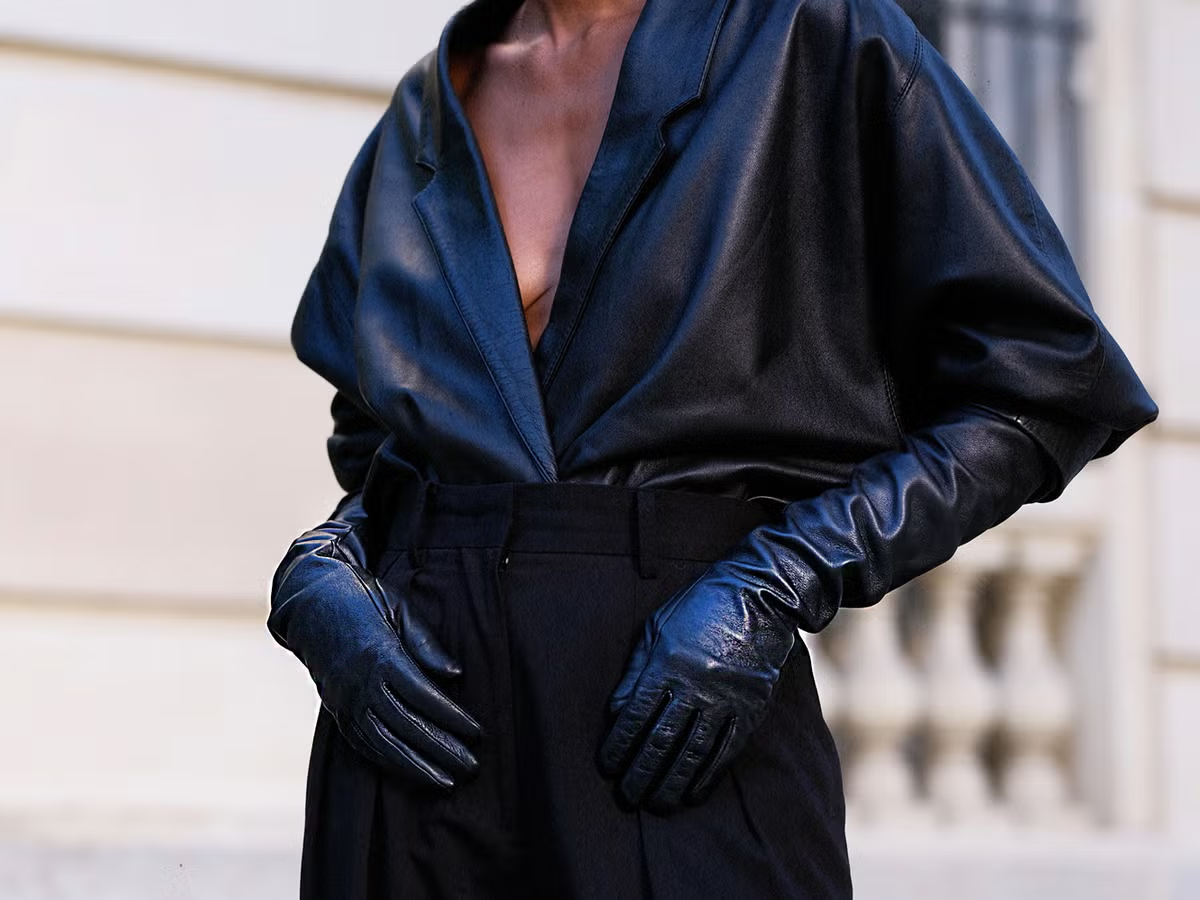
What sets luxury leather gloves apart from those from chain stores? Above all:
- Natural leather – calf, lamb, sometimes exotic types that breathe and age beautifully
- Precise craftsmanship – hand stitching, finishes you can see and feel
- Details that make a difference – linings made of cashmere, a discreet logo, a cut perfectly tailored to the anatomy of the hand
Mass-market doesn’t stand a chance. It’s simply a different league.
And the topic is resurfacing now because the luxury market in Poland is booming — according to Bain & Company, the global personal luxury goods market saw dynamic growth in 2024, and Polish women are increasingly investing in timeless accessories instead of fast fashion. Gloves are once again the it-accessory, a symbol of sustainable luxury and a thoughtfully curated wardrobe.
Later in the article, you’ll see how they’ve evolved over the decades, which brands are setting the rules today, how to choose the perfect pair, and how much you really need to spend. Because luxury is no accident — it’s a conscious choice.

From status symbol to style icon – a brief history
Gloves have not only served as protection against the cold for centuries—they have been a silent language of power and elegance. The aristocracy wore them as a symbol of belonging to the upper class, and in medieval Poland, especially around Kraków and later Łódź, a tanning tradition developed that would endure for centuries.
From the royal court to the streets of major cities
After World War I, gloves transitioned from being an aristocratic accessory to a mainstream staple—they became a must-have for every fashionably dressed woman. The 1950s and 1960s saw a boom in evening, long-style gloves. Audrey Hepburn in “Breakfast at Tiffany’s” (1961) turned black satin gloves into a glamour icon, while leather versions began to appear in luxury boutiques as an alternative to silk. In the 1970s to 1990s, limited editions made from exotic skins—snake, crocodile—transformed gloves into collectible items, often more expensive than many watches.
After 2000, sustainable fashion began to put pressure on the leather industry, but traditional leather still dominates—now, however, with an emphasis on transparency and ethical tanning. In Poland, after 1989, there was a shift: from mass production under the communist era to niche workshops that today export high-quality leather to European brands. This history means that today’s pair of gloves is more than just an accessory—it’s a piece of a long tradition of luxury.
The best brands and their iconic models
Luxury in the world of gloves is not just about a discreet logo sewn on the side—it’s above all about the finest materials, meticulous finishing, and that distinctive soft “nappa touch” you feel from the very first touch. In the premium segment, you’ll find both legendary Parisian fashion houses and Polish ateliers focused on conscious craftsmanship. Each brand has its own unique “signature,” which is worth discovering before making an investment.
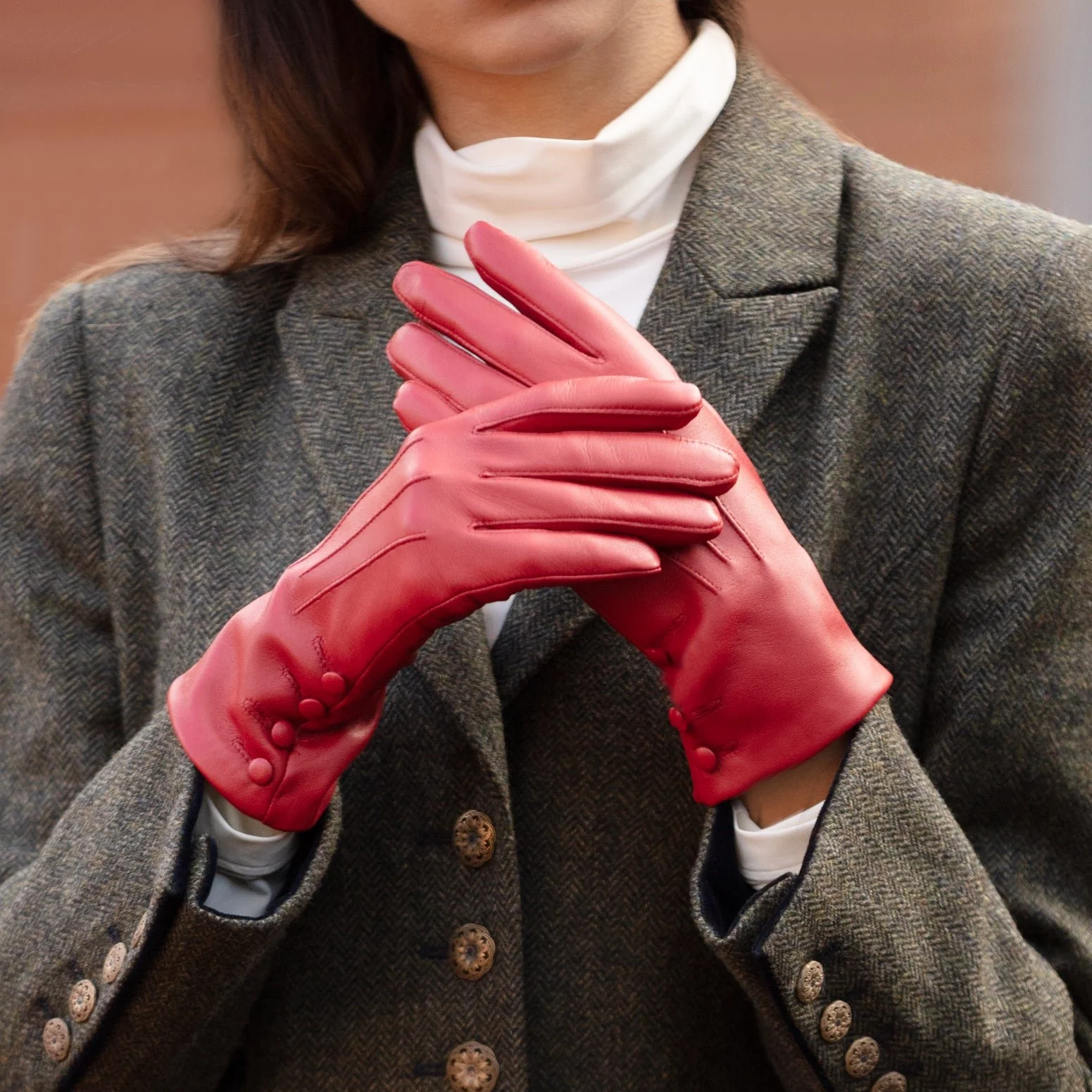
Global fashion houses and their iconic models
| Brand | Iconic model | Approximate price | Key features |
|---|---|---|---|
| Hermès | “Gants H” | 2,500-4,000 PLN | Lamb nappa leather, quilted stitching, metal buckle |
| Chanel | “Lambskin Long Gloves” | 2,000–3,500 PLN | Opera length, pearl buttons, classic black |
| Bottega Veneta | “Intrecciato Gloves” | 1,800–2,800 PLN | Distinctive weaving, soft suede |
| Gucci | “Leather Logo Gloves” | 1,200–2,200 PLN | Logo on top, metal details, camel and black |
Hermès and Chanel are timeless classics—you can tell by the details, where every stitch truly has a purpose. Bottega impresses with its texture (that weaving is their signature), while Gucci leans more into streetwear luxury with its logo.
Polish accent: Respire
The Polish brand Respire fills the gap between fast fashion and global luxury—offering certified sheepskin leather gloves priced between 400-800 PLN. Minimalist aesthetics, no flashy logos, with a focus on quality and durability. It’s a conscious choice for those who want luxury without paying extra for a Parisian address. And it works—I’ve been wearing their model for the second season now.
Choosing a brand is a matter of fit: do you care about iconic details (Hermès), bold style (Gucci), or rather “quiet” luxury (Respire)?
How to choose the perfect luxury gloves
Choosing luxury gloves is a bit like buying fine wine – at first glance, they all look similar, but the real differences lie in the details that aren’t immediately visible. And it’s those very details that determine whether you’re paying for true craftsmanship or just the brand name.
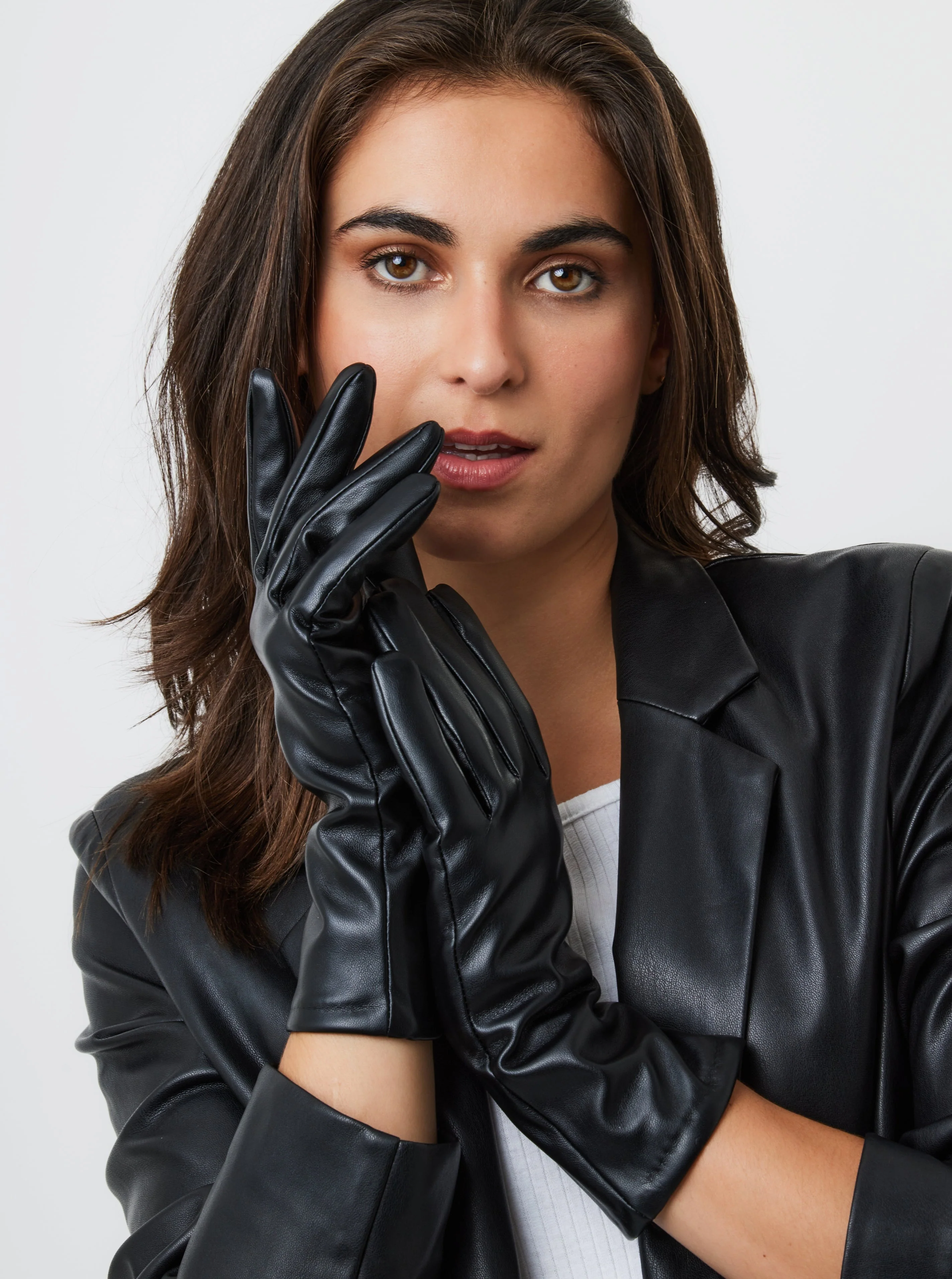
Which leather to choose: lamb, calf, or goat?
Not all leathers are created equal. Lamb nappa is the epitome of soft luxury—thin, delicate, perfectly molding to your hand, but it does require careful handling. Calfskin is thicker and more durable, making it ideal for everyday use. Goat leather? Flexible and resilient, it stretches beautifully between your fingers.
Pay attention to tannery certifications—chrome-free or LWG labels mean the leather was tanned without harmful chemicals. This isn’t just about sustainability; it’s also a guarantee that the material won’t stiffen after a month of wear.
Sewing, seams, and construction: how to recognize quality
True luxury gloves are handmade—and you can see the difference. Each finger should have three seams, not two. A quality pair takes 8 to 12 hours to make. Why does this matter? More seams mean a better fit and greater durability. Check the finishing—threads should not fray, and the inside should look just as refined as the outside.
Size matters: measuring your hand and finding the right fit
Measure the circumference of your hand just below the knuckles (excluding the thumb). Standard sizes range from 16-21 cm (XS-XXL). Thin leather is unforgiving—gloves that are too tight will tear, while those that are too loose look cheap. The first time you put them on, they should be almost difficult to slip over your hand; the leather will then give and mold perfectly to your shape.
Short gloves pair well with an elegant coat, while long ones are ideal for evening looks. Matte leather is versatile, while a glossy finish adds sophistication. One more thing: treat them with a protector right after purchase and never dry them on a radiator—with proper care, they’ll last a decade.
Price, investment, and sustainable luxury
A pair of genuine leather gloves is a purchase that really makes your wallet feel it. But maybe that’s exactly the point?

How much does a pair of luxury gloves really cost?
From what I see on the Polish market, the price ranges are quite spread out:
- Entry-level luxury (brands like Coach, Michael Kors) – 400–800 PLN
- Mid-range premium (Longchamp, Mulberry) – 900-1,600 PLN
- Top tier (Hermès, Prada, bespoke) – 2,000–5,000+ PLN
Differences? It’s mainly the quality of the leather, the country of origin, and the prestige of the logo. In Poland, the luxury market is growing by about 8-10% annually, with its value now reaching several billion zlotys. Interestingly, just 15% of the wealthiest female clients generate nearly 40% of the revenue—these are the women who buy the most expensive pairs.
Gloves as an investment, not just an expense
A good pair can last a decade if you take care of it. And that’s the point—instead of buying cheap replacements every year for 150 PLN (which fall apart after one season), you invest once in something that looks good always. A classic design never goes out of style, and leather gains character as it ages. Fast fashion can’t offer that.
Quality comes at a price, but cheapness costs even more—especially in the long run.
Between Luxury and Sustainability: How to Shop Responsibly
And here’s where the dilemma begins. Leather is more durable than synthetics (which shed microplastics), but tanneries pollute rivers, and not every brand is honest about their “eco-collections.” Around 40% of Polish women say they want to shop more responsibly—but how can you do that when there’s so little transparency? E-commerce helps a bit: it’s easier to check certifications and compare options. But greenwashing is everywhere.
Your pair for years to come – the next step in luxury
Once, I bought a cheap pair of gloves “just for the season.” After a month, they fell apart. The next pair—same story. Eventually, I realized: investing in one good pair of luxury gloves isn’t an extravagance, it’s real savings. And a style reference point that stays with you for years.
The future of luxury gloves: personalization and new technologies
What’s next in the world of luxury gloves? More and more brands are offering monograms (your initials embossed with golden thread—absolutely stunning!), and some are experimenting with custom fit: they scan your hand online to craft a perfectly tailored pair. AI is making its way into design—algorithms suggest the best finger proportions based on thousands of measurements. Meanwhile, bio-leathers (grown from cells, zero slaughter) and metaverse fittings (virtual try-ons!) are no longer science fiction, but the reality of 2025 and beyond. Sounds futuristic? Yes, but to me, it means luxury is becoming even more conscious and accessible.
From Knowledge to Action: What You Can Do Today
Analyze your style – which colors dominate your wardrobe? Set a budget (remember, 800–2000 PLN is an investment for years). Decide what matters more: the heritage of the brand or production ethics – there’s no wrong answer here. Plan your purchase: online offers variety, but visiting a boutique lets you feel the leather. And don’t shy away from Polish brands – they could become your “secret signature.”
A conscious choice of luxury isn’t consumption. It’s self-care.
Nadia
inspiration & lifestyle
High Class Fashion