
Imagine a black, oversized coat with three white stripes — the elegance of Yohji Yamamoto’s minimalism fused with the iconic Adidas symbol. This is Y-3, a brand that, twenty years ago, proved haute couture and sportswear tracksuits could create something more than just another collaboration. It’s a platform where Japanese avant-garde meets German technological precision, and the result continues to captivate fans of both streetwear and premium fashion.
How did the black coat with three stripes change fashion?
Three stripes and the letter “Y” are not just a logo—they are a symbol of the fusion of two traditions that, in theory, shouldn’t go together. Yet, from its very first shows, Y-3 has proven that luxury minimalism can be functional, and sports technology can be beautiful. Black, unconventional proportions, sneakers with character—these are the things immediately associated with the brand.
In the following sections of the article, you will read:
- how did the meeting between Yamamoto and Adidas even come about,
- which shows and collections have gone down in history,
- which Y-3 sneakers have become iconic,
- why the brand still influences street culture and streetwear,
- what’s next for Y-3 in an era where every collaboration seems already seen.

Yohji Yamamoto and Adidas – a meeting of two worlds
Seemingly completely different worlds: a Tokyo-based designer-artist who spent years creating dark, deconstructed fashion, and a German sports giant known for functional shoes with three stripes. Yet it was precisely this clash—avant-garde versus sport—that had the potential to change the way we think about clothing.
Who is Yohji Yamamoto – the father of fashion deconstruction
Yohji Yamamoto founded his own brand in 1972 in Tokyo, but the real breakthrough came in 1981 when he debuted in Paris with collections that shook the fashion world. Black, loose, asymmetrical – his clothes were the opposite of the Western ideal of fitted, colorful elegance. The press dubbed him the “father of deconstruction,” and his obsession with black and unisex cuts became globally recognizable. Yamamoto is the kind of designer who treats fashion as philosophy – every seam has meaning.
Why did Adidas need a designer from Tokyo?
At the end of the 1990s, Adidas began experimenting, looking for an entry into the luxury segment. They knew they couldn’t break into haute couture on their own, but collaborations with designers could open doors — later, for example, lines with Stella McCartney would appear. Herbert Hainer, then CEO, met Yamamoto at Paris Fashion Week and was captivated by his approach to tailoring. He proposed a collaboration.
Each had their own reasons: Adidas wanted to build an image as an innovator in fashion, while Yamamoto sought access to sports technology and global distribution without creative compromise. The tension between these worlds sounded promising.
| Yohji Yamamoto | Adidas |
|---|---|
| Avant-garde, black aesthetics | Functionality, sport |
| Deconstruction, asymmetry | Technology, performance |
| Tokyo, creative freedom | Germany, global scale |
The birth of Y-3 in 2002 – first collections and manifesto
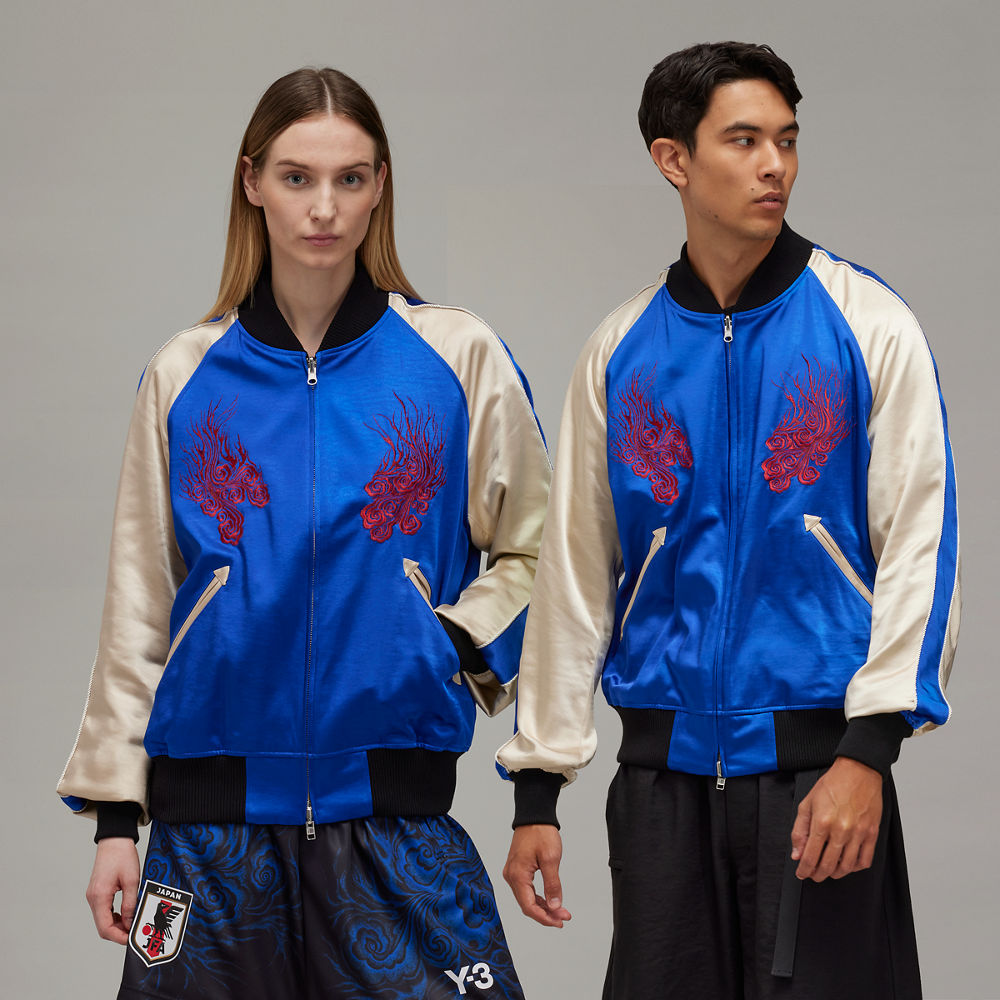
Paris Fashion Week, January 2002 – among traditional fashion houses, something completely unexpected suddenly appears. Models in oversized deconstructed coats, sporty sneakers, and technical fabrics. It was there that Y-3 announced to the world that the line between the runway and the playing field had just disappeared.
Paris Fashion Week 2002 – the birth of Y-3
The SS2003 collection was a manifesto from the very first glance. Yamamoto combined his signature minimalism with Adidas’ DNA in a way the industry had never seen before. On the runway appeared:
- long, asymmetrical haute couture silhouettes
- technical fabrics known from sports lines
- the Adidas three stripes woven into deconstructed cuts
- sneakers as a fully-fledged element of elegance
The Y-3 logo – simple, sharp, monochromatic – said it all. No compromises, no ornamentation. Black, white, and gray dominated, with an occasional touch of red from the three stripes.
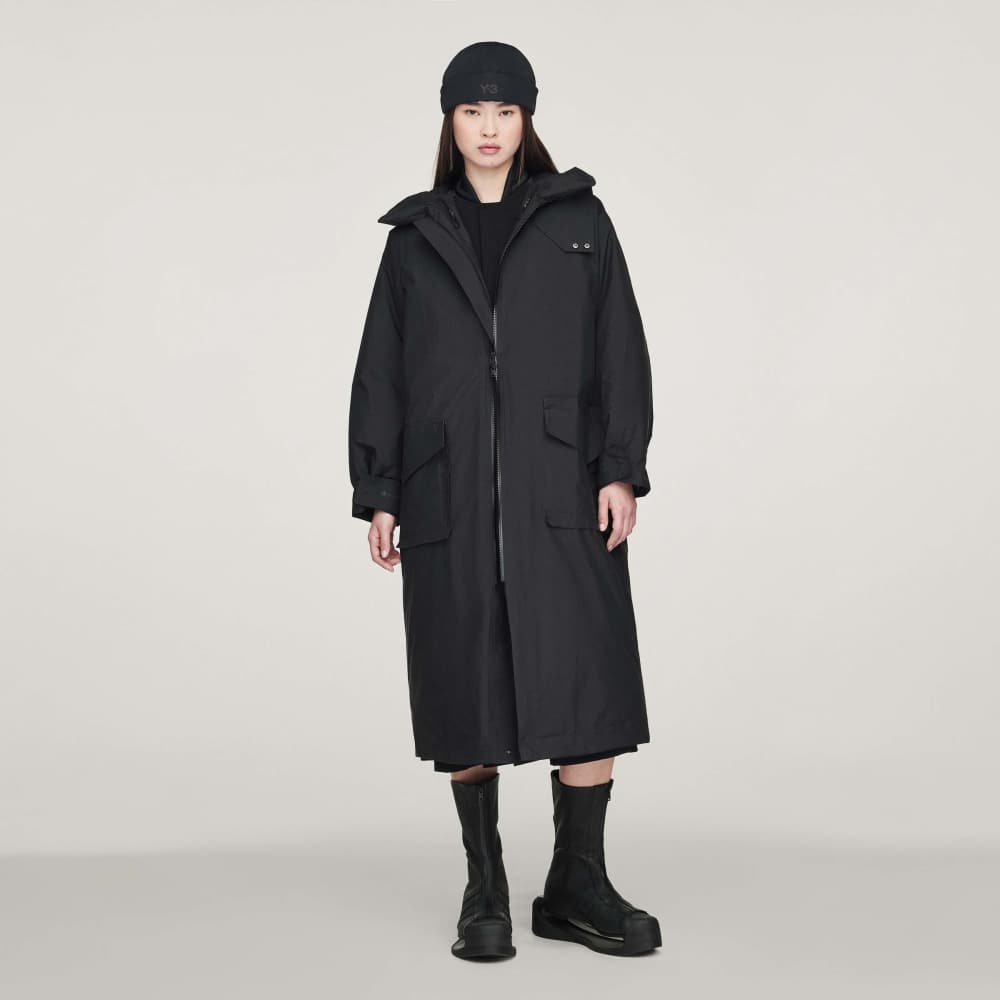
Manifest sportswear couture
The concept was bold: to combine the meticulous construction of couture with the functionality of sportswear. Yamamoto didn’t hide the seams—he showcased them. He didn’t conceal sporty details—he celebrated them. Sportswear couture sounded like an oxymoron, but that was exactly the point.
Reactions? Fashion critics were divided. Some saw a breakthrough, others the commercialization of haute couture. But something crucial happened—Y-3 opened the door for the entire streetluxury movement, which was just beginning to emerge. Adidas, Nike, Puma—all started to look at this space differently. But Y-3 was the first.
From a niche collaboration to a global phenomenon
In 2002, Y-3 was a bold experiment — today it stands as one of the key pillars of Adidas’s luxury sport segment. The journey from a niche collaboration to a global phenomenon took over two decades and several pivotal turning points.
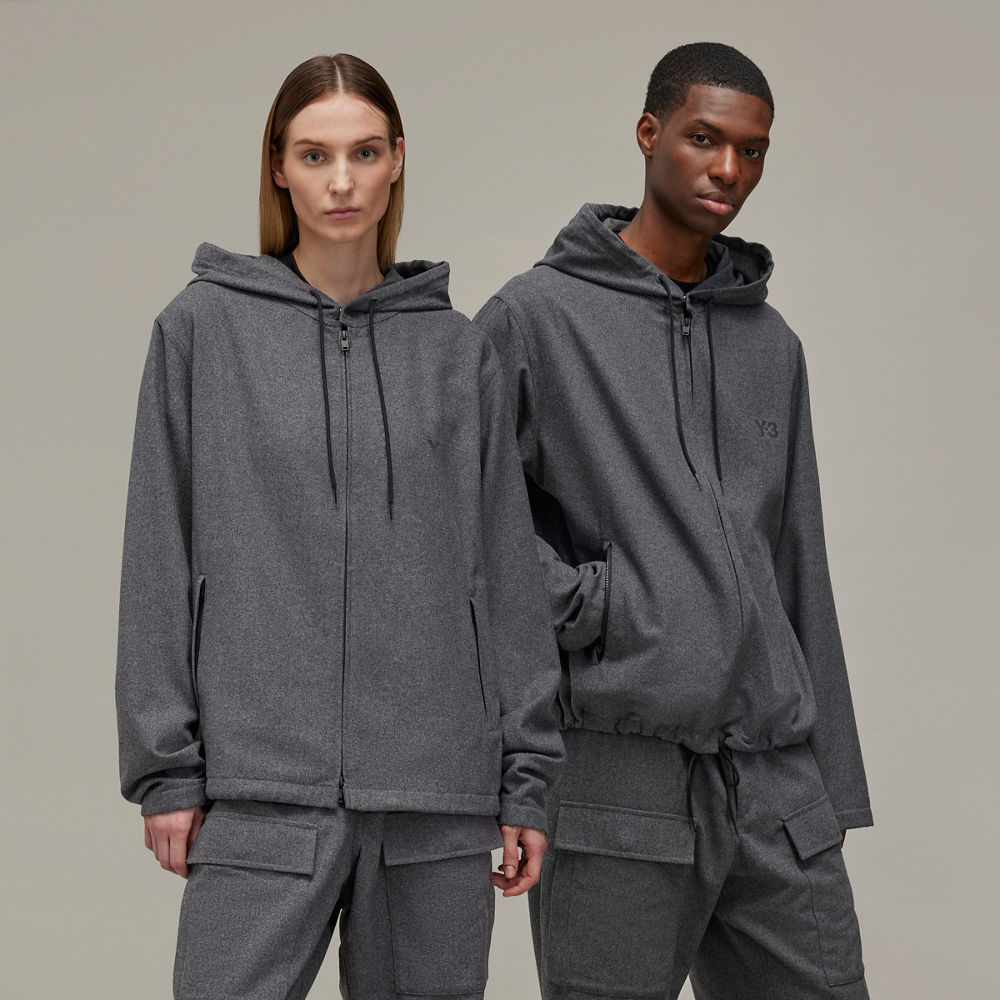
The first flagship stores and global expansion
The first real breakthrough came in 2005, when the first Y-3 flagship store opened in Tokyo—a space of about 1,000 m² that demonstrated the brand’s serious intentions for long-term presence. Between 2006 and 2010, expansion accelerated: New York, London, Paris. Interestingly, Asia was a stronger market than Europe from the very beginning—the combination of Yamamoto’s minimalism and a sports brand resonated with the local audience.
| Year | Event |
|---|---|
| 2003 | Runway debut |
| 2005 | First flagship store (Tokyo) |
| 2008 | Expansion into the USA and Western Europe |
| 2013 | Start of the performance line (tennis, running) |
| 2016 | UEFA/FIFA referees’ kits |
| 2020 | Shifting the focus to lifestyle |
From the runway to the field – Y-3 sports designs
In the second half of the 2010s, Y-3 moved into performance: lines for tennis players, runners, and even designing referee uniforms for UEFA and FIFA (since 2016). It was a way to show that Yamamoto’s aesthetic works not only on the runway.
2013–2025 – the era of sneakers and hype
The real boom came between 2013 and 2015 — models like Kaiwa or Iniki (shared with Adidas’s main line) became coveted by hypebeast culture. Celebrities started wearing Y-3 offstage, and sneakerheads hunted for limited drops. The pandemic brought a pause, but post-2020 the brand returned stronger: the FW2025/SS2026 collections balance between futurism and everyday comfort.
Y-3 sneakers – from Qasa to Superstar Triple Black
Shoes are the core of Y-3—both financially and symbolically. It is estimated that sneakers account for around 60-70% of the brand’s revenue, and individual models can reach sales in the millions. The Qasa model has surpassed the threshold of 1,000,000 pairs sold, which is truly impressive for the luxury-streetwear segment. Yamamoto and Adidas knew from the start that shoes would be the most effective tool for building global recognition—clothing can be too avant-garde for a broad audience, while sneakers combine comfort with futuristic aesthetics and attract buyers from various groups.
Qasa High – the futuristic icon of Y-3
Qasa High (debuted around 2011) is the quintessence of the brand’s philosophy. Distinctive leather panels, Kevlar laces, and a sole with Boost technology—which returns up to 75% of the energy from each step—create a silhouette inspired by Yohji’s motorcycles. This is a shoe that looks like a piece of sci-fi, yet is comfortable enough for everyday wear. The massive silhouette and minimalist details have made the Qasa instantly recognizable from afar.
Kaiwa and the new generation of massive forms
The Kaiwa model (circa 2014) took the oversized trend even further. An asymmetrical upper, thick sole with Continental rubber—famous from car tires—and futuristic proportions attracted fans of chunky sneakers. Kaiwa demonstrated that Y-3 can balance between sporty functionality and artistic expression.
Superstar Triple Black and a reinterpretation of the classic
The latest projects, such as the Y-3 Superstar “Triple Black” (number IE3237, drop on 11/12/2025 in Japan, around 500 pairs), prove that the brand is not afraid to reach into the Adidas archive. The completely black, leather version of the iconic Superstar pays tribute to history while also serving as a statement of minimal elegance. Technologies like Primeknit and Lightstrike reinforce the “future-ready” image—Y-3 continually reminds us that a sneaker can be both comfortable and aesthetically radical.
| Model | Year | Key features |
|---|---|---|
| Qasa High | ~2011 | Leather, kevlar, Boost (75% energy return), motorcycle-inspired |
| Kaiwa | ~2014 | Asymmetry, massive form, Continental sole |
| Superstar Triple Black | 2025 | Leather, completely black, IE3237, limit ~500 pairs (Japan) |
Y-3 aesthetics – deconstruction, minimalism, and sporty elegance
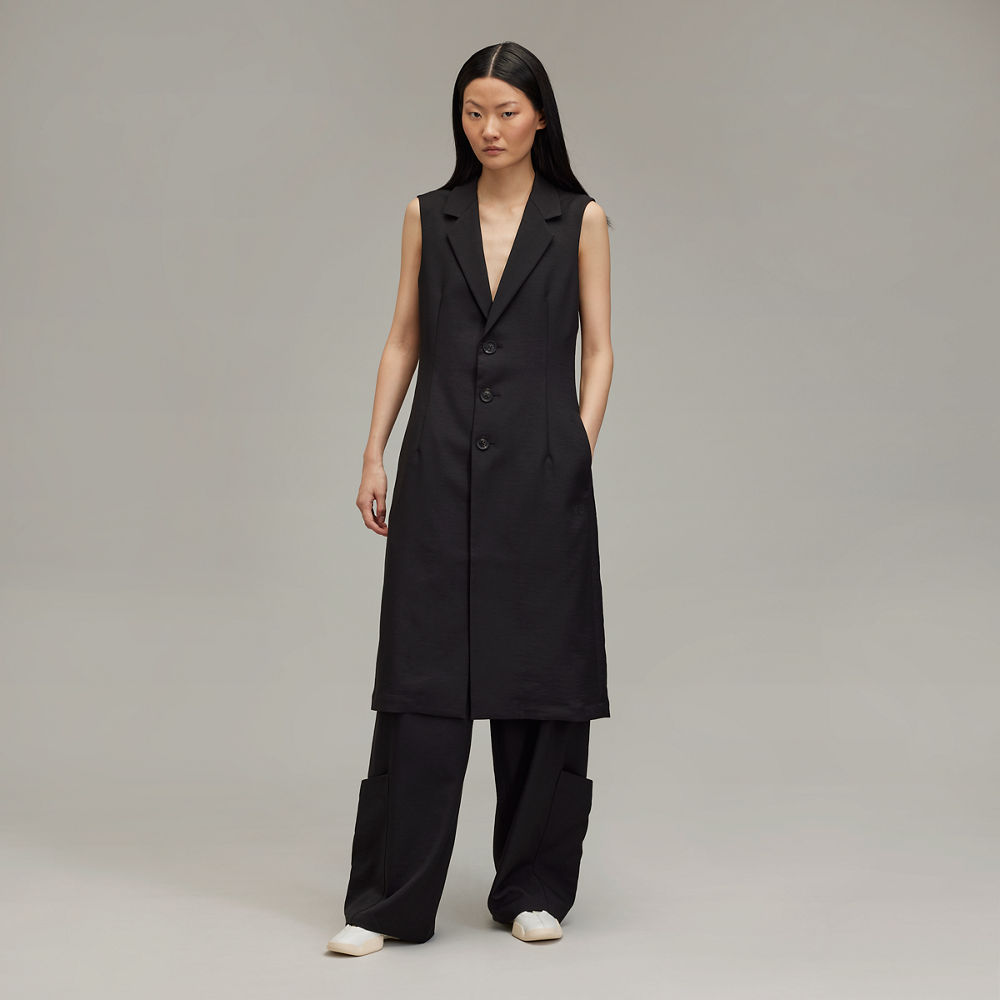
You can recognize Y-3 from afar—not by the three stripes, but by the silhouette. There’s something about the proportions, the way the fabric drapes on the body, that immediately signals this is not ordinary sportswear. It’s the result of a highly intentional design philosophy, where Yohji Yamamoto has merged his avant-garde vision with the technical capabilities of Adidas.
Deconstruction and oversize as the signature of Y-3
Yamamoto has been breaking classic cuts for years – and in Y-3 he does the same, only with sportswear. In practice, this means:
- Asymmetrical lines – sleeves of different lengths, shifted seams, irregular finishes
- Oversize done right – loose, but not baggy; proportions are carefully considered so the silhouette maintains structure
- Layering – jackets worn over sweatshirts, vests over longlines, mixing textures
- Unisex by design – the same cuts work on different bodies because it’s about the form, not the fit
This approach, inspired by Japanese ma aesthetics, where empty spaces and ambiguity are just as important as the material itself.
Monochromatic palette: the power of black, white, and gray
Y-3 is practically the definition of monochromatism. Black, white, shades of gray—sometimes navy or khaki appears, but rarely. Why has this color asceticism become its trademark? Because it lets the form speak louder. When color doesn’t distract, you suddenly notice the cut, the detail, the way the fabric moves. It’s minimalism that, paradoxically, stands out more than loud prints—in a sea of colorful streetwear, a black, asymmetrical silhouette looks like an object from the future.
Materials and technologies behind Y-3 comfort
Aesthetics are one thing, but function is another – and this is where Adidas comes in with its full technical expertise:
| Material | Function |
|---|---|
| Gore-Tex | Water resistance + breathability |
| Primeknit | Flexibility, lightweight design |
| TPU overlays | Structural reinforcements |
Add to that the military details — belts with buckles, cargo pockets, adjustable straps — which enhance both functionality and visual impact. The result? The clothes look like haute couture, but perform in the rain, in urban chaos, in the rush of everyday life. Sporty elegance is not just a slogan — it’s a true embodiment of the idea that something can be both beautiful and comfortable at the same time.
The impact of Y-3 on fashion, street culture, and the luxury market
Without Y-3, today’s “designer sneakers” would look completely different. The brand not only proved that haute couture and sportswear can blend seamlessly, but also became a template for an entire wave of collaborations that followed. Fashion media outlets —from Vogue to Highsnobiety—often cite Y-3 as a reference point for projects such as:
- Nike x Sacai
- Dior x Jordan
- Prada x adidas (later)
- Gucci x The North Face
In fact, Y-3 set the “blueprint” for the entire sport-luxury trend.
Economic impact and position in the premium segment
From a business perspective, Y-3 generates an estimated €500–800 million annually for Adidas. This may seem modest on the scale of the entire corporation, but the brand increases Adidas’s share in the luxury segment by about 15–20% and accounts for 5–10% of revenues in this area. In other words, Y-3 brings not only profit, but also prestige and brand legitimacy in the world of haute couture.
Celebrities, hype, and the secondary market
In street culture, Y-3 has achieved cult status. Rihanna, A$AP Rocky, Pharrell, Travis Scott—all regularly wear shoes and jackets with three stripes designed by Yamamoto. Selected models on the secondary market reach prices three to five times higher than retail, showing just how strong the hype around the brand is. Parsons and Harvard use Y-3 as a case study of a successful collaboration—in programs on fashion business and premium brand strategies.
Controversies, challenges, and a shift towards sustainable fashion
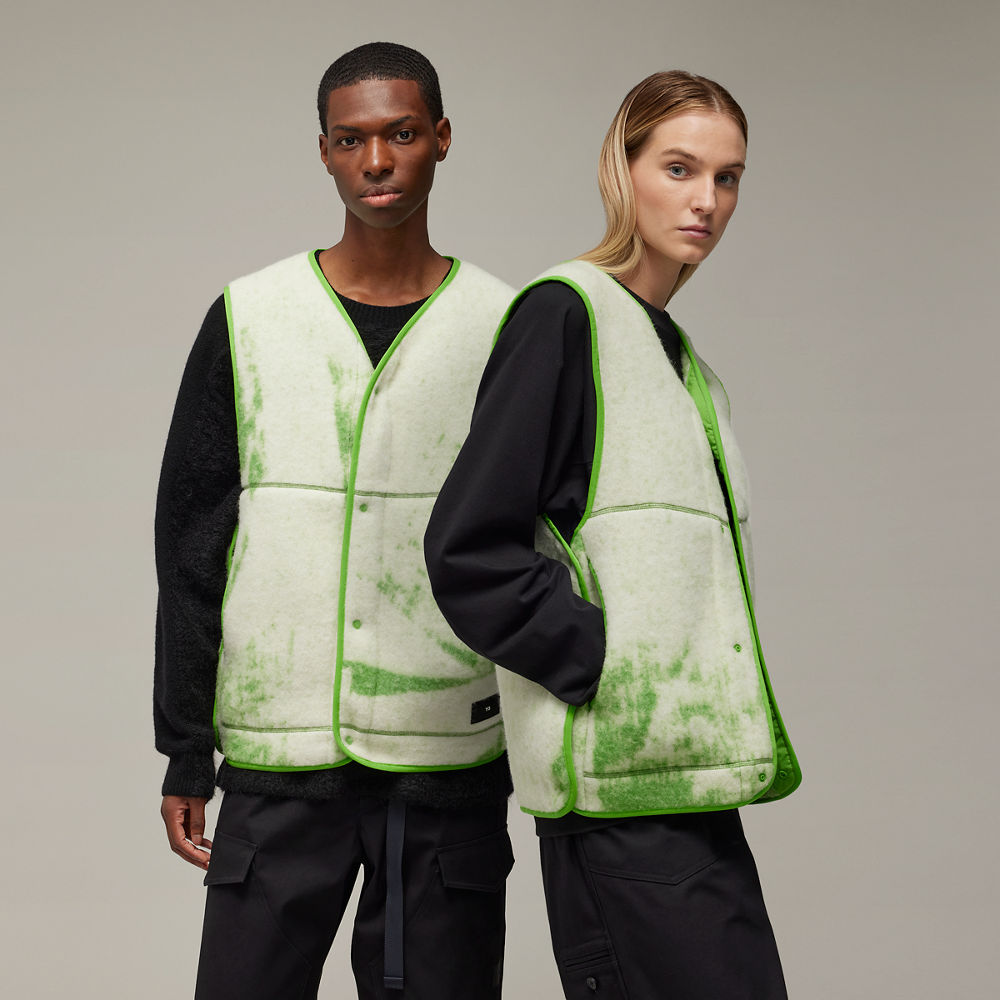
There’s no denying it—even the most acclaimed collaborations face criticism. Over the years, Y-3 has inspired admiration but also serious critique. The prices? Often above 400–600 euros for a sweatshirt. Comparisons to Off-White or Supreme? Many people say “overpriced.” After 2023, as inflation soared and the cost of living skyrocketed, debates about Y-3’s accessibility intensified. The younger generation, especially Gen Z, began to ask: am I paying for Yamamoto’s design, or just for the Adidas logo?
Originality under scrutiny – controversies surrounding Y-3 designs
In 2015, accusations arose regarding excessive similarity to the Undercover collection. There were also debates about who truly dominates this collaboration—Yamamoto or Adidas? Some critics believe that over time, the brand has lost part of its exclusive “spirit,” becoming more commercial. And these questions return every season.
From fast fashion to recycled – Y-3’s response to the climate crisis
Adidas as a fast fashion giant? Yes, Y-3 got caught in the crossfire too. However, since around 2024, the brand has responded:
- Recycled materials (sustainable tech fabrics)
- Greater production transparency
- Discussion on an ethical approach in every collection
For younger consumers, this is crucial — design alone is no longer enough; responsibility also matters. These challenges are shaping the future of Y-3, forcing the brand to balance between luxury and ethics.
What’s next for Y-3? The future of the brand at the intersection of fashion and technology
After more than two decades, Y-3 is still going strong—the brand generates hundreds of millions of euros annually and shows no signs of slowing down. But what’s next? What scenarios can be envisioned for this fusion of haute couture and sport in the years 2026 and beyond?
Urban Nomad and modular designs – a new era of Y-3
The latest collections, such as “Urban Nomad” (FW2025/SS2026), indicate the direction: modular sneakers with interchangeable elements, clothing that adapts to your lifestyle. This is a response to the growing demand for personalization and functionality. Yohji Yamamoto focuses on designs that combine aesthetics with practicality—where detail meets technology. Such an approach may open the brand to younger consumer groups and increase loyalty.
AI, the metaverse, and Asia – directions of development after 2025
The future of Y-3 will likely involve greater use of artificial intelligence in design and a stronger presence in the digital space — Adidas is already testing drops in the metaverse, so Y-3 may follow suit. Additionally, Asia, especially Japan (about 40% of sales), will remain a key market, but growth may come from expansion into emerging markets and e-commerce.
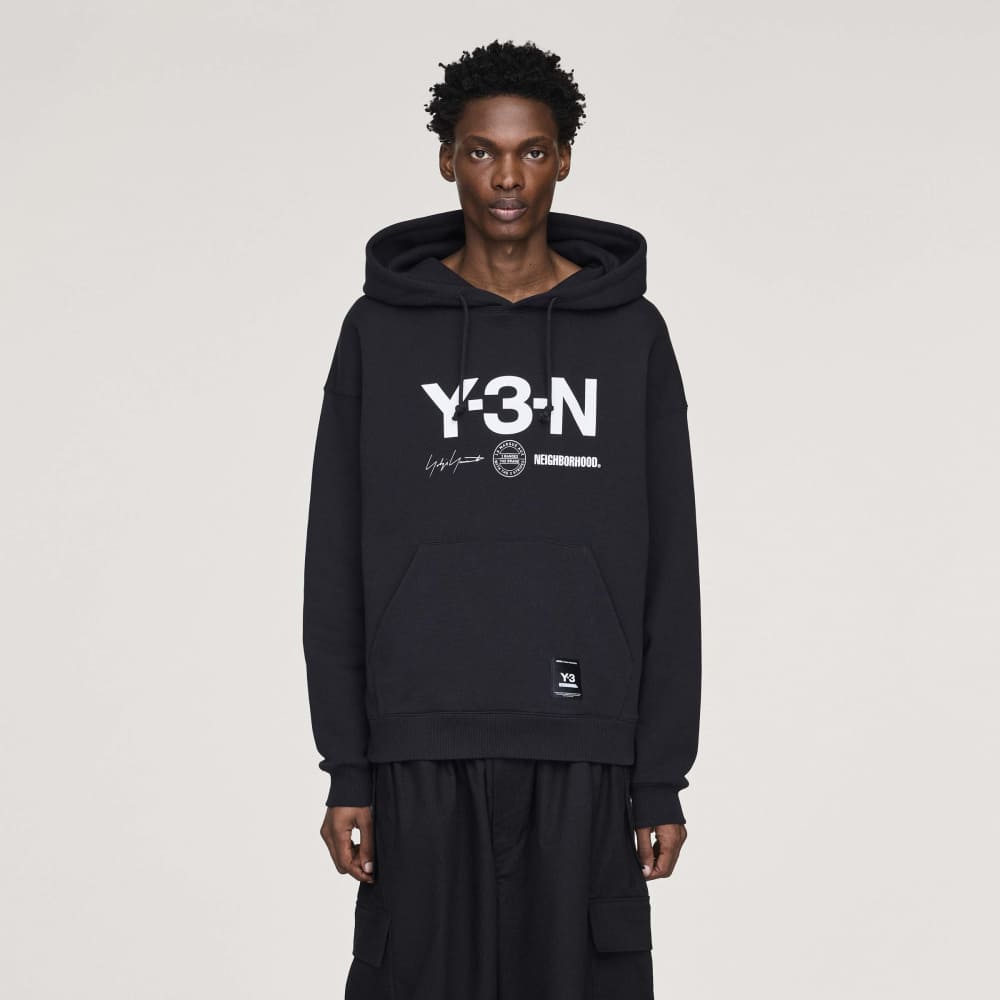
It’s also possible that Y-3 will become an even more independent entity within Adidas—a quasi-autonomous brand with its own DNA. And the focus on sustainable materials? That could be its distinguishing feature in the luxury segment. The question is: will the brand seize these opportunities, or will it remain in the shadow of the major streetwear players?