
July 6, 2026, 3:00 PM. Paris, the gardens of the Musée Rodin. Jonathan Anderson presents his second haute couture collection for Dior, and this moment is much more than just a show. It is a time when the fashion house speaks with a new voice, consciously and boldly.
The outdoor setting among Rodin’s sculptures is no coincidence. Anderson invites us to view couture as a “grammar of forms,” a visual language in which every gesture, line, and volume carries meaning. The work of Lynda Benglis, an American sculptor who understands the power of matter better than anyone, serves as inspiration. Couture ceases to be merely a craft (though craftsmanship plays a key role here); it becomes a conversation between art and construction.
What will you find in this article? Facts from the show that are worth knowing. The idea behind Grammar of Forms and its origins. Tailoring craftsmanship that amazes. And cultural impact, because haute couture fashion in 2026 can still make a statement. Without oversimplification, but also without unnecessary embellishments. Let’s begin.
Idea and inspirations
Jonathan Anderson says this about the collection:
Kolekcja dotyczy spojrzenia na materialność i formę z innej perspektywy… jak wydobyć z nich rzeczywistość?
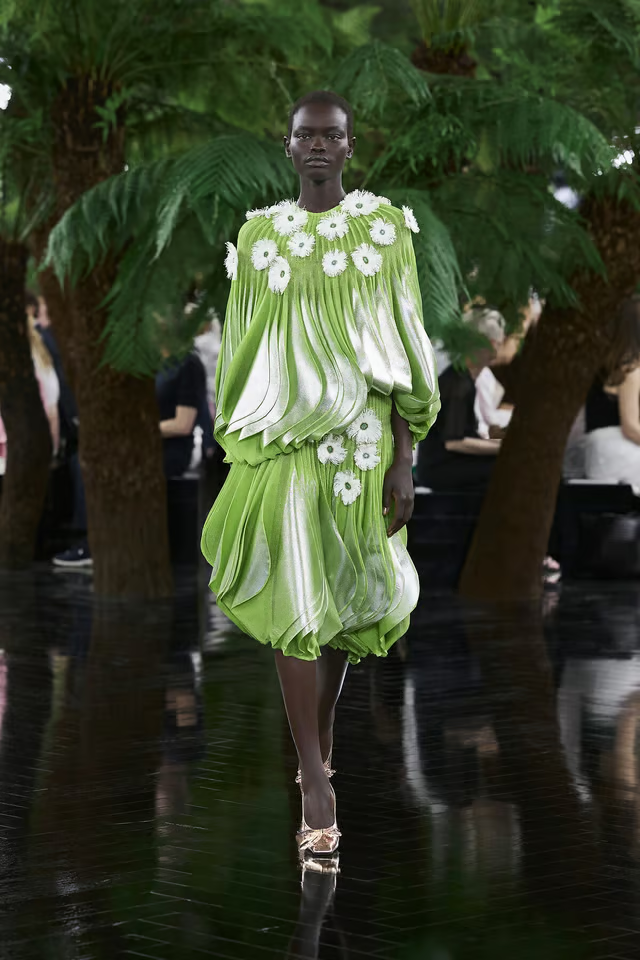
This is a question about translation. How can something immaterial, like movement, gesture, or a moment, be frozen in fabric? Anderson drew inspiration from the works of Lynda Benglis, an artist known for her poured latex pieces that solidified into organic, almost fluid shapes. These ” frozen gestures ” are the key to the entire collection. Benglis treated matter as a record of movement; Anderson does the same with couture, only instead of latex, he uses silk, organza, and embroidery.
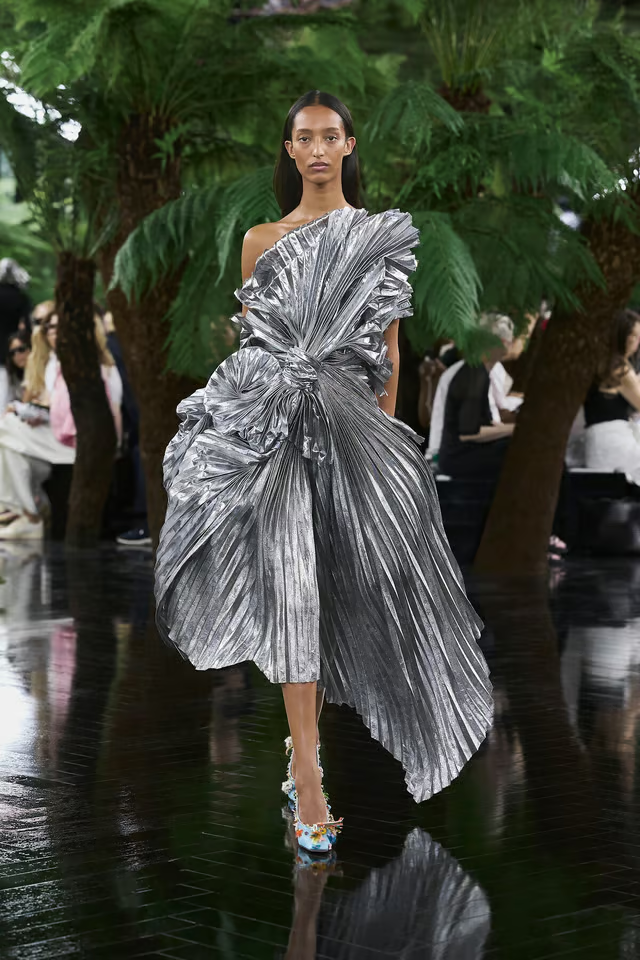
Pleating, tying, draping, embroidery. These are not just techniques here. They are an alphabet. Each form is a letter in a language meant to describe the body, space, the tension between what is soft and what is rigid. Quite literally: the grammar of gestures.
India, Santa Fe, and the Dior archive
Geographical inspirations spread widely:
- India – the “Peacock” series, a reference to Ahmedabad and Gujarat, plant motifs and weaving traditions
- Santa Fe, New Mexico – where Benglis worked, desert light and earth palette
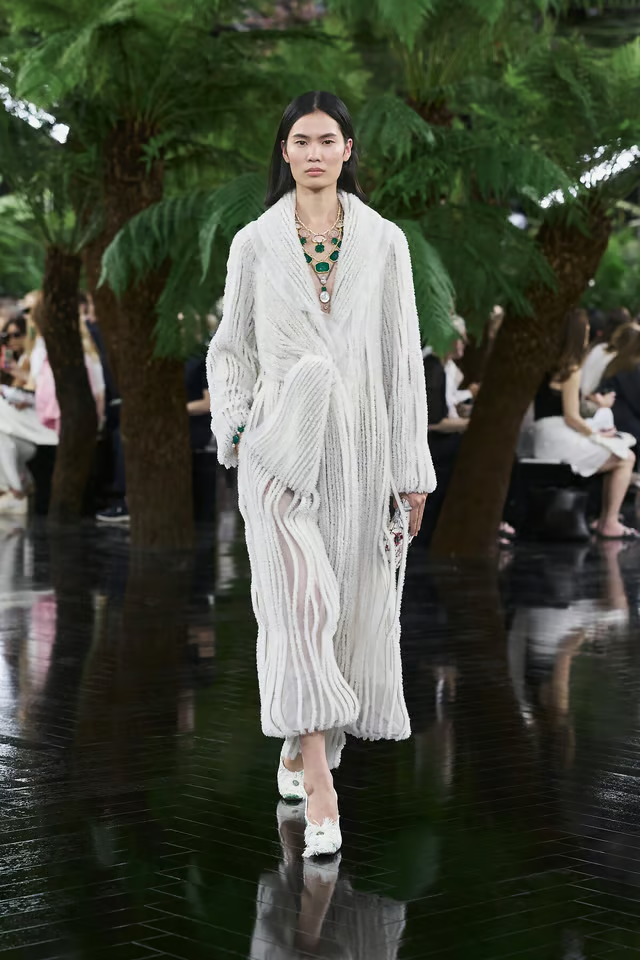
- Nature – ferns, rhododendrons, cacti, meadows as a network of organic lines
Anderson doesn’t treat these motifs as decoration. Rather, he sees them as layers that overlap with each other and with the Dior archive, just as previously, in SS 2026, the dialogue was conducted with the ceramics of Magdalene Odundo. This time, Benglis’s sculpture becomes the starting point for asking how clothing can simultaneously be a gesture and an object. How couture can speak the language of contemporary art without losing its artisanal identity.
Dior Haute Couture 2026/2027
On July 6, 2026, precisely at 3:00 PM, the gardens of the Musée Rodin transformed into the stage for Dior’s latest collection. The show took place as part of the official Paris Haute Couture Week calendar, coordinated by the Fédération de la Haute Couture et de la Mode. And it must be said, the timing was… bold. Paris was experiencing quite a heatwave, so the organizers handed out bamboo fans to guests. A detail? Perhaps, but one that everyone remembered.
Scenography versus reality
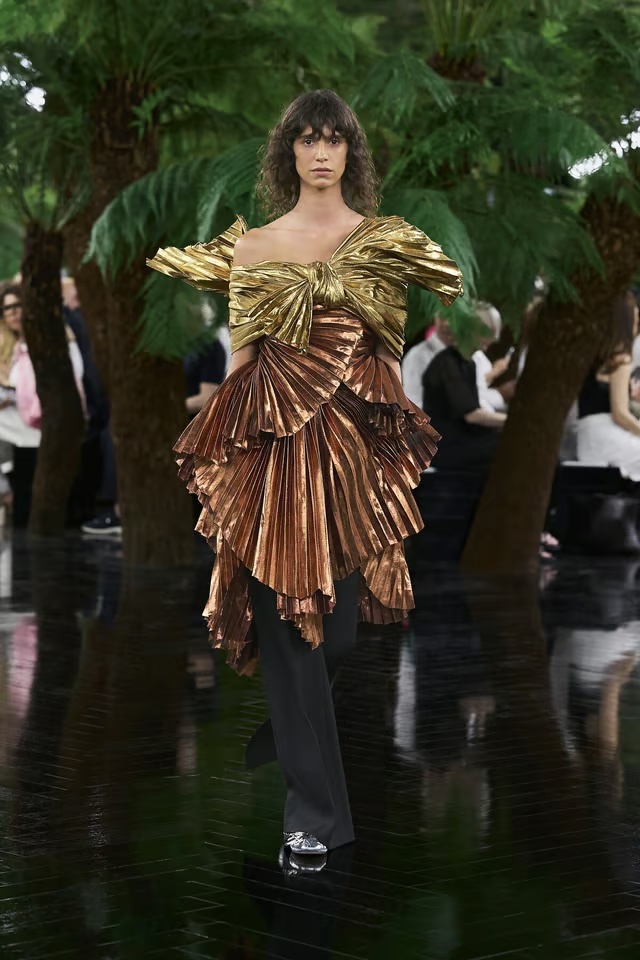
A black, mirror-like runway was laid out in the middle of the gardens. Alongside it, ferns were arranged on palm trunks, theoretically meant to create a contrast with the collection’s raw elegance. The effect was striking, though some first-row reports mentioned battling the heat rather than experiencing romantic harmony. Reuters showed shots of guests waving fans between walks, WWD described it as “tropical minimalism under climate pressure,” while Vogue Runway maintained a diplomatic distance.
People behind the scenes
The backstage crew is a trusted team:
- Styling: Benjamin Bruno
- Hairstyles: Guido Palau
- Makeup: Peter Philips (Dior Beauty)
The music was kept at a slow, almost meditative pace, which slowed down the perception of individual silhouettes. Reporting from the front rows were, among others, Josh O’Connor, Alexa Chung, and Baz Luhrmann. The live broadcast was streamed on major fashion platforms, ensuring global reach. ELLE France focused on the audience’s emotions, emphasizing that despite challenging conditions, the show’s energy remained high.
Haute couture artistry
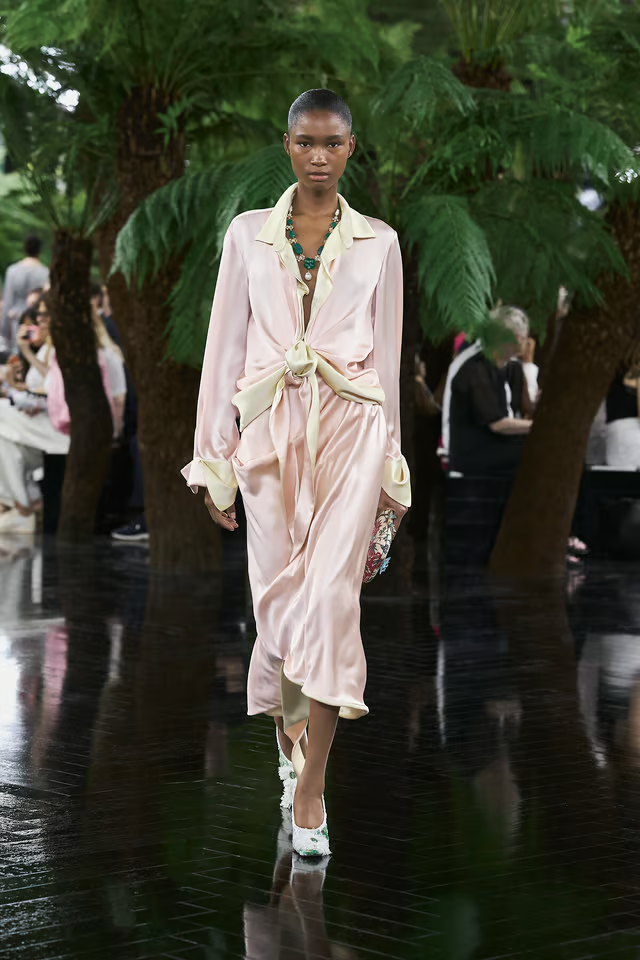
Material on the body is more than just fabric. It’s the way the textile catches the light, begins to move, creates a form. In the FW 2026/2027 collection, Dior showed how archival techniques can look completely fresh.
Techniques and light
The list of tailoring solutions here is impressive:
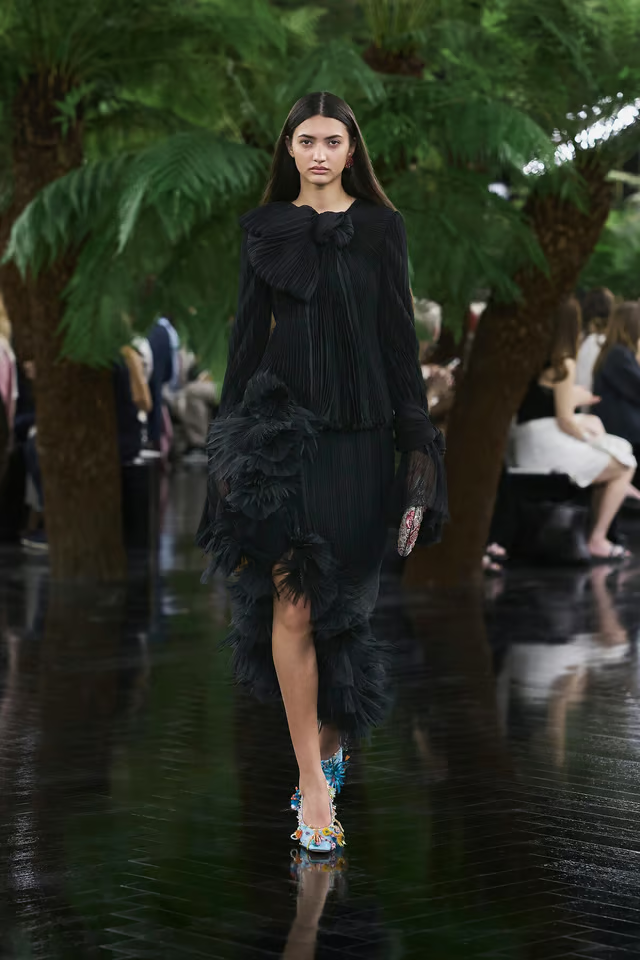
- “Unfixed” pleating on natural fibers, which moves with the body and does not hold a rigid shape
- bindings and draping transforming flat fabric into a three-dimensional sculpture
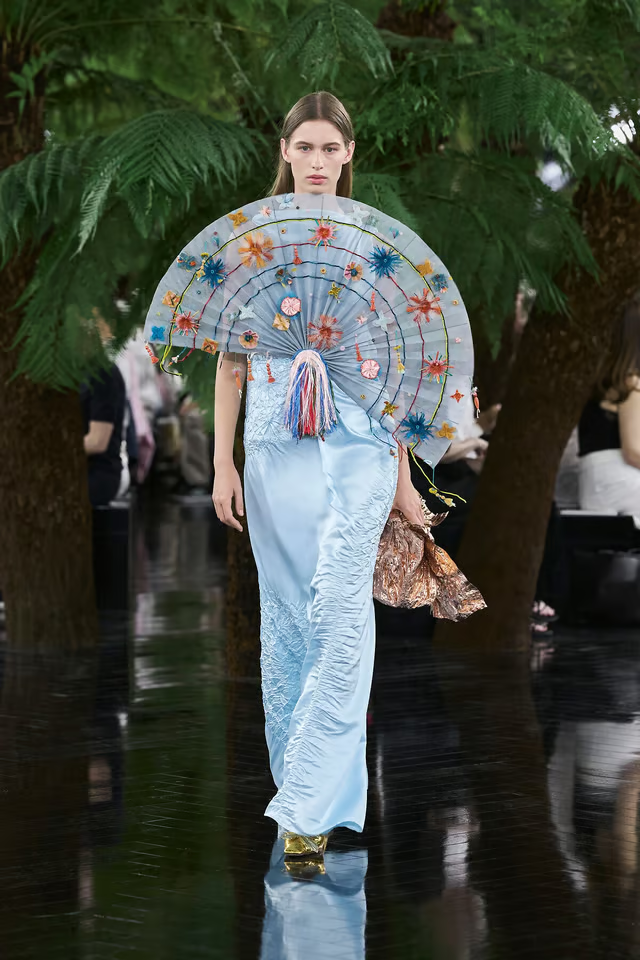
- embroidery: silk flowers, white threads forming microgeometry, bead mosaics
- metallic and iridescent finishes that reflect light from every angle
- fringes and trompe‑l’œil effects (the eye thinks it sees one thing, but the touch reveals something else)
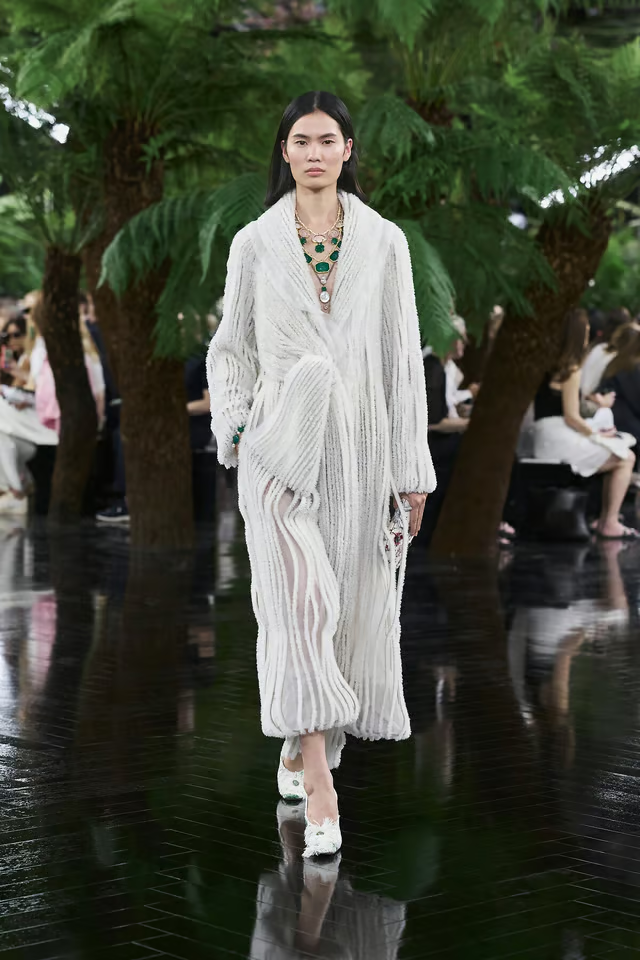
The result? Dresses that shimmer differently in motion than when still. Blue tulle fans look like a delicate mist until the model makes a turn.
Bar jacket: new variations
The iconic Dior blazer appeared in several incarnations, but without a sentimental reprise of the New Look:
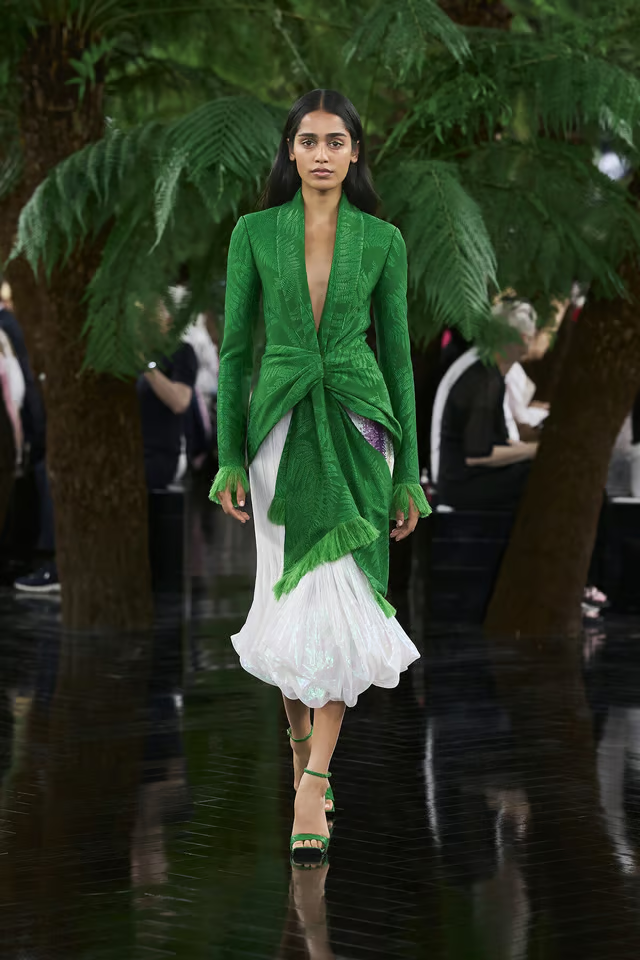
- green tweed with fringes arranged like fern leaves
- gray houndstooth with a chiffon bottom instead of a classic skirt
- version with white threads (almost invisible from a distance)
- bow draping instead of buttons
Each version maintains the proportions but changes the material and finish. It’s not a replica, but a remembrance of the form.
Palette and closure
The collection sticks to shades of gray, white, and silver with subtle accents of green and blue. The final wedding dress: semi-transparent, off-the-shoulder, with lace appliqués and a long train. It looks like something that could dissolve into the air at any moment, yet its construction is absolutely precise. This is exactly how haute couture craftsmanship works in 2026.
From handbags to the Swift effect
Accessories in this collection are not just add-ons; they are true works of art. Anderson invited Lynda Benglis to collaborate on four signature bag models, including the iconic Lady Dior and Petit Diner. The result? Metallic leather pleats that catch the light like sculptures, signature bows (those iconic ribbons) in unexpected textures, and fringes that move like liquid metal. Each bag redefines the balance between form and function.
Jewelry and shoes: details that speak
The stones were selected with surgical precision: onyx, rock crystal, carnelian. Artisans from Jaipur crafted tassel settings that balance between tradition and futurism. The footwear received the same attention, with heels adorned with floral embroidery or metal, pleated bows referencing the handbags. Everything comes together in a cohesive visual language that you feel before you understand.
Impact and availability
The actual reach of the collection? Taylor Swift’s wedding dress and Travis Kelce’s outfit designed by Anderson generated an estimated media value of around $15 million.
And accessibility? The “Grammar of Forms” installation at Musée Rodin (July 7-12, 2026, museum tickets, capacity limits) allows you to see the collection live. Selected pieces will simultaneously enter boutiques and online sales, so it’s not just a spectacle for the chosen few. The collection lives on, beyond the runway.
Maria Grazia Chiuri shows that haute couture does not have to choose between heritage and innovation.
It can draw from both at the same time. This collection is a dialogue between archival techniques and contemporary thinking about form, where material becomes just as important as the silhouette.
Actually, that’s probably why these designs don’t look like replicas from the past or like futuristic experiments detached from tradition. They simply exist in their own time, combining what is tried and true with what is only just emerging.
Because the grammar of fashion changes more slowly than we think. And the power of good craftsmanship? That endures.
Lara Ty.
lifestyle editorial team
HCF