
Premium sneakers are doing quite well. Forecasts predict an increase from $26.5 billion in 2026 to nearly $48 billion a decade later (CAGR of 6.1%). Sounds optimistic, but there are nuances. The American market is seeing a 21% year-on-year drop in sales, which shows that things aren’t rosy everywhere. Globally, however, the category remains strong.
Why are we even talking about sneakers in the context of luxury? Because they are no longer just footwear. Today, they are:
- Comfort in an elegant form (can be worn anywhere)
- Status symbol (limited editions, collaborations with designers)
- Collectible asset (secondary market, resale for several times more)
Sneakers are now a fusion of fashion, technology, and investment. Streetwear culture has emerged from the underground and landed on haute couture runways. Drops generate excitement like iPhone launches.
In the following part of the article, you’ll find the answer to the question, what actually makes sneakers luxurious, how this category has evolved, what the real sales figures are, and where the business is happening (DTC, resale). We’ll also take a look at the Polish market and the controversies surrounding the topic. But first: definitions.

What makes sneakers luxurious?
A luxury sneaker is, above all, a fusion of two worlds. On one hand, you have the comfort and technology of sports footwear —cushioning, lightness, and foot support. On the other, finishes straight from haute couture. Full-grain leather, Italian suede, technical fabrics from a manufacturer who usually supplies fashion houses. Laser-engraved metal details, hand stitching, vulcanized soles, or soles molded in precision forms.
This is not mass production from a factory. Most premium brands emphasize limited series (limited drops), because genuine craftsmanship simply comes at a price. Hence the prices, which we’ll discuss in a moment.
Design and price
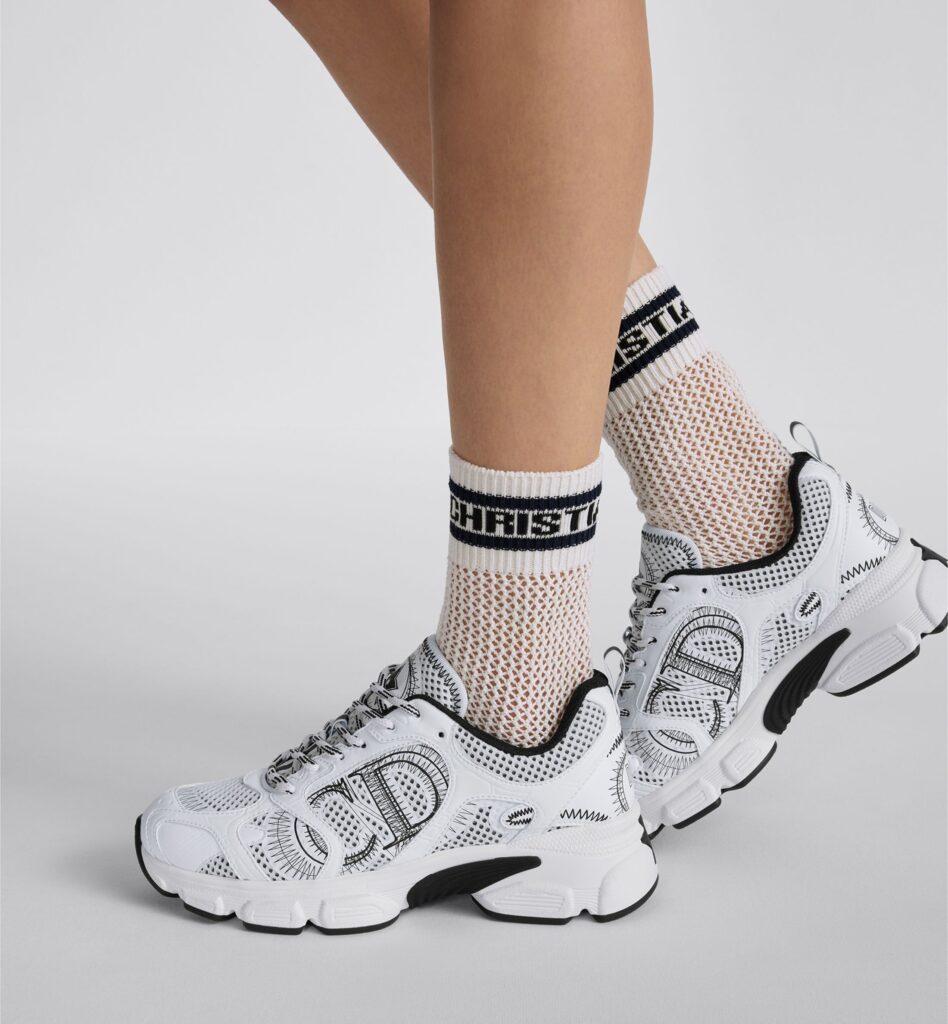
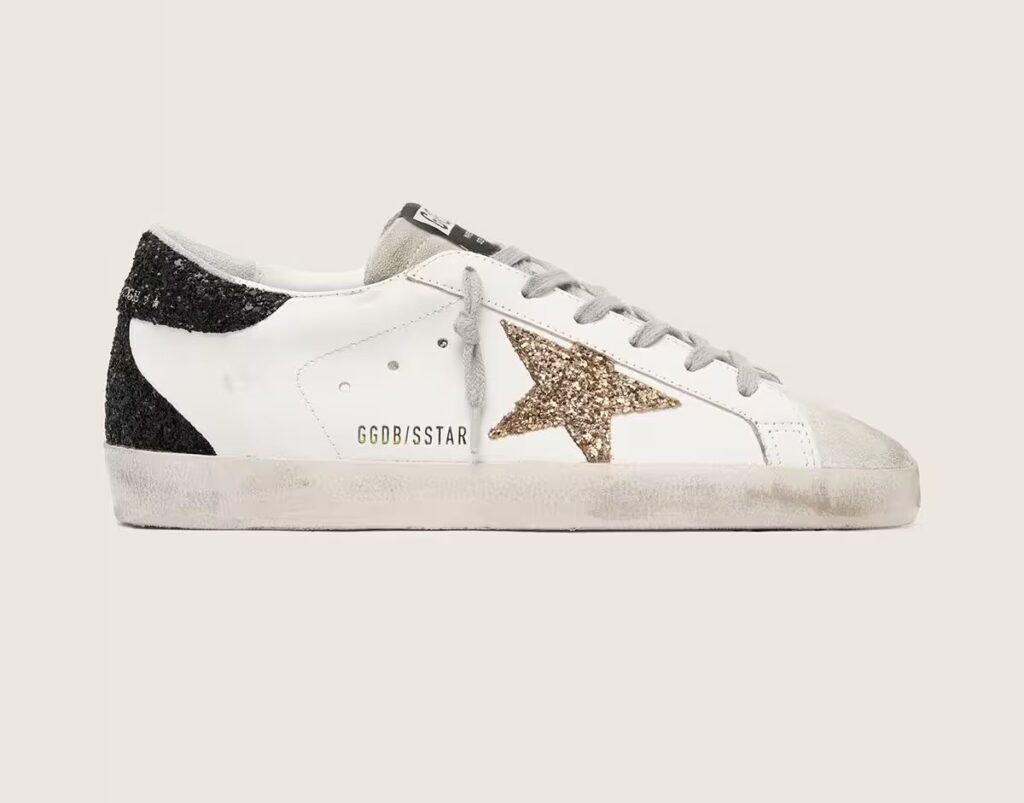
Balenciaga goes for chunky, exaggerated shapes that have upended the canon of the “pretty” shoe. Common Projects is all about absolute minimalism, gold numbers, and zero unnecessary stitching. Golden Goose delivers a distressed look, as if someone wore them for a year before selling. Each of these aesthetics has its own audience, and all fall within the range of 500 to over 2,000 USD or EUR per pair.
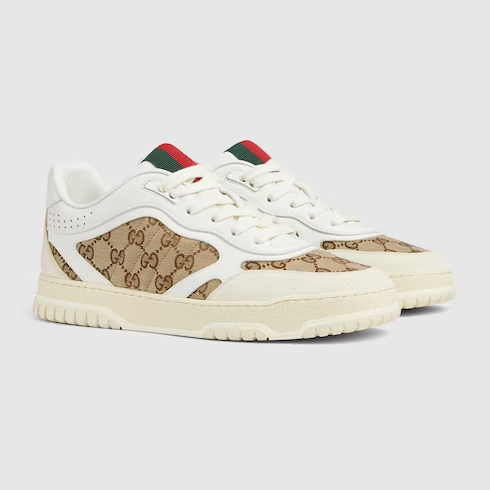
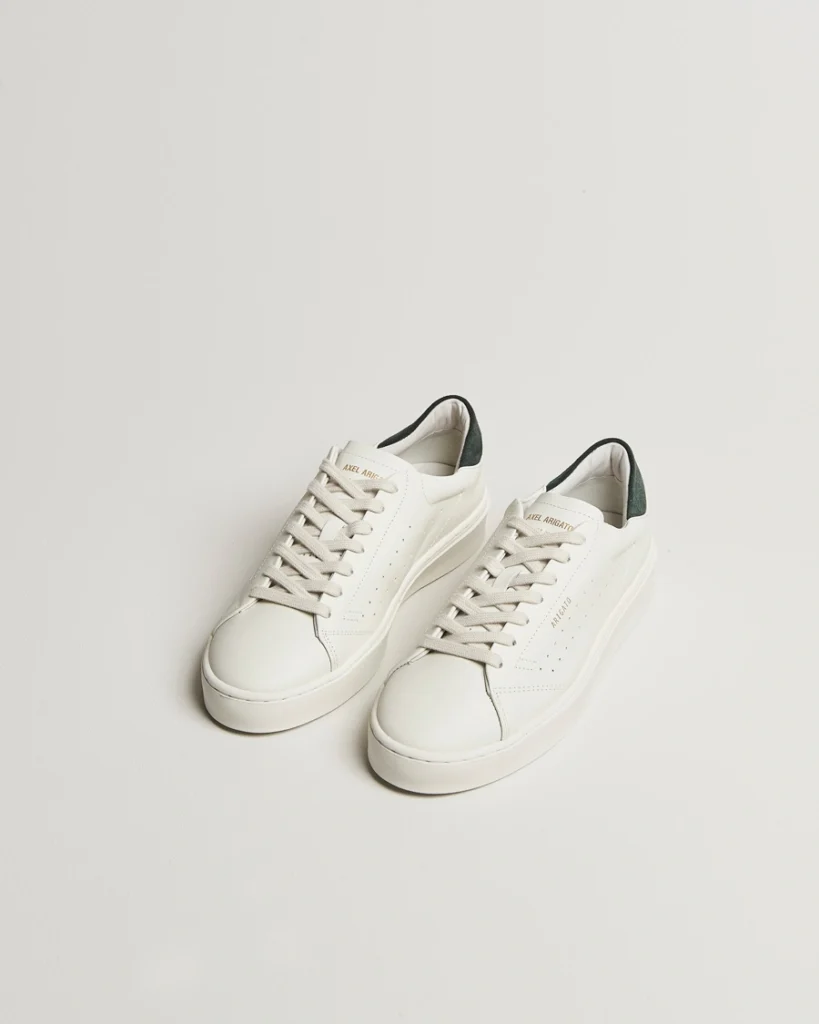
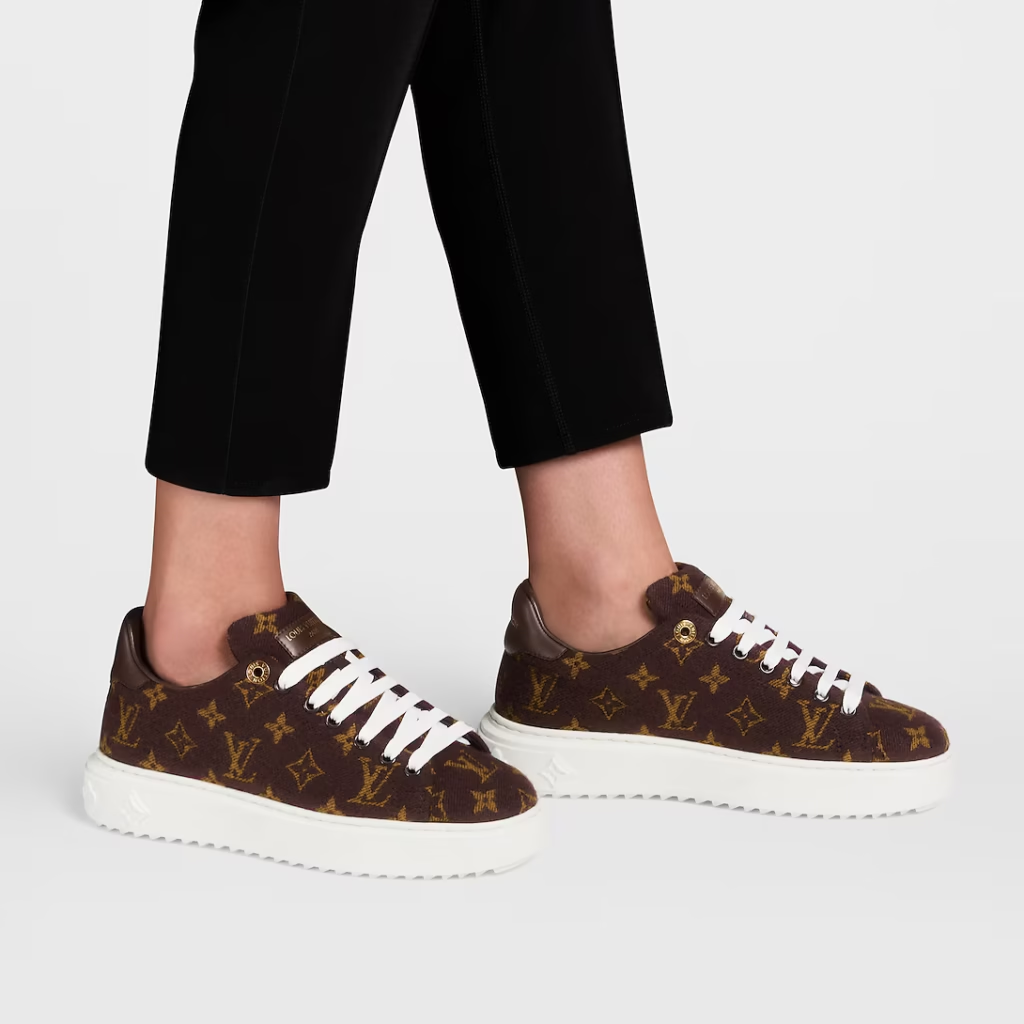
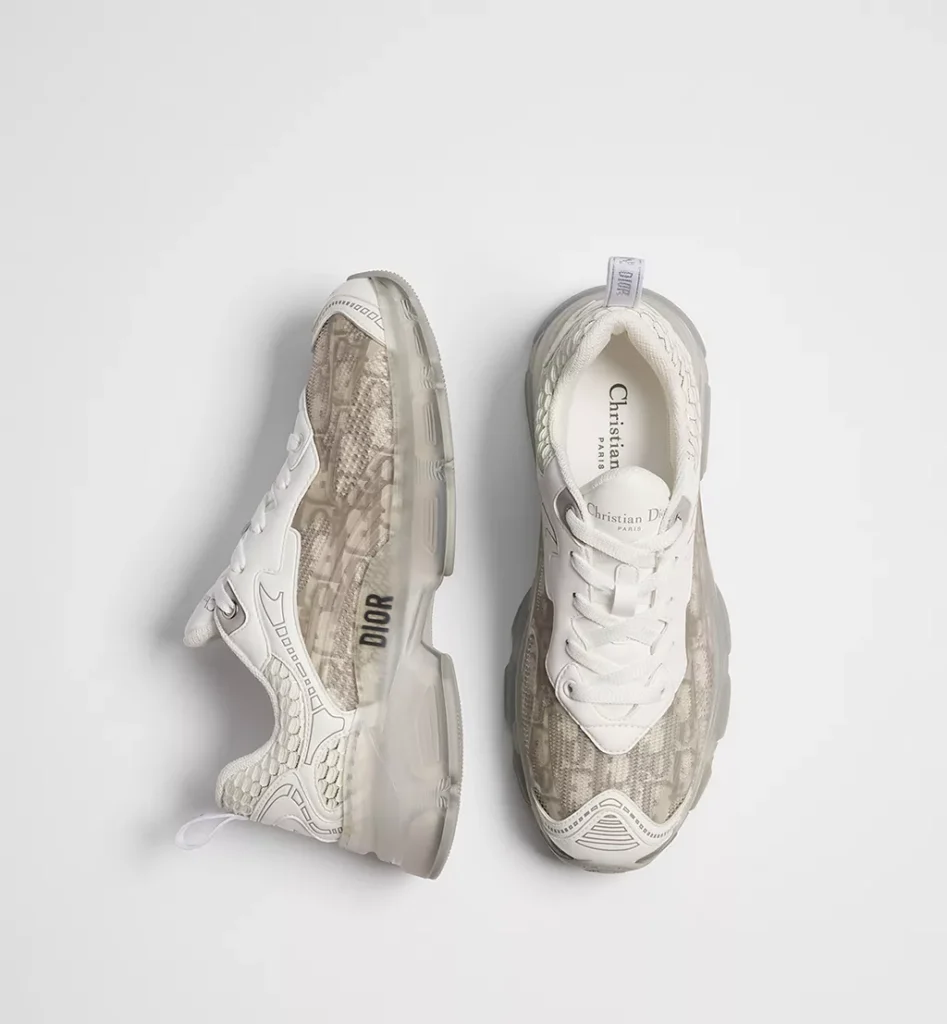
Louis Vuitton, Dior, Gucci, along with younger brands like Axel Arigato or Veja in the premium price range. Limited availability increases their value, as they are harder to get than regular Adidas.
Technology and sustainability
Contrary to appearances, luxury today is not just leather and metal. Carbon-fiber plates in the sole, advanced cushioning systems (advanced cushioning gel, air pockets), fused midsoles without glue. More and more often, recycled or bio-based materials, because the premium customer wants quality, but not necessarily at the expense of the planet. Veja is building its brand precisely on this. Technical innovation plus aesthetics plus ethics, all in one product. And that’s exactly why this category remains so strong.
From the dance floor to the runway
Back in the 1980s, no one suspected that sports shoes would become a status symbol. Converse and Adidas were made for the courts and the streets, not fashion salons. Everything changed in 1985, when Nike released the Air Jordan. That was a breakthrough. An athlete as a style icon, shoes as a statement. Sneakers stopped being just functional—they started to say who you are.
Milestones and collaborations
The true turn towards luxury came after 2010. Common Projects showed that minimalism and premium can work together ( a price of $400 for white leather sneakers). Golden Goose went in the opposite direction, deliberately distressed models sold as works of art. In 2017, Balenciaga released the Triple S and everything exploded. Chunky, oversized, ugly-beautiful. Then came Track, 3XL, a whole wave of imitators. Fashion stopped pretending that sneakers were a compromise and made them the main attraction.
The era of high-low brands and collecting
Collaborations like Dior × Jordan or the LV Trainer (designed by Virgil Abloh) have shown that sports and haute couture can blend without losing prestige. On the contrary, such a mix creates buzz. The pandemic accelerated this even further; forced casualization turned into a permanent trend. Sneakers have stopped being just a fashion statement—they’ve become an investment asset. Some models are increasing in value faster than stocks. From functional footwear to fashion statement to collectible asset, this evolution has taken barely 35 years.
Five Forces of Domination
Luxury sneakers hold the premium market for a reason. It’s the combination of five driving forces that fuel each other and create something more than just a trend.
Comfort meets wardrobe
The first driver is simple comfort, but in a premium edition. You can throw on Air Maxy for a casual look, but you can also pair Balenciagas with a blazer for the office. The casualization of dress codes in corporations has done its job—sneakers are no longer “too laid-back” and have become the norm. Versatility is truly something worth paying for today.
Status and community
Millennials and Gen Z treat limited edition sneakers as their favorite category of luxury spending, often ahead of watches or bags. The roots in hip-hop and basketball culture are still strong, and limited drops create powerful FOMO. The sneakerhead community is not just about buying—it’s about belonging, knowledge of models, and exchange. It’s a culture, not just a purchase.
Investment and tech
The resale market surpassed $10 billion GMV in 2025, and forecasts predict over $30 billion in the following years. Platforms like StockX and GOAT have changed the game, as a rare model is now a real asset. At the same time, product innovations (carbon-fiber plates, advanced cushioning, fused midsoles) are driving the category forward. The growing importance of sustainable materials and traceability is no longer an extra, but a requirement for premium.
These five forces together create a market structure that is worth breaking down into specific numbers and segments.
The market today in numbers
The luxury sneaker market is now a multi-billion dollar business that continues to grow at a fairly decent pace. Designer sneakers are projected to reach around USD 26.5 billion in 2026 and are expected to jump to USD 48 billion by 2036 (CAGR 6.1%). The strictly luxury sneakers segment is a smaller slice of the pie, but still substantial: USD 10.48 billion in 2025, with a target of USD 16.54 billion by 2034, growing at a rate of about 5.87% per year.
Who buys and through which channels?
When it comes to the breakdown, men still make up the majority of the market (about 52%), although women are increasingly joining the game. Interestingly, high-tops, meaning ankle-high models, account for roughly 35% of the share, which shows that classic low-top sneakers still dominate. Sales channels? Online accounts for about 40% of the volume, while specialty stores make up around 38%. The rest is spread between department stores and other outlets.
Geography and the example of Golden Goose
Geographically, the differences are significant. The USA is seeing a 21% decline in designer sneaker sales (2024 vs 2023) in department stores and off-price, likely due to market saturation and rapid trend turnover. Europe remains stable, while Asia, especially China, is experiencing the fastest growth (around 8.5% CAGR).
Golden Goose is a good illustration of the strength of the segment: revenues of around EUR 587 million in 2023 increased to EUR 654.6 million in 2024 (+13%), and forecasts for 2025 are EUR 734 million (+15%). Importantly, DTC accounts for about 71% of their sales, confirming that direct contact with the customer really pays off in this business.
Where and how do we buy?
Online shopping now accounts for about 40% of the entire luxury sneaker market. Quite a lot, right? Premium brands are increasingly opting for direct-to-consumer (DTC) sales, bypassing intermediaries and maintaining full control over pricing and availability. The drop mechanism, meaning limited online releases, has become almost standard. It’s not just a sale—it’s an event. The customer knows that at hour X, Y pairs will appear and they have to be quick. The margin stays with the brand, and the hype grows organically.
Specialist stores
Physical specialty boutiques account for about 38% of sales. A smaller share than before, but still significant. These stores act as curators, build brand experience, and help customers touch the product before purchase. Not everyone wants to buy shoes for 800 euros without trying them on, especially when it comes to the fit of a limited edition.
Resale ecosystem
Platforms like StockX and GOAT have changed the rules of the game. The resale market has reached a value exceeding 10 billion dollars GMV in 2025, and forecasts indicate over 30 billion in the coming years. This is no longer a hobby; it’s an investment. Some pairs appreciate more than stocks. Scarcity-led planning, or consciously limiting availability, drives this mechanism. A limited edition today means potential profit tomorrow. Sneakers have stopped being just footwear; they have become collectible assets with a market valuation.
Risk of counterfeits
It’s getting really tense here. In Europe, every second pair of selected luxury sneakers is a fake. Alexander McQueen leads the counterfeiting statistics (about 54% of pairs on the secondary market), which directly affects Polish customers. When buying second-hand or from unverified sellers, you simply risk overpaying for a counterfeit. Authenticity checks have become practically mandatory, especially for popular models.
Shadows of radiance
Recent months show that even luxury sneakers have their limits. In the US, sales of designer sneakers in department stores and off-price chains dropped by 21% (2024 vs 2023). That’s a significant signal. Part of the market is simply oversaturated, especially younger consumers who have already seen all the collabs, limited editions, and exclusive drops. Hype fatigue is a real phenomenon.
Marketing or craftsmanship
The recurring debate: are sneakers for 700 euros really worth the price? The production cost is probably several times lower, which raises questions about what we’re actually paying for. For storytelling? For the logo? For artificial scarcity? Discussions in industry circles resurface regularly, especially when a brand releases another model with minimal visual changes but a new price tag. Critics talk about ” margin inflation “, while fans reply: you’re paying for design, recognition, and cultural context. The problem is, both sides have a point.
Counterfeits and trust
Counterfeits are a separate headache, especially in Europe, where the trade in these replicas is thriving. Some fakes are now so convincing that buyers need a certificate of authenticity or NFC or blockchain technology to be sure. The industry is responding: more and more brands are adding verification chips, QR codes, and traceability systems. This works, but it increases costs and complicates matters.
Sustainability versus the drop culture model? Another tension. Brands advertise sustainable materials, yet at the same time release new models every week, fueling the spiral of consumption. Half-measures, but the pressure is mounting.
What next until 2036
Forecasts for the next decade paint a picture of a market that will be larger, but also more demanding. If the reports are to be believed, designer sneakers will reach a value of around 48 billion USD by 2036 (CAGR 6.1%), the luxury sneakers segment will reach approximately 16.54 billion USD as early as 2034 (CAGR ~5.87%), and the entire luxury footwear market could hit 62.5 billion USD in 2031. It sounds impressive, but these numbers won’t come by themselves.
Strategies and channels until 2036
Brands are making scarcity a cornerstone of their planning—no one is surprised anymore. It’s about protecting margins and maintaining control over distribution. Direct‑to‑consumer is gaining momentum because it lets brands retain more value in-house and build customer data. At the same time, traceability, NFC chips, and blockchain are developing in parallel, all to ensure buyers know where their shoe comes from and what’s inside it. Sustainability is no longer just a PR add-on; it’s becoming a requirement, especially in Europe.
Technology and sustainability
Performance and fashion hybrids are probably the most promising product direction. Advanced cushioning, carbon plates, breathable membranes—all of this packed into runway-worthy silhouettes. Bio and recycled materials are becoming a permanent part of mainline collections, not just capsules. Personalization, in-store experiences, customization—these are now standard for a generation that buys experiences, not just products.
Growth map
Asia, especially China, will be the engine of growth until 2036. Europe will remain stable and mature, but it is the Asian markets that will provide momentum. Brands are learning local tastes, adapting collections, and not imposing a single global template. This pays off, as local preferences can be surprising.
Luxury between comfort and cultural capital
Luxury sneakers have proven that they can be both comfortable and prestigious. It’s a rare case when an everyday item becomes a symbol of social status without losing its primary function. Shoes costing several thousand zlotys are worn to the office, to dinner, and for a walk with the dog. This versatility, combined with aesthetic sophistication, makes them the perfect product for the modern middle and upper class.
It’s hard to predict what could shake this position. Premium sneakers have become so deeply embedded in culture that they’re almost invisible as a symbol of luxury. Billionaires and influencers wear them, as do executives and artists. This very ubiquity paradoxically reinforces their exclusivity, because true luxury today is about the freedom to choose, not rigid dress code rules.
Mayy ZRE.
editorial team