
Searches for ” preppy aesthetic ” have increased by over 200% since the beginning of 2025. This is no coincidence. Retro preppy is making a comeback, and this time it’s about more than just the academic elegance we know from Ivy League campuses. It’s a mix of sporty chic from the ’50s, ’60s, and ’80s, a touch of nostalgia, and a subtle “old money” vibe that’s spreading across TikTok, Instagram, and Pinterest like wildfire.
Why are we seeing preppy everywhere again?
Probably because it pairs well with other aesthetics that are popular right now: old money, quiet luxury, clean girl. People are looking for something timeless, but not boring. They want to look polished without effort. And that’s where preppy comes in, with its sweaters draped over the shoulders, collared polo shirts and boat shoes, which are suddenly popping up even at Miu Miu. Something that was once mainly associated with elite schools is now worn every day to cafés.
In the following section, we’ll take a closer look at what retro preppy is, where it comes from, which wardrobe elements are key, and how to put together ready-made outfits. We’ll also check out the trends for 2024-2026, so you’ll know which direction everything is heading.
Retro preppy – what is it?
We’ve seen preppy style thousands of times. Classic, timeless, always in good taste. It’s that “sporty elegance” straight from American private schools and Ivy League campuses, polo shirts, sweaters, pleated skirts, loafers. But what happens when we add a vintage twist to it?
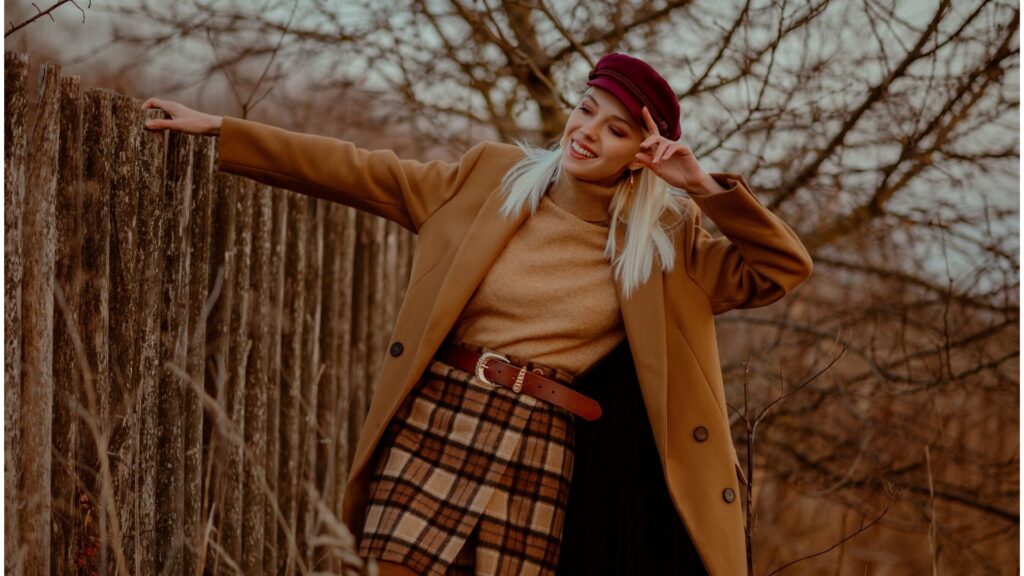
“Retro Preppy” (or “retro‑preppy”) in fashion refers to an aesthetic that combines classic preppy style with vintage, retro, or historically inspired elements, often drawing from the 1950s, 60s, 70s, or 80s.”
This is where the fun begins. “Retro” means a layer of nostalgia, second-hand hunts, and distinct decade inspirations. Pastel plaid from the ’80s, a mini tennis dress from the ’60s, the muted tone of a vintage polo from the ’70s. All of this gives classic preppy style character and history.
Materials, colors, and patterns that create DNA
The basics are quite simple, but important. The main materials are:
- cotton (oxford, pique)
- wool and tweed
- linen for summer
- madras, seersucker (these are more casual, often in plaid)
Colors? Navy, khaki, white, muted reds, and bottle greens. The patterns make the difference: checks (from subtle windowpane to bold plaid), Breton or regimental stripes, argyle on sweaters, houndstooth on blazers.
What’s cool is that retro preppy is totally unisex. The same sweaters, oxford shirts, and vintage cardigans are worn by everyone. And for an authentic effect? Thrift shops and second-hands deliver it better than new collections. True preppy loves things with a history.
From Ivy League to TikTok
It all began with exclusive preparatory schools on the East Coast of the USA, when in the late 19th century Brooks Brothers created the first button-down oxford for polo students. We’re talking about a time when clothing truly signified belonging.
Timeline: from campus to pop culture
- ~1890-1910 – Brooks Brothers and J. Press dress Ivy League students; an informal “variant of elegant casualness” emerges, distinct from their fathers’ suits
- 1940-1950 – The GI Bill opens elite universities to veterans; preppy becomes more widely accessible, though it still encodes aspirations
- 1965 – “Take Ivy” documents campus aesthetics, reaches Japan and begins to shape the local Ametora movement (which today influences the West in return)
- 1980 – “The Official Preppy Handbook” by Lisa Birnbach sells over 1 million copies, with 32 reprints by 1995; preppy stops being insider knowledge
- The 1980s – commercial peak: madras, Lacoste with the collar popped, Ralph Lauren builds an empire on this aesthetic
- The 90s – minimalism replaces logos; Carolyn Bessette-Kennedy showcases a toned-down version of the style
- 2000s – Abercrombie & Fitch popularizes preppycore among teenagers; the style loses its sophistication
- After 2020 – TikTok and Pinterest are bringing back archival versions under the “old money aesthetic” trend; once again, it’s all about photos from “Take Ivy”
Retro preppy is exactly about this cyclicality. Every 15-20 years, a new generation discovers photos from campuses decades ago, looks for similar sweaters in vintage shops, and calls it their own. Ralph Lauren, Brooks Brothers, J.Press, J.Crew, L.L.Bean, Lacoste, GANT—these brands have endured precisely because their archival collections always return as inspiration.
Now that we know where it came from, we can get down to specifics. What exactly did those people from the old photos wear?
Retro preppy wardrobe
Sporty elegance is the foundation of the entire aesthetic. The quality of materials has always mattered more than the abundance of the wardrobe—cotton, wool, linen, madras, seersucker, or tweed create that distinctive “I bought it for years to come” atmosphere.
Polo shirts (classic Lacoste, Ralph Lauren) are an absolute essential, as they combine casual comfort with elegance. Look for retro versions in muted colors with a more pronounced collar.
Oxford Button-Down Shirts – white or with blue stripes, always featuring buttoned collars. The retro twist is a looser fit and heavier cotton.
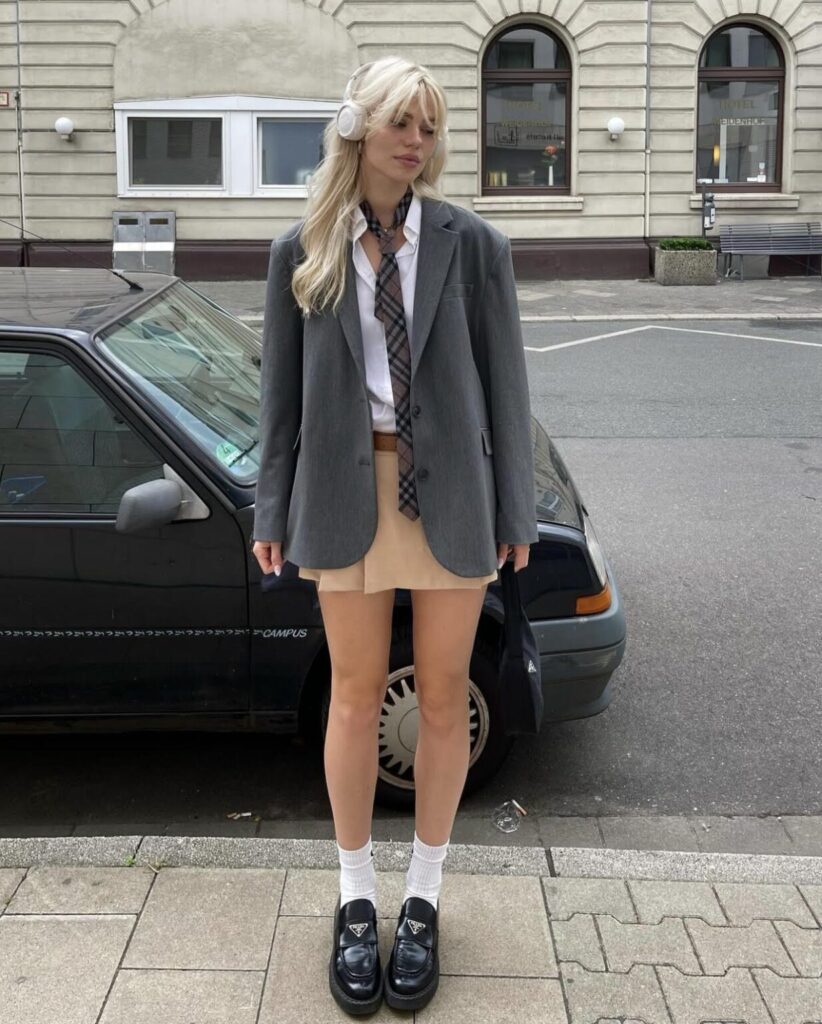
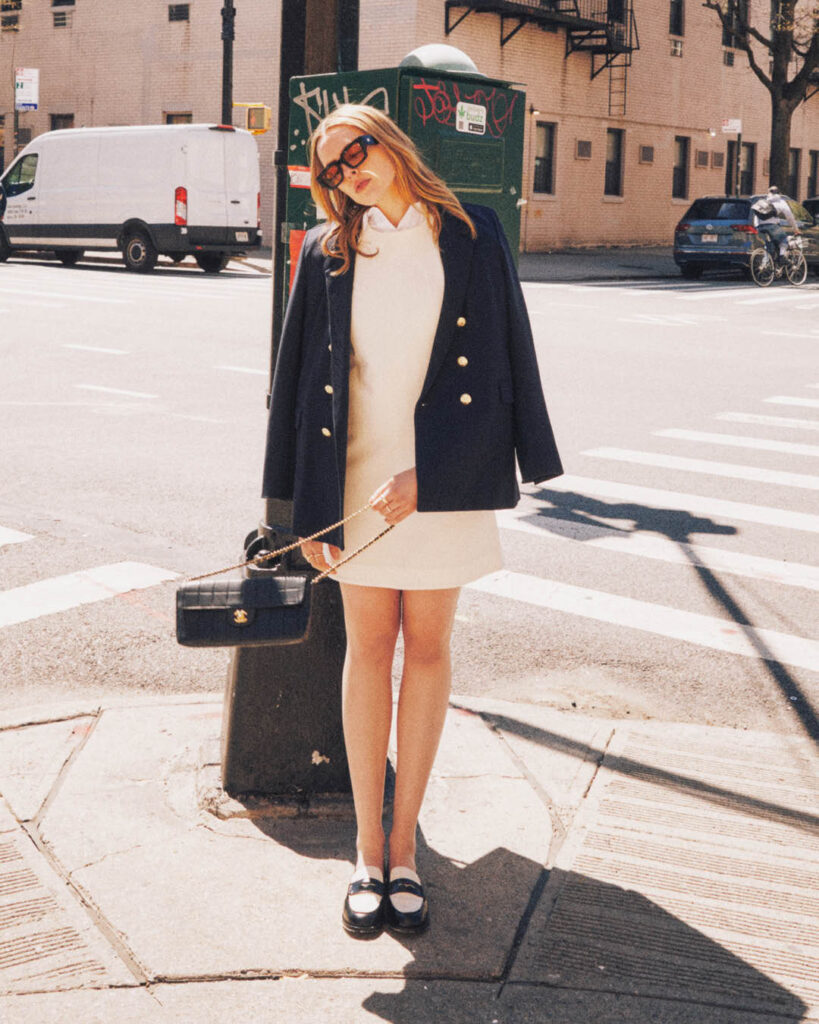
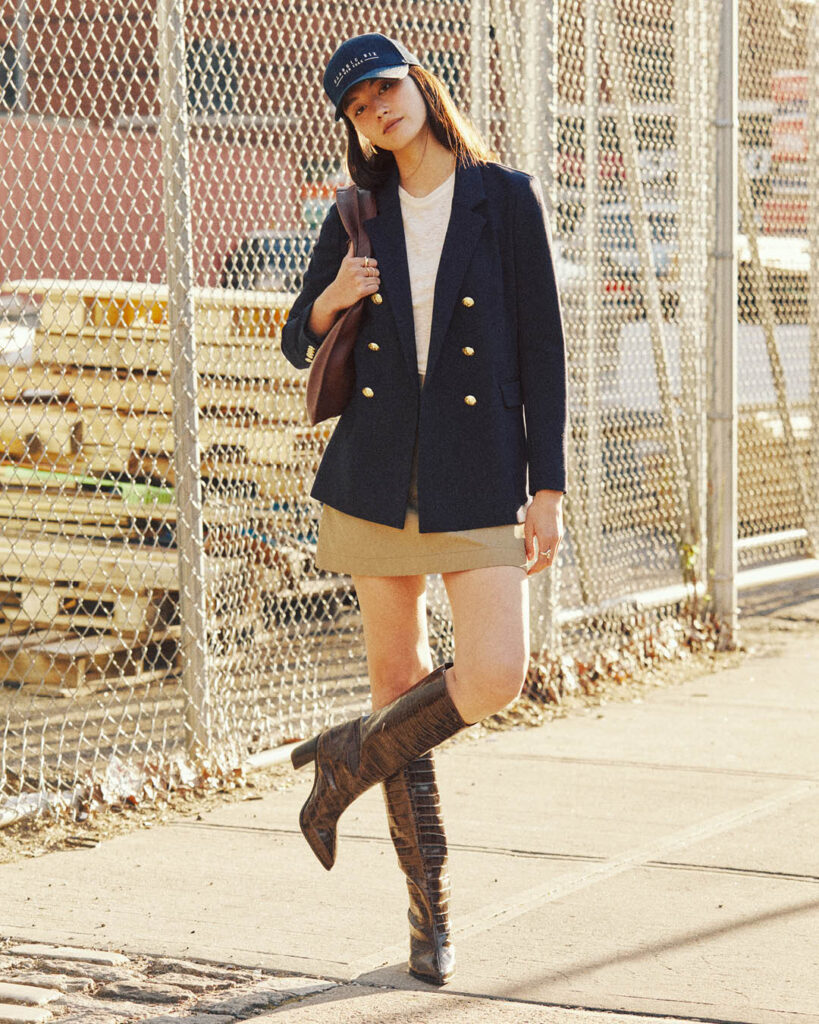
A navy blazer with brass buttons embodies academic elegance without excess. Look for a slightly looser cut inspired by the 1980s.
Chinos and khakis plus pleated trousers create that casual foundation. Choose a higher waist and a looser leg.
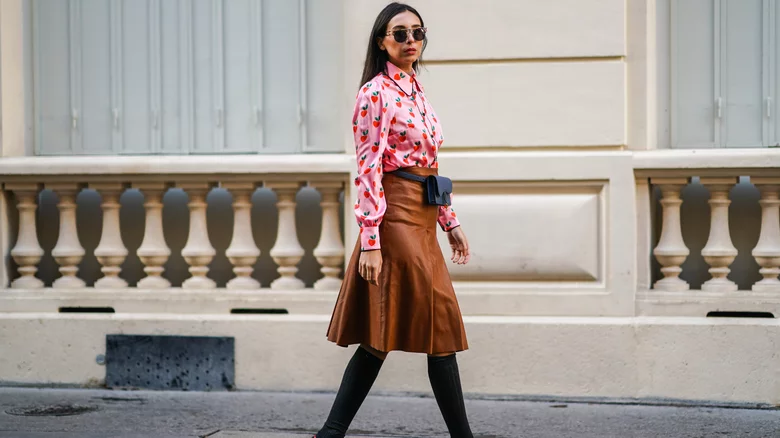
Pleated skirts (preferably in plaid) are reminiscent of school uniforms. The retro versions are a bit longer, falling below the knee.
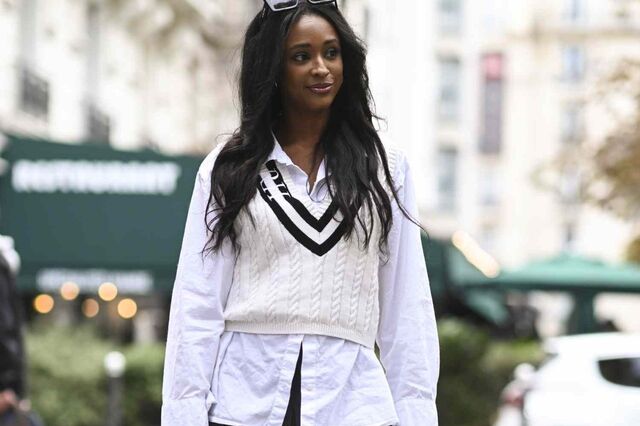
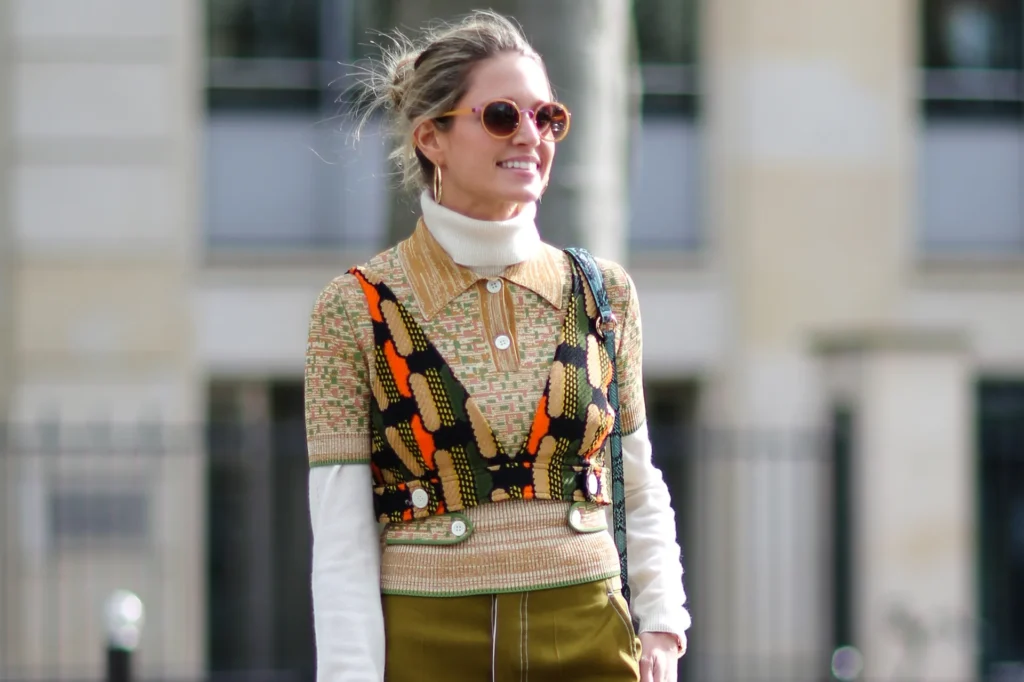
Sweaters are a whole category: cable knit, Fair Isle, argyle vests, Shetland wool cardigans. Here, be sure to look for vintage patterns in particular.
Footwear: penny loafers, boat shoes (Sperry Topsider), brogues, moccasins plus retro sneakers (Adidas SL 72). All leather, well worn.
Accessories complete the look: striped repp ties, bow ties, pearls, satchels, baseball caps, aviators, or wayfarers. Patterns like madras or gingham, rugby shirts, and letterman jackets add authenticity.
Honestly, you don’t need a lot of elements. You need the right ones.
How to give a retro twist to the classics?
Instead of guessing what goes with what, it’s worth having a few proven formulas that simply work.
Ready-made sets by decade
Here are some formulas you can recreate almost instantly:
- The 60s. – navy blazer + pleated mini + OCBD shirt + knee-high socks + loafers. Retro accent: a headband or a brooch in school colors (burgundy, gold).
- The 70s. – striped polo + A-line skirt (or khaki chinos) + cable knit sweater loosely draped over the shoulders. Pair with retro sneakers like Adidas SL 72 or classic loafers.
- The 80s. – pastel madras, preferably as a vest + pleated trousers + repp tie. You can go for a “popped collar,” but that’s a matter of taste.
- Campus casual (unisex) – rugby shirt + straight jeans + letterman jacket + sneakers. If you want to elevate the vibe, add a baseball cap and socks in collegiate stripes.
Colors and layers in practice
The base palette is navy, khaki, and white, but you can confidently add pastels (mint, light pink), primary reds, and bottle green. In the Polish climate, layers are key—after all, who wears just a polo shirt in October? A tweed sweater, Shetland wool, a classic coat or trench, all of these work perfectly.
One more thing: originals from second-hand shops perfectly capture authentic vintage preppy style. Sometimes, all it takes is one genuine piece to give the whole look character.
Here and now
The last two years have seen a true explosion of interest in the preppy aesthetic. Searches for “preppy aesthetic” have increased by over 200% since the beginning of 2025, and terms like “retro preppy” or “old money aesthetic” have seen a 66% rise in 2025 compared to the 12-month average. This isn’t a passing trend—it’s a cultural phenomenon.
What matters now:
- Trend labels: “neo-prep,” “preppy-go-lucky,” “quiet luxury,” and “old money” merge into a single movement
- Runways 2024/2025: Miu Miu brings back boat shoes, Loewe and Burberry opt for classic cuts, Prada and Simone Rocha mix preppy with avant-garde
- Pop culture as an amplifier: Hailey Bieber in sweaters, the Hadid sisters in polos, Emily Ratajkowski in pleated skirts
- Dakota Johnson in retro-preppy sneakers and Taylor Swift with iconic cardigans are becoming trend icons
Social context
Preppy carries an inherent contradiction that cannot be washed away: a style created by the white elite remains timeless precisely because it combines tradition with ease. The problem? For decades, it functioned as a visual access code to an exclusive club. Abercrombie & Fitch faced lawsuits in 2003 over racial and religious discrimination because it hired according to the “brand image.” This is not an abstract story; it is a tangible example of how aesthetics can exclude.
On the other hand, since the 1950s, Black Ivy has shown that preppy was never a white enclave. Malcolm X and Black intellectuals wore the same blazers, ties, and loafers, adopting the style as a strategy for respect and negotiation in a white world. Today, the diversity of the scene is a fact: influencers from various backgrounds mix preppy with their own codes, social media removes geographical barriers, and the Ametora movement in Japan has been confidently reinterpreting American classics for decades.
The debates around the “old money aesthetic” continue. Some see it as a glorification of consumerism and class gatekeeping, while others view it as a defense of quality and durability in the face of fast fashion. Thrift stores and secondhand shops, however, democratize access, since a well-tailored wool blazer from 1985 costs less than a new sweater from a chain store. Aspiration meets accessibility, and everyone decides for themselves where they stand on this spectrum.
Why does it still work?
Retro preppy has endured for decades because it combines two things that rarely go together: visual elegance and practicality. This is not a style that requires us to dress up as someone else. We can wear a pleated skirt with sneakers or an argyle sweater with jeans and still look cohesive. This flexibility makes preppy work just as well at a business meeting as it does on a weekend stroll.
What does all this mean? That fashion returns to what is tried and true when we need something stable. Preppy gives us a sense of order without rigidity. And that’s probably why it will stay with us for a long time to come.
Madame B
HCF Editorial Team