
Just look at the numbers. #Officecore has surpassed 700,000 views in the US, “Office Core” is already gathering around 42 million posts, and on Pinterest, searches for ” officecore ” have increased by 50%, and “corpcore” by 25%. This is not a random trend; it’s a response to a specific need.
The thing is, we’re going back to the office. The years 2024 and 2025 mark the moment when RTO (return to office) policy stopped being speculation and became reality. The problem? During the pandemic, our wardrobes got used to sweatpants and oversized hoodies. We need something in between: “elevated business casual”—professional, but without the stiffness of a suit. Comfort meets refinement.
Office core, or the return to the elegant office
Hybrid changes the game. We work in multitasking mode: office in the morning, meeting in the afternoon, evening outing without changing the entire look. Office Core gives you exactly this functionality. Less formal than “business formal,” but definitely more intentional than casual Friday.
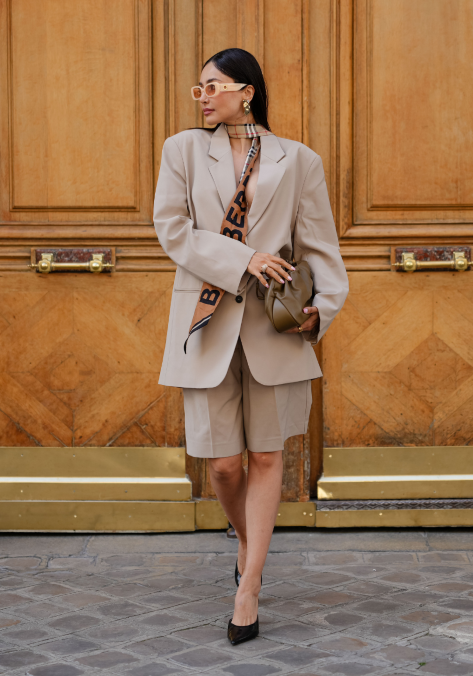
Forecasts for 2026? Mainstream with a strong emphasis on comfort and versatility. You can already see it in stores, on social media, and in the way people dress in city centers.
But to understand where Office Core actually came from, it’s worth going back a bit in time.
The origins of Office Core – history and evolution
Office Core didn’t appear out of nowhere. It’s the result of decades of shifting codes in the corporate world, which have finally come full circle and returned to elegance.
From Le Smoking to Casual Fridays
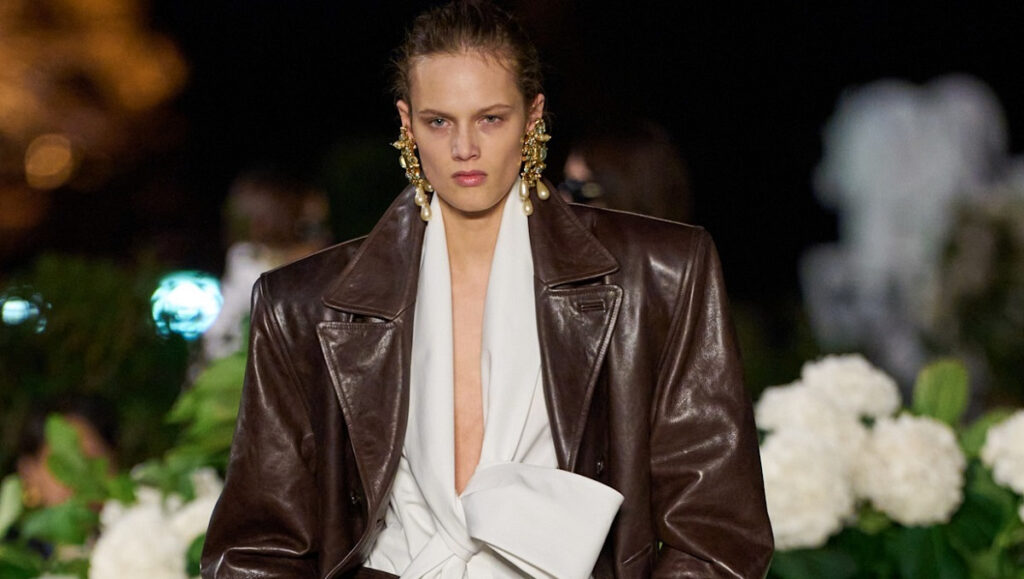
The 1950s–80s were the era of sharp suits and power suits. Women fought for their place in offices, wore padded shoulders, and the blazer became a symbol of strength. An icon of the time was the Yves Saint Laurent “Le Smoking” suit from 1966, which gave women the right to masculine elegance on their own terms.
Then came the 90s and everything loosened up. Tech companies from Silicon Valley let khakis and polos into their offices. Casual Fridays became the norm.
The pandemic and the birth of a new normal
2020-2022 was the peak of relaxed casual wear. “Zoom tops” paired with sweatpants from the waist down. Elegance seemed to be dead for good.
But 2023 changed everything. The return to offices coincided with the BOSS “CorpCore” show (fall 2023), which put the suit back on a pedestal. Prada and Stella McCartney picked up on the trend. At the same time, TikTok and Pinterest exploded with the #OfficeCore hashtag, and Gen Z discovered a nostalgia for the ’90s and Y2K aesthetic they only knew from the series “Suits.”
Anatomy of the trend: key elements and palette
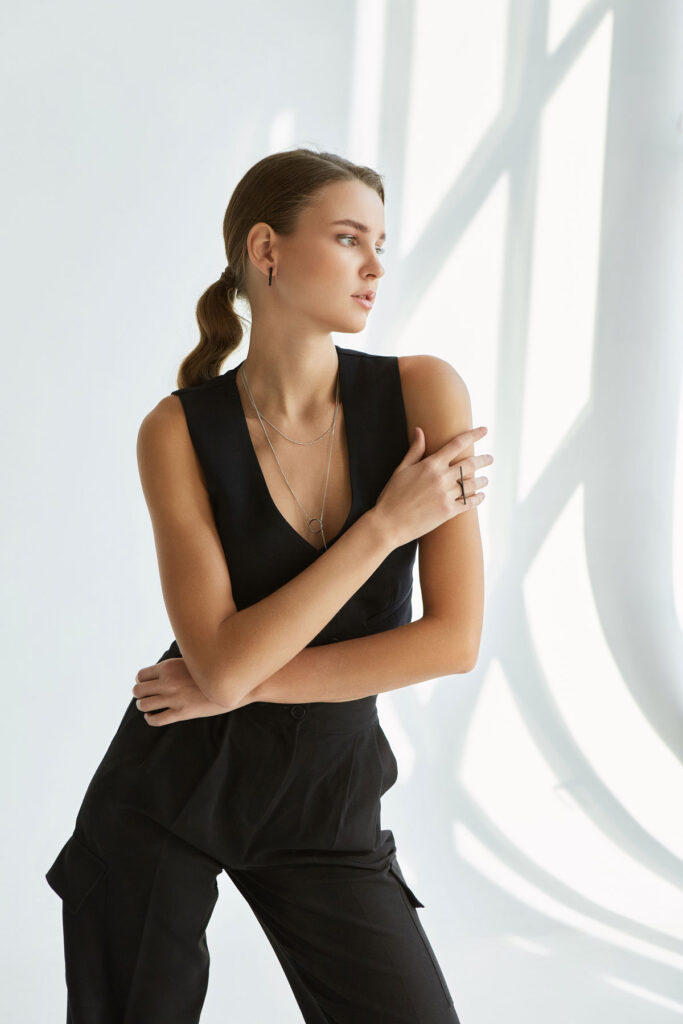
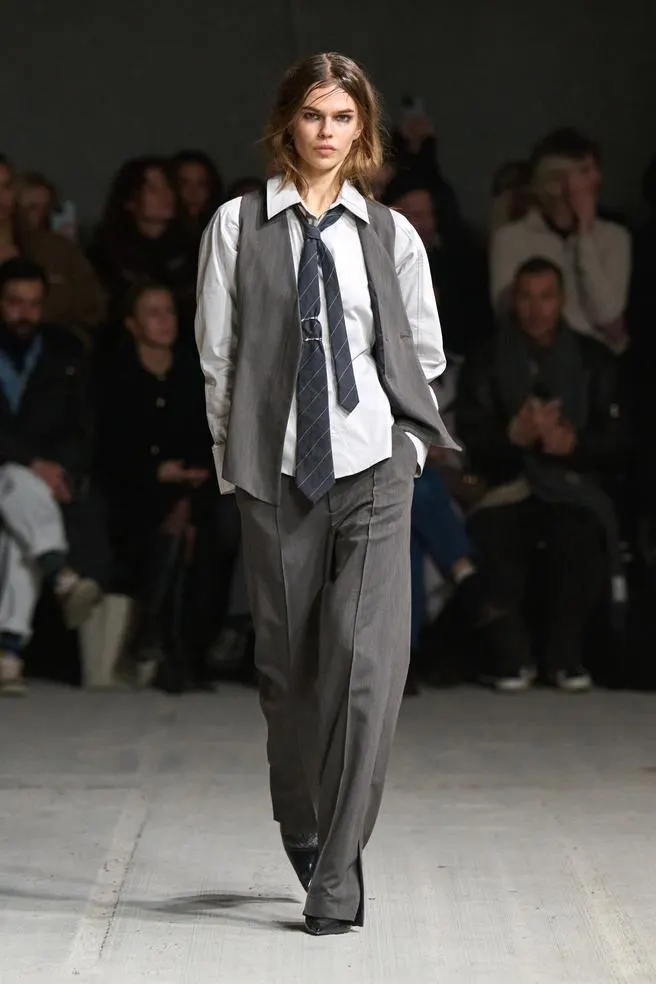
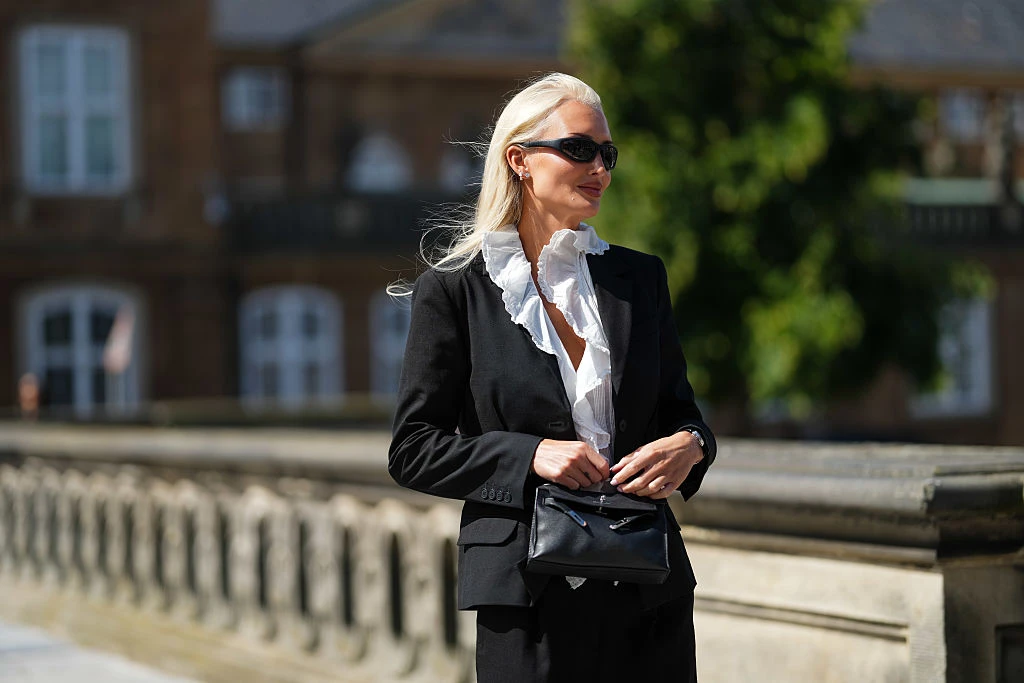
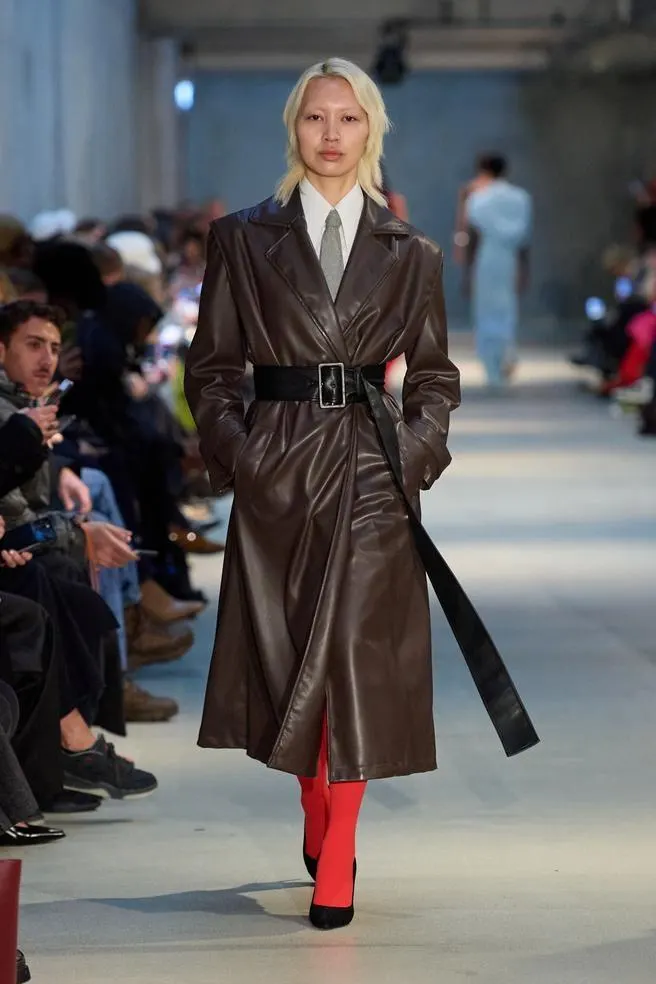
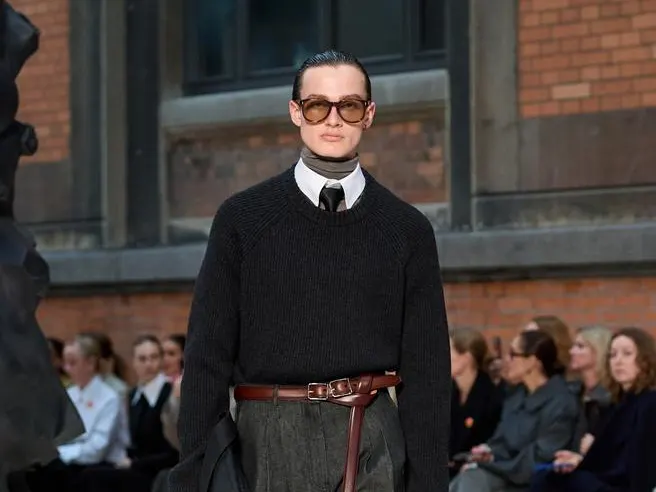
Office Core isn’t an HR handbook dress code. It’s more of an elevated business casual that works just as well for a morning meeting as for an evening dinner. The key categories? Tops include cotton or silk shirts, satin blouses with a tie ( yes, the tie has become gender-fluid), turtlenecks, and suit vests worn solo. Bottoms feature wide-leg pleated trousers, pencil skirts, and midis that combine structure with movement. Outerwear focuses on blazers (both oversized and fitted) and classic trench coats, often with pronounced, structured shoulders.
Footwear balances between comfort and “polish”: loafers, oxfords, low heels, Mary Janes. Accessories? Structured Kelly-style bags, thin belts, subtle jewelry that doesn’t shout.
Palette and fabrics that work
This is where the magic begins. The Office Core palette is based on black, graphite, shades of “mocha mousse,” and burgundy. The materials include wool, silk, satin, and sustainable blends that look luxurious but don’t require weekly dry cleaning. It’s all about fabrics with character: a subtle sheen, a delicate texture, something that gives simple cuts a sense of depth.
Importantly, each piece can be worn in several ways. A suit vest with jeans on Friday, with a wide skirt for the weekend. Flexibility is key, because Office Core doesn’t confine us to just one version of ourselves.
Office Core today: runways, media, and everyday life (2025-2026)
SS25 shows and SS26 previews demonstrate that Office Core is no longer just a hashtag. Hermès showcased wide palazzo trousers paired with satin shirts (that fabric flow!), Saint Laurent opted for ties worn by women with oversized blazers, while Fendi and Valentino played with the “mocha mousse” color, which Pantone, by the way, declared the color of the year. Soft tailoring, natural fabrics, zero aggressive power dressing from the ’80s. It’s no longer a suit of armor, but clothing that works with you, not against you.
Digital buzz and expert voices
The numbers speak for themselves:
- the hashtag “#officecore” has surpassed 700,000 views on TikTok
- “Office Core” (overall) generates around 42 million posts on social media
- Pinterest recorded a 50% increase in searches for “officecore” and a 25% increase for “corpcore”
- it is estimated that 20-30% of the AW25 collection is influenced by Office Core
Beckie Klein, a stylist from New York, summed it up briefly: “Power suit is back.” Ali Lees, an HR consultant, added something equally important: ” Comfort doesn’t compromise credibility.” In Poland, we can see this clearly with the return to offices in 2025. Ties are making a comeback (though worn more loosely), pencil skirts are appearing more often, but the hybrid work model means that comfort and elegance must go hand in hand. No one wants to look stiff on a 9 a.m. Zoom call, but a 2 p.m. meeting? Yes, that’s where Office Core works perfectly.
How we wear it: outfits from the morning call to after-work
Elevated business casual may sound complicated, but in practice, it’s a few tried-and-true combinations that work whether you have a Zoom meeting at 9 or drinks with a client at 6.
Universal RTO day: oversized blazer (beige or navy) + wide high-waisted trousers + leather loafers + structured handbag in a neutral color. Add a delicate chain or small earrings, and you’re set. Looks polished, but you can survive 10 hours in it without discomfort.
Presentation or board meeting: satin shirt (ecru, powder pink) + knee-length pencil skirt + low heels. If you want to add some character, a narrow tie worn loosely is now a perfectly acceptable touch—you don’t have to be afraid of it.
Hybrid day: suit vest + thin turtleneck + tailored trousers + Mary Janes. Comfortable enough to get you through the day, elegant enough that no one will ask if you happen to have the day off.
After-work: the same set as in the morning, but drape the trench coat over your shoulders, swap the loafers for patent pumps, and add a slightly bolder lipstick. Done.
Office → evening in two moves
Changing shoes (from flats to heels or vice versa, from matte to patent) and your bag (from a large one to a smaller, more evening-appropriate one) makes a bigger difference than you think. Add a darker shade of lipstick, bolder jewelry, and no one will notice that you’ve been wearing the same pants since 8 a.m.
The line between “Office Siren” and Office Core: etiquette and pitfalls
“Office Siren” and Office Core are two different worlds, although the boundary can be fluid. Siren is a trend that celebrates tight-fitting cuts, semi-transparent fabrics, bold makeup, and striking accessories that evoke the aesthetics of the ’90s and early 2000s. Office Core, on the other hand, focuses on structure, tailored fits without tightness, and elegance that would never raise eyebrows in HR. For some, Siren is a form of expression and reclaiming agency; for others, it’s a risky reinforcement of patriarchal norms.
Where does Siren end and Core begin
The debate around Office Siren has been heating up the media for months. Vogue and The Guardian highlight the controversy: is it emancipation, or an unconscious alignment with the male gaze? Practically speaking, Gen Z is increasingly hearing comments about dress codes. Fortune reports cases of “dress-coded” employees who opted for interpretations deemed too bold. Sheer fabrics, mini lengths, deep necklines, and tight materials are red flags in conservative corporations.
Label: elegance without HR red flags
If you want to avoid problems, follow a few rules:
- Transparency: avoid or add a camisole
- Skirt length: at least mid-thigh (or longer)
- Fit: a cut that accentuates the silhouette without being tight
- Neckline: up to the middle of the bust at most
- Footwear: heels are fine, but they should be stable and a reasonable height
Office Core gives you structure, elegance, and room for a personal touch without risk. Polish over provocation, always.
Elegance that works for us – the essence of Office Core today
Office Core is essentially a response to what we seek in everyday life — clothes that don’t require us to make constant compromises. It’s not about stiff suits or pretending to be someone we’re not. It’s more a way to look conscious and confident, whether the day brings an online meeting or an unexpected lunch outing. Elegance is no longer something we reserve for special occasions. It has become a tool that helps us feel good in our own skin.
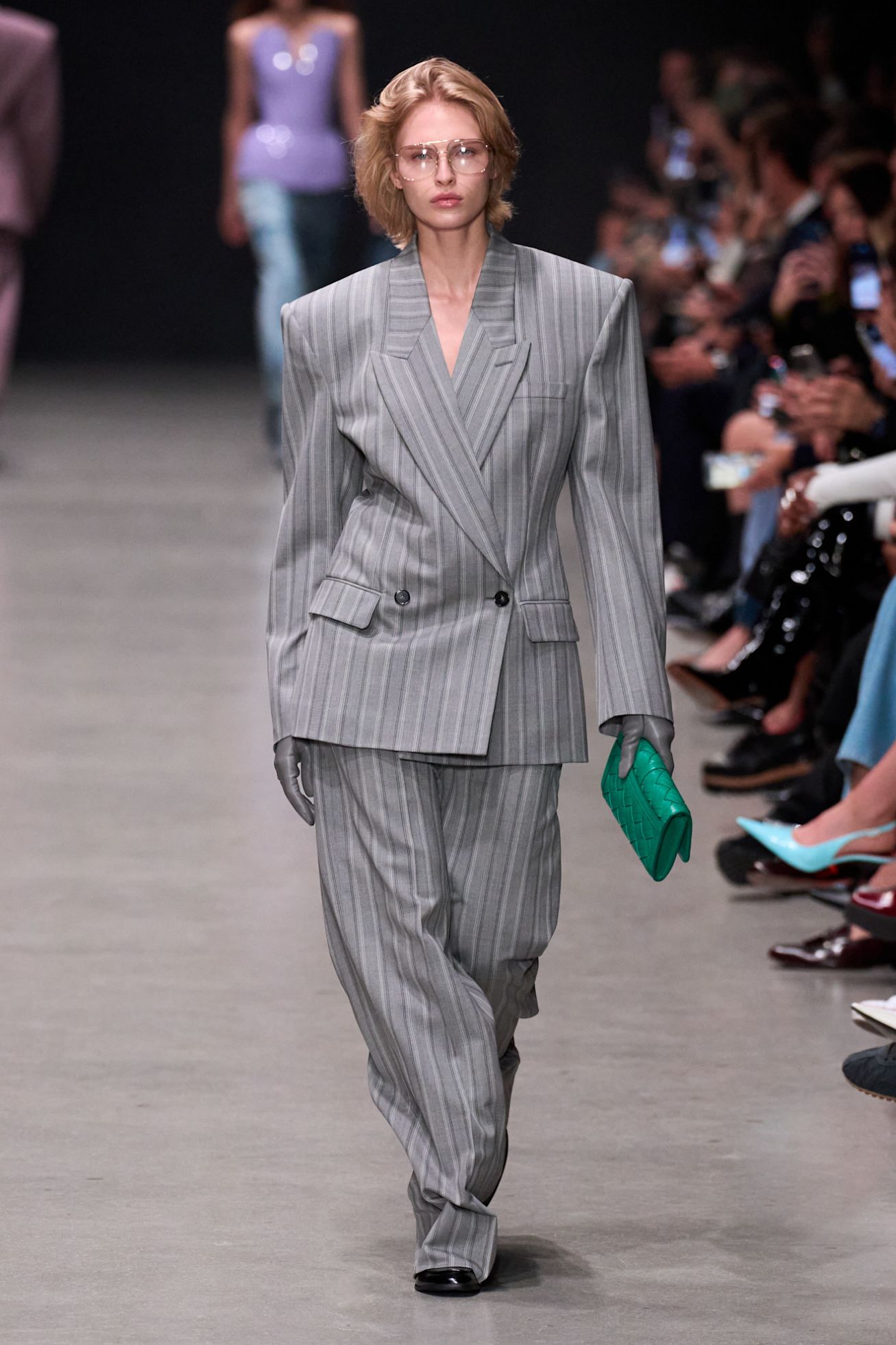
And it is precisely this naturalness, combined with thoughtful choices, that creates the essence of today’s Office Core. We don’t need a wardrobe revolution to feel the difference. Sometimes all it takes is a well-tailored blazer that simply fits, or trousers in which we can move comfortably throughout the day. This is a style for ourselves, not to impress others.
Elegance works best when we stop thinking about it. When clothes simply do their job, allowing us to focus on what truly matters.
Eden
lifestyle & fashion editorial team
High Class fashion