
The year 2002. The Nobel Prize in Chemistry is awarded to Dr. Koichi Tanaka for developing MALDI, a mass spectrometry technique that enables the analysis of protein macromolecules. Sounds like pure chemistry, right? But this groundbreaking method of “splitting” large structures into ultra-small fragments became the inspiration for the Japanese Forlle’d brand. If proteins can be broken down to nanoscale, then why not do the same with hyaluronic acid?
And this is where the story of premium professional cosmeceuticals begins—products you can now find in aesthetic medicine clinics in over 55 countries. Forlle’d based its philosophy on Hyalogy technology, hyaluronic acid with molecules as small as 5 nm (not a mistake, really 5 nanometers), and FINDS, meaning ionized minerals. Manufactured in Japan at pharma-grade level, zero parabens, no artificial fragrances, unisex lines. Importantly, these formulas work seamlessly with treatments such as lasers, RF, or HydraFacial.
Why does this story matter today?
Because the brand is celebrating its 20th anniversary (2024), and the premium J‑beauty market continues to grow. Forlle’d is not a seasonal trend; it’s a global player with Japanese ethics and a scientific foundation. In the following sections, you’ll discover the specific origins of the technology (2002-2004), see the evolution of the product lines, take a look at the evidence of effectiveness, and learn about the realities of availability in Poland.
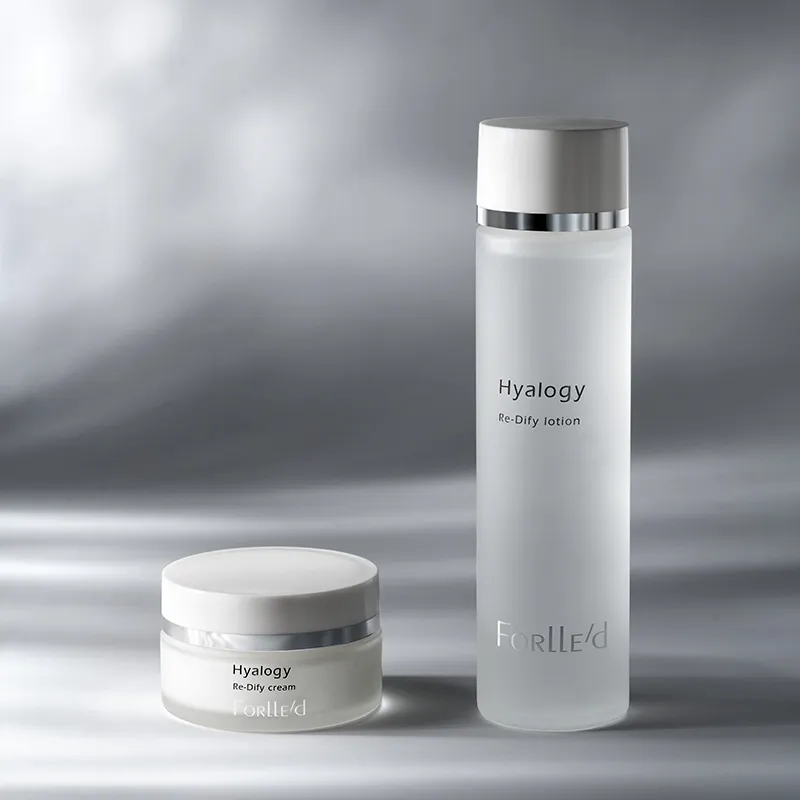
Beginnings and technological breakthrough
In 2002, Dr. Koichi Tanaka from Shimadzu was awarded the Nobel Prize for MALDI (matrix-assisted laser desorption/ionization). It was this very technology that made cosmetologists realize it is possible to safely “break down” large macromolecules without losing their biological activity. Hyaluronic acid, which until then had remained on the skin’s surface, suddenly gained the chance for true penetration. And this is where the Japanese perspective comes into play.
The birth of Forlle’d and the 5 nm revolution
Two years after the Nobel Prize, Nanocosmetech Inc. from Hamamatsu establishes the Forlle’d brand. The technological breakthrough is credited to Dr. Makoto Hatto, who patented a method for reducing HA to just 5 nanometers. For comparison: standard hyaluronic acid measures 3,000–20,000 nm, which is up to 4,000 times more. Hatto went further by ionizing the molecules with minerals:
- Ca (calcium)
- K (potassium)
- Zn (zinc)
- Mg (magnesium)
- On (sodium)
This system was named FINDS (Functional Intracellular Delivery System), and the combination of low-molecular-weight HA with ionized minerals was dubbed Hyalogy. Thanks to the 5 nm scale, the ingredients reach the dermis, not just the epidermis.
From the very beginning, pharmaceutical standards were prioritized: GMP, ISO 22716, cruelty-free formulas, free from parabens and artificial fragrances. Unisex by design. It was truly a well-thought-out launch.
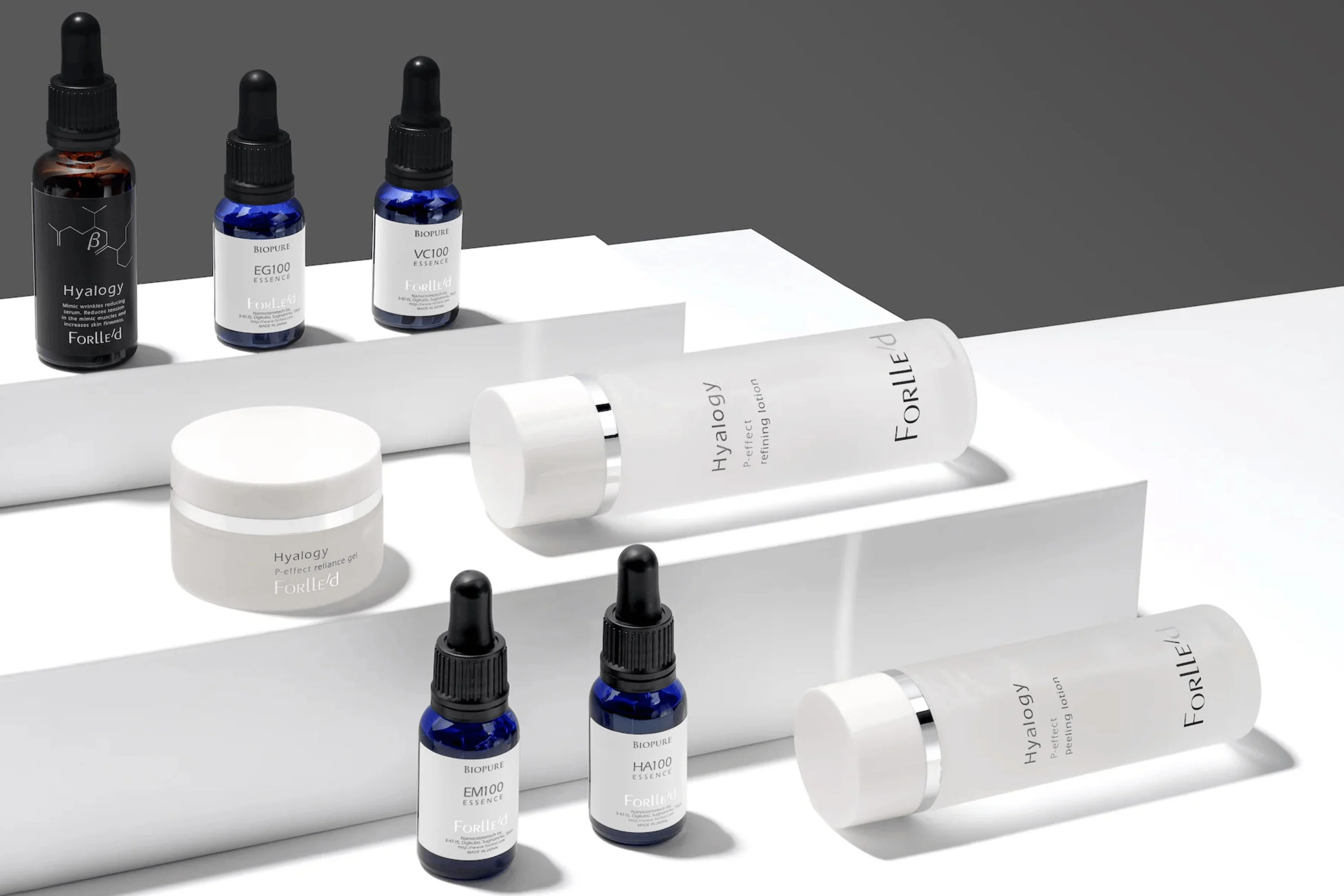
From Hyalogy to complete lines
The first Forlle’d products were not a complete collection right from the start. It began modestly, with a single essence designed to prove that low molecular weight technology truly works outside the laboratory.
Main lines and their purpose
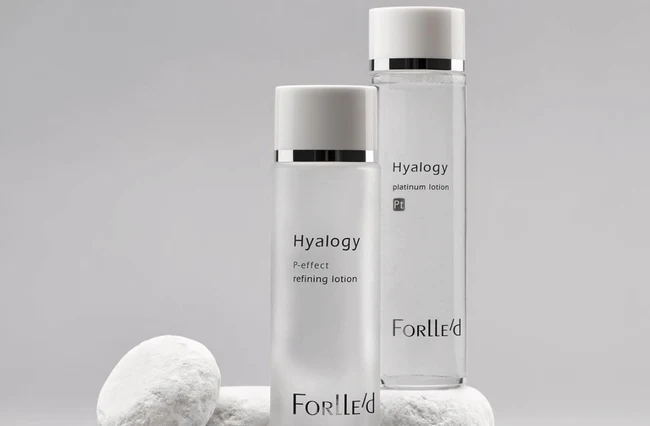
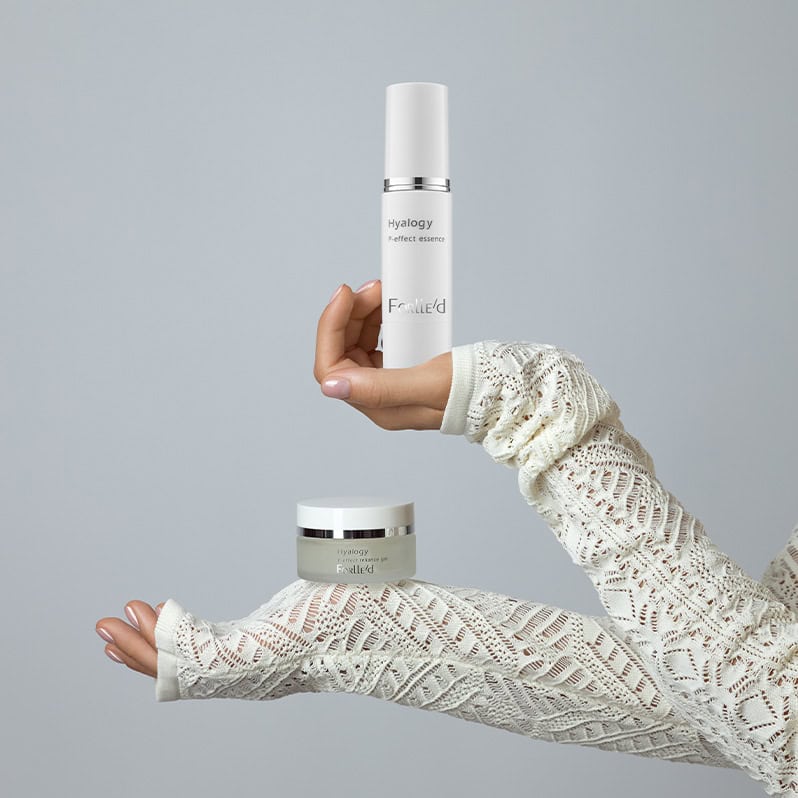
Hyalogy P-effect Essence was the debut, sometime after 2004. A moisturizing and regenerating base that quickly became a pillar of the brand. Over time, the portfolio grew organically, responding to the needs of different skin types:
- Platinum – organic platinum as an antioxidant
- P-Effect – moisturizing and regenerating base (an advanced version of the first essence)
- AC Clear – dedicated to oily and combination skin
- SensiSkin – for sensitive skin
- Re-Dify – specially formulated for the eye area
- BW (Brightening & Whitening) – brightening and pigmentation
- RetiMoist – retinol in low molecular weights
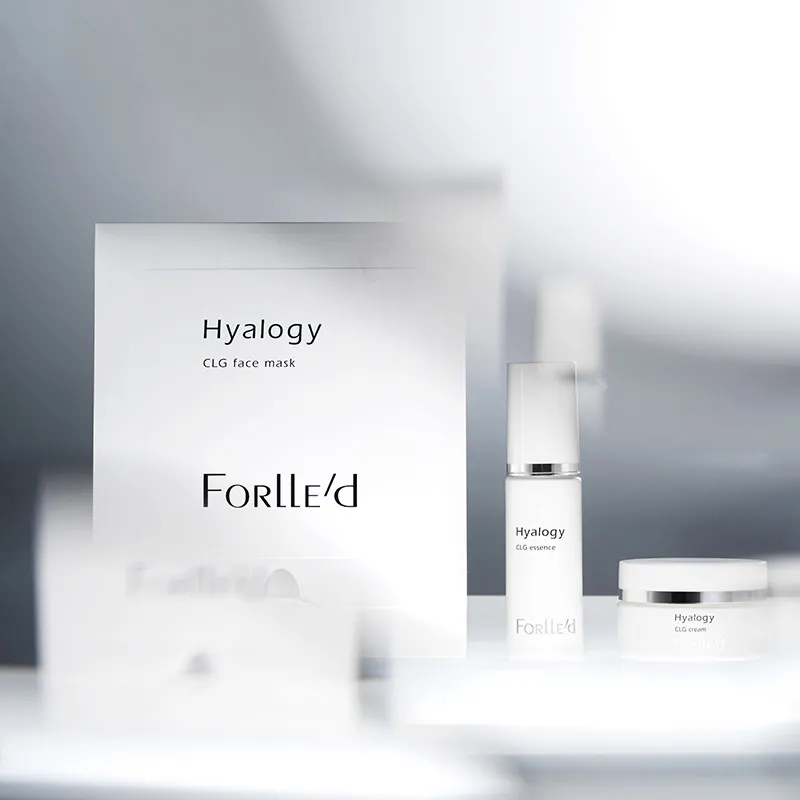
- CLG – collagen
- UV Intense Protector SPF50 – sun protection
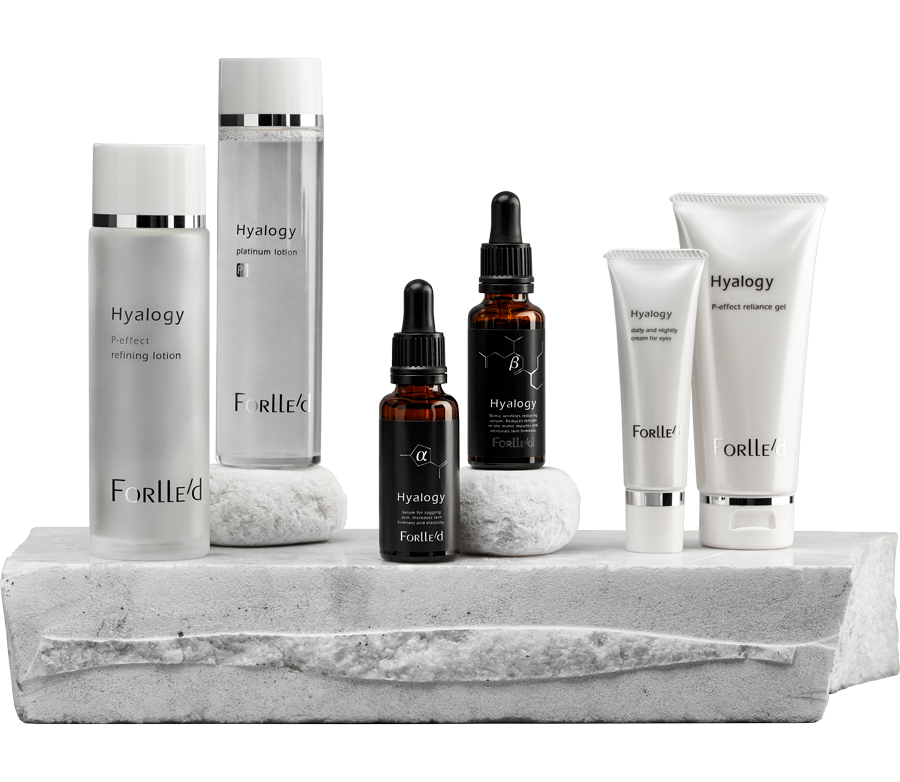
Milestones in the portfolio
Around 2008, Biopure for Professional appeared: a serum with a concentration 50% higher, aimed at salons. 2012 brought a men’s line, which at the time was rare in J-beauty. 2024 marks the brand’s 20th anniversary, and in 2025/2026 a rebranding is planned (likely a visual refresh, maybe new packaging).
Today we’re talking about over 60 products: not only for the face, but also Neck & Décolleté, masks, peels, body care lines, even Enzo Powder (an enzymatic detergent). The portfolio has grown from a single essence to a complete skincare ecosystem.
Technology in practice
The Hyalogy technology is based on hyaluronic acid with a size of 5 nm, which penetrates into the dermis. For comparison, standard HA measures 3,000–20,000 nm, so we’re talking about a molecule up to 4,000× smaller. In addition, ionized minerals support transport and regeneration. It sounds impressive, but what do the numbers show?
What do studies say?
Independent ProDerm tests in Hamburg (2012) are probably the most frequently cited results. After 2 months of using Forlle’d products, the following was observed:
- skin hydration: +96%
- wrinkle depth: -40%
- elasticity: +55%
- redness: -35%
In 2021, another study was conducted on 20 participants, divided into groups using home and professional products. Courage+Khazaka instruments were used to measure hydration, elasticity, and smoothness. Once again, the results confirmed improvement in all parameters.
Where does technology prove effective in practice?
Forlle’d often appears as support after aesthetic medicine procedures. Regeneration after lasers, acid peels, or microneedling are standard indications. Dermatologists use the products before and after botox and fillers to enhance the effect and shorten healing time.
Compatibility with devices? HydraFacial, RF, fractional lasers — all of these work in harmony with Hyalogy formulas. The products do not block wave penetration; on the contrary, they actually support tissue regeneration.
“Forlle’d works like an HA injection, only without the needle,” says Prof. Neil Sadick from the USA, a dermatologist specializing in anti-aging.
The effects are predictable and consistent, which is a significant advantage for aesthetic clinics.
Global reach, prices, and availability
Forlle’d has already reached over 55 countries, and its client list is truly impressive. We’re talking about Emirates Palace, Kempinski hotels, Rescue Spa in New York, and exclusive clinics in Dubai, London, and Warsaw. These are not random locations—the brand is clearly targeting the premium segment.
In 2024, the brand entered the Indian market through Soho House Mumbai, with Skin Matters and Glow Clinic becoming distributors. The expansion continues.
Official websites are forlled.com (global) and forlled.com.pl (Poland). Buying elsewhere? There’s a risk you might get a counterfeit.
Reputation, research, and premium challenges
Forlle’d bases its position on a foundation that is already standard in premium cosmetology, but the brand follows it consistently. GMP and ISO 22716 certifications, pharma-grade production conditions, a cruelty-free policy, unisex formulas, no parabens or artificial fragrances. All of this sounds like a checklist for any brand aspiring to the luxury segment, but here it truly works. Dermatologists and cosmetologists appreciate that they don’t have to feel embarrassed recommending a product that is expensive. Presentations at IMCAS or dermatological congresses add prestige to the brand, although, to be honest, almost every player in this segment appears somewhere and showcases something. “Luxury based on science” is a label the brand wears proudly and one that generally resonates well within the professional community.
Price, exclusivity, and risks of the premium segment
On the other hand, Forlle’d faces challenges typical for exclusive brands. The high price and distribution limited to salons or clinics cause frustration among customers accustomed to online shopping. There is also the risk of counterfeits, so the brand recommends purchasing only from official distributors and reminds customers about patents protecting its formulas. I did not find any serious controversies or scandals related to Forlle’d in the sources, which, in the cosmetics industry—where a single failed ingredient can cause an uproar—is quite a good result. In fact, the brand’s biggest problem is… that very few people have heard of it outside of beauty clinics.
Legacy of innovation
The history of Forlle’d is more than just a technological timeline. It is proof that groundbreaking scientific discoveries can successfully make their way from the laboratory to the cosmetics shelves, provided someone has the vision and patience to do it right. Moreover, it shows that long-term consistency in developing a single technology often prevails over the rush to chase the latest trends.
The brand has also proven that it is possible to build global recognition without aggressive marketing, focusing above all on results. Specialists in clinics and dermatologists recommend these products precisely because they deliver predictable and measurable effects. This is a kind of reputation that cannot be bought with a campaign.
In conclusion, it’s worth taking a broader view: in an industry full of seasonal novelties and “revolutionary” ingredients, Forlle’d demonstrates the value of consistently developing a single technology over decades. A bit of an old-fashioned approach, but an effective one.
Brands
uHCF editorial team