
On February 27, 2026, at Milan’s Palazzo delle Scintille, Demna Gvasalia presented his debut runway collection for Gucci, namely ” Primavera “. The name directly references Botticelli’s “Primavera” and symbolizes a new beginning: spring after a long period of recalibration. The set design, inspired by Florence and the Uffizi Gallery, signaled a grounding in the heritage of Italian craftsmanship while opening the space to a fresh narrative. For Gucci, this moment is of strategic significance: Demna, appointed in March 2025 and officially taking on the role of creative director in July, is the first non-Italian in this position since Tom Ford, and the brand accounts for around 41% of Kering’s revenue.
Why does Primavera matter?
This show is a response to market expectations and the internal needs of the fashion house. Gucci needed a new language—one that would preserve its historical DNA, yet speak to contemporary clients. Demna has moved from Balenciaga’s spectacular provocation to a dialogue with Gucci’s luxury code: sensuality, color palette, craftsmanship quality. “Primavera” signals that in the following parts of the article, we will uncover the brand’s DNA background, key silhouettes and materials, accessories, and the market resonance of this change. This is the beginning of a new era. The question remains whether spring will permanently change the house’s climate.
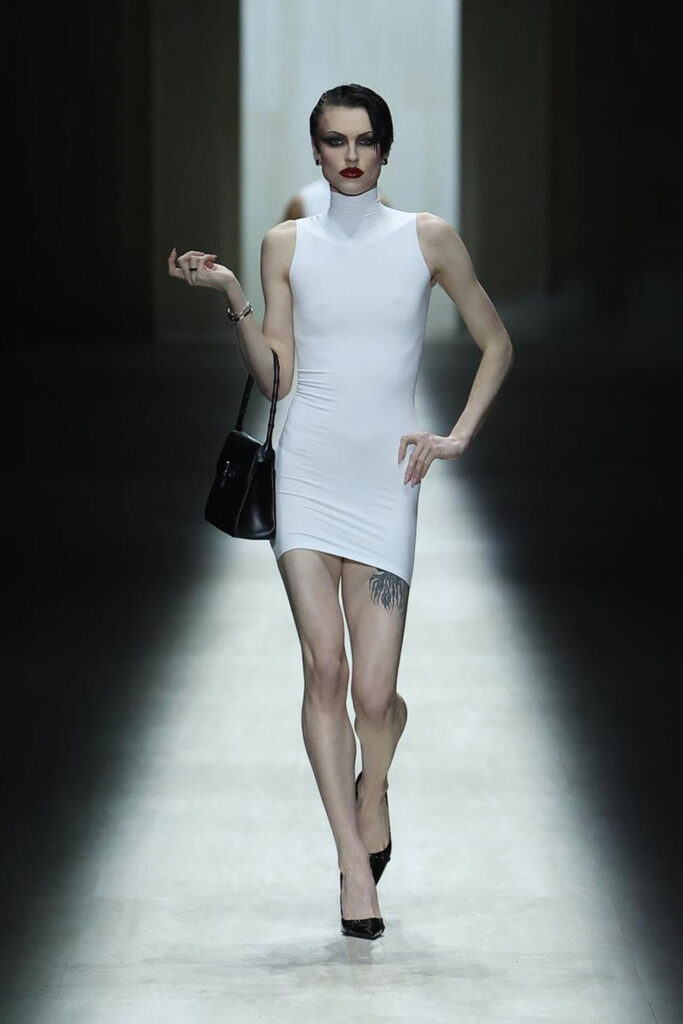
Between Ford and Michele
The history of Gucci is a story of tensions between craftsmanship and show business, Florentine elegance and global pop culture. It is precisely these contradictions that create ” Gucciness “, the identity that Demna Gvasalia inherited along with the mandate of creative director in March 2025.
From Tom Ford to Demna
Gucci, founded in 1921 in Florence by Guccio Gucci, began as a workshop for equestrian leather goods. But it was the subsequent creative eras that gave it the status of a cultural phenomenon:
- Tom Ford (1994-2004) – unapologetic sensuality: low waists, G-strings as outerwear, the revival of Jackie and Bamboo 1947 icons. Ford made Gucci synonymous with sex and power.
- Alessandro Michele (2015-2022) – maximalist eclecticism, gender-fluidity, collections full of the Flora motif, historicizing embroideries, and narratives about eccentricity as the norm.
- Sabato De Sarno (2023-2025) – a minimalist reset, a return to classic styles and premium fabrics, though without a distinctive cultural narrative.
Gucciness
Demna, the first non-Italian since Ford, approaches with pragmatism: “Gucciness is the tension between respect and sensuality, aristocracy and pop culture”. Instead of intellectualism, he focuses on the “Gucci feeling.” Preludes? The “La Famiglia” lookbook (SS26) with a film by Spike Jonze and Halina Reijn, as well as the archetypes of “Generation Gucci” (Pre-Fall 2026) – Sciura, It-Girl, Party Boy, Nonna – a polyphonic family of clients as the starting point for the narrative.
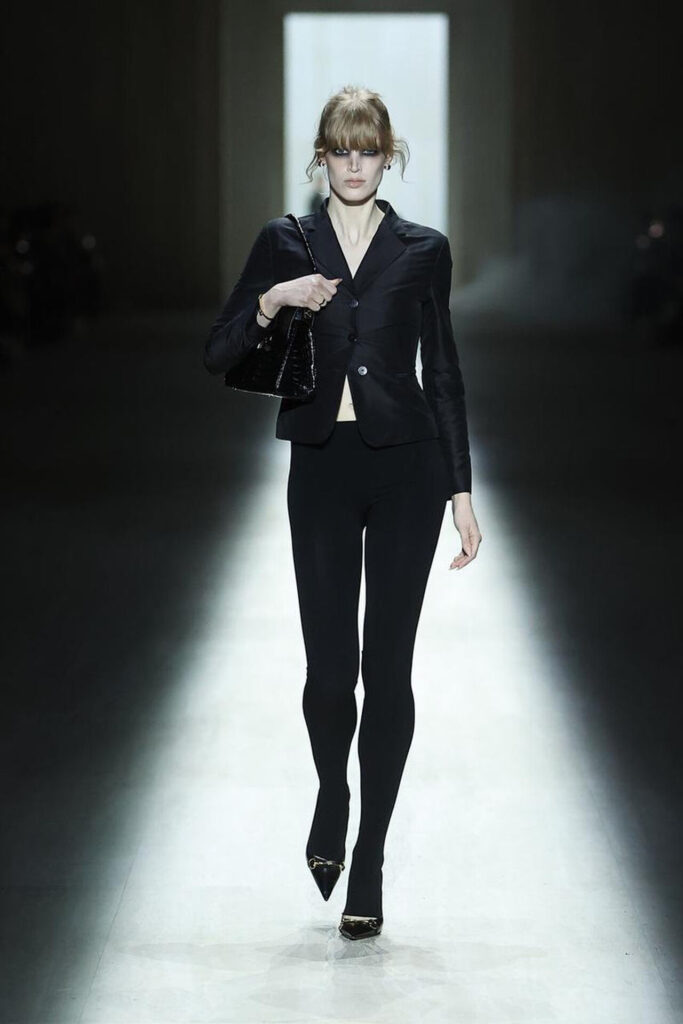
Spring
The Gucci Spring FW26/27 collection show took place on February 27, 2026 during Milan Fashion Week at the historic Palazzo delle Scintille. Demna chose a space that became a stage for his vision, with a set design inspired by the Uffizi Galleries in Florence, featuring white Roman sculptures that highlighted the brand’s deep Italian roots.
Milan 27.02.2026
The title “Primavera,” a direct reference to Botticelli’s masterpiece, symbolized a new beginning under Demna’s leadership. The set design, combining the aesthetics of Renaissance Florence with modern minimalism, created a context for a return to Gucci’s Italian identity. The show’s final moment was unforgettable: Kate Moss appeared in a creation featuring a diamond GG thong, blending provocation with elegance. The casting was diverse. Alongside trans models such as Vivian Wilson, athletes and rappers also walked the runway, emphasizing the democratic language of the brand’s new era.
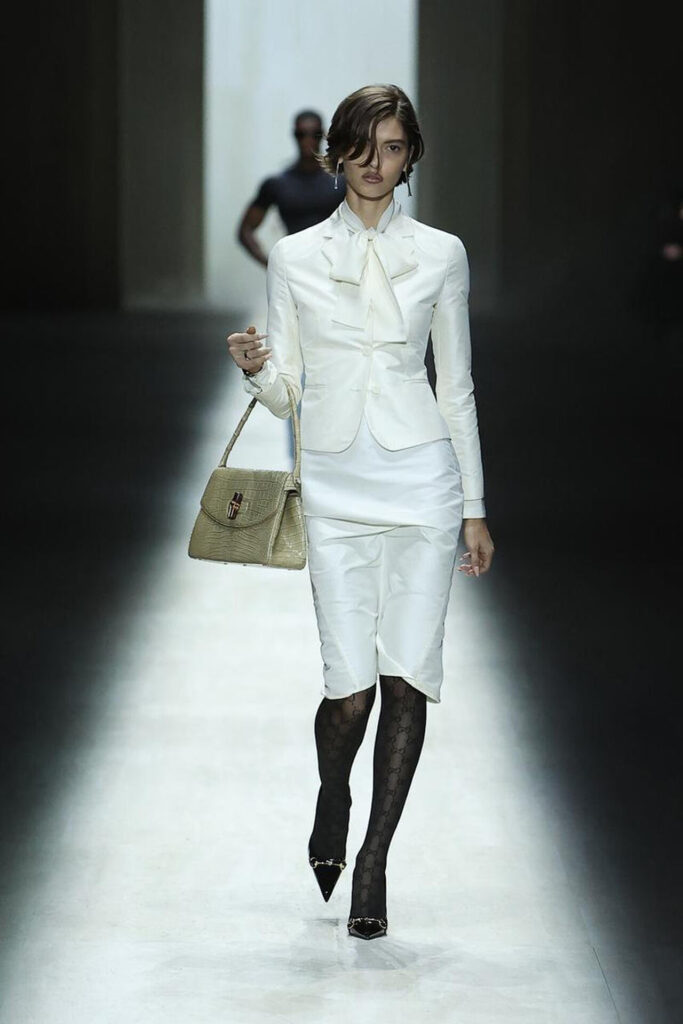
Symbolism and guests of the show
Guests representing various worlds of fashion, culture, and entertainment took their seats in the audience:
- Shawn Mendes
- Cardi B
- Donatella Versace
- Alessandro Michele
- Bianca Jagger
- Paris and Nicky Hilton
This mix of surnames reflected the wide influence of Gucci and the universal nature of the “Primavera” message of rebirth, which combines tradition with modernity.
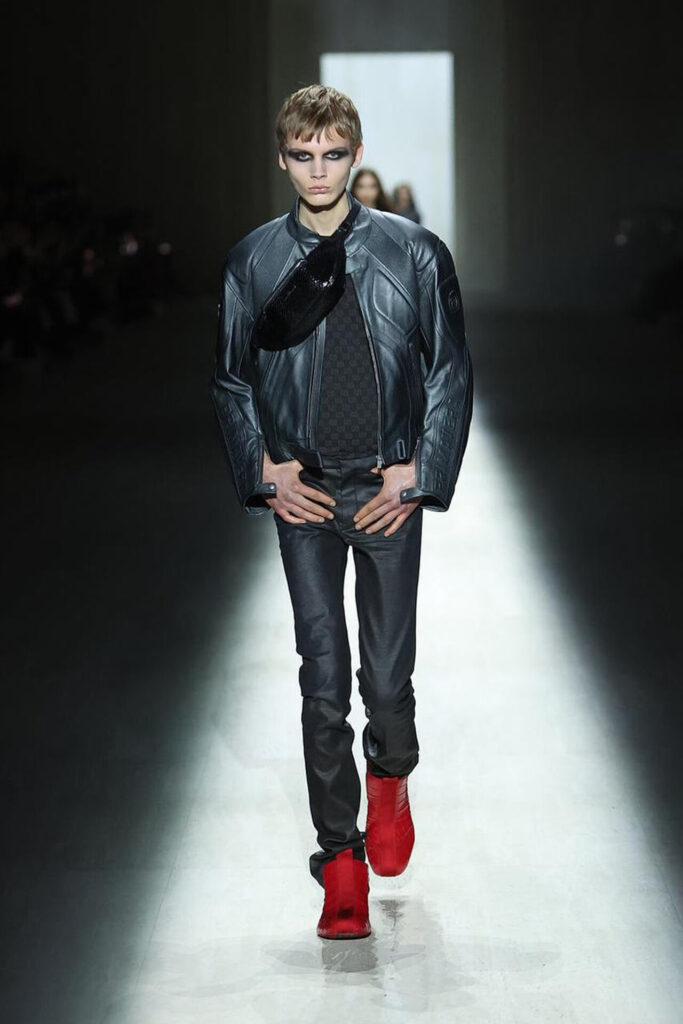
Sex appeal and pragmatism
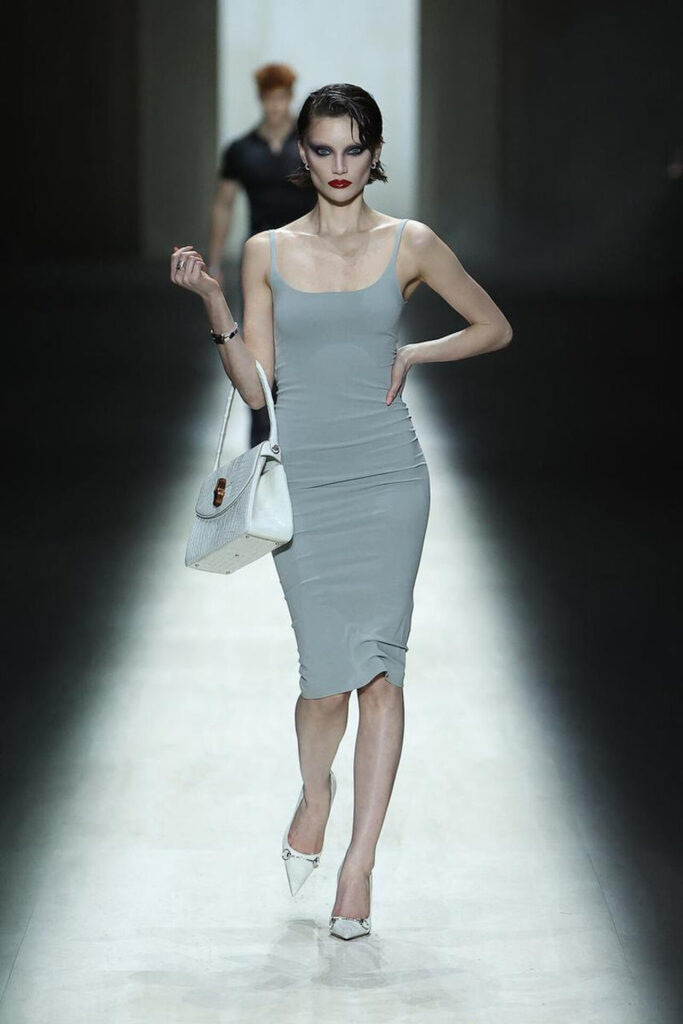
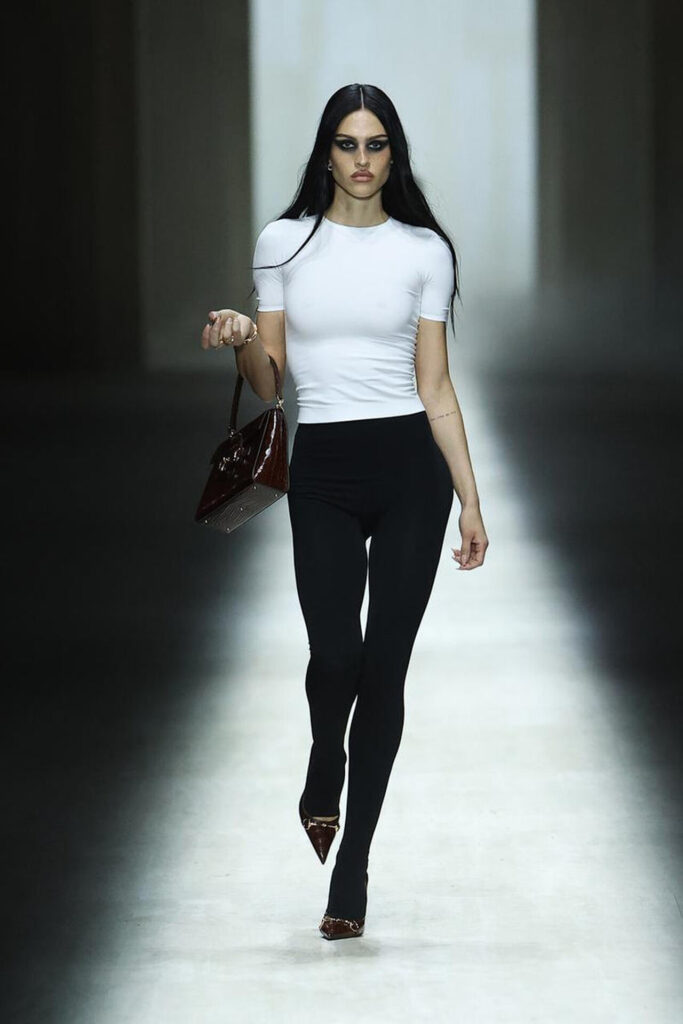
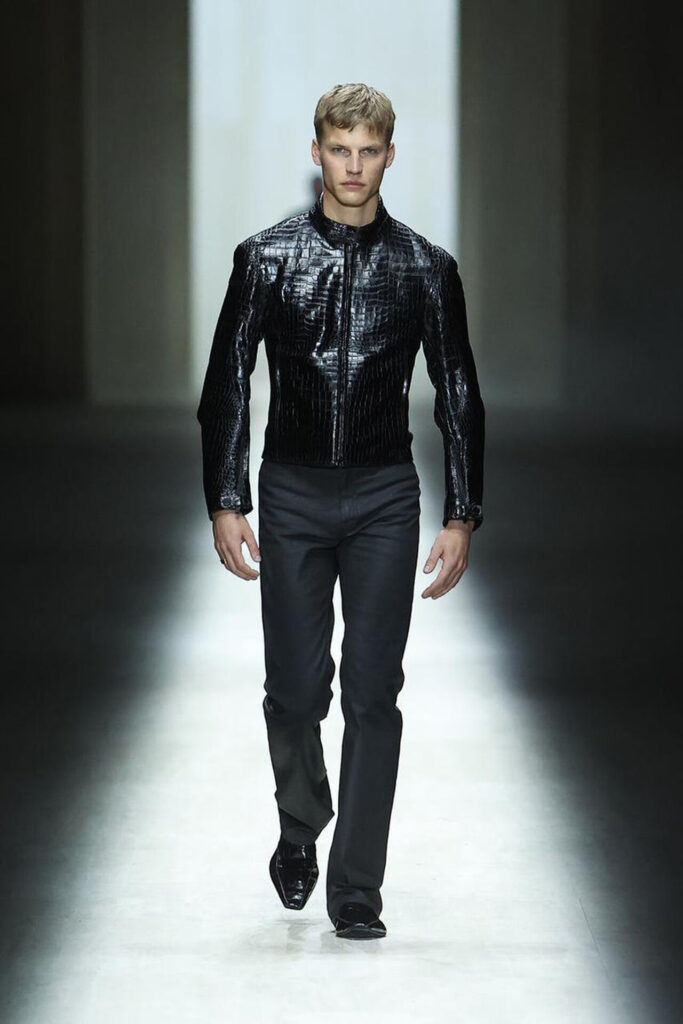
Demna, in his debut for Gucci, opted for a form that both seduces and avoids trapping fluid, body-aware silhouettes from the Ford era in a cage of theatricality, blending them with urban pragmatism. Instead of trousers, high-shine leggings; instead of classic denim, skinny jeans in python leather; instead of a cocktail dress, second-skin dresses covered in rhinestones. The low waist returns as the signature of the season, while fluid shearling suits set a new balance point between meaning and wearability.
Body-aware forms of the season
Key FW26/27 silhouettes play with the tension between revelation and restraint: leggings paired with an oversized blazer and heels work for the evening, but swap the heels for flat boots and you get a city look. Fluid suits made from stretchy knit drape over the body like a second skin, yet the cut remains classic. The finale with Kate Moss in a diamond GG thong reminds us that sensuality at Gucci has always been a dialogue, not a manifesto.
Textures and shine of “Primavery”
The season’s materials follow the logic of contrast:
- Leather and python – on trousers and mini skirts
- Stretch knits – fitted dresses, wrap blazers
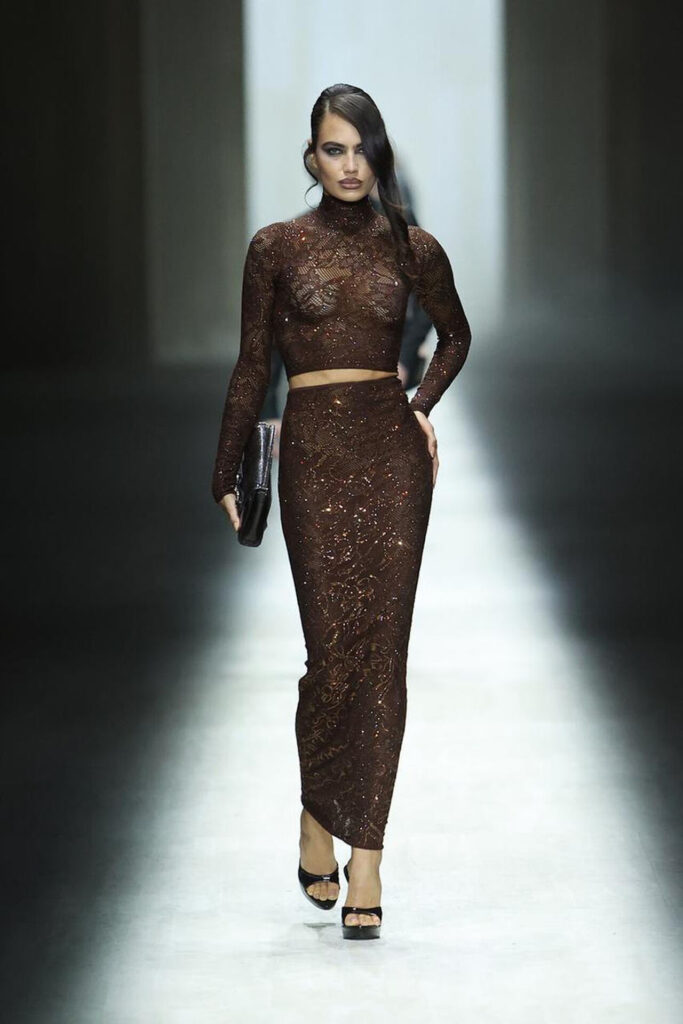
- Lace, satin, rhinestones – evening accents
- Matelassé – shearling and outerwear
The palette is based on deep purples, black with a crystal sheen, and nude tones; shine is introduced by appliqués and metal, not color. The details reference Ford’s archives, but Demna mutes ornamentation in favor of line.
Icons reinvented
When Demna steps into Gucci territory, accessories become the front line of change, and the campaign featuring Vittoria Ceretti for the GG Marmont bag (2026) clearly signals that the House treats accessories as a driver of recognition and revenue growth. It is bags, shoes, and ornaments that translate the language of the collection into tangible items that make their way into boutiques and wardrobes.
Bamboo and Jackie
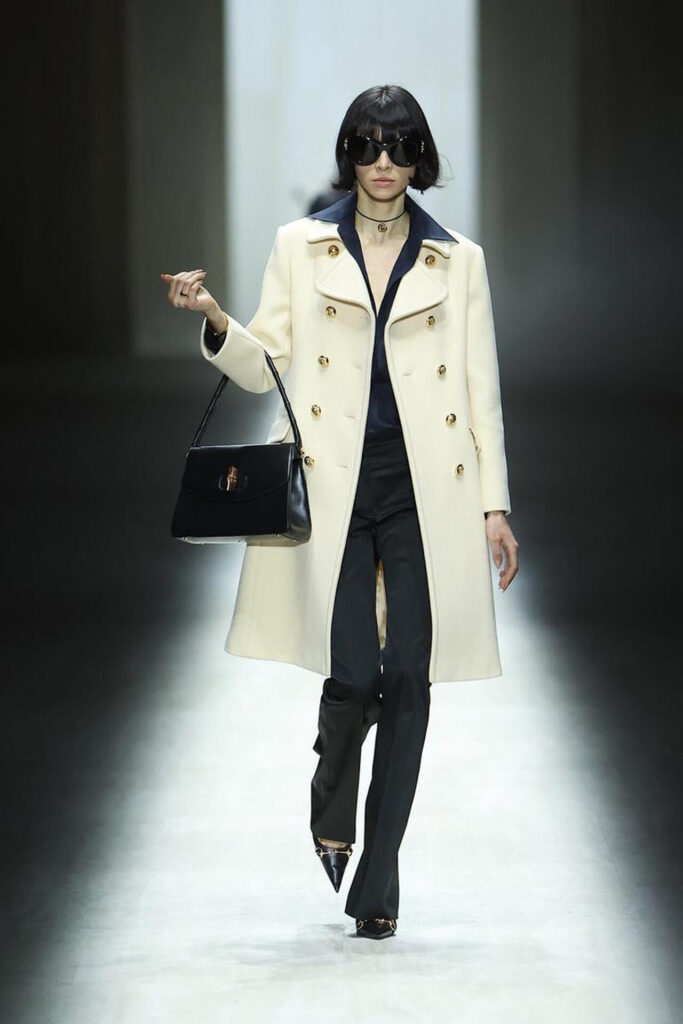
Demna does not erase heritage, but rather rewrites it. The Bamboo 1947 has been given a slimmer and more voluminous proportion, adding elegance without losing its recognizable bamboo handle. The Jackie transforms into a “crushable” version that can be folded and practically tossed into a larger bag, while also celebrating the soft leather. Joining this pair are:
- Jetset GG Marmont – monogram, quilted, for an evening out
- Horsebit Duomo bag – larger size for everyday use, inspired by equestrian harnesses
Shoes and details that complete the look
Donna slingback pumps with a closed toe and open heel are making a comeback as office-to-evening footwear. Alongside them is the Screener sneaker (vintage GG logo, slightly distressed aesthetic), which perfectly balances the sensuality of a skirt with a loose sweater. In the realm of additional accents:
| Element | Application |
|---|---|
| GG belt (corset) | Accentuates the waist in an oversized suit |
| Choker | After-dark dramaturgy |
| Goggles/mask-like glasses | Futuristic accent, masking trend |
| Belt bag | Hands free, comfort in motion |
Two scenarios: office look = Bamboo 1947 + Donna slingbacks + classic trench coat; after-dark = Jetset GG Marmont + chokers + corset belt over a slip dress. Accessories set the tone for the entire wardrobe, and the market is responding with Bamboo bag pre-sales and inquiries about Jackie.
Resonance and numbers
Demna Gvasalia’s debut at Gucci sparked reactions of both admiration and skepticism. Commentators appreciate the return of sensuality and the diversity of feminine archetypes, which harken back to the eras of Tom Ford and Alessandro Michele. However, a significant portion of the criticism points to an excessive similarity to Balenciaga’s aesthetic and a lack of a distinct identity.
Between admiration and skepticism
Positive comments highlight:
- The return of sex appeal and a sense of fun that have been missing in recent seasons
- Diverse casting as a signal of inclusivity and a modern approach to luxury
- References to the golden years of the Ford and Michele brands that evoke emotions
On the other hand, critics raise the following objections:
- “Too Balenciaga-like” – lack of original vision from Demna for Gucci
- Online nostalgia: “bring back Michele”, “boring”, “cheap-looking”
Gucci is luxury that wants to be noticed.
What do Kering’s numbers say?
Gucci’s sales dropped from around EUR 10.5 billion (2022) to approximately EUR 6 billion (2025). In the first half of 2026, the brand generated EUR 2.757 billion (‑5% comparable), with a sequential retail improvement of +7 points in the second quarter. Gucci now accounts for about 41% of Kering group’s revenues. Investments in major shows and campaigns, combined with pragmatic design, aim to rebuild desirability and margins—the “Primavera” collection is a test of this strategy.
Gucci after “Primavera”
“Primavera” turned out to be proof that “feeling Gucci” is not just a marketing slogan, but a coherent vision combining Tom Ford’s archive, sensuality expressed through cuts and textures, and the pragmatism of universal styling. Demna Gvasalia did not replace the heritage with a new narrative—he wove it into everyday life, maintaining the tension between respect for the past and popularity in meme culture.
This tension may become the driving force for upcoming seasons and the key to rebuilding the desirability of the brand within the Kering portfolio, which has been facing declines for the past two years. “Primavera” showed that Gucci under Demna’s leadership can be both archival and current, luxurious and interpretively accessible—a balance that has long been missing.
If the durability of this formula is confirmed in future collections, the house will gain a foundation more stable than the spectacular but ephemeral shows of its predecessors.