
Gucci was founded in 1921 in Florence by Guccio Gucci. It began as a small leather goods and luggage workshop, serving mainly the Italian elite and guests of the Savoy hotel. Today, in 2026, the brand is part of the Kering group and is one of the most recognizable fashion icons in the world. But what made an ordinary atelier turn into a global phenomenon?
The answer lies in three pillars: perfect craftsmanship, iconic design, and bold creative turns. I think everyone recognizes the distinctive symbols. The Bamboo bag (1947), the horsebit loafers (~1953), the GG monogram, the red and green stripes, the Flora pattern. These are not random products; they are cultural codes that have endured for decades.
The brand underwent a true transformation under the direction of Tom Ford (1994-2004), who revived it with provocative sex appeal. Then came Alessandro Michele (2015-2022) with his maximalist aesthetic. And in March 2025, Demna became the artistic director, heralding a new chapter.
Below, we will show exactly what made Gucci a global icon. From its artisanal beginnings, through brilliant branding, to a strategy that endures to this day.
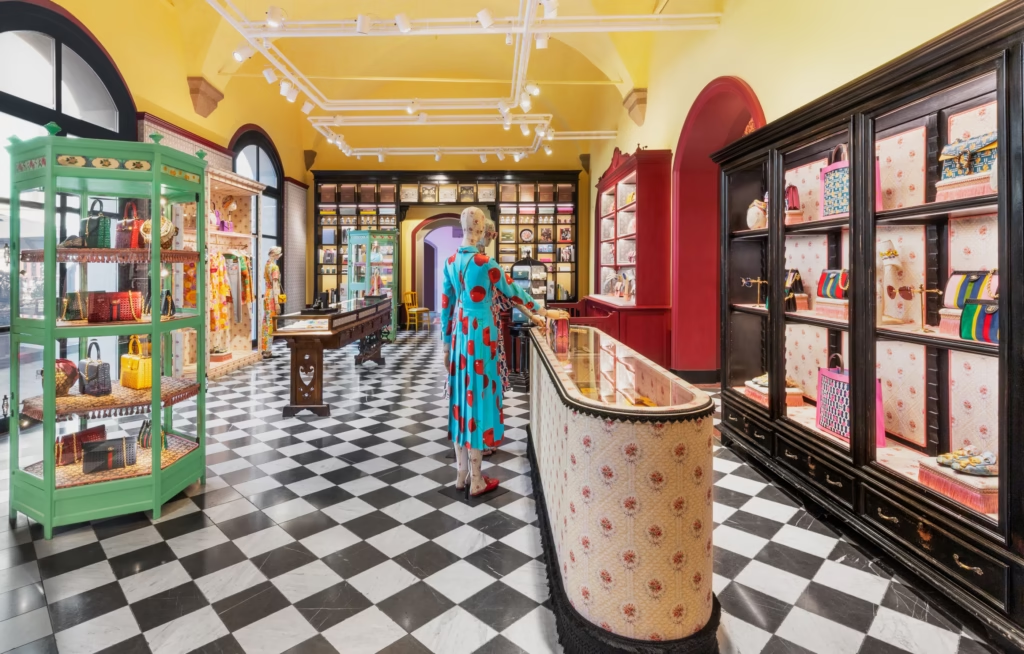
Roots and milestones
Guccio Gucci started with what he saw, not with what he learned at school. At the end of the 19th century, working as a porter at London’s Savoy Hotel, he observed the elite up close. Their luggage, leather trunks, elegant travel bags. It was then that he realized luxury is not bought out of necessity, but out of a desire to belong. In 1921, he returned to his hometown of Florence and opened a small shop on Via della Vigna Nuova. He began with luggage and equestrian goods, because that’s where the demand was.
Innovations of the 1930s and postwar icons
The 1930s brought a problem: leather shortages. Gucci responded creatively by introducing canvas as the main material. That’s when the symbols everyone recognizes today were born:
- GG monogram (interlocking G), that is, the founder’s initials intertwined in a repeating pattern
- Red and green stripe, inspired by equestrian braces
- The “rombi” motif and the “cuoio grasso” technique (greased leather)
The war further restricted access to raw materials. In 1947, the Bamboo bag was created, featuring bamboo handles simply because metal was in short supply. This wasn’t a stylistic whim, but a necessity. And it turned out to be a brilliant marketing move.
Jackie, Flora and stepping out into the world
1952/1953 was a milestone: loafers with a metal “horsebit” (bit) and the first store in the USA, in New York. Globalization had begun. In 1961, the Jackie bag appeared (the name came later, after Jacqueline Kennedy Onassis carried it everywhere). The 1960s also brought the Flora scarf, designed especially for Grace Kelly, and the first steps into prêt‑à‑porter. Gucci was no longer just about luggage. It became a lifestyle.
Expansion, crisis, and revival
The 1970s and 1980s brought Gucci an expansion that seemed like a success, but in reality marked the beginning of its decline. The brand handed out licenses for almost everything: perfumes, glasses, lingerie, even whisky. At one point, you could buy a Gucci product in every department store. The result? The dilution of exclusivity, which had been the very foundation of the brand. It was a classic case of scale killing the DNA.
When success hurts
Overproduction and ” over‑licensing ” caused Gucci to stop being synonymous with luxury and become a mass premium brand. On top of that came brutal family conflicts. Aldo, Rodolfo, Paolo, Maurizio—each pulled in their own direction, fighting for control and money. In 1993, the family ultimately lost the business to Investcorp. Two years later, in 1995, Maurizio Gucci was shot dead in front of his office in Milan. This ended an era, although by then it no longer mattered to the brand itself.
Reset
Dawn Mello, who joined in 1989, started with a clean-up: withdrawing cheap licenses and returning to craftsmanship. But the real revolution was brought by Tom Ford, who took over as creative director in 1994. His show from 1995, described as “porno-chic,” was both scandalous and brilliant. The sexual, provocative aesthetic transformed Gucci from a boring brand into an object of desire for the younger generation. Ford, together with CEO Domenico De Sole, formed a duo that saved the company.
IPO and entry into Kering
1995 also marked the debut on the NYSE, which provided capital for further growth. In 1999, after a dispute with LVMH (Bernard Arnault attempted a hostile takeover of Gucci), the brand came under the wing of PPR, known today as Kering. It was this change in ownership that gave Gucci corporate stability and a strategic direction for the coming decades.
Why is Gucci a global icon?
When we talk about the “Gucci DNA,” we’re really talking about consistency. About a few visual signatures that have endured for decades and act as the brand’s identifying code, no matter who is currently at the creative helm. Here are the five pillars of this aesthetic:
- Monogram GG (interlocking G) and red-green stripe
- ” Horsebit “, that is, a clasp inspired by equestrianism
- Bamboo in bag elements
- Flora pattern, a poetic floral print
- Florentine craftsmanship, workshops at Palazzo Settimanni
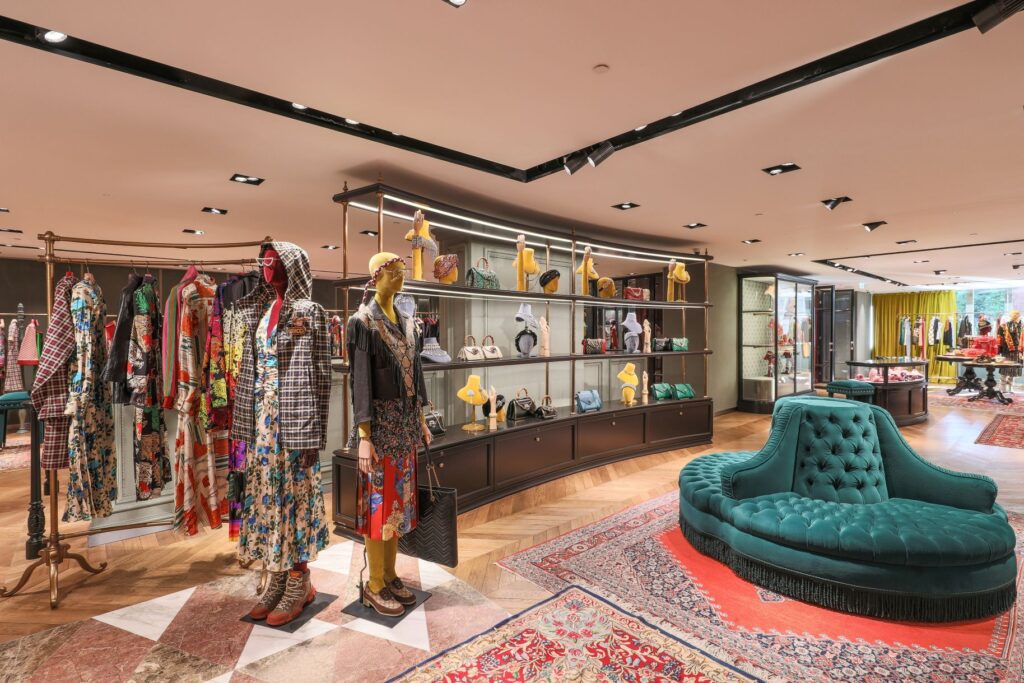
The monogram was created in the 1930s, when Guccio was looking for solutions during shortages of leather. The red and green stripe? The same association with galloping and the elegance of the stables. Simple, distinctive, hard to counterfeit (though everyone tried).
“Horsebit” is a loafer clasp inspired by a horse’s bit. Iconic since around 1953, it still feels fresh. Perhaps because its form has hardly changed at all.
Bamboo and innovation born from scarcity
The bamboo handle of the bag (1947) was the result of a raw material crisis. The lack of materials forced creativity, so Gucci used bamboo, bending it in special ovens. Today, Bamboo bags are reissued, with limited editions returning every few seasons.
Flora is something completely different, lighter. The floral motif, created in the 1960s especially for Grace Kelly, has a poetic lightness and returns in reinterpretations as the brand’s visual mantra.
Flora and Florentine craftsmanship
The actual Gucci workshops ( Palazzo Settimanni in Florence) operate as a quality laboratory. Tanning techniques, precise hardware assembly, hand finishes. These are not just marketing stories. Limited editions and “reissues” of old models are a practice of nurturing the archive, ensuring that history remains alive.
Gucci’s recognizability is the sum of these choices, their continuity, and consistency. You don’t change the logo every season if it already works. That’s why you can spot the GG monogram belt from a mile away, whether you first saw it in 1975 or just yesterday on Instagram.
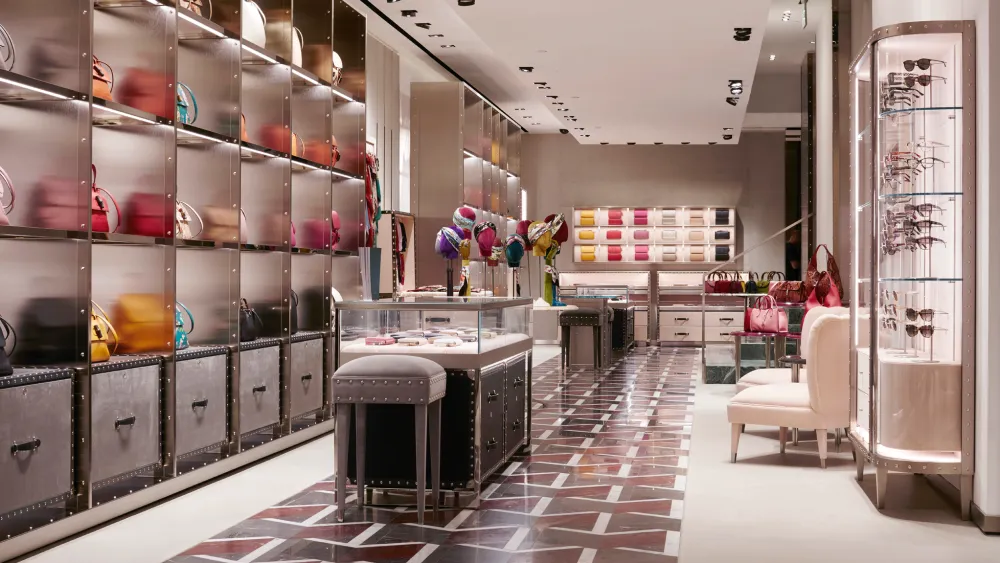
Brand mastery
The double G combined with the red and green stripe has become more than just a trademark. It’s an instant status symbol you can recognize from afar. For decades, Gucci has consistently infused these symbols into bags, belts, and loafers. And it’s this almost obsessive repetition that has made everyone know: it’s Gucci. Without reading the label.
Stars who create demand
Grace Kelly with the Flora bag in the 60s, Jacqueline Kennedy Onassis with the bag that would later bear her name — these were not random choices. Gucci built its myth through associations with the elite. When Jackie carried that bag, demand skyrocketed. In 1969, 84,000 pairs of Gucci loafers were sold in the USA, which sounds absurd for a luxury brand. But that was the point: mass aspiration while maintaining prestige. Everyone wanted a piece of that world, even if it was “just” a belt.
From the museum to social media
In 2011, Gucci opened a museum in Florence. Archive, heritage, history—classic tools for building a legend. But the real turning point came with Alessandro Michele in 2015. Eclecticism, gender-fluid aesthetics, campaigns full of storytelling and meme potential. Suddenly, Gucci became viral, younger, more inclusive. Michele understood that culture is now born on social media, not just in magazines. And cultural capital? It’s precisely this ability to move between the elite and pop culture that gives Gucci an edge that’s hard for the competition to match.
Offer and distribution
Gucci has been owned by the French group Kering since 1999, which is controlled by the Pinault family. The brand’s headquarters and main artisan workshops remain in Florence, emphasizing its Italian roots. But the true engine of the business is a complex network of products and sales channels.
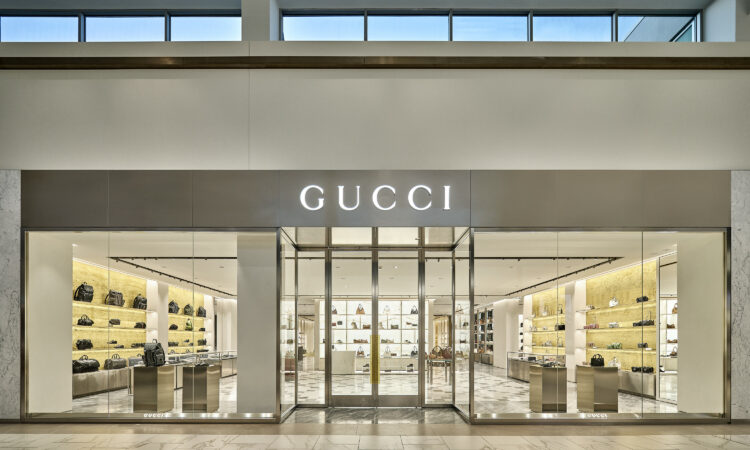
Category portfolio and business core
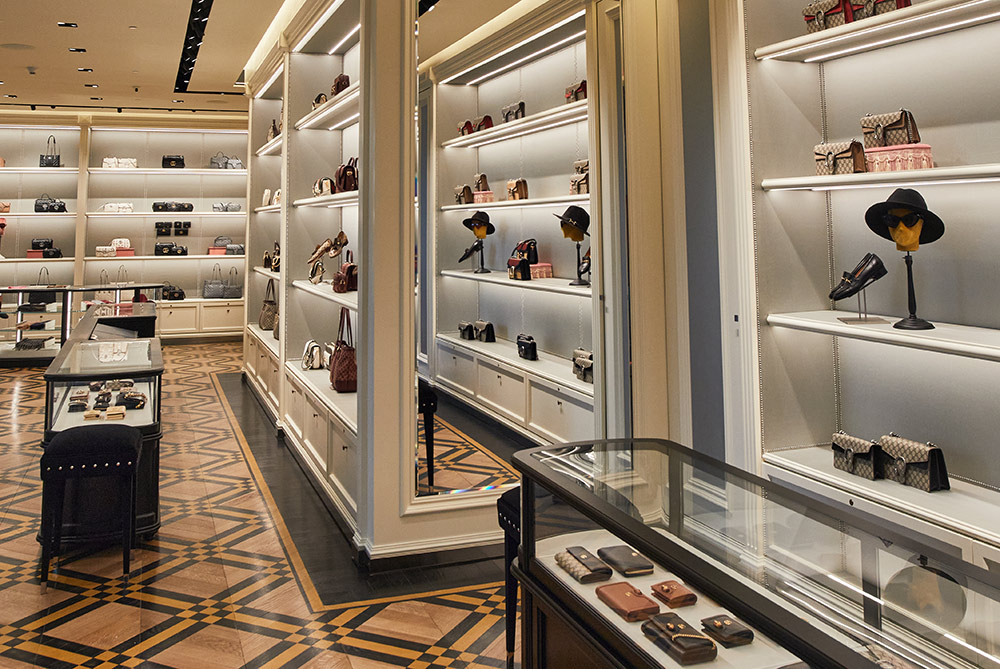
The largest revenues are generated by leather goods, meaning handbags, wallets, and belts. This is the foundation that drives the results. Alongside this, there is ready-to-wear clothing, footwear, jewelry, watches, as well as accessories ranging from scarves to sunglasses. The beauty and perfume segment operates under licenses (Coty), as does décor, but the core remains textiles and leather. Virtually every category has flagship products that rotate between archival re-editions and limited capsules, so as not to cannibalize demand.
Scale
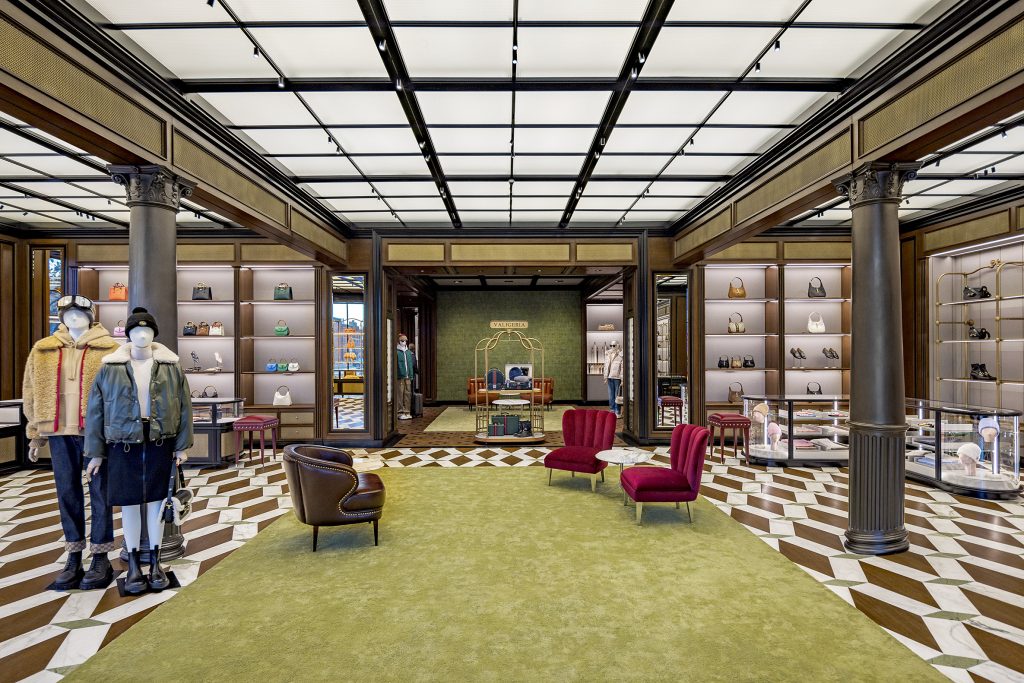
Gucci operates approximately 497 own stores globally (according to the 2025 report, though some sources state 529 depending on the definition), providing a physical presence on every continent. The number of employees reaches around 20,032, highlighting the scale of operations. Most locations are flagship boutiques in prestigious districts, where the customer experience is shaped by VIP consultants.
Omnichannel and customer experience
The brand has strongly focused on e-commerce, which works in harmony with its physical network. Customers can try on items online, order them to a boutique, or vice versa. Selective retail (multibrand) still exists, but Gucci prefers to maintain control over distribution. This is a strategy for building “desirability” through exclusivity and a consistent visual message, regardless of the channel.
Results and odds for 2026
Numbers don’t lie, so let’s start with the facts. Gucci reached its revenue peak in 2022, recording around 10.5–10.9 billion euros. That was a moment when the brand seemed almost untouchable. But luxury has its cycles.
From peak to correction
The decline came faster than some analysts had predicted. In 2024, Gucci’s revenues amounted to 7.65 billion euros, and forecasts for 2025 indicate a further drop to around 6 billion euros (that is, −22% in reported terms, −19% on a comparable basis). The recurring operating result in 2025? About 966 million euros, which gives an operating margin of 16%. These are still solid numbers for the luxury segment, but the trend has worried Kering’s management.
Market signals
The first three months of 2026 saw another comparable decline, this time by about 8%. But (and this is important) there were sequential improvements in selected regions. North America showed relative strength, which may suggest that not all markets are responding equally to the change in strategy.
Desire map and priorities for 2026
Kering introduced for Gucci something they call “roadmap to desirability”. Sounds like marketing? Maybe, but the pillars are concrete: brand elevation, fewer (but better) stores, novelty and innovation, and strengthening omnichannel. Since October 2024, CEO Stefano Cantino has taken the helm, tasked with reconciling heritage with innovation and cultural relevance, working alongside creative director Demna.
Effects? Not expected until the second half of 2026 and beyond. The numbers may continue to disappoint investors for some time, but the direction appears to be well thought out.
Disputes and liability
Crises either strengthen a brand or break it. In the case of Gucci, we have seen both, but the lessons were learned with enough clarity that the company still stands.
When the scale hurts
The 1980s brought an epidemic of licensing. Gucci appeared everywhere, from stationery to lighters. Exclusivity? Blurred to the extreme. When every store offered something with the logo, the brand stopped being a dream. Only the buyback of family shares in the 1990s and a ruthless review of distribution channels restored control. From that moment on, the company has closely monitored who, where, and how its products are presented. The simple lesson: scale cannot come at the expense of prestige.
Dynasty, law, and reputation
Family disputes dragged on for years. Paolo Gucci was in litigation with his brothers and cousins, trying to launch his own line. The culmination came in 1995, when Maurizio Gucci was shot dead on the orders of his ex-wife, Patrizia Reggiani (she served about 18 out of 29 years of her sentence). The media went wild, but the company was no longer owned by the family. Kering separated the corporate narrative from the drama. The film “House of Gucci” (2021) reopened old wounds, with descendants protesting the portrayal of their story. Nevertheless, the brand survived, because today it is the creative vision that matters more than the saga.
Offsets, materials, and real reductions
Carbon neutrality based on offsets (since around 2018) sounded promising, but quickly faced criticism regarding the effectiveness of such mechanisms. Gucci began shifting its focus toward real reductions, the Circular Hub is reworking materials, and transparency is increasing. Pressure from PETA regarding leather and fur forced declarations, although debates continue. ESG ( Environmental, Social, Governance) has stopped being just PR and has become part of the operational strategy. Because customers are asking questions, and ignoring them costs reputation.
Demna’s Horizon
March 2025 brought a move that almost no one expected: Demna became the new artistic director of Gucci. The official start is somewhere around July, but the announcement itself is already a signal that Kering has chosen a bold cultural narrative over a safe continuation. After two years of Sabato De Sarno’s “Gucci Ancora,” which was meant to be a commercial reset, now it’s time for iconic status and a louder voice.
What to expect
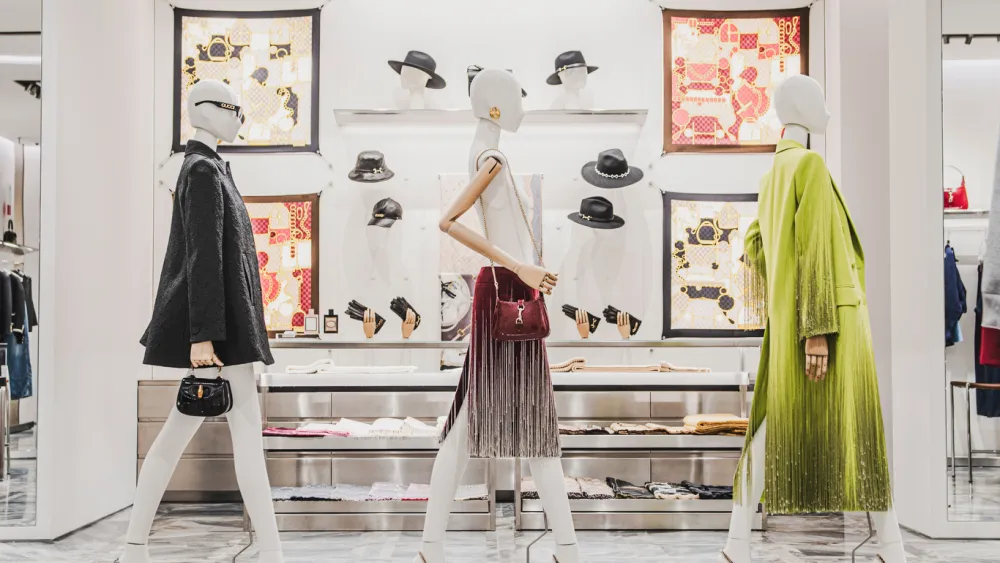
Demna is someone who understands provocation and meme culture just as well as archival codes. I expect a mix: on one hand, a reinterpretation of iconic elements from the Gucci archive ( double G, horsebit, bamboo details), on the other, a freshness that will play with internet culture and contemporary visual language. This won’t be just a clothing collection, but rather a series of cultural statements. The only question is how much Demna will have to balance between his own vision and the commercial priorities of the group.
Less, but better
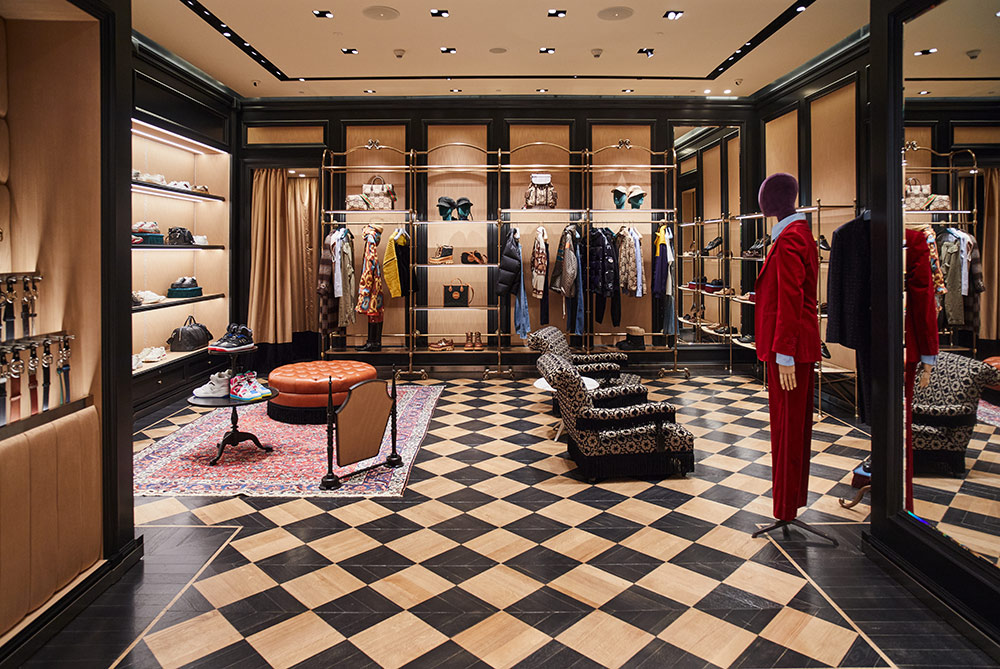
Kering continues the “fewer, better stores” approach, meaning fewer locations, but better and more experiential ones. This means the physical network will rely more heavily on storytelling and personalization, while the online channel will receive more phygital tools. At the same time, there is a focus on genuine sustainable actions ( not just offsets), which is meant to meet the growing expectations of customers. In the regional context: demand is stabilizing in the US and there is cautious optimism regarding Asia, possibly sometime in the second half of 2026.
Will it work? It’s hard to say, but one thing is certain: Gucci is once again moving toward a bold identity, not the safe mainstream.
An icon that keeps reinventing itself
It is hard to find a brand that so consistently combines respect for tradition with a willingness to take risks. Gucci demonstrates that true luxury is not only about flawless craftsmanship and a recognizable logo, but also the ability to read cultural shifts and the courage to rewrite its own rules. The following decades brought both triumphs and crises, but the brand always managed to find its way, because it understood one thing: desirability must be rebuilt anew, generation after generation.
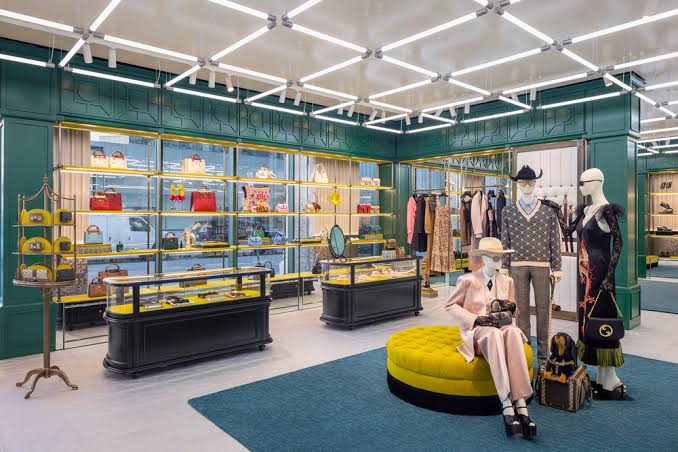
Today, Gucci is more than just a fashion house. It is a laboratory of strategy, where the limits of creativity are tested without losing its identity. It is a mirror reflecting cultural, social, and generational changes. And it is precisely this flexibility, combined with business discipline, that ensures the brand still has many chapters left to write.
Soonia
High Class Fashion editorial team