
In 2024, Hugo Boss celebrated its centenary. The company, which began as a local clothing manufacturer in the small town of Metzingen, today generates sales of around 4.3 billion euros and is present in about 8,000 points of sale worldwide. That’s quite a lot for a brand that has never aspired to join the ranks of ultra-luxury fashion houses like Chanel or Hermès.
The evolution of Hugo Boss
Because Hugo Boss is a great example of premium positioning that strikes a balance between mass-market fast fashion and luxury that’s out of reach for most. The contemporary duality of BOSS (classic, suits, formality) and HUGO (younger energy, streetwear, freshness) answers the question of how one brand can serve two different target groups without diluting its identity. And it seems to work.
To understand this position, you have to go through several uncomfortable stages: a controversial wartime past, the evolution from a suit manufacturer to a lifestyle player, rebrandings aimed at a younger demographic, and finally, digitization and omnichannel. Not every decision was obvious, not every one came easily. But it is precisely these choices, the brand culture, and its strategic shifts that have shaped Hugo Boss’s place in today’s fashion.
Years 1924-1949
Hugo Boss founded his clothing factory in Metzingen in 1924, during the chaotic inflation of the Weimar Republic. For several years, he produced ordinary workwear, coats, raincoats, and overalls. The business was barely surviving. The real change came after 1933, when Boss (a member of the NSDAP since 1931) switched production to uniforms for Nazi organizations.
From clothing work to uniforms
The numbers speak for themselves. Sales jumped from around 38,000 ℛℳ in 1932 to over 3.3 million in 1941. The factory produced uniforms for:
- SA (Sturmabteilung)
- SS (Schutzstaffel)
- Wehrmacht
- Hitler Youth
At its peak, employment reached around 300 workers, but that’s not all. Boss used forced labor: about 140 people (mainly women from Poland and the USSR) and occasionally around 40 French prisoners of war. It was a system based on exploitation.
Postwar settlements and memory
Denazification did not bypass Hugo Boss. He was classified as a “nazi-follower,” received a fine, and had his civil rights restricted. He died in 1948, before the company could recover.
The company commissioned an independent historical study (Roman Köster, 2011), participated in the compensation fund for victims of forced labor, and issued a statement of “deep regret”. Is that enough? It’s hard to say. Facts remain facts, and the history of this brand begins with decisions that cannot be erased.
From a suit to a global brand
After the war, Hossa faced a choice: either continue producing uniforms or venture into something completely new. They chose men’s suits, and it turned out to be an excellent decision.
Milestones
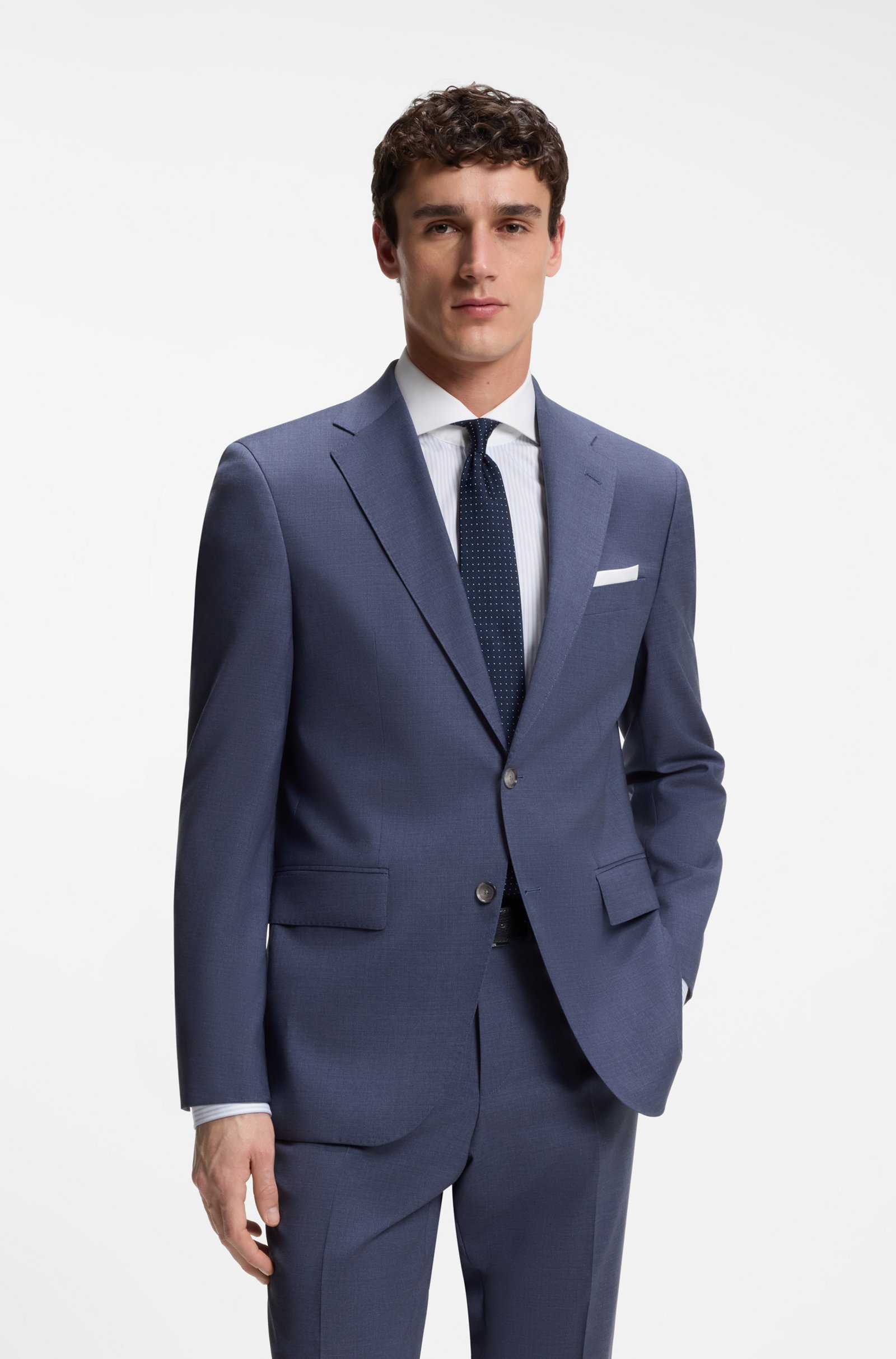
The first orders for men’s suits were placed around 1950. A decade later, the production of ready-to-wear clothing began, meaning garments ready to wear without tailoring adjustments. In 1969, the company was taken over by brothers Uwe and Jochen Holy, who inherited the business and quickly began building the brand according to their own vision.
The key dates are as follows:
- 1970 – debut of the BOSS suits line, which became synonymous with elegance
- 1972 – the first factory outlet (interestingly, so early)
- 1977 – the trademark was registered, formally protecting the name
- 1984 – the brand’s first fragrances (entry into lifestyle)
- 1988 – stock market debut, the company from Metzingen goes public
- 1993 – launch of the HUGO line, younger and more casual
- 1998 – first women’s collection
- 1999 – launch of the website and the BOSS Orange line
Werner Baldessarini joined the team around 1975 and influenced the product strategy. The company also sponsored early motorsport events, building a premium brand image.
From suits to a lifestyle empire
What has changed? The company stopped being a suit manufacturer and became a brand offering a lifestyle. Accessories, fragrances, retail, more product lines. Before the digital era, Hugo Boss built a solid foundation of global recognition, which later only needed to be developed further.
Two faces of the brand
In 2017, Hugo Boss made a rather bold move. The sub-brands BOSS Orange and BOSS Green, which had been confusing customers for years, were discontinued. What remained? Two clearly distinct lines: BOSS and HUGO. The idea was simple: each speaks to a different person, in a different language.
BOSS vs HUGO
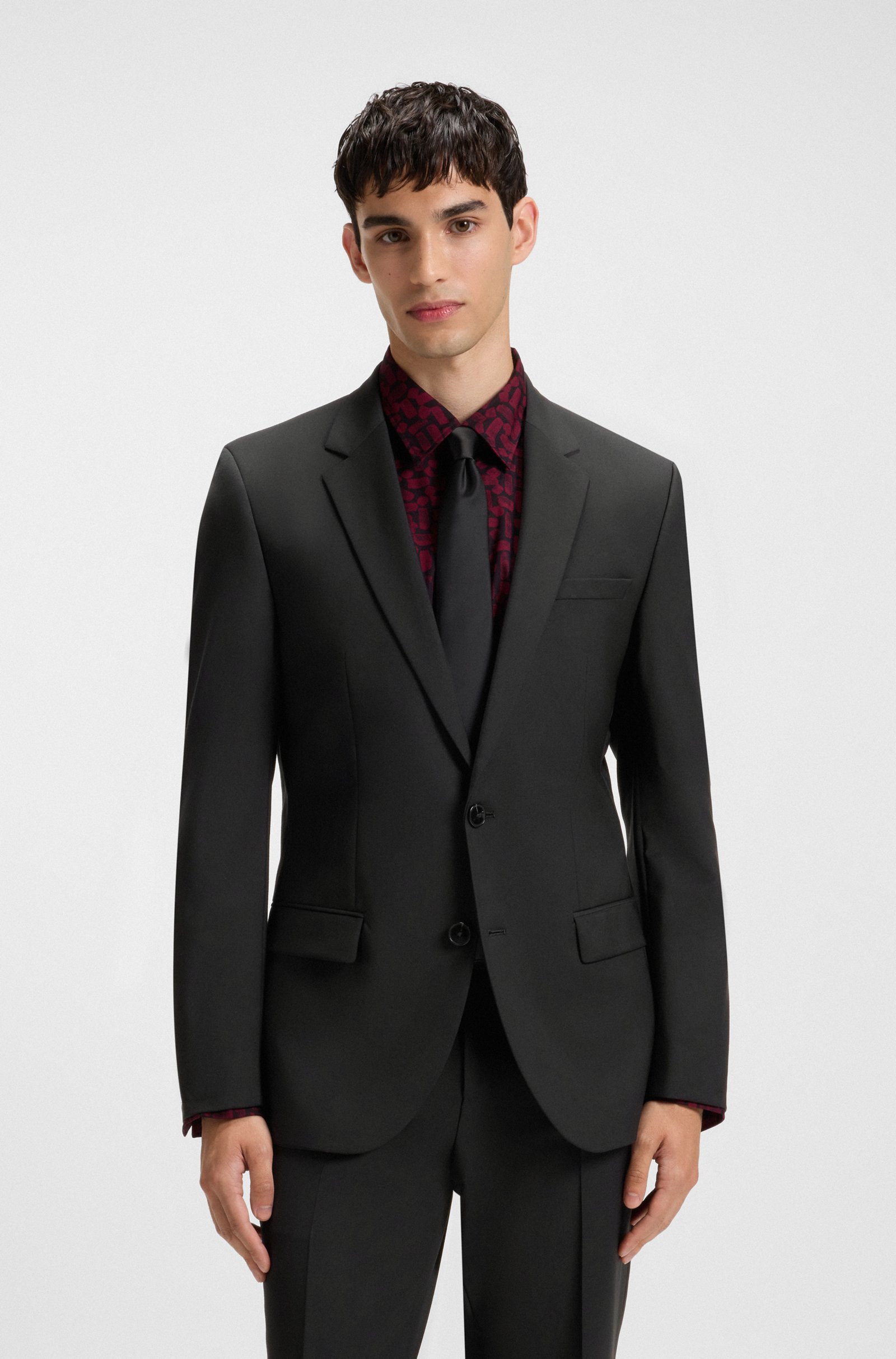
BOSS is a premium brand focused on tailoring and elegance. It targets someone who wants to look like their ideal self, aspiring to professional excellence. Average age? Usually around 40, maybe a bit older.
HUGO, on the other hand, targets younger, more expressive people. Streetwear, denim, bolder cuts. It’s expressive self, where individuality and ease matter. Like BOSS’s twin brother, but the one who listens to hip-hop, not jazz.
Rebranding under Grieder
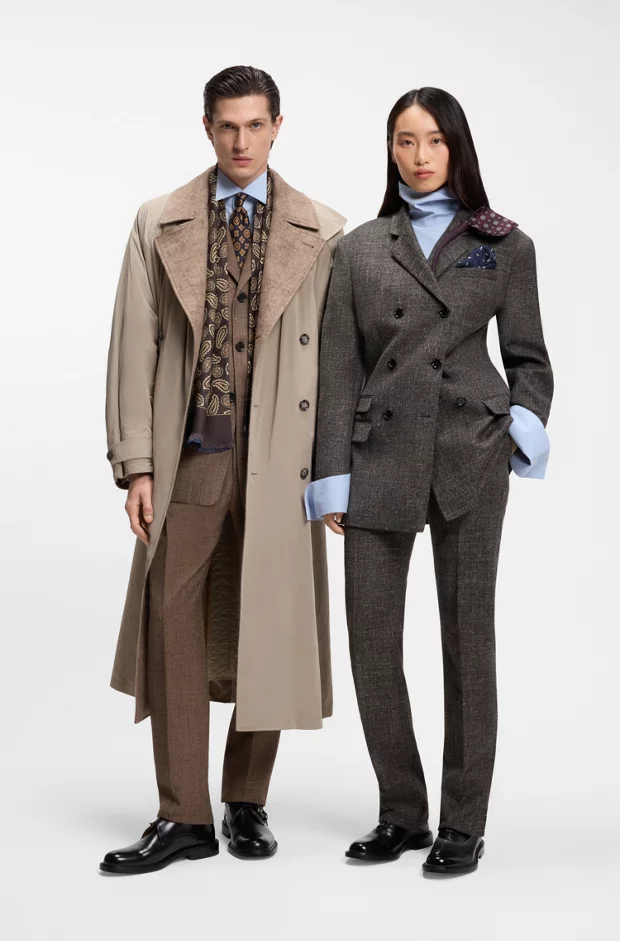
When Daniel Grieder took over as CEO in June 2021, modernization began. The logo was refreshed, communication targeted a younger demographic (the average customer age dropped to around 37). Influencers, celebrities, David Beckham as ambassador, all to ensure the brand didn’t appear stiff.
The celebrations of the 100th anniversary in 2024 provided a pretext for further moves: HUGO BLUE (denim/streetwear line), the HUGO XP loyalty program (featuring NFT and Web3 elements). Sounds futuristic? A bit. But it shows the direction: clear positioning, without blurring the message between lines. And that was the goal from the start.
Production, technology, and omnichannel
Behind the BOSS and HUGO collections stands a well-thought-out operational infrastructure. The company maintains control over the process from design to delivery, combining in-house production with a global network of suppliers and an extensive omnichannel strategy.
From 3D sketch to shelf
Hugo Boss manufactures in 5 of its own facilities:
- Metzingen (Germany, headquarters)
- Izmir (Turkey, largest hub)
- Radom (Poland)
- Morrovalle (Italy)
- Coldrerio (Switzerland)
They account for approximately 17% of total production (2025 data). The remainder comes from external suppliers, of which 94% are Tier 1 partners with high social compliance.
The real transformation is happening in the digitization of the creative process. Over 65% of products are already being designed in 3D, with the goal of reaching over 90%. This technology eliminates most physical samples and reduces the time to market from about a year to 6-8 weeks. AI supports demand forecasting and supply chain optimization, enabling faster responses to changes in customer preferences.
Sales network and omnichannel
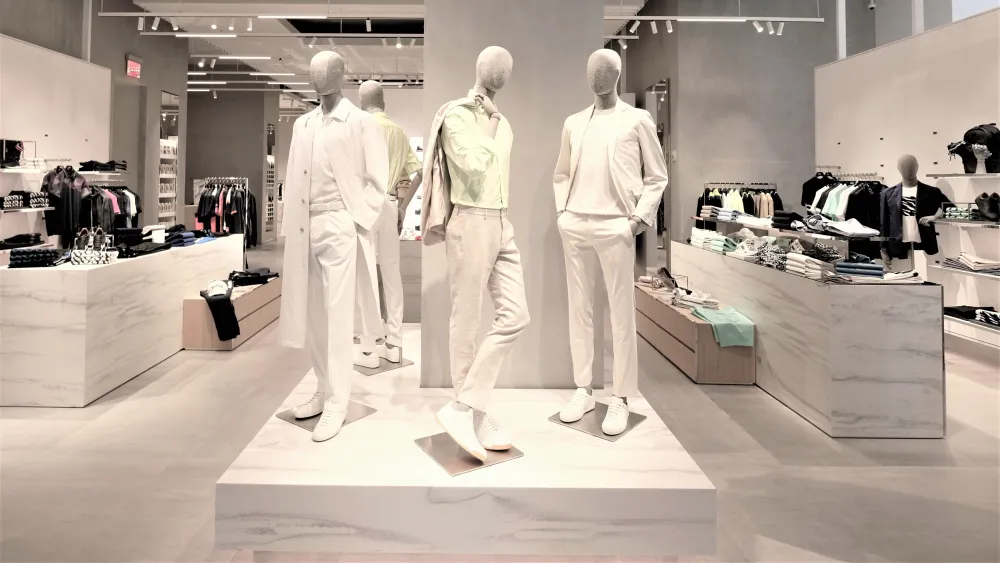
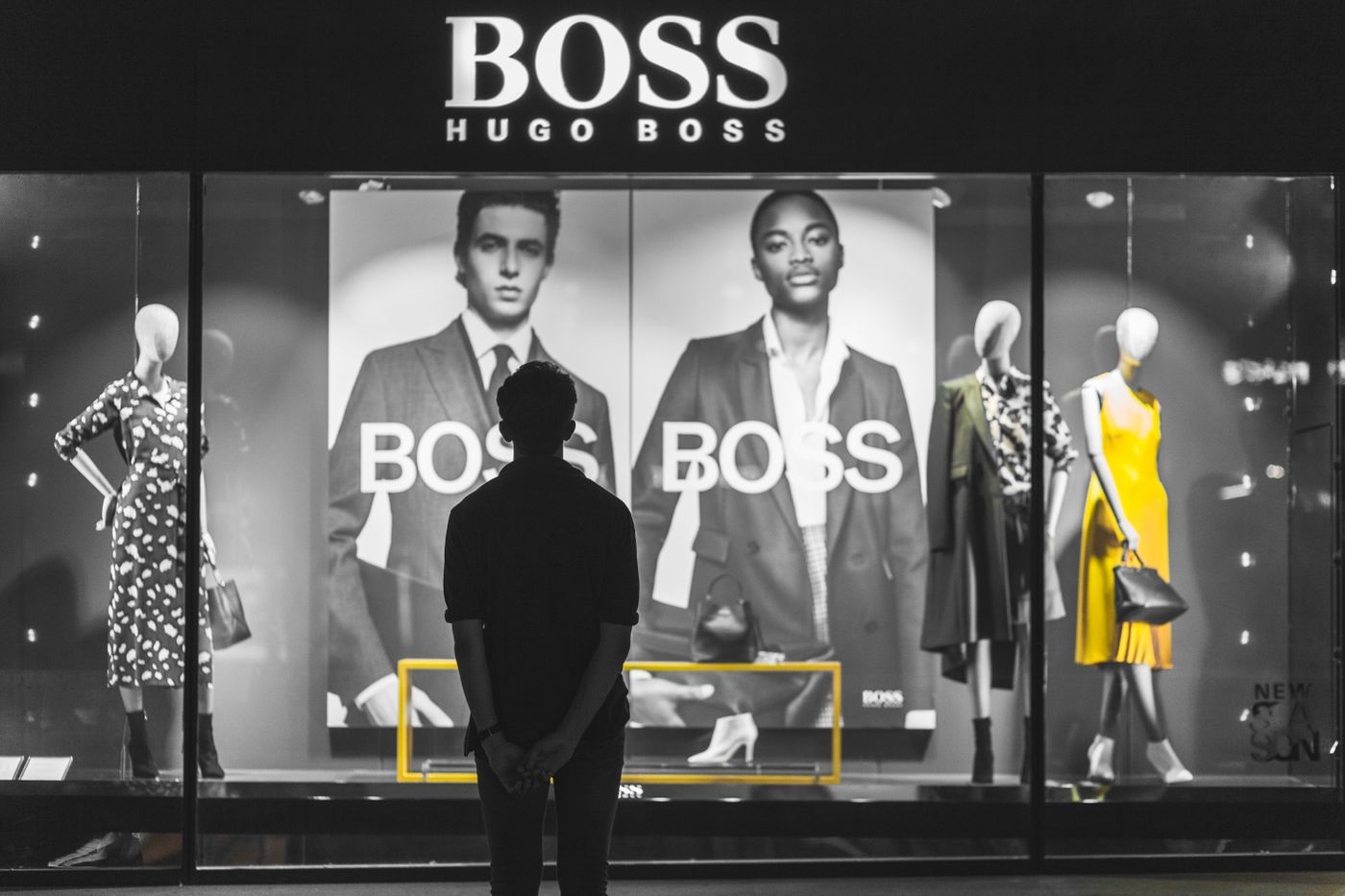
The distribution reach is impressive: around 8,000 points of sale globally, including 451 BOSS/HUGO own stores and 1,532 own retail points (2024). E-commerce operates in 74 markets.
The omnichannel strategy integrates boutiques, wholesale, and the online store into a cohesive experience. Outlets (such as the one in Metzingen) play an important role by monetizing end-of-season collections without compromising the image of the main lines. Altogether, this creates a flexible ecosystem that combines efficiency with control over how the brand reaches the customer.
Strategy, numbers, and markets
Hugo Boss operates in three main geographic markets, with a clear dominance of Europe. EMEA generates about 61% of total revenue, the Americas add another 24%, and APAC rounds out the list with around 13%. Licenses? That’s another 2%. The brand portfolio shows a similar asymmetry: BOSS accounts for 84% of sales, while HUGO makes up the rest.
The specific figures from the latest reports are as follows:
- 2024: revenues at the level of €4.3 billion
- 2025: around €4.27 billion (slight decrease, yes)
- Q1 2026: €905 million, which means −6% year-on-year
- Gross margin: stable at 61.8%
- Free cash flow: a solid ~€497 million in one of the periods
The management calls it a “realignment,” not a crisis. It’s about shifting priorities, not saving a sinking ship.
CLAIM 5 vs TOUCHDOWN
The CLAIM 5 strategy was launched in 2021. The main themes were: digitalization, a younger target audience, omnichannel at full speed. Scale mattered, pace was important. In 2025, an update called TOUCHDOWN arrived, shifting the focus. Now, it’s all about “quality over quantity”: fewer stores but more profitable ones, optimized distribution, a focus on margins and cash flow, and inventory reduction.
The outlook is as follows: a return to growth in 2027, with acceleration in 2028. For 2026, the management forecasts EBIT in the range of €300-350 million. The shares are listed on the MDAX in Frankfurt, with a free float of around 64%. Frasers Group holds ~19%, the Marzotto family ~15%, and the company itself owns about 2% of its own shares.
What remains after a hundred years?
History Hugo Boss demonstrates that surviving in the world of premium fashion is not about sticking to a single idea. The company from Metzingen has gone through crises, changed owners, distanced itself from its past, and rebuilt itself from scratch. So what actually remains of a brand that has reinvented itself several times? It turns out to be precisely this flexibility. The ability to reassess its identity without losing credibility in the eyes of its customers.
Premium brands that endure for decades share the ability to evolve without panic. Hugo Boss has proven that it’s possible to go from corporate suits to streetwear, from Germany to China, from conservatism to collaborations with rappers. And still remain recognizable.
A century-old brand is not a museum. It is an organism that has learned to respond to changes before they become inevitable.
Stenn
lifestyle editorial team
High Class Fashion