
Meta has just moved smart glasses from the category of “cool sunglasses gadgets” to something that makes sense for everyday use: prescription glasses with AI. Ray‑Ban Meta Blayzer is a variant optimized for prescriptions, built on the Gen 2 platform and designed to be unobtrusive. Voice commands (“Hey Meta, take a video”), discreet photo/video, open-ear audio—all in frames that look just like… regular glasses.
Why this debut matters
To understand the leap, it’s worth looking at the timeline:
- 09.2025 – Meta announces Gen 2 (12 MP camera, 3K video, battery ~8+ h)
- 31/03/2026 – launch of Blayzer and Scriber as the first “optics‑first” models
This is the result of the Meta + EssilorLuxottica (Ray‑Ban) partnership, whose goal is simple: to normalize AI glasses as ordinary prescription frames. You don’t wear them “to show off,” you wear them all day because you simply… need glasses. AI is an add-on, not an excuse. The point is for them to stop being technology and just become glasses.
Design and technology for everyday life
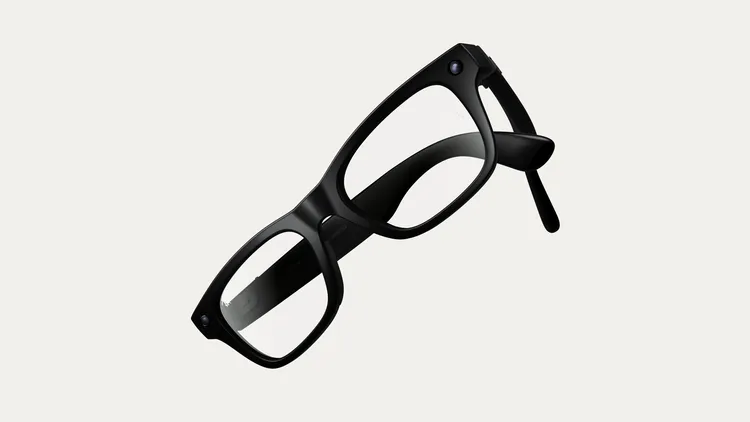
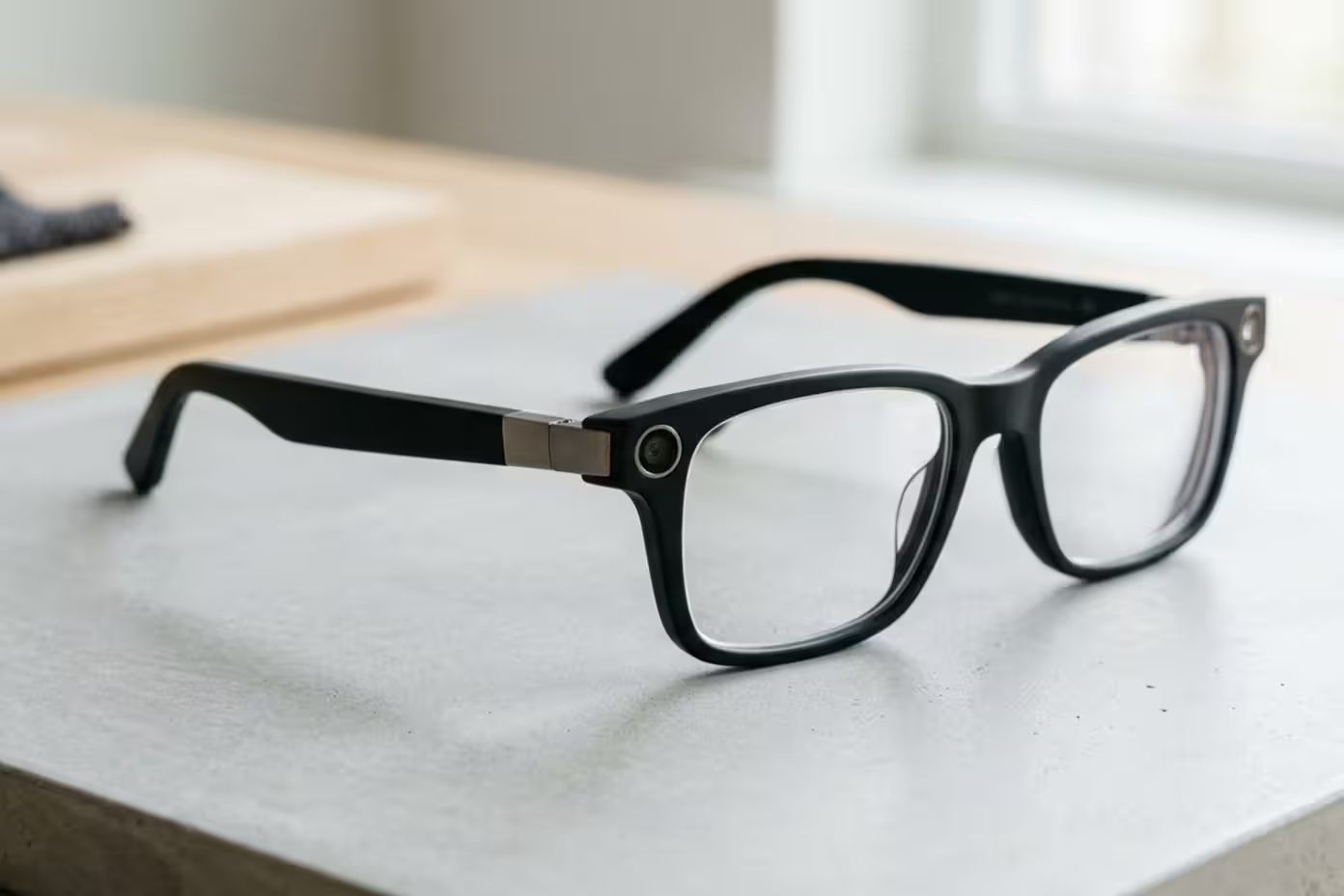
Blayzer takes on a slimmer profile than the regular Wayfarer Gen 2, which you can feel immediately on your nose. The rectangular, full-rim frame with adjustable nose pads and over-rotation hinges ensures the glasses stay securely in place, even when you lean your head over your phone. Weight? Around 30 grams. You practically only notice them when you’re recording.
Specification designed for everyday use
| Subsystem | Key data |
|---|---|
| Camera | 12 MP, photos 3,024×4,032 px |
| Video | 3K Ultra HD (~3,264×2,448, 30 fps), HDR + stabilization |
| Audio | 2 open-ear speakers, 6-microphone array |
| Memory | 32 GB (500+ photos / 100+ 30 s clips) |
| Connectivity | Wi‑Fi 6E, Bluetooth 5.3 (iOS 18.6+, Android 15+) |
| Battery | up to 8+ h, case recharges multiple times (40+ h total) |
The camera has a wide angle and is activated by pressing the action button; the LED indicator lets those around you know it’s working. Voice control works surprisingly well—commands like “Hey Meta, take a video” are executed without delay. Real-time translations by Meta AI are something you truly appreciate only when talking to someone who speaks Spanish and you barely remember any words from school.

Price, lenses, and availability
The frame itself starts at $499, which is about $120 more than the standard Meta Gen 2. But keep in mind that the price is just the starting point. When you reach checkout with a complete set, including prescription lenses, the amount quickly rises to $600-1000+ USD. It depends on the prescription strength, possible coatings, and whether you choose Transitions (photochromic lenses). In the UK, prices start at around £429.
| Position | Amount/Deadline |
|---|---|
| The frame itself | from 499 USD |
| Set (frame + lenses) | ~600-1000+ USD |
| Prices in the UK | from approx. £429 |
| Announcement and presale | 31/03/2026 |
| Wider availability | 14.04.2026 |
Where and when available?
You will be able to buy them on Meta.com, Ray‑Ban.com, and of course throughout the entire EssilorLuxottica network:
- LensCrafters, Sunglass Hut
- Target Optical
- Eyebuydirect and Glasses.com
- salons in the UK, Australia, Canada, selected markets in Europe
Lenses? Single vision, progressive, and transitions. Typical starting ranges are roughly from −6 to +6 diopters, plus astigmatism correction (the exact range depends on the store). Colors Matte Black, Shiny Black, Havana, Transparent Ice Grey, though not every option will be available everywhere.

Pre-sale starts on March 31 2026, with wider distribution from April 14.
Between elegance and intelligence
The Blayzer model combines two things that until recently seemed incompatible: classic style and advanced artificial intelligence. Ray-Ban proves that technology doesn’t have to turn glasses into a gadget that looks like a laboratory prototype. Here, all the electronics disappear beneath an elegant frame, and you get a tool that simply works.
Interestingly, the vision correction option means that these glasses stop being just an accessory to everyday life and become a natural part of it. You no longer have to choose between the visible need to wear glasses and the desire to use AI. This is the detail that changes everything, because hardly anyone would wear two pairs at the same time.

Maybe this is exactly how technology should be introduced into everyday objects. Without noise, without flashy design, just a well-made thing.
ROXX 99
HCF editorial team