
The luxury lingerie segment reached a value of around USD 16 billion in 2026, with forecasts indicating growth to USD 34 billion by 2035. A CAGR of 8.6% is truly significant, especially when compared to mass-market brands. The question is: why is this category attracting more and more attention right now?
What does prestige in lingerie really mean?
Prestige is not about the label on the tag. It’s about craftsmanship, luxurious materials, and refined tailoring. We’re talking about silk, Calais lace, guipure embroidery, or the finest tulle. France and Italy dominate this segment because tradition and artisanal skill thrive there—something mass production can never replace. Victoria’s Secret or Calvin Klein make good lingerie, certainly, but it’s a completely different league when it comes to finishing and durability.
By purchasing such a bra, you’re investing in years of comfort and self-confidence. In the article, you’ll find clear selection criteria, concise “top 10” profiles, and practical price ranges, without unnecessary chatter. Sometimes it’s worth knowing where to look.
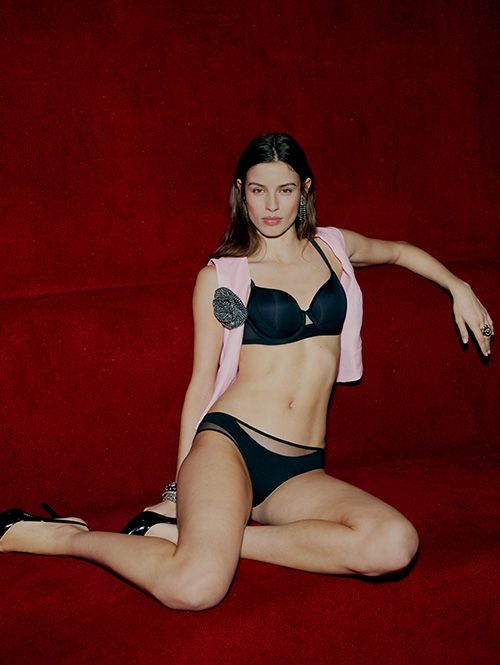
The most prestigious bra brands
Let’s start with a simple fact: there is no single, official ranking of prestigious lingerie brands. These aren’t FIFA rankings. Our list is a synthesis of what appears in industry media and luxury retail between 2024 and 2026, mainly Vogue, Elle, Forbes, The Lingerie Addict, as well as “most expensive” lists from Bergdorf Goodman or Harrods. We took these sources and applied specific criteria to them.
Criteria of Prestige: From Materials to Innovations
Prestige is not just about the price. What mattered to us were:
- Craftsmanship and hand finishes (e.g. guipure embroidery, quilting, personalization)
- Luxury materials: silk, Calais lace, Lyon tulle, Swiss cotton
- Fit and support for a wide range of sizes (not just A-D)
- Heritage and innovation: has the brand contributed anything to the industry?
- Aesthetic consistency (recognizable, intentional style)
- Global presence: boutiques, department stores, not just e-commerce
- Editorial recognition: how often they appear in prestigious publications
- Value for money in the luxury segment (is that 200 euros really justified)
Examples? Chantelle introduced seamless underwear as early as 1972, which was a revolution. Empreinte has specialized in fuller busts (C-H) for decades, and it shows in their construction. These kinds of things build a brand’s position.
What did we exclude and why?
You won’t find Victoria’s Secret or Calvin Klein here. These are excellent brands, but they operate in a different segment, with different value criteria (marketing, availability, price). Our list features niche luxury and premium brands, where craftsmanship quality and limited production scale are the main priorities.
Top 10
The first five brands are European lingerie legends, each of which could fill the entire prestigious list on its own. But it is they who have consistently set the standard of luxury for decades.
La Perla
La Perla (Italy, 1954, founded by Ada Masotti in Bologna) is synonymous with ” Made in Italy ” in the lingerie category. Hand-sewn Leavers lace, silk with a weight tailored to each specific cut, flawless finishes without a single unnecessary thread. In 2024, the brand faced a financial crisis but rebuilt itself by returning to its artisanal roots and with the support of new investors. Today, Bologna’s seamstresses once again set the pace of production, not the other way around.
Agent Provocateur
Agent Provocateur (United Kingdom, 1994, Joseph Corré and Serena Rees) is punk rock in lace and satin. Vintage 1950s silhouettes, bold colors, total empowerment through sensuality. A brand that turned the bra into a statement, not just a piece of wardrobe. The Brits know how to blend elegance with a touch of scandal—that’s exactly the point here.
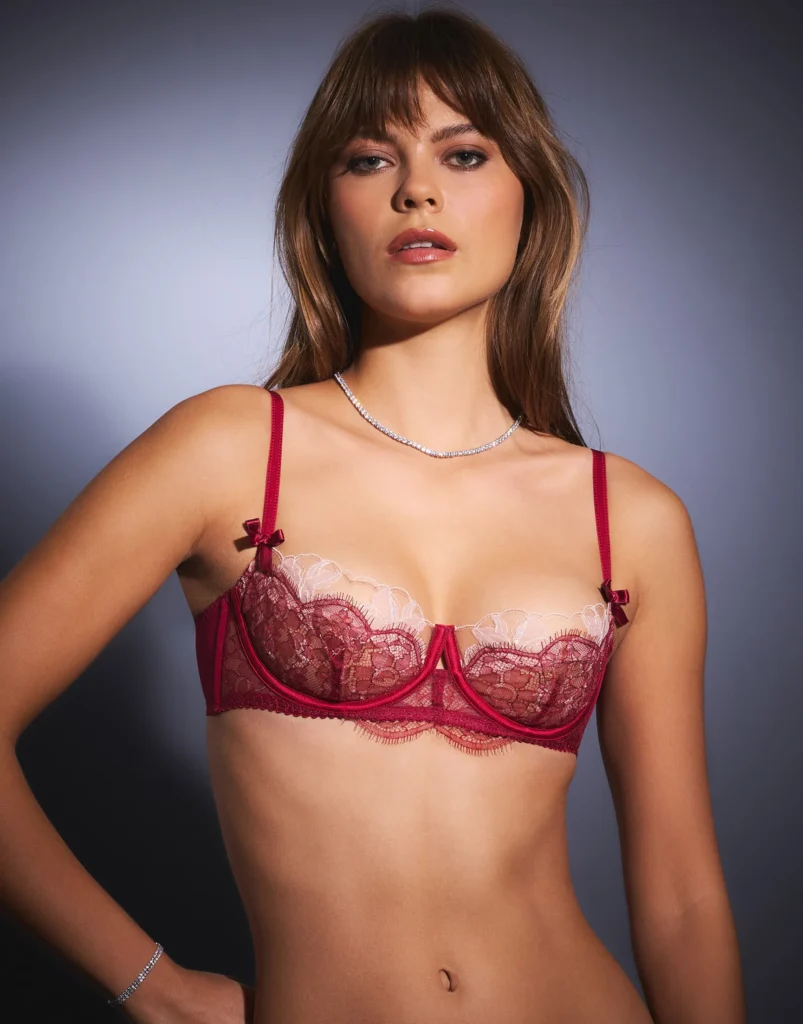
Empreinte
Empreinte (France, 1946) specializes in sizes C to H and does it better than most global giants. Seamless constructions, innovative designs that truly support and shape. French craftsmanship for women who need more than just aesthetic decoration.
Simone Pérèle
Simone Pérèle (France, 1948, a family business now run by the third generation) present in over 80 countries. The philosophy of “embracing” the female body translated into elegant lace and comfortable cuts. A balance that’s hard to achieve on paper, yet they manage it season after season.
Aubade
Aubade (France, ca. 1958) is lifestyle seduction in the spirit of Paris. Lace details, refined cuts, and the belief that lingerie is above all a way to feel like yourself. Less Victorian ceremony, more lightness and confidence.
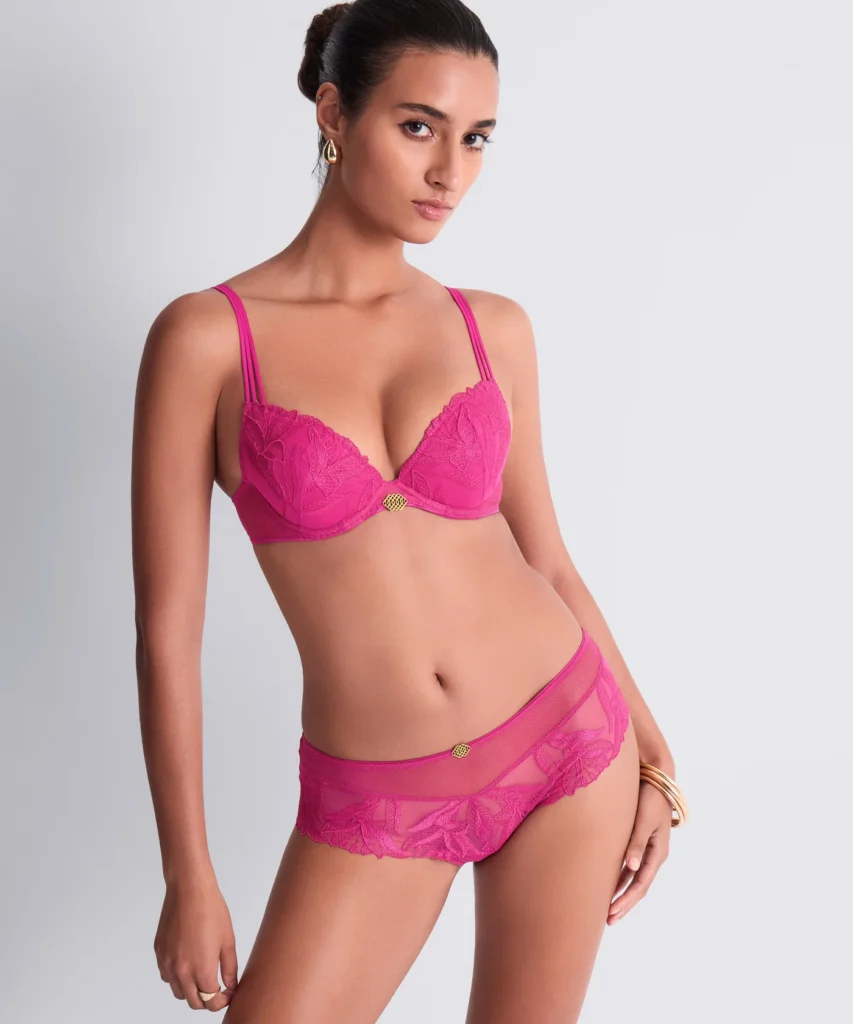
The next five also have their strengths, though with a slightly different DNA.
Top 10 continuation
We continue our review of the most important brands, moving on to the top five that combine French heritage with modern interpretations of luxury.
Lise Charmel and Chantelle, the essence of French tradition
Lise Charmel (France, 1950s) is a brand that has preserved the spirit of haute couture in lingerie. Vivid colors, satins, and guipure embroideries crafted using Calais lace techniques give the collections an artistic character. Interestingly, most of the production still takes place in France, which is rare nowadays.
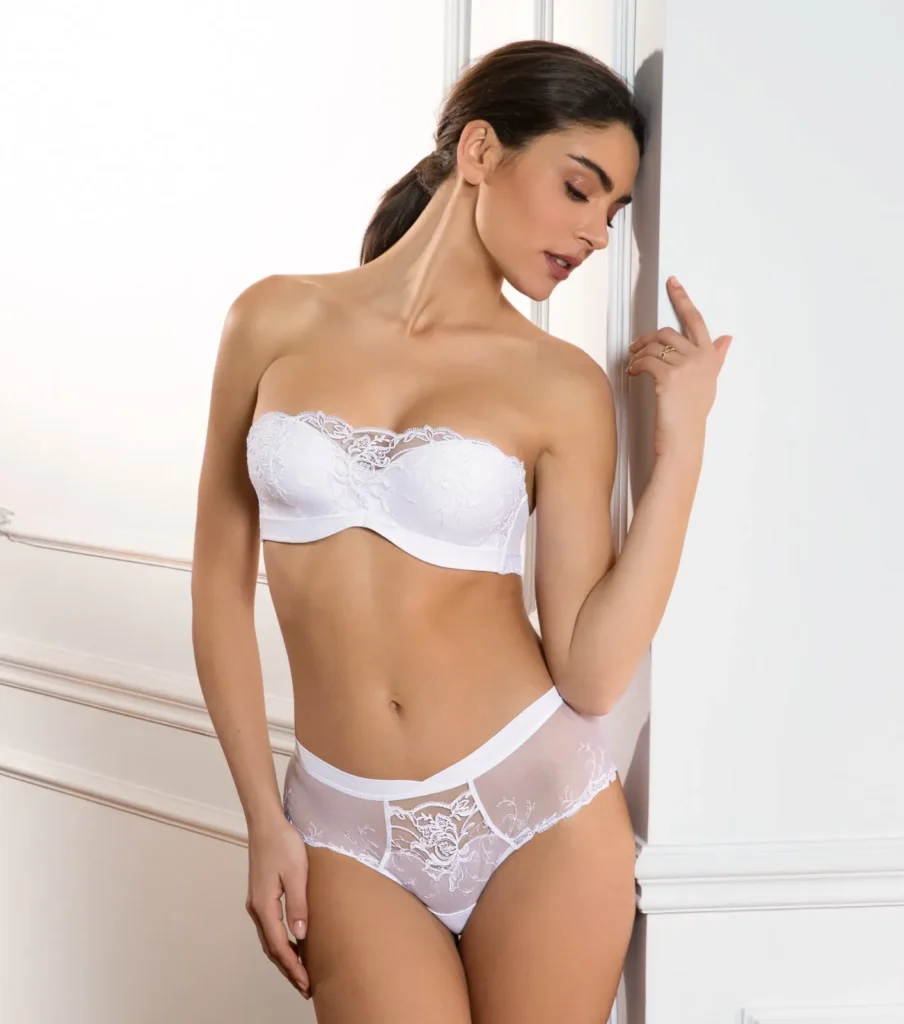
Chantelle has roots dating back to 1876, although the brand itself was established in 1949. This family-owned company became renowned for innovation, introducing the world’s first seamless bra in 1972. The Norah Comfort line demonstrates that premium can, above all, mean comfort. In 2026, the brand will celebrate its 150th anniversary, which is truly impressive.
I.D. Sarrieri, Kiki de Montparnasse and Fleur du Mal
I.D. Sarrieri (Romania/France, early 2000s) treats bras as “wearable art.” Embroidery and embellishments, often featuring Swarovski crystals, make this more couture craftsmanship than typical lingerie.
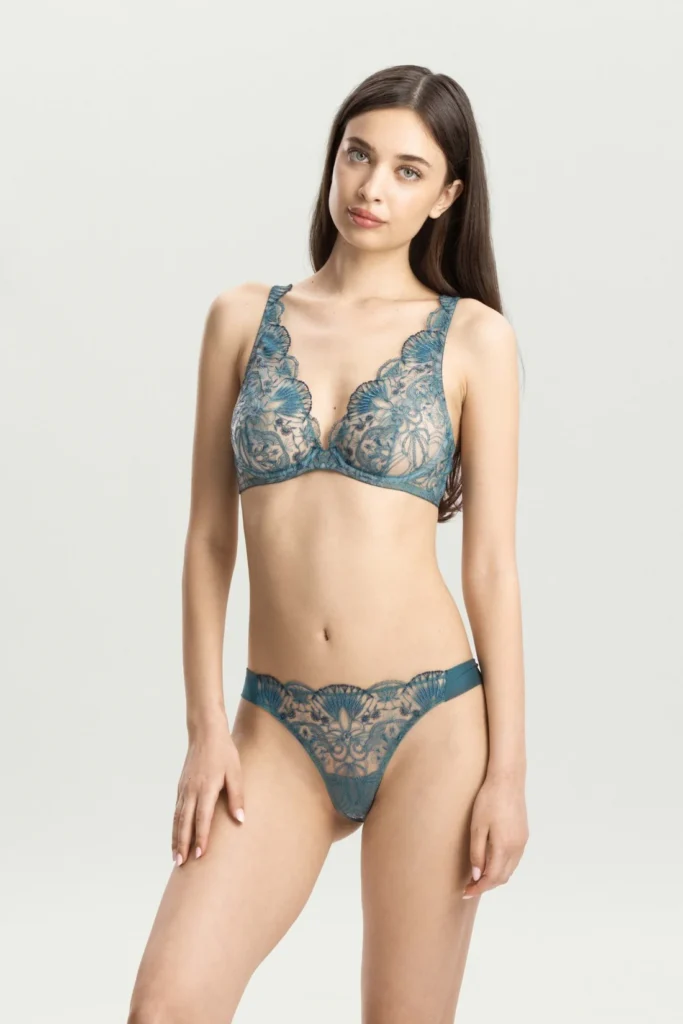
Kiki de Montparnasse (USA, 2005) is modern luxury inspired by Parisian bohemia. In addition to lingerie, the brand offers RTW, accessories, and wellness, while the Mr. Kiki line proves that luxury can also be masculine.
Fleur du Mal (USA, 2012), founded by Jennifer Zuccarini, treats lingerie as “outerwear.” French Leavers lace, worn by Anne Hathaway and Kendall Jenner, proves that contemporary luxury can be just as intriguing as heritage.
We have completed the top ten. Now let’s move on to practical matters.
Prices, sizes, and where to buy?
Before you decide to make a purchase, it’s worth knowing what kind of amounts you’re getting into and where to even look for these luxury brands. Because the price differences can be really significant.
How much does luxury cost?
Basic models from prestigious brands usually cost around 50-150 USD/EUR. These are classic bras without excessive embellishments, made from high-quality materials. But when you move into couture collections or limited sets made of silk and embroidery, prices can jump to 200-1,000+ USD. Premium brands have margins 3-7 times higher than the mid-range segment, reflecting the craftsmanship and materials.
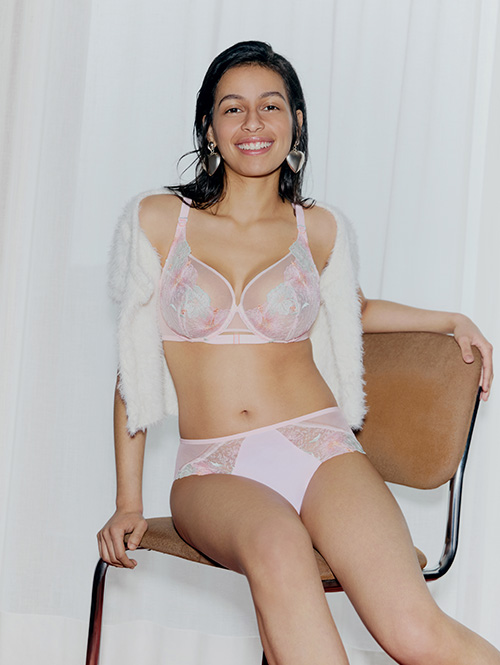
Sizes and fit in the premium segment
Most luxury brands offer a band size range from 30 to 42+ (in UK/EU sizes) and cup sizes from B to J/H+. Brands such as Empreinte, Chantelle, and Simone Pérèle are renowned for their fit for fuller busts. It’s truly worth taking advantage of professional fitting, as the differences in cut between brands can be significant.
Where to buy?
You have several options:
- Flagship brand boutiques (availability in major cities)
- Luxury department stores (e.g., Bergdorf Goodman in the USA, Galeries Lafayette in Europe)
- Specialized bra fitting boutiques (e.g., Caroline Randell in the UK
I recommend starting at a boutique with an advisor, especially if you don’t know your exact size in a given brand. It saves frustration and returns.
When does lingerie become art?
Prestigious lingerie is not just a purchase; it is essentially an investment in yourself. Once we understand which brands create the best bras in the world and what sets them apart, it becomes easier to judge whether the higher prices make sense. And they truly do.
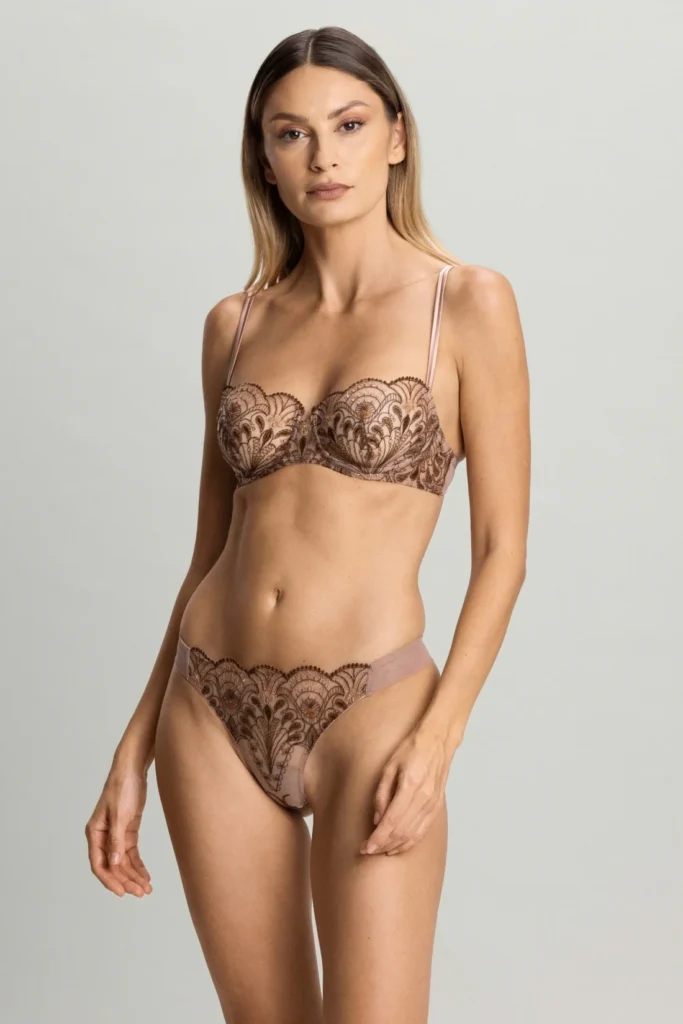
You can see quality in the details: in how the seams are finished, how the fabric holds up after the tenth wash, how the cups keep their shape for years. That’s the difference between lingerie you replace every season and the kind you return to for years to come. A high-quality bra means everyday comfort, not just a visual effect in the fitting room.
Good brands know that their clients shop consciously. That’s why they pay attention to every detail, from the design to the final stitch.
Maria & Sonia
editorial fashion/lifestyle
High Class Fashion