
The history of Jimmy Choo is a great example of how a brand can evolve from an exclusive atelier to a global player without losing its prestige. Let’s take a look at the key turning points.
From atelier to the global stage
In 1996, the London workshop in East End was known to a select group: celebrities, royals, Princess Diana. The ’90s and early 2000s saw an explosion of visibility, red carpets, ” Sex and the City.” Jimmy Choo was becoming synonymous with glamour, but in a very specific segment: runway, galas, special occasions. Beautiful, expensive, unattainable for most.
Breakthrough? The year 2017. Capri Holdings pays 1.2 billion dollars, and it’s immediately clear that it’s not just about maintaining the status quo. The new owners want broader reach, younger customers, fresh energy. And in 2018, the first signals appear: collaboration with Off‑White (Virgil Abloh as a cultural bridge), greater emphasis on “fashion active,” meaning sneakers, everyday sandals, accessories beyond the evening bag.
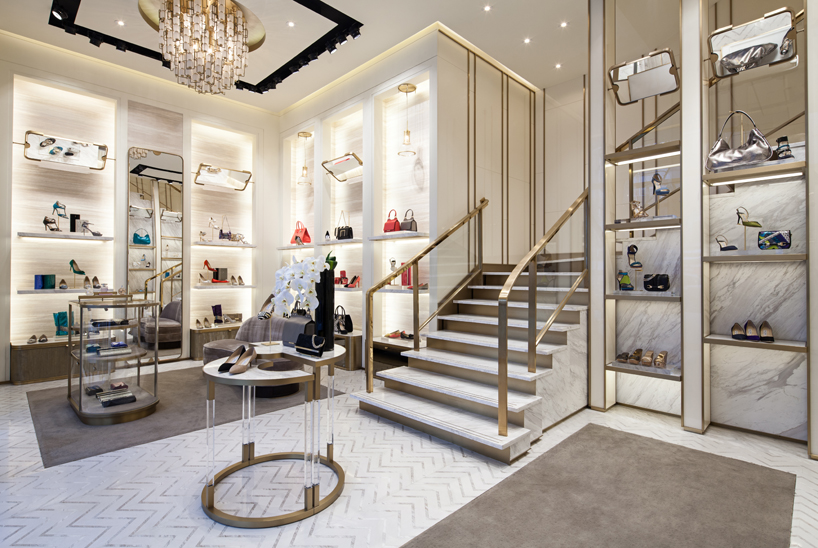
Capri and acceleration towards Next Gen
Since 2023, the pace has only increased. Sandra Choi, the creative director, puts it plainly: we’re moving from ” runway‑ready glamour ” to an “effortlessly alluring” lifestyle. The brand’s 30th anniversary in 2026 is an opportunity for a campaign featuring faces like Devon Lee Carlson, a Gen Z influencer, not an Oscar-winning actress. It’s a strategic choice that builds a cultural bridge.
Fun fact? The brand’s DNA (craftsmanship, quality, glamour) remains unchanged, but the context of use is evolving. We’re not giving up on high heels—we’re simply adding the possibility of wearing Jimmy Choo in a café, not just at a gala.
Offer and entry thresholds
Jimmy Choo for years was mainly associated with red carpet stilettos. Now, that’s changing—and quite rapidly. Casual footwear already makes up over 20% of the brand’s business, which just a decade ago would have sounded like science fiction.
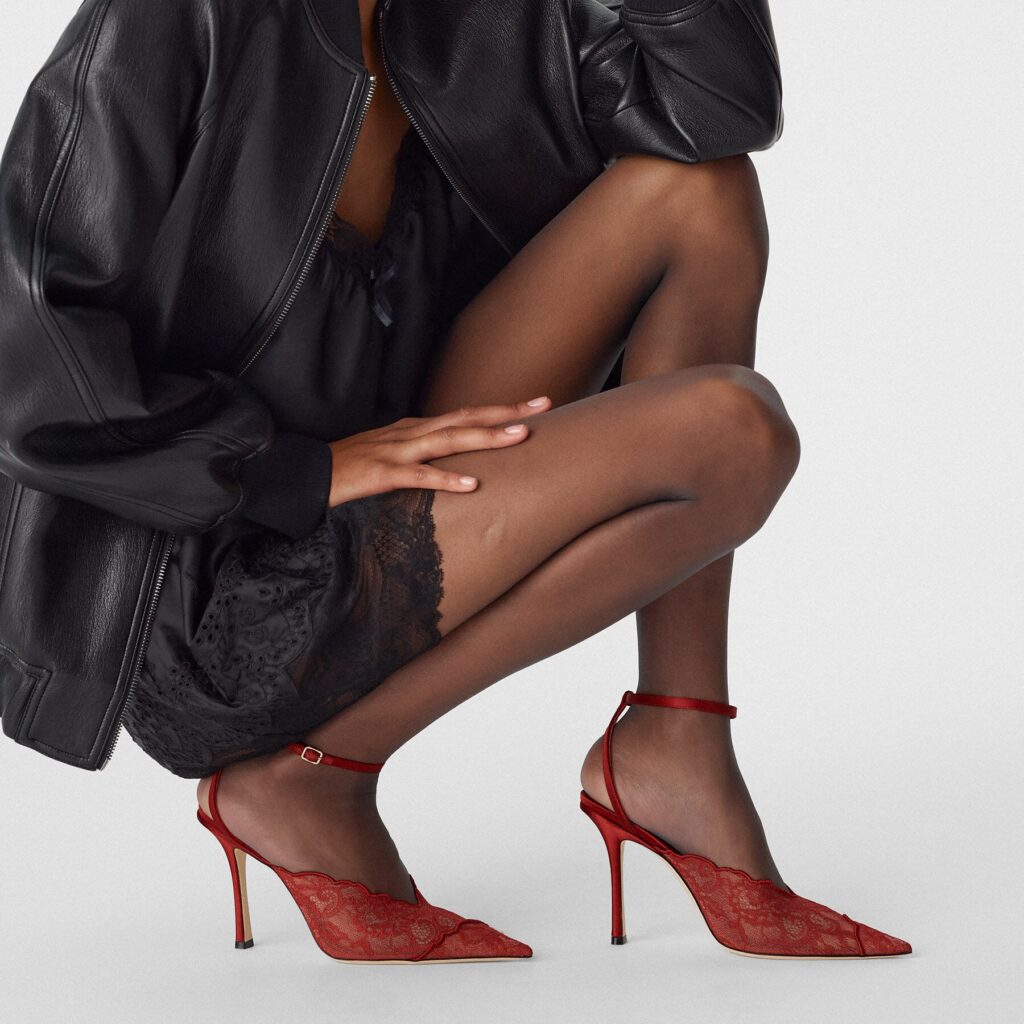
Casual that increases frequency
Sneakers, loafers, Margot-style flats are no longer just an addition to the collection, but wardrobe staples. Younger clients wear them every day—to work, for coffee, to the office. That’s exactly the point. Increasing the frequency of wear means the brand is more present in daily life, not just at events. Diamond/F is a model that perfectly combines recognizability with everyday comfort.
At the same time, bestsellers like Scarlett and Sacora keep that glamour DNA alive. Jimmy Choo doesn’t give up on being “effortlessly alluring”—he simply expands the repertoire.
Accessories and price entry thresholds
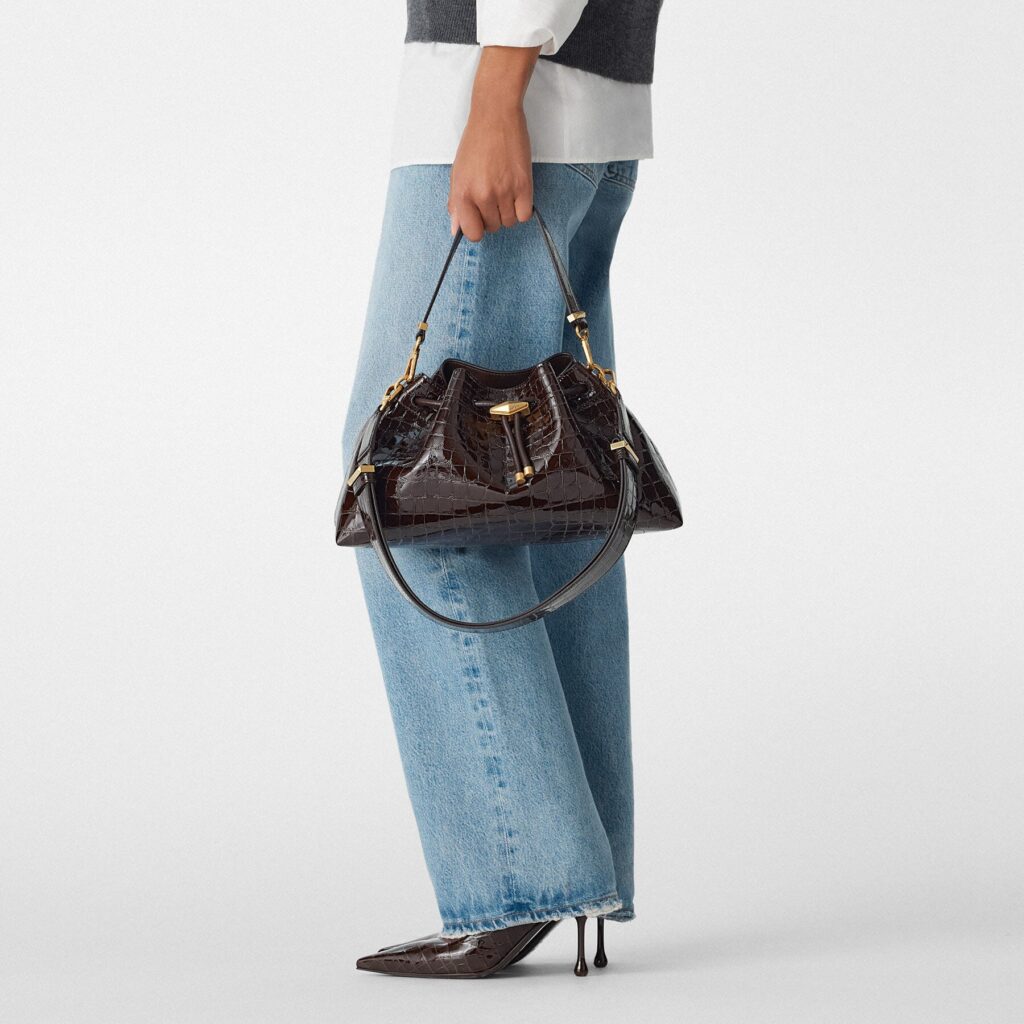
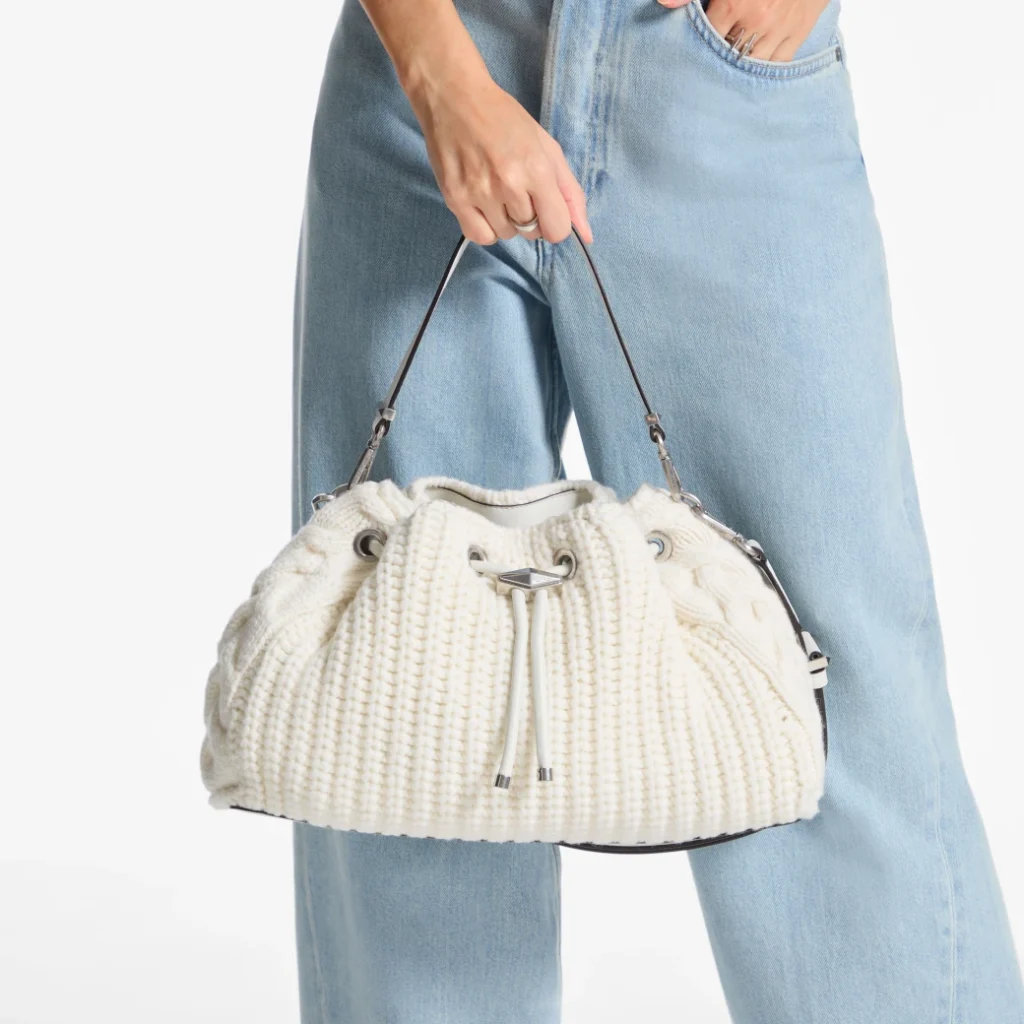
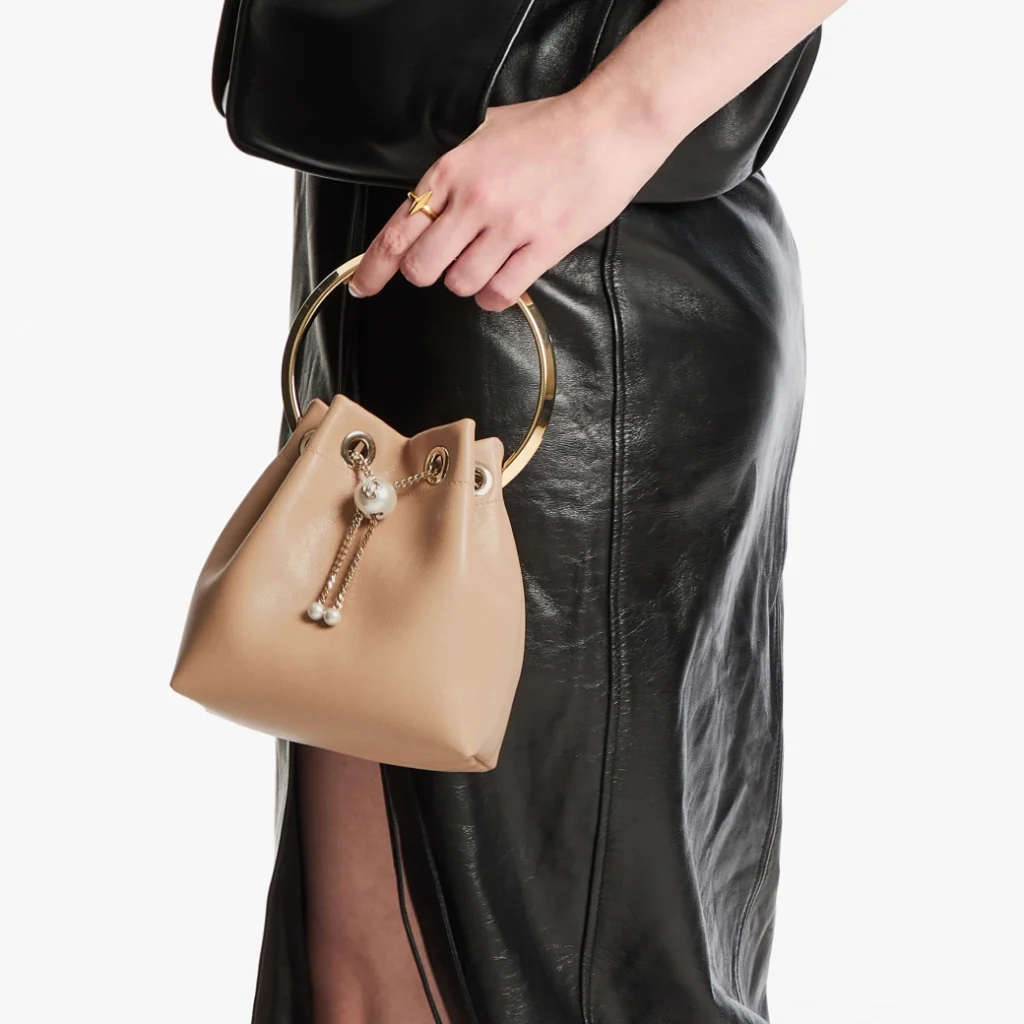
Bags under $1,500 are key. Bon Bon and Cinch are growing at a double-digit rate because they hit the sweet spot of “treat yourself” purchases for Millennials. These are buys you can make without guilt or going into debt. The first Jimmy Choo bag for around $1,200 sounds different than shoes for $800, even though it’s a similar amount of money. Price psychology works.
Collaborations as a lifestyle extension
Malbon Golf (where sport meets lifestyle), Conner Ives with animal prints and archival reworks, Jean Paul Gaultier, even Timberland. These collabs are more than just hype. Each one opens the brand up to a new use-case and the culture of younger groups. Someone who plays golf and follows Malbon suddenly has a reason to consider Jimmy Choo. The collection with Conner Ives attracts fans of bolder, more Gen Z aesthetics.
As a result, the brand creates several entry points simultaneously, without eroding its sense of luxury.
Influencers, TikTok, and experiences
Jimmy Choo needed more than just a good offer. It needed a conversation happening where Gen Z spends their time. And that’s where social media, influencers, and event marketing come in, generating FOMO faster than any advertisement.
TikTok and the archive
TikTok doubled the number of brand followers after one thing: sharing archival photos and campaigns from the 90s and early 2000s. Nostalgia, but in a discovery format for a generation that didn’t remember those campaigns. Instagram already has over 13 million followers, which shows the scale of organic reach without paying for every impression. It just works, fast.
Lifestyle narratives instead of a lookbook
“Wardrobe Collection” (2026) with Devon Lee Carlson is not a shoe catalog, but rather “Choos you can’t live without.” It’s about the story, not the specification. The ” Choo Stories ” series with Olivia Dean and others works similarly, focusing on people, not products. Jimmy Choo stopped saying “buy this” and started saying “live with this.” And influencer trips? The trip to Nice generated around 50 million impressions because people repost, tag, and create their own content.
Ambassadors and local cultural identity
In Asia, the brand chose local ambassadors: Bai Lu and Wang Yibo in China (plus the regional variant Bạch Lộc in Vietnam). These aren’t Hollywood stars, but faces that Gen Z actually follows there. Cultural alignment has more power than global reach, at least when it comes to genuine resonance.
Data and AI in the service of personalization and retention
Jimmy Choo has discovered a simple truth: capturing the attention of Gen Z is one thing, but turning it into repeat purchases is a completely different matter. This is where data and AI come into play, which the brand uses to encourage younger customers to return more often and spend more.
From reach to LTV
AI-based segmentation enables precise differentiation between the behaviors of Millennials and Gen Z. The system analyzes:
- browsed product categories and time spent on specific pages,
- signals from TikTok and Instagram (likes, saved posts),
- the history of carts and abandonment moments,
- reactions to previous email campaigns.
Based on this, algorithms create dynamic recommendations and triggered journeys, such as a reminder about shoes viewed a week ago, enhanced with influencer styling suggestions. The result? Higher purchase frequency and an increasing basket size, exactly in line with Capri’s narrative of “very rapid demand growth among Gen Z.”
AI under human supervision
Omnichannel works here like a network of sensors: activity on TikTok Shop (inspired by the practices of sister brands within the Capri group) fuels the personalization of emails and push notifications. The brand doesn’t chase every trend, but connects the dots between platforms.
Jimmy Choo has repeatedly warned against the overuse of AI in design. The algorithm can suggest, but the final decision is made by people, protecting the brand’s DNA.
This approach ensures that automation supports retention without destroying authenticity. Because luxury loyalty does not tolerate cheap tricks.
JCA London Fashion Academy
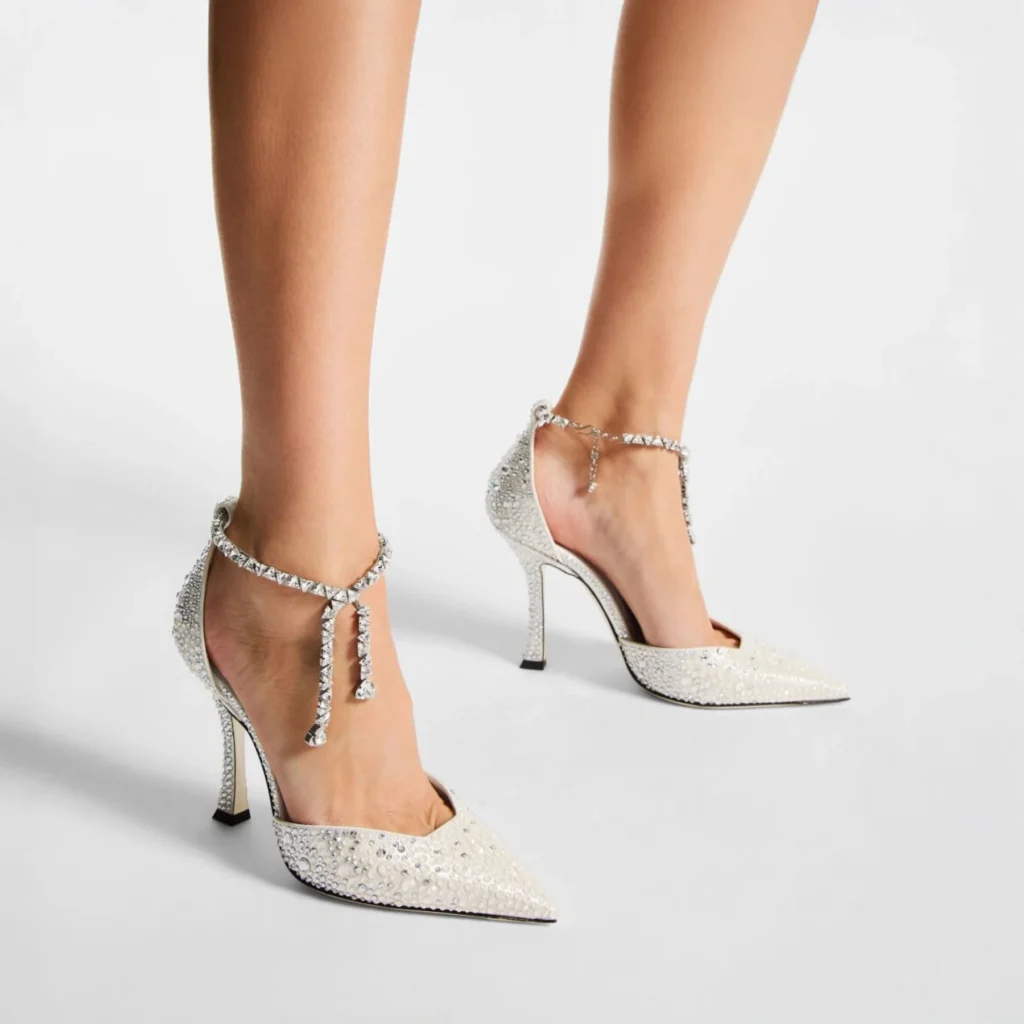
Jimmy Choo Academy doesn’t sell shoes. It builds something harder to measure, but perhaps more lasting. A relationship. A memory. The feeling that the brand has given you something more than just a product.
Education and entrepreneurship in practice
JCA launched in 2021 with two campuses: Mayfair (the heart of London luxury) and Boston Manor. The academic partner is the University of West London, which gives the programs formal weight, with BA and MA degrees in design, branding, and entrepreneurship. The cohort consists of around 60 people, a mix of nationalities and backgrounds. But the most interesting aspect is the commercialization model built into the education:
- Retail Gallery – a physical space where students and graduates exhibit and sell their collections
- E-commerce platform – sales and rental of student projects, real transactions
- Workshops for teenagers (ages 13-17) – early brand exposure before they have money to buy
It’s not about philanthropy. This is a long game: someone who learned to make shoes under the guidance of JCA mentors in high school could be the one designing for the brand a decade later. Or buying from it.
Visibility and cultural capital
JCA graduates debut at London Fashion Week 2025. The brand doesn’t need to spend on campaigns targeting Gen Z. It builds relationships through co-creation. This is soft power in its purest form.
The brand gains more than just customers. It gains ambassadors who remember who taught them the craft.
Results and KPIs
The strategy looks good on paper, but the numbers show whether it really works. In the case of Jimmy Choo, the results from Q2 FY2027 say a lot.
Q2 FY2027
Revenues amounted to USD 146 million, representing an 11.5% year-over-year increase (12.2% in constant currencies). This figure includes about USD 5 million from previous wholesale shipments, so pure retail sales also grew solidly. More importantly: the brand jumped from an operating loss of USD 9 million to a profit of +USD 2 million (margin 1.4%). These aren’t astronomical margins yet, but for a brand in the midst of a turnaround, it’s a truly decent signal.
A short table shows the scale of the change:
| Indicator | Q2 FY2027 | Comment |
|---|---|---|
| Revenue | 146 million USD | +11.5% y/y |
| Operating margin | 1.4% (+2 million USD) | from the previous −9 million USD |
| Customer base growth | +7% y/y | globally |
| POS department stores (N. America) | double-digit growth | weekly sales data |
Who buys and where is POS growing?
The customer base grew by 7% year-on-year across the entire network. Positive signals are coming from POS in department stores in North America (double-digit weekly increases). In product categories, accessories are seeing double-digit growth, as are the casual and dressy lines ( Scarlett, Sacor models). Ambassadors and social media have provided visibility, but the final effect is evident in the sales data, not just in reach.
Goal
Capri Holdings is betting on Jimmy Choo reaching USD 650 million in revenue for the entire FY2027. Long-term ambition? Surpassing USD 800 million and achieving margins in the low teens. It looks optimistic, but with the current growth rate and streamlining of the assortment (fewer models, greater relevance), the goal seems attainable.
Risks, compromises, and how not to dilute brand DNA
Younger clients are an opportunity, but also a minefield for a luxury brand. Jimmy Choo constantly has to navigate between opening up to Gen Z and maintaining the aura of exclusivity that they have built over the years. One wrong move and suddenly you stop being luxury and become just “a more expensive H&M.”
From conspicuous to conscientious
Luxury is changing. It’s no longer just about showing off a logo. Gen Z (and more and more Millennials) are paying for values: sustainability, diversity in campaigns, production transparency. Jimmy Choo has to keep up, but authentically. Overusing AI in design or empty greenwashing? Fickle audiences will spot it in a second, and the brand will be left with the hashtag #JimmyChooIsOverParty.
Competition never sleeps. Fast luxury (Zara, Mango Premium) produces similar styles at a fraction of the price, and DTC brands have direct contact and loyalty. Additionally, younger customers expect constant content, new drops, and fresh campaigns. It’s an exhausting race where it’s easy to lose control of the narrative.
Horizon 2026-2028
Capri Holdings claims that Jimmy Choo could surpass USD 800 million in annual revenue by 2028. It sounds ambitious, but reaching that figure will require several truly well-coordinated moves. It’s not just about more sales, it’s about changing the composition of those sales and the margins, which in luxury are never gigantic.
Growth paths
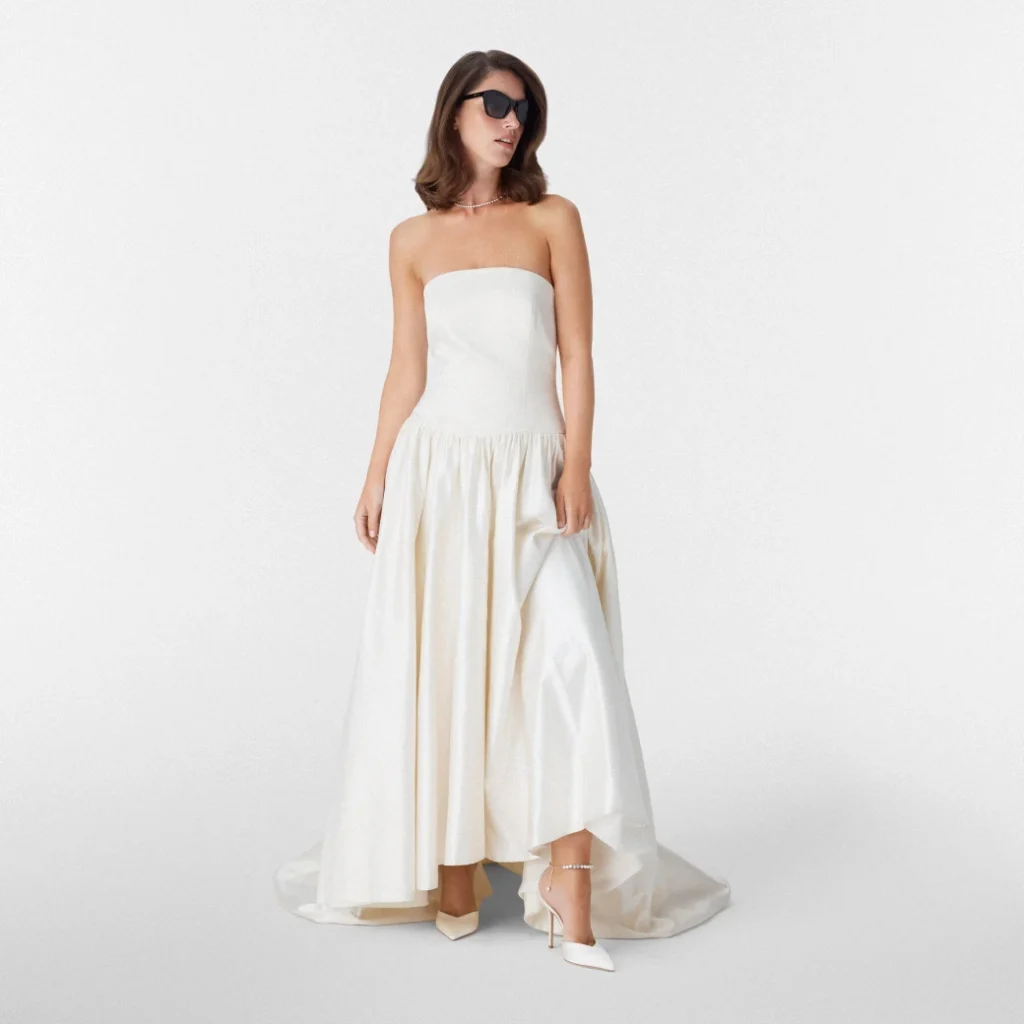
First of all, a continued shift towards casualization. Sneakers, loafers, small crossbody bags are categories that younger customers purchase more often than one-time wedding heels. Jimmy Choo is building ” wardrobe staples,” items you wear every week, not just once a year.
Secondly, channels. TikTok is now the main mood board for Gen Z, so the brand needs to live there, not just “be present.” The potential of AR (virtual try-ons) and personalization (monograms, color configurators) can boost online conversion without lowering margins through discounts. Collaborations with young content creators who have genuine credibility in fashion are another key element of the mix.
Geography matters too. Strengthening sales in North America and Europe is essential, but Asia, especially Southeast Asia, offers greater growth potential. Local ambassadors, content in local languages, and an understanding that luxury in Bangkok looks different than in Milan.
Conditions for reaching 800 million USD+
Achieving the goal requires a higher share of accessories and casual footwear (higher volumes, lower unit margins, but better capital turnover). EBIT margins will likely remain around 10-12%, not more, as the brand needs to invest in digital and content. The key will be maintaining a premium perception despite greater availability, which sounds like a contradiction, but some (see: Bottega after the strategy change) manage to succeed.
What can others learn?
- Authenticity beats status: younger customers don’t buy “because it’s luxury,” but because the brand fits their identity.
- Experiences matter more than display: an event in an art gallery delivers more retention than a billboard.
- Data plus culture equals demand plus loyalty: algorithms tell you what, but only people know why.
- Education and talent pipeline: investing in training and internships is not just CSR, it’s about building goodwill and access to future creators.
Now the question remains whether Capri will remain patient long enough for this plan to come to fruition.
Elegance that matures with youth
Jimmy Choo proves that luxury doesn’t have to choose between heritage and freshness. The brand skillfully combines classic elegance with modern communication codes, reaching younger clients without giving up what has built its prestige for decades. It’s a balance that requires intuition: too much tradition repels millennials and Gen Z, too much trend destroys authenticity.
You can see a broader pattern here for the entire premium segment. The brands that will survive are those capable of speaking several languages at once. Jimmy Choo shows that it can be done without desperation and without diluting identity.
Younger customers are buying not just a product, but participation in a narrative they help create. And that’s exactly what Jimmy Choo offers them.
Ursux
High editorial staff