
Prada S.p.A. was founded in 1913 in Milan, when brothers Mario and Martino Prada opened a store in the Galleria Vittorio Emanuele II. At that time, they sold leather trunks and travel accessories, sturdy and practical. Back then, no one thought of luxury as minimalist aesthetics.
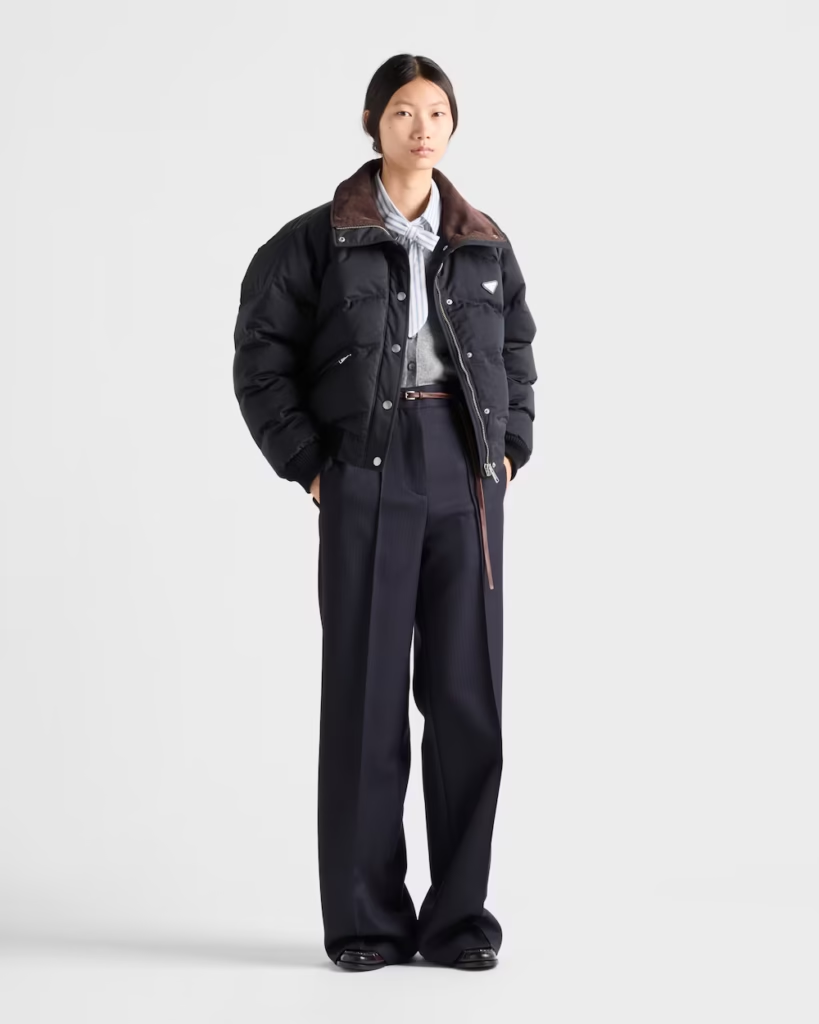
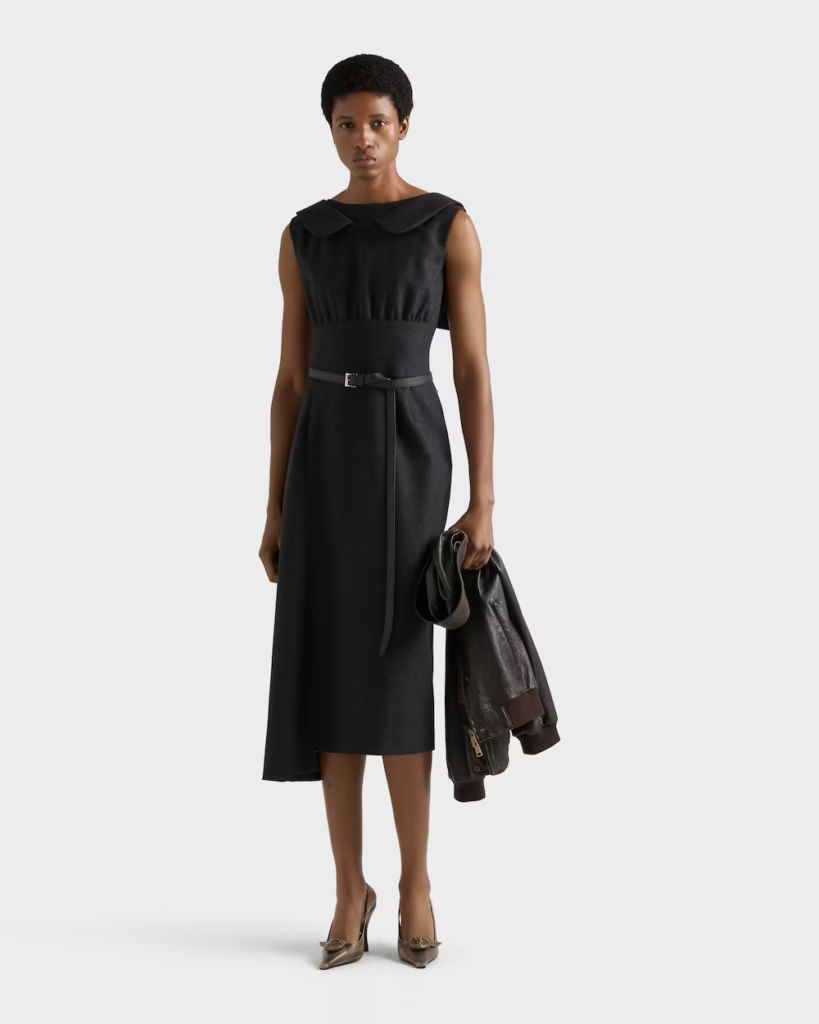
What sets Prada apart today is precisely this “quiet luxury” philosophy—luxury without shouting. Instead of oversized logos and obvious extravagance, the brand has embraced intellectual minimalism and practicality. The “ugly chic” concept they introduced in the 1990s was revolutionary, as it demonstrated that true luxury is not about flawless beauty, but about creativity and quality of craftsmanship.
The most interesting? The real breakthrough turned out to be ordinary nylon. Introducing this material, associated with utility, into the world of high fashion changed the way people thought about status. Practicality became a luxury, and material innovation merged with conceptual design.
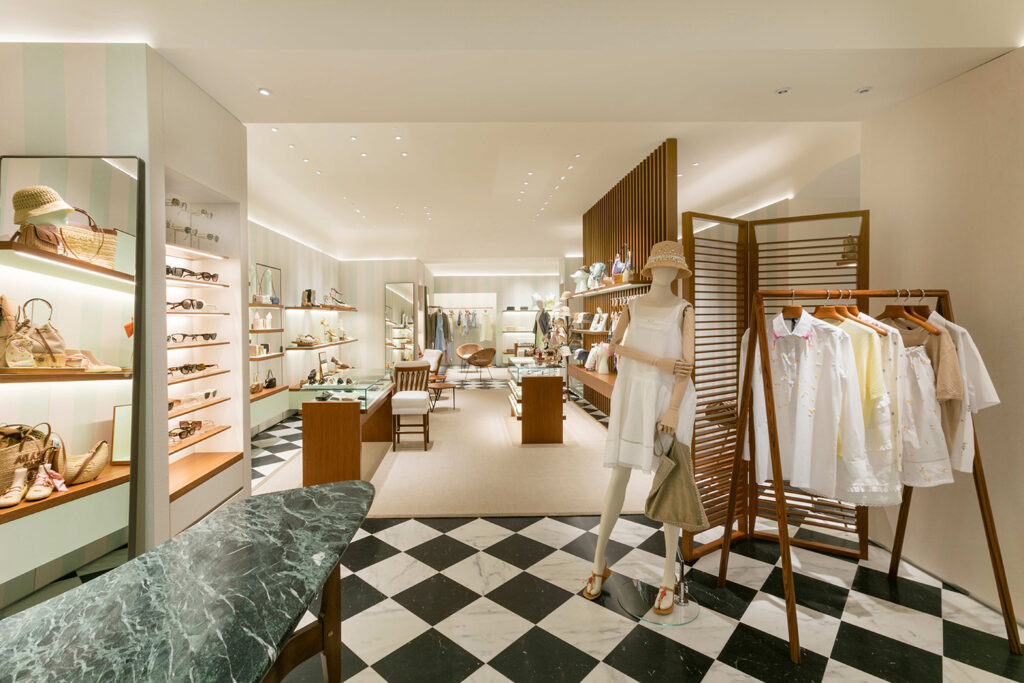
In the following sections, we will take a closer look at specific materials (nylon, Saffiano), the brand’s iconic symbols, and its cultural impact, which extends far beyond the world of fashion.
Materials that have become icons
Miuccia Prada knew that true innovation in luxury is not just about the cut or the brand. It’s the material you wear every day. And this is where Prada redefined itself, three times over.
Nylon that changed luxury
In 1984, Miuccia introduced something that sounded like heresy in the world of haute couture: black military-grade Pocono nylon. The “Vela” backpack made from this material was a breakthrough. Lightweight, about 50% lighter than leather, and completely waterproof. For many, it was a shock—luxury without shine, without a logo, without traditional leather. But it was precisely this functionality, this freedom of wear, that made nylon a synonym for modern elegance. A material previously reserved for parachutes suddenly became the signature of a brand worth billions.
Re-Nylon
In 2019, Prada took it a step further, in collaboration with Aquafil. Re-Nylon is nylon regenerated from:
- fishing nets retrieved from the oceans
- old carpets and textiles
- industrial waste
Importantly, the material can be recycled infinitely without any loss of quality. The results? Producing 10,000 tons of Re-Nylon saves around 70,000 barrels of oil and reduces emissions by 57,000–65,000 tons of CO2. This isn’t greenwashing; it’s a real transformation of the production chain.
Saffiano
Saffiano leather is another cornerstone. The technique of embossing under high pressure and temperature creates a distinctive crosshatch texture that is virtually resistant to scratches and water. Here, durability meets visual lightness. Saffiano has become synonymous with Prada’s durability, the handbag can last for years and still look like new.
Material innovation combined with functionality—that’s the signature of this brand.
Aesthetics and symbols
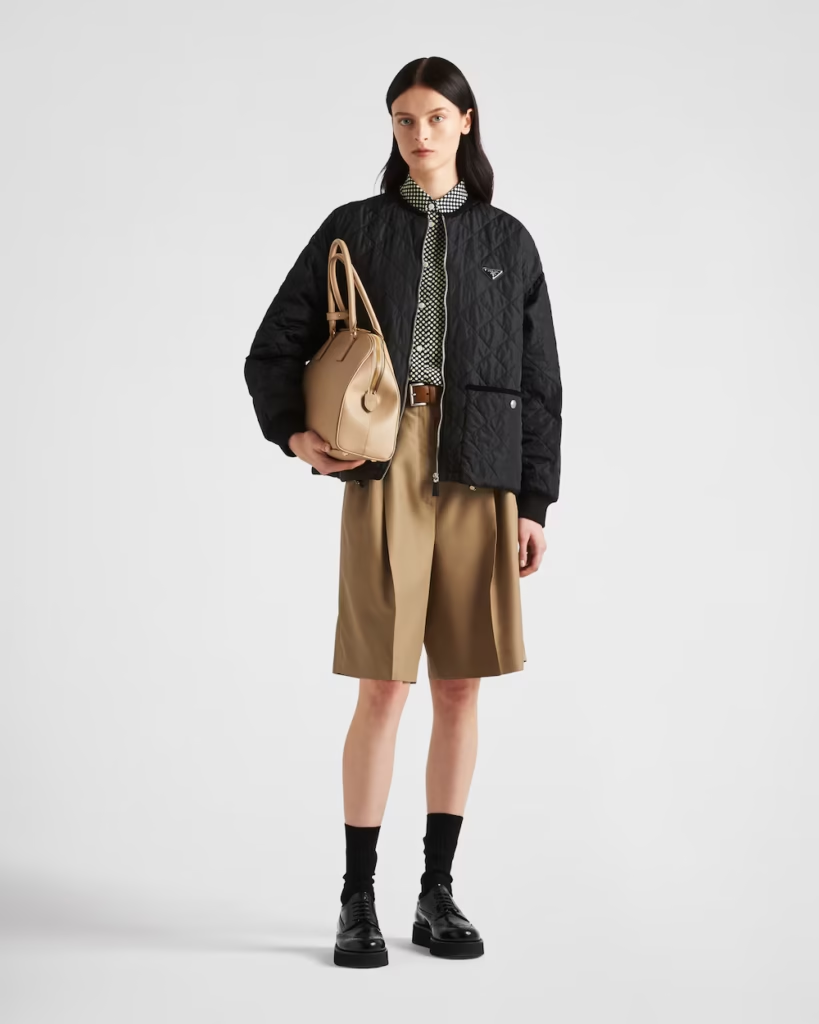
The Prada logo is one of those symbols that doesn’t shout, yet everyone recognizes it. The inverted triangle of enameled metal, the inscription ” PRADA MILANO DAL 1913 ” — simple, elegant, self-assured. Interestingly, this triangle is no coincidence. It dates back to the time when the fashion house was a supplier to the House of Savoy (since 1919), and heraldic motifs appeared in the brand’s imagery. Today, it’s a sign of luxurious understatement.
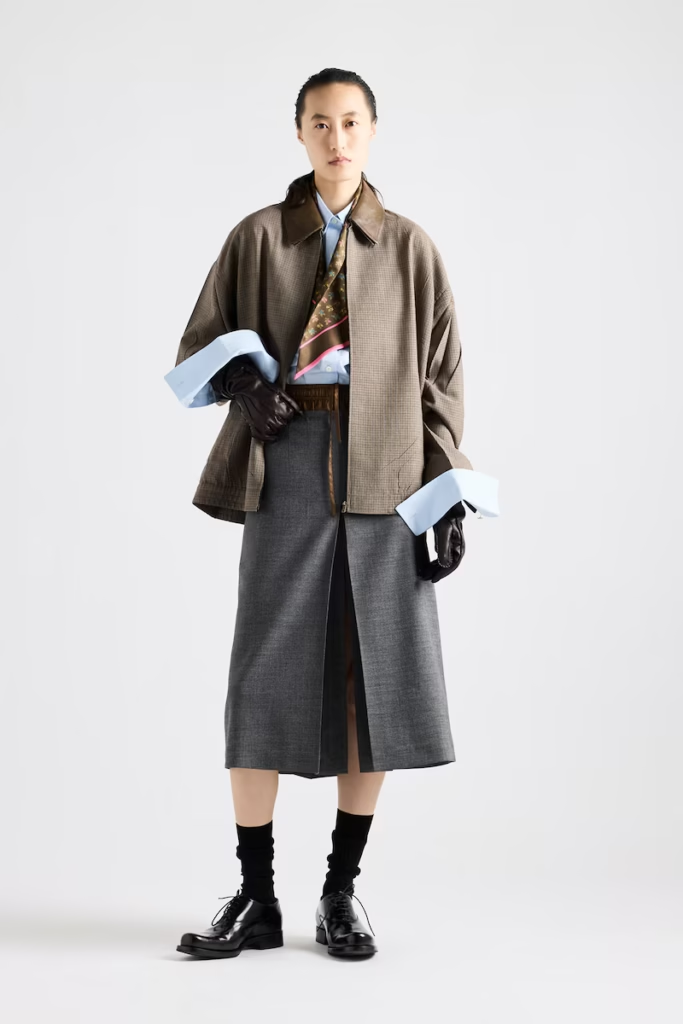
“Ugly chic” as the new code of elegance
Prada has defined something that sounds like an oxymoron: a deliberately unobvious aesthetic. Miuccia Prada opted for proportions that shouldn’t work, boxy cuts, non-intuitive color combinations, minimalism with a quirky detail. And this is exactly what became the status codes. Instead of shouting with logos, Prada communicates luxury through “ugly” elements that require an understanding of context. This isn’t beauty for everyone—only for the initiated.
Main principles of this aesthetic:
- Proportions that balance on the edge of awkwardness
- The colors seem boring, but in unconventional combinations
- A discreet yet distinctive detail (e.g., this triangle)
Miuccia and the language of the brand
Miuccia Prada (PhD in political science, background in mime) joined the family business in the 1970s and transformed it into an intellectual fashion project. Since 2020, she has been co-creating collections with Raf Simons, resulting in an intriguing mix of her minimalism and his street-inspired approach. Together, they craft an aesthetic that communicates more through understatement than through declarations.
Products that made history
The fame of Prada? It’s not just slogans and concepts. It’s tangible products that we wear, recognize on the street, and that have changed the rules of the game in luxury.
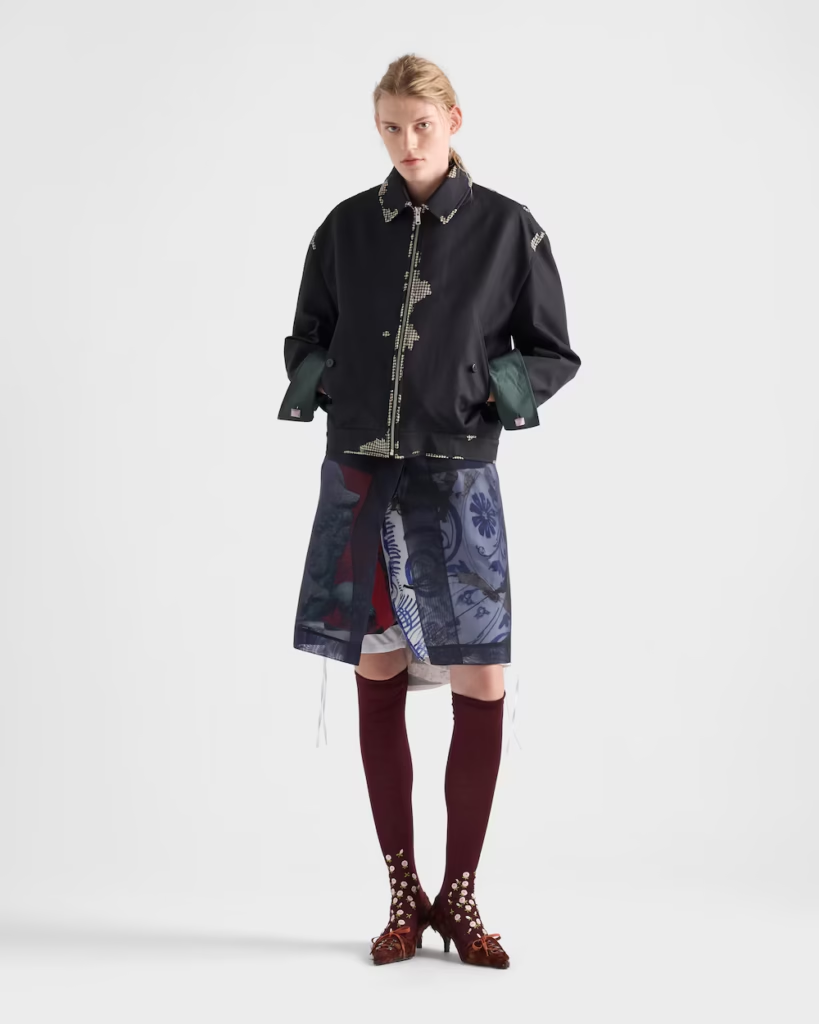
Vela and nylon that conquered the world
In 1984, the Vela backpack made its debut in black Pocono nylon. Sounds ordinary, right? Yet this very material, previously reserved for parachutes and military gear, turned out to be revolutionary. The following year, Miuccia Prada released the classic nylon handbag with the triangular logo. Everyday luxury without shouting, practical and durable. In the 1980s, it was a shock—today, it’s a hallmark of the brand.
Linea Rossa and Galleria
1997 brought Prada Sport, also known as Linea Rossa with its red stripe. A technical sports line that anticipated the entire athleisure boom by a good dozen years. Then came 2007 and the Galleria bag made from Saffiano leather. A structured shape, perfect for the office and the city. This model remains a bestseller.
Contemporary hits and licenses
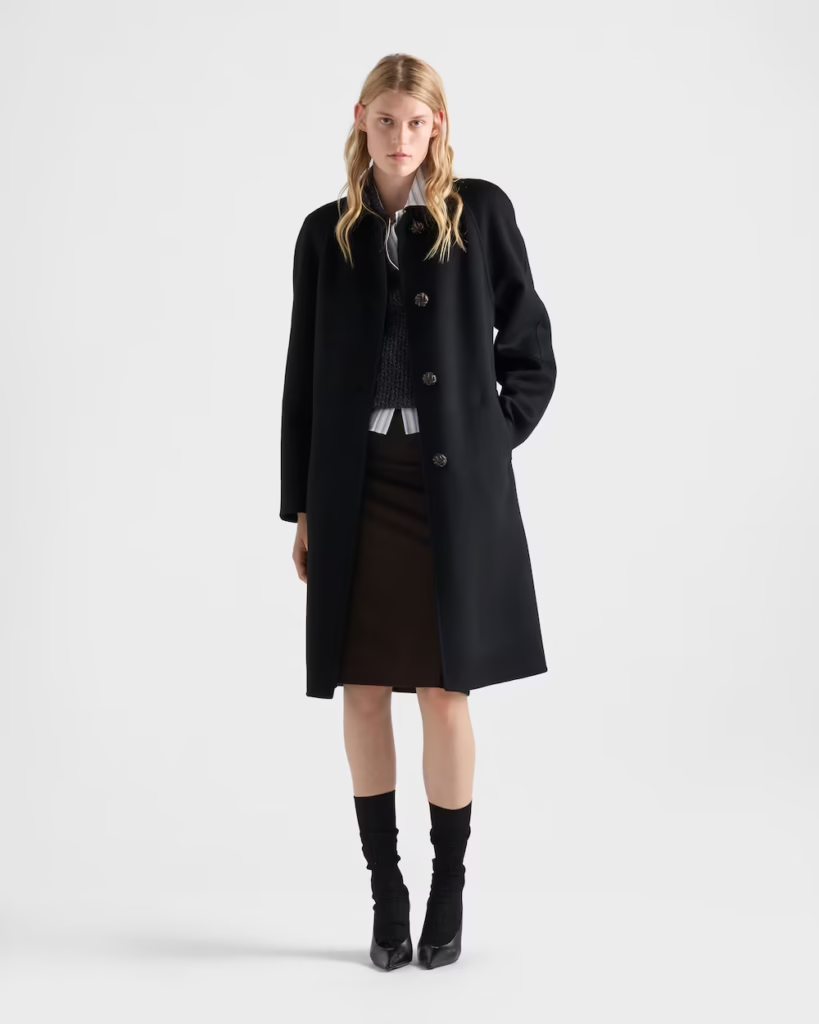
The list of icons is growing:
- Monolith loafers (the ones with thick soles) – Instagram loves them
- Glasses by Luxottica – street style icons
- Perfumes: “Candy” (L’Oréal), “Luna Rossa” – recognizable fragrances
- “Eternal Gold” Jewelry – a new premium segment
Popularity breeds counterfeits. Buy from official stores or authorized multibrand retailers, because imitations are everywhere. No need to panic, but it’s better to be safe than sorry.
Cultural and market impact
Prada is today more than just fashion; it is a brand that builds museums, designs stores with star architects, and achieves results that make your head spin. But with great power comes responsibility, and that hasn’t always gone smoothly.
Fondazione Prada and dialogue with art
Founded in 1993, Fondazione Prada was intended from the start to be more than just a corporate showcase. Its permanent headquarters in Milan, opened in 2015, occupies a former distillery; the project by Rem Koolhaas and OMA is a blend of raw concrete, the gilded “Tower” ( also known as the Haunted House), and exhibition halls that have hosted works by Jeff Koons, Damien Hirst, and Carsten Höller. In Venice, the foundation operates in Ca’ Corner della Regina. This is not art sponsorship for PR purposes, but an authentic dialogue: fashion borrows concepts from art, while art receives a stage from fashion.
Architecture that sells ideas
Stores “Epicenter” in New York (2001, Koolhaas/OMA) and Tokyo (2003, Herzog & de Meuron) changed the game. It was no longer about shelves and mirrors, but about the experience. The space itself became the product, which aligns with Miuccia’s philosophy, who has long emphasized that fashion is material culture.
Market scale and challenges
The numbers are impressive:
- Revenues 2025: approx. 5.72 billion euro (+9% y/y)
- H1 2026: approx. 3.05 billion euros (+16% y/y)
- Miu Miu: dynamic growth of approx. +35% in 2025
- Acquisition of Versace: approx. 1.25 billion euros (closed XII.2025)
- CEO Andrea Guerra since 2023
But growth requires vigilance. Prada conducted over 850 audits in Italy, severing ties with more than 200 suppliers (the “zero tolerance” policy). In 2018, the Pradamalia case (blackface allegations) ended with the collection being withdrawn and diversity training implemented. In 2025, controversy over sandals inspired by kolhapuri led to acknowledgment of the source of inspiration, dialogue with manufacturers from India, and a plan for a limited “Made in India” edition (approx. 800-930 USD). Not ideal, but at least a response.
What remains
If there were one word to describe Prada, it would probably be “independence.” It is this consistent refusal to conform to expectations, combined with a rare ability to anticipate rather than follow trends, that has made the brand a benchmark for the entire industry. Nylon, minimalism with a touch of ugliness, bold combinations of colors and patterns—each of these elements might have seemed like a risky move, yet turned out to be a perfect hit.
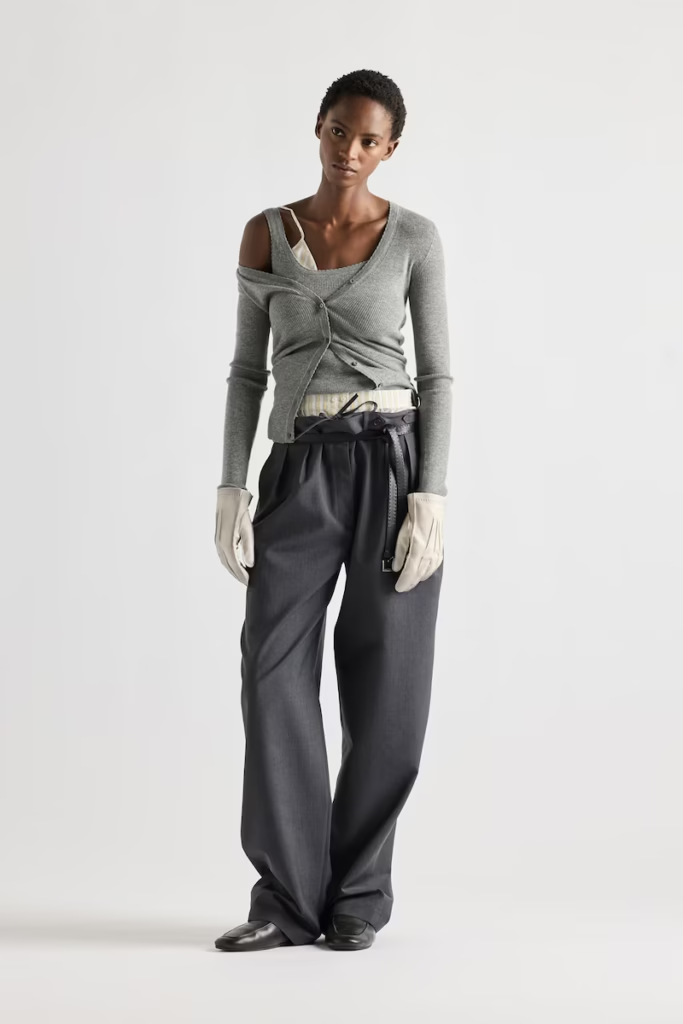
In a world where luxury often means repetition and safe choices, Prada has chosen the more challenging path. And that is precisely why its influence extends far beyond just clothes or bags. It’s a matter of attitude that defines modern luxury as more than just status—as an expression of one’s own point of view.
The essence of Prada’s fame does not lie in a single product, but in the courage to be oneself, even when it means going against the tide.
Elen
editorial inspirations
High Class Fashion