
Burberry has existed since 1856 and over all these decades has built a reputation as a luxury brand that can be recognized from afar. The problem? That’s exactly why counterfeit Burberry scarves, trench coats, and bags have flooded the market like few other brands. The popularity of the check is both its blessing and its curse.
Quick red flags
Before we get into the details of specific products, it’s worth knowing the basic warning signs that apply universally:
- A price too good to be true – a genuine Burberry trench coat costs several thousand zlotys, not just a few hundred
- Printed pattern instead of woven (the check should be tactile from the back of the fabric)
- Misaligned check lines on the seams – originals have a perfectly matched pattern at the joining points
- Font errors, blurry text or typos in the logo (happens more often than you think)
- Light and hollow-feeling hardware – metal in counterfeits often sounds dull, while in originals it is more solid
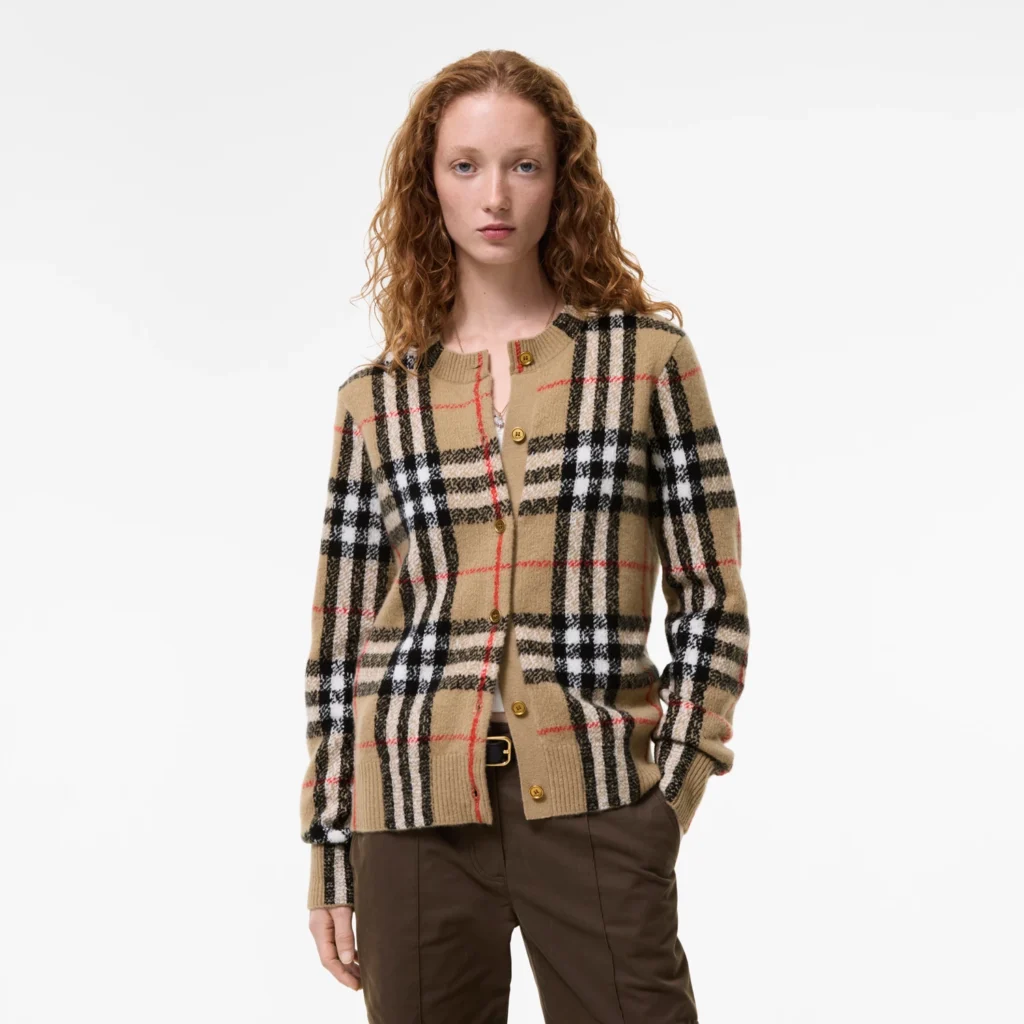
Important thing: authenticity is always the sum of consistent elements. No single detail gives one hundred percent certainty. That’s why the following sections will show you how to thoroughly check the logo, labels, and check, and then we’ll go through tests for specific products.
DNA Burberry
Authentic Burberry speaks its own language. You just need to learn how to read it, which is not that difficult at all.
Name and marks
First, the name. If you see “Burberrys” (with an “s” at the end) on the label, don’t panic—this was the original designation used until 1999. Then the brand underwent a rebrand and became simply “Burberry.” Both versions can be authentic; it’s just a matter of era.
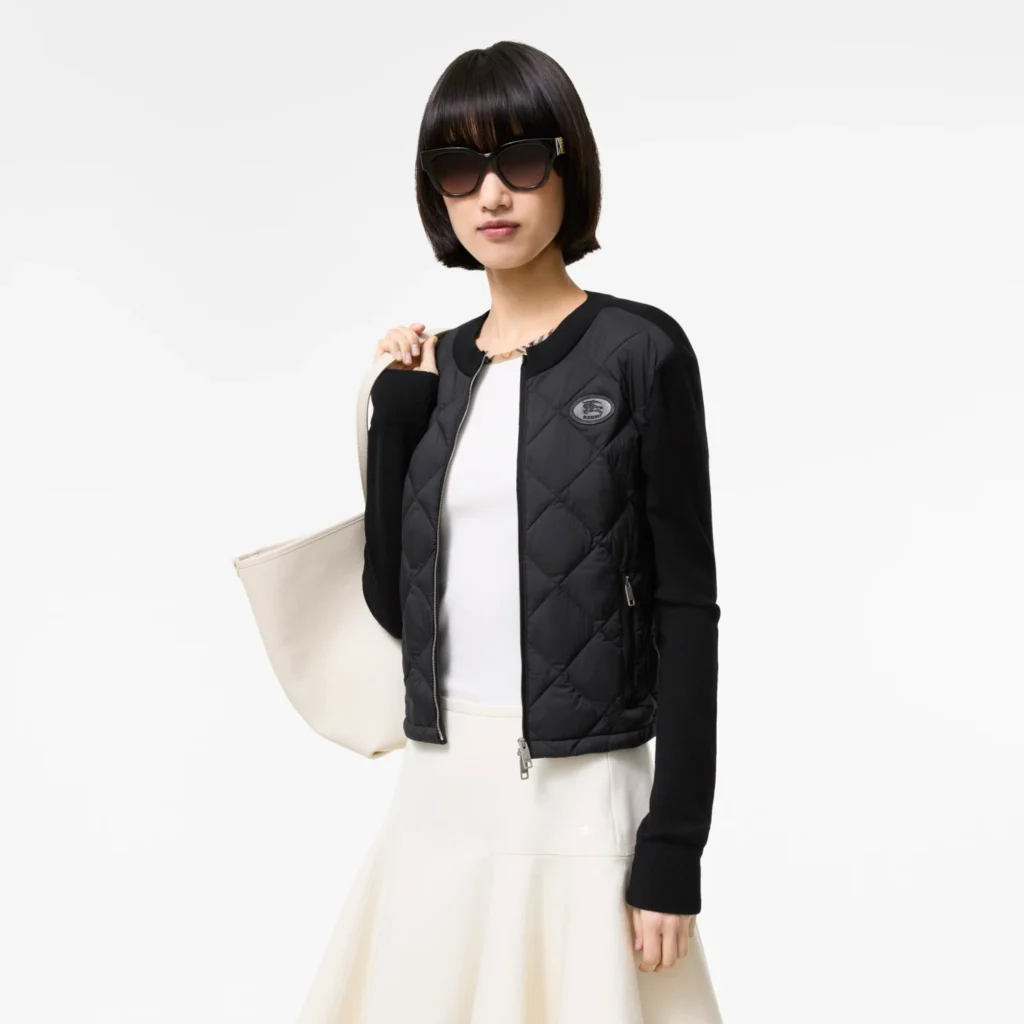
The EKD logo features a knight on horseback, facing left, with the motto “Prorsum” (Latin for: forward). The details have changed over the decades, but it should always be sharp, legible, and crafted with high-quality embroidery or embossing. Since 2018, the TB monogram (Thomas Burberry) has also appeared, featuring distinctive interlocking letters. If you notice blurred outlines or uneven stitching, something is off.
Tags and typography without missteps
Original Burberry clothing usually has several labels:
- Main neck label (with brand name)
- Label on the side seam (material composition)
- Internal tag in the pocket (production codes, batch)
Check the kerning and centering of the text. No typos, crooked lettering, or strange spacing between letters. The font should be even and professional. Sometimes it’s these small typographical errors that reveal a counterfeit faster than anything else.
Check
The check pattern must be woven, not printed. That’s fundamental. The colors should be muted (beiges, blacks, reds), the line proportions precise, and the symmetry at the seams perfectly matched. Burberry mainly uses three variants: Nova, House, and Haymarket. In the latter, you’ll often spot a small knight at the intersections of the red lines, which is an additional mark of authenticity.
If the check pattern looks like a print or the colors are too bright, skip it. The original stands out for its weaving quality, which counterfeits simply can’t replicate without production costs approaching… exactly, those of the original.
Iconic trench coat
Burberry trench coat is one of the most frequently counterfeited garments in the world, and the reason is simple: the design hasn’t changed for decades, so a fake ” looks like the original”. But the devil is in the details, which require expensive tailoring, and that’s where the fakes fall apart. Here’s a list of things I check on the coat in person.
Gabardine and collar
The real gabardine (invented in 1879, patented in 1888) is a special dense twill weave, matte, and compact to the touch. Water literally beads up on the surface; the fabric is neither papery nor stiff. If you pinch a piece between your fingers, you’ll feel its weight and solid character. Imitations are made from much lighter polyester, which softens like cellophane.
The collar consists of about 180 hand stitches that form its distinctive curve. The stitching is even and dense, allowing the collar to hold its shape on its own. If the collar lies flat or droops, that’s a warning sign. The original “stands” upright, even when the coat is hanging on a hanger.
Military details and lining
Here is the essence of the test. Check:
- Epaulettes on the shoulders (originally for officer insignia)
- Storm flap on the right shoulder and back
- Gun flap above the right pocket (buttstock protection)
- Metal D-rings at the belt
- Belt with genuine leather buckles, not plastic ones
- Back slit with button/tab (not just Velcro)
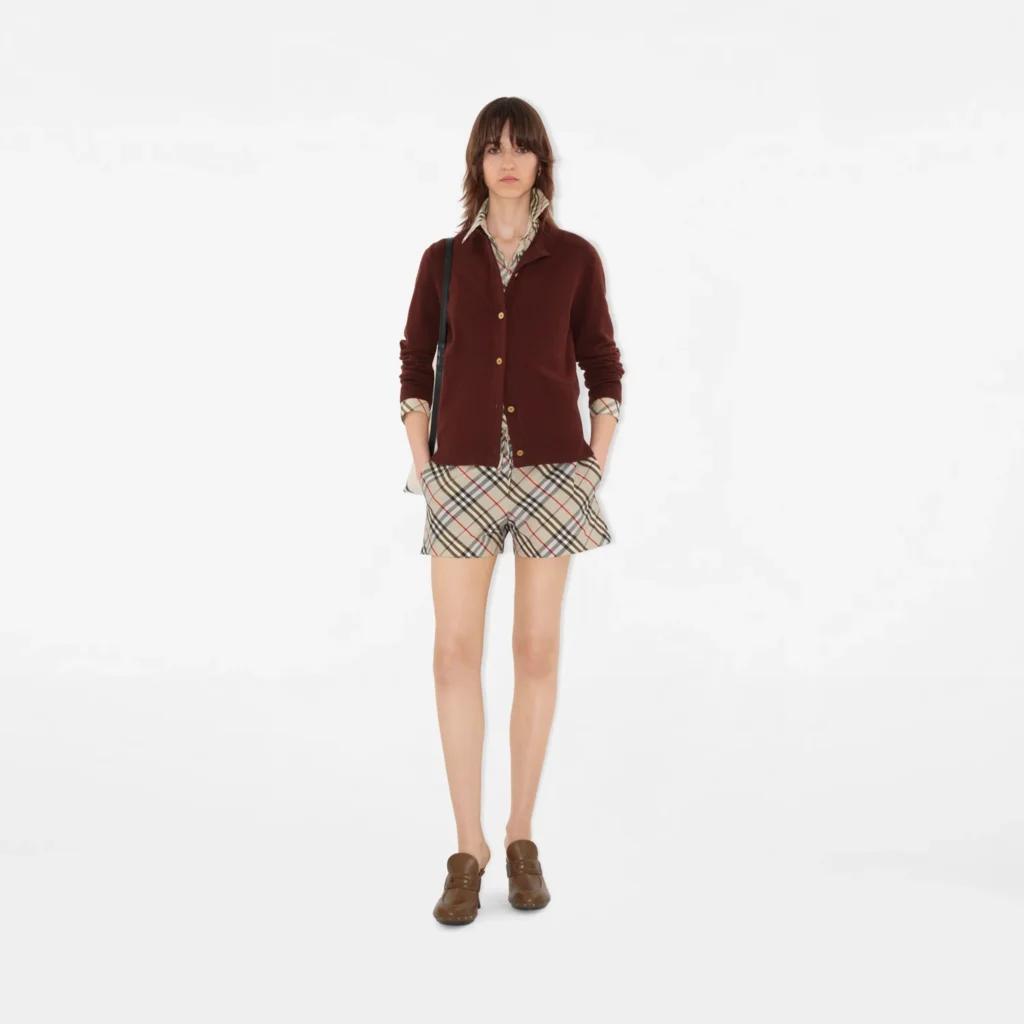
The check lining must be woven, not printed, and should align perfectly at the seams: back, shoulders, pockets. If the pattern dances around chaotically, it’s a sign of cheap workmanship.
Buttons, sewing, labels
Buttons are made of resin or horn-like material, convex, with a double engraving of “BURBERRY” or “BURBERRYS” (older models). The engraving is deep, sharp, and not blurred. Stitching around the buttons is even and tight.
Internal labels: usually three (at the neck, in the side seam with the composition, in the pocket with the batch code). No typos, fonts consistent with the production era. If something is crooked or the font looks odd, that’s a red flag.
All these elements must work together. One cool detail is not enough; counterfeits sometimes copy the buttons or the check, but the rest gives them away.
Scarves and handbags
Cashmere scarves and logo bags are among the most frequently counterfeited Burberry products. Why? Because they are relatively cheaper than the trench coat, and the demand for them is enormous. But that’s exactly why it’s worth knowing a few simple tests that will clear up any doubts in just a few seconds.
Scarves
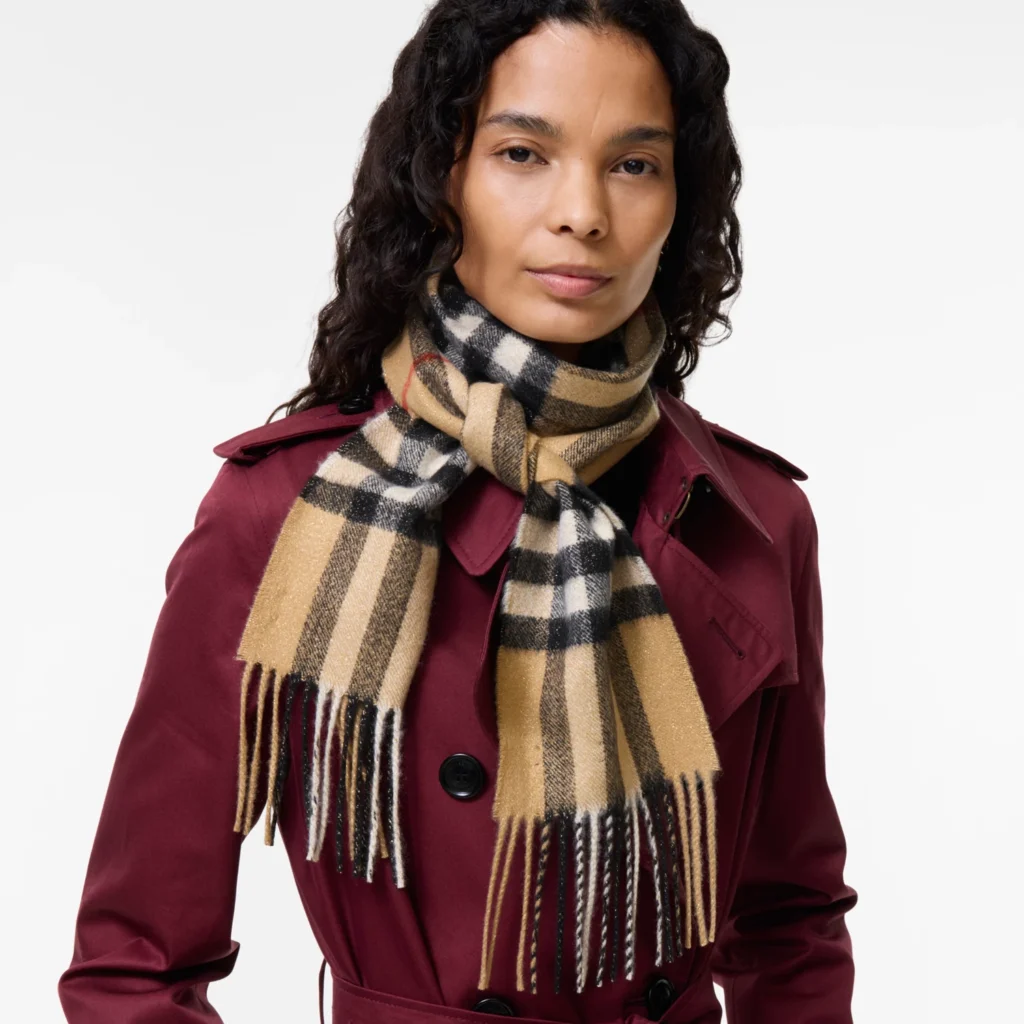
Touch the material. Cashmere from Burberry is smooth, soft, doesn’t scratch or leave fibers on your hand. The lines of the check pattern should meet perfectly, with no shifts or asymmetry. Now the fringes: on the original, they are thick, twisted, of equal length (up to 7.5 cm), and the colors of the fringes blend seamlessly into the check without sharp tonal differences. The label? It should display “Burberry London” or ” LONDON ENGLAND “, the composition with cashmere content, and the product code. The knight embroidery (EKD) must be clear, facing left. If the logo is blurry or threads are sticking out, walk away.
Bags
Pick up the bag and feel the weight. The hardware on the original is heavy, metal, and the zippers or clasps move smoothly without sticking. The “BURBERRY” engraving should be deep, even, and the font should match the brand’s identity (not too thick, not too thin). Check the edges: the stitching should be straight and dense, with no glue marks or loose threads. Inside, the plaque or metal patch is centered, and the lining is made of quality material. On the Haymarket check canvas, the pattern is woven, the colors are muted (not bright oranges), and at the intersections of the red lines, you can spot a miniature knight. That’s a sign you have an original.
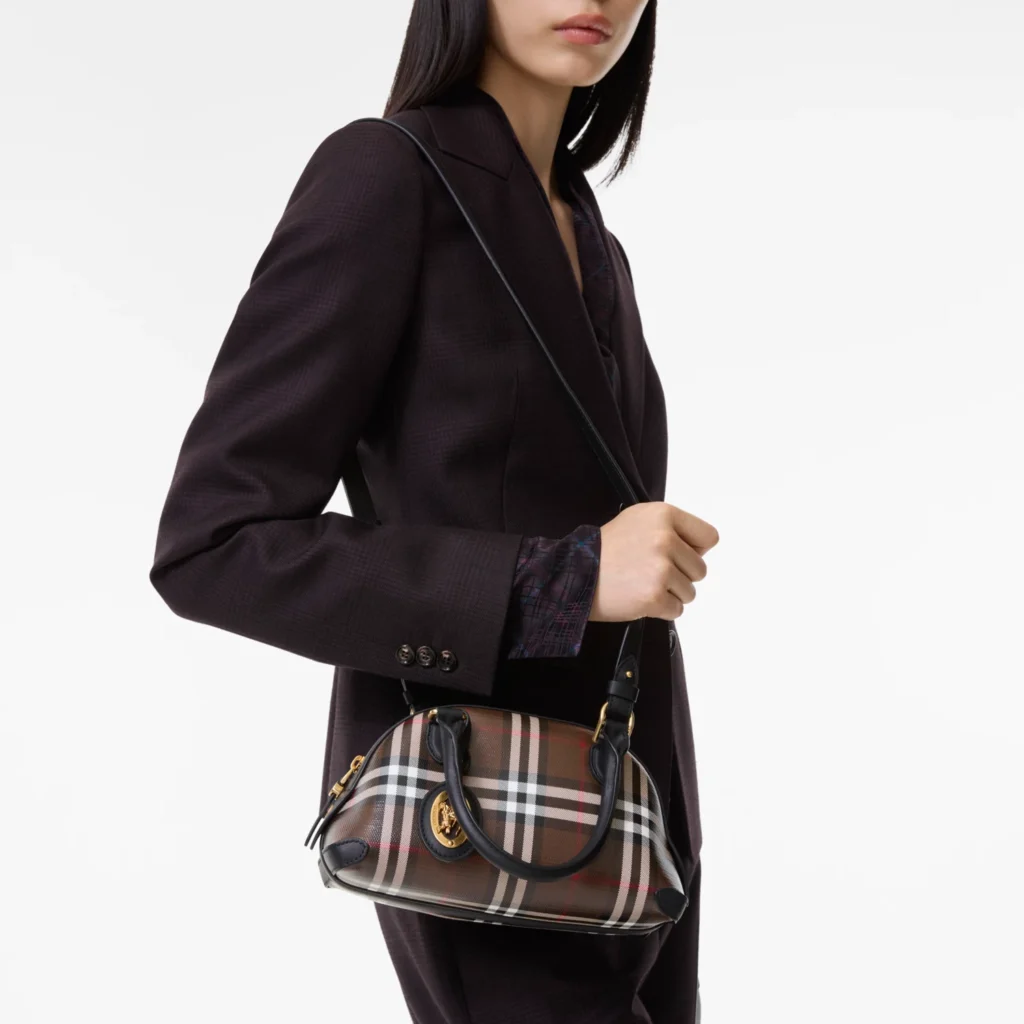
Details never lie. Fringes, seams, engraving. Everything has to be perfect.
How to recognize an original Burberry?
Buying on the secondary market is a gamble, unless you know where to look. The official Burberry store (physical or online) is the safest option, but as we know, the prices can sting. Reputable platforms with authenticity programs (like Vestiaire Collective or The RealReal) offer a money-back guarantee if something isn’t right.
Avoid listings without photos of details, sellers with no transaction history, and “bargains” that are 60-70% cheaper than the market price. These are almost always traps.
“Made in” at Burberry
The “Made in China” label does not mean fake.
- United Kingdom: trench coats (the Castleford factory has been operating since 1972), Scottish scarves.
- Italy: handbags, leather accessories.
- China, Spain, Portugal: ready-to-wear (RTW), canvas, accessories.
Counterfeits often have labels without multilingual composition information ( Burberry prints at least 3-4 languages) or typos in the codes. Authentic tags are made of thick, matte fabric with clear printing. Paper stickers instead of woven labels? Red flag.
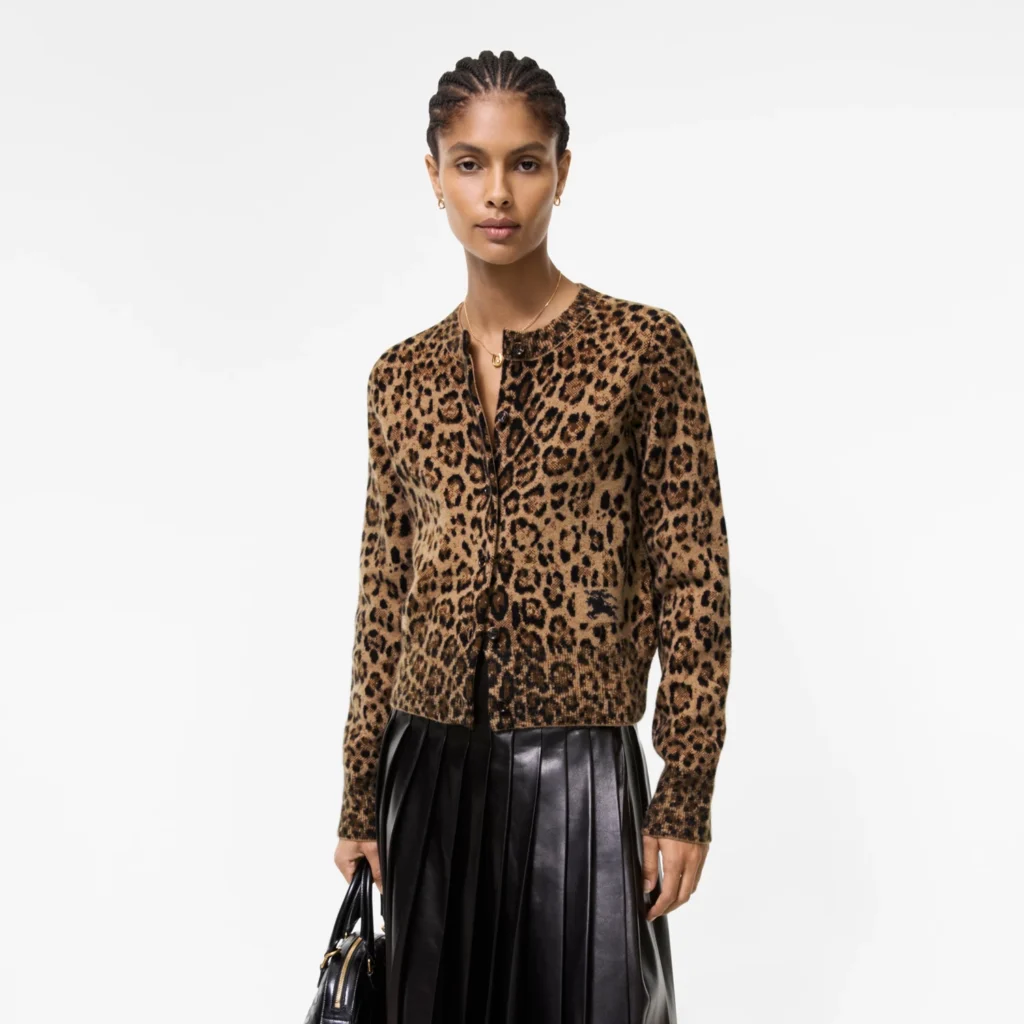
Documents, price, support
Originals come with premium-quality boxes and tags, without smudged fonts or crookedly attached barcodes. The numbers on the tags must be internally consistent, with no typos. The pattern (e.g., check) should align at the seams. A price far below the market average is a red flag.
For major purchases, it’s worth paying for external authentication ( online services like Entrupy or Legit Check App). Request detailed photos: engravings, stitching, close-ups of labels. Compare them with official brand photos.
The key is consistency of all information. If something feels off, it’s better to let it go.
Authenticity is peace
The real Burberry is not about individual details, but the harmony of the whole. Just as counterfeits may have a well-replicated logo or check pattern, there will always be something off when you look at the combination of fabric and lettering, or the stitching and finishing. Authentic pieces simply “make sense” when you look at them as a whole; you don’t feel that contradiction between the material and the craftsmanship.
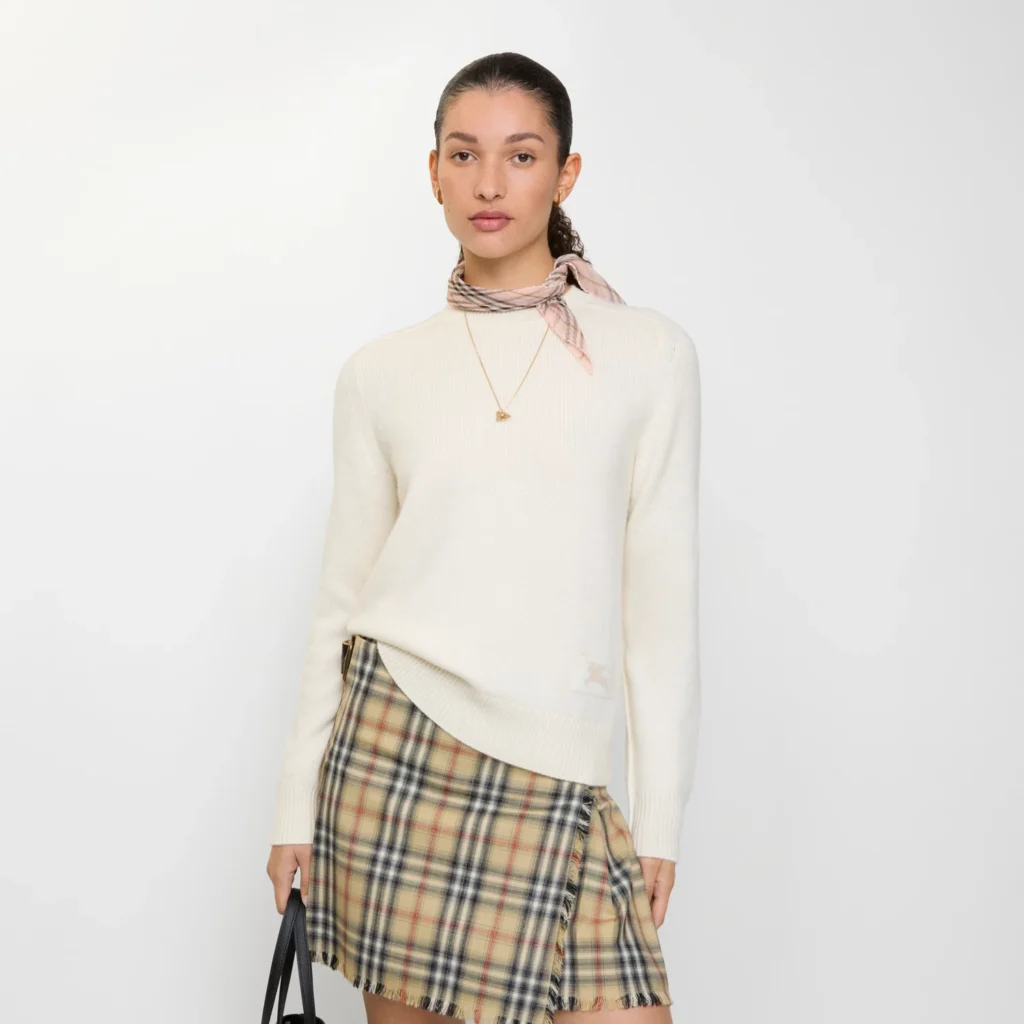
It’s a bit like with people who lie. You can master individual elements of the story, but the whole thing still won’t be completely coherent. It’s the same with counterfeits: you can read a thousand guides on how to spot a fake, but the most reliable signal is still that feeling that something just doesn’t add up. Trust that first impression.
Therefore, if a purchase raises doubts, don’t be afraid to let it go. An authentic item should bring peace of mind, not constant checking and googling “how to verify authenticity.” If you can’t stop scrutinizing the details even after buying, that’s probably telling you something.
Lori Lori
editorial staff High Class F