
Seventy percent of people worldwide struggle to keep up with the pace of technological change. VML demonstrated this in its latest study, and this very number explains why we so eagerly turn to visions of the future that… have already been created before. It’s a bit like returning to a home we never actually had.
What exactly is premium retro-futurism?
In short: it’s a combination of how people in the 50s, 60s, and 70s imagined the future ( Space Age, art déco, streamline moderne) with today’s technology and noble materials. We’re talking about chrome, polished steel, metallic fabrics, vinyl. Classic cuts known from premium tailoring get a futuristic twist that makes them look fresh, yet familiar at the same time. Comforting futurism, as some call it.
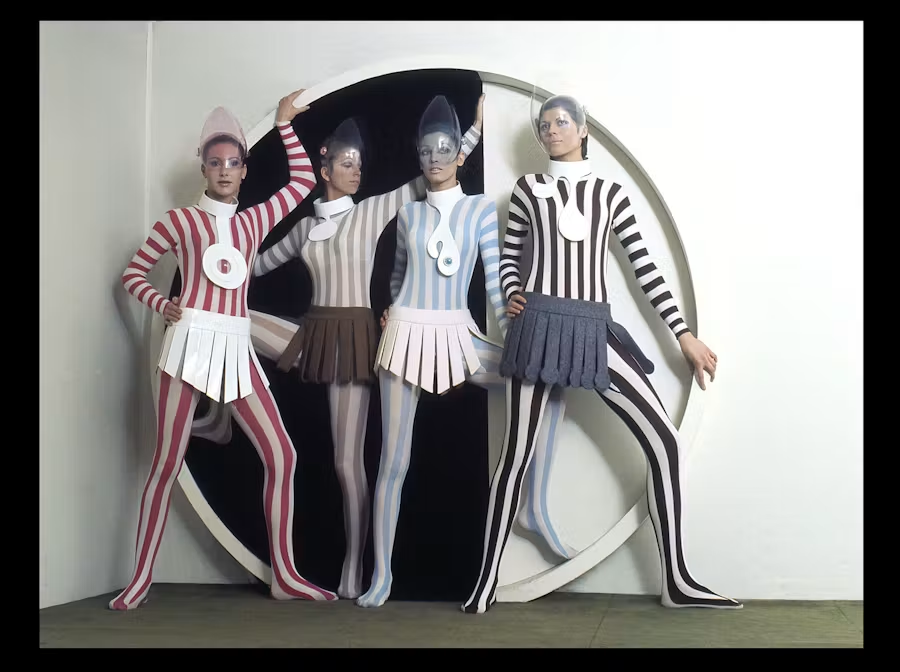
This is not just ordinary nostalgia. It’s thoughtful design that takes timeless forms and adds something that makes them fit perfectly in 2024 and beyond. In the following sections, you’ll discover the full story behind the phenomenon, the language of forms and materials, the latest trends for 2024–2026, Polish inspirations, and concrete design principles. Because it’s worth knowing where it all comes from and how to apply it.
From Art Deco to Space Age
Actually, it all began even before the war, when the world went crazy for technology and progress. The world exhibitions at the end of the 19th century already showcased a future full of glass, steel, and electricity. And then art déco in the 1920s and 1930s took those forms and added luxury, geometry, and a belief that machines could be beautiful. Streamline moderne with its aerodynamic shapes? It’s all the same fascination with what is yet to come.
Milestones
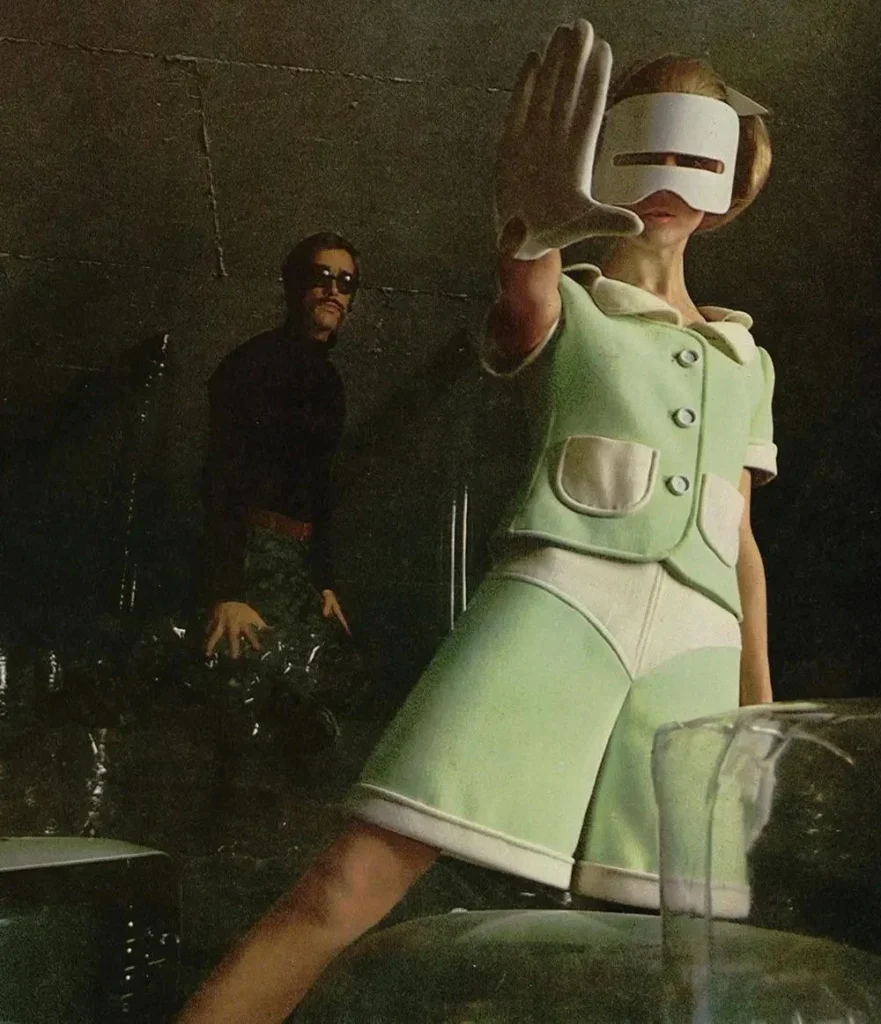
The real boom came in the 1950s and 60s, when rockets really started to fly. Sputnik in 1957, man on the Moon in 1969. Suddenly, the future was no longer science fiction—it needed to be given shape. And that’s when the designers stepped in:
- André Courrèges (1964, “Moon Girl” collection): white jumpsuits, flat boots, miniskirts resembling astronaut suits.
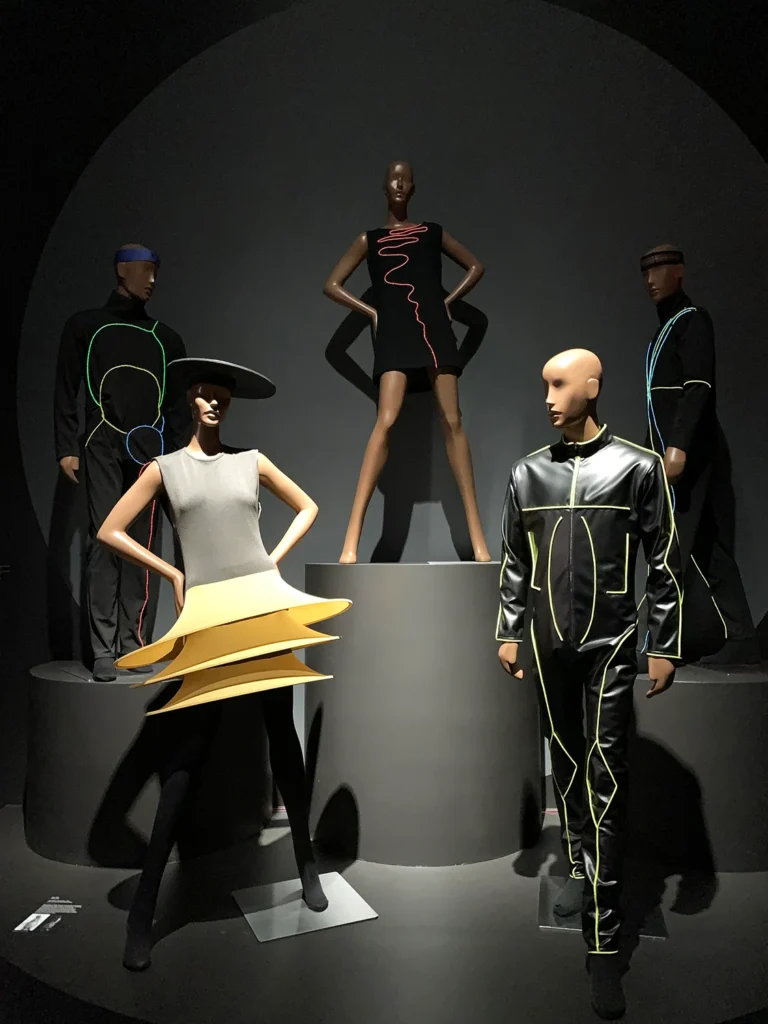
- Pierre Cardin: created the “cosmocorps,” even designed for NASA in 1969; everything geometric, futuristic, metallic.
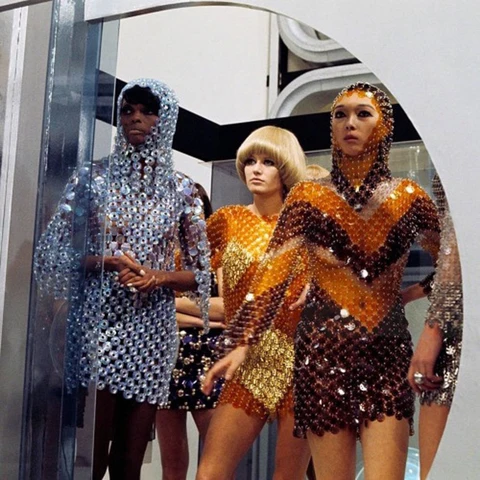
- Paco Rabanne: dresses made of plastic and linked metal discs, as if the future were meant to be light and shiny.
In design, it’s similar: Eero Saarinen gave us the Tulip and Womb chairs (organic, yet space-age), Verner Panton created entire rooms out of plastic, Eero Aarnio suspended people in the Ball Chair as if in a spaceship capsule.
How did the trend get its name and what happened next?
Lloyd Dunn finally called it “retrofuturism” in 1983 in his zine “PhotoStatic.” The 80s and 90s were all about power dressing (Thierry Mugler, Claude Montana, broad shoulders, armored chic) and cyberpunk, which rewrote the future into a darker version. Since 2010, we’ve seen a renaissance—a nostalgia mixed with technology—but more on that in a moment.
The language of premium cuts
In retro-futurism, form says it all. It’s the geometry, shine, and unexpected material combinations that set ordinary outfits apart from premium 60s looks with a futuristic twist. Let’s take a closer look at what exactly creates this language.
Silhouettes
Retro-futuristic fashion is, above all, about strong, structural cuts. A-line, trapeze, and cocoon shapes don’t cling to the body—they create space around it. Mini (of course), spacesuit-inspired jumpsuits, asymmetrical cuts that look like they were designed by an engineer, not a tailor. Capsule-like forms that could just as well be tents for a space station. And in interiors? The same: Egg Chair, Bubble Chair, Ball Chair, sculptural seats, rounded lamp forms in the style of Sputnik or UFO.
Materials, colors, and premium details
This is where the real fun begins. Chrome, polished steel, glass, plexiglass, high-gloss lacquer. Vinyl and PVC (yes, plastic can be luxurious), neoprene, metallic fabrics. Do you remember Rabanne’s chain dresses made of flat disc elements? Exactly that.
The classic palette is silver, white, and chrome with contrasting accents: orange, lime, turquoise, red. Contemporary versions are often muted, meaning beiges, pastels, grays, but always with a metallic accent that evokes the future.
Details? Orbits, arches, satellite motifs. Flat white Courrèges-style shoes, oversized Space Age sunglasses. In interiors, minimalist, but with character: aluminum frames, glass tops, rounded shapes contrasted with sharp edges. Everything looks as if it were designed for an orbital station. And that’s exactly the point.
Here and Now 2024-2026
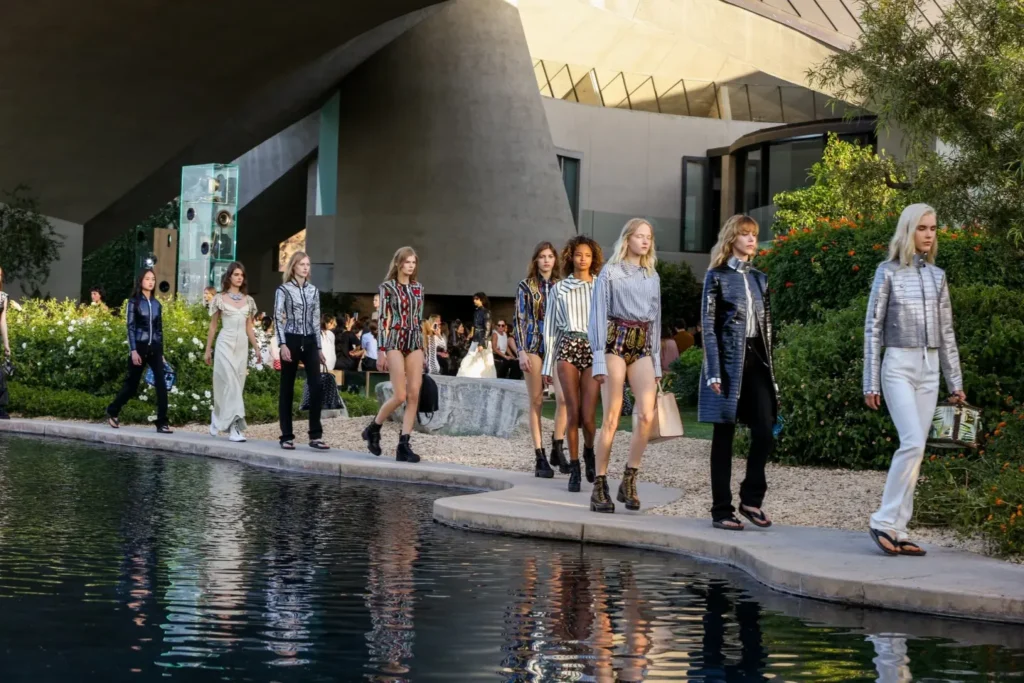
In 2025, retrofuturism stopped being a niche vibe and hit the mainstream. Prada’s SS 2025 collection featured silver sequins and windbreakers straight out of the ’60s, but tailored so well that no one would call it a “costume.” Rabanne took it further, with chains and plastic discs arranged into futuristic armor. Courrèges, a brand that’s been quoting itself for decades, finally found the balance between retro and something fresh. And Pharrell at Louis Vuitton menswear FW 2026-27? Retro-futuristic elegance at its finest: nylon, contrasting linings, an ’80s vibe without any nostalgic overkill.
The market speaks for itself. Synthwave apparel, meaning clothing with that specific vibe, was worth $0.3 billion in 2025. Forecasts for 2034? Growth to $0.6 billion, CAGR 7.2%. This is not a small niche.
Interiors and pop culture in chrome
Architectural Digest PL called retrofuturism the “trend of 2024” in homes. Rounded shapes, chrome, UFO and sputnik lamps, sinuous furniture. Muted palettes (beiges, grays), but the metal shines. It works because it doesn’t shout.
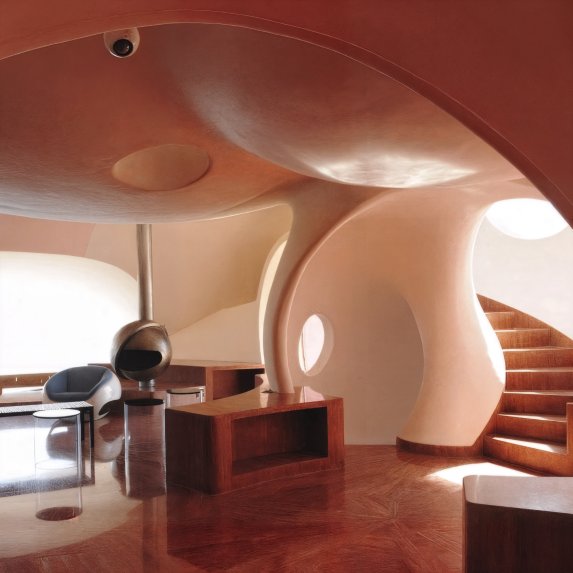
And pop culture? Tesla has opened a retro-futuristic restaurant with robot servers in LA and a 60s vibe. The film “Fantastic Four” (2025) embraces Kennedy-era optimism. Campaigns from Havaianas, Embraer, and Fiat mix classic lines with slogans about innovation. Everywhere, the same code: past + future = now.
How to create luxury in retro-future aesthetics?
Balance is key if you want retrofuturism to look elegant, not like a costume from a sci-fi festival. Take a timeless silhouette from the 60s ( A-line, cocoon, mini line) and pair it with modern materials, even high-tech ones. The idea is to balance the shine of chrome or lacquer with matte finishes or natural wood. This kind of contrast tones down the effect and adds sophistication.
Premium fashion
The silhouette should be geometric and precise—capsule, mini, A-line. Look for metallic fabrics, vinyl, or modern neosynthetics, but make sure the cut is refined in its details. Geometric seams, asymmetrical zippers, and orbit-like belts are the details that make all the difference. Sunglasses and jewelry with cosmic shapes (round, streamlined) perfectly accentuate the whole look. Colors? Orange, lime, turquoise, red—but as accents, not the main theme. And one more thing: choose premium, durable fabrics. Recycling and responsible sourcing truly make sense if you’re building a wardrobe for years to come.
Premium interiors
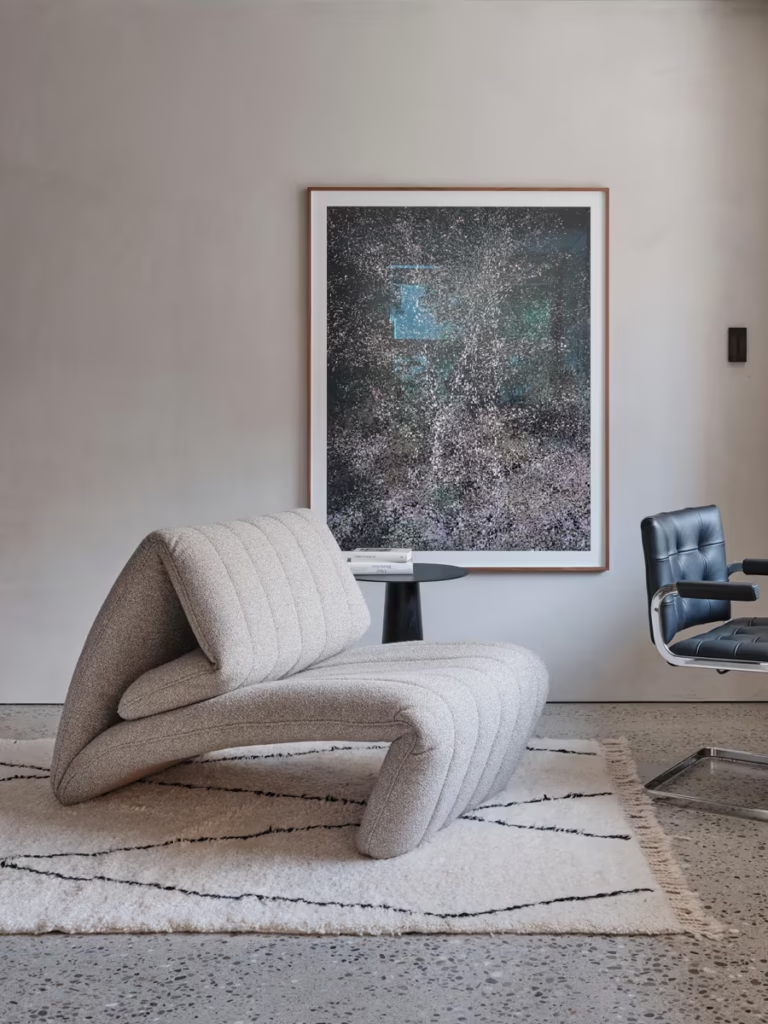
The shapes should be rounded: oval tables, sinuous furniture, forms without sharp angles. Combine chrome and polished steel with wood to avoid a cold effect. Lamps shaped like spheres, sputniks, or UFOs are an obvious choice, but LED lighting that highlights the curves of the furniture adds that futuristic glow. Color palette? Silver, white, chrome plus muted beiges and pastels as a base. This makes the interior look cosmic, yet calm.
The elegance of tomorrow we were searching for yesterday
Retro-futurism is more than just an aesthetic play with archives. It’s a conscious dialogue between what worked in fashion decades ago and what we need to wear today: comfort, quality, and responsibility. Classic premium cuts, enriched with the techno-aesthetics of the Space Age, show that the future doesn’t have to look cold and soulless. It can be elegant, functional, and emotionally warm.
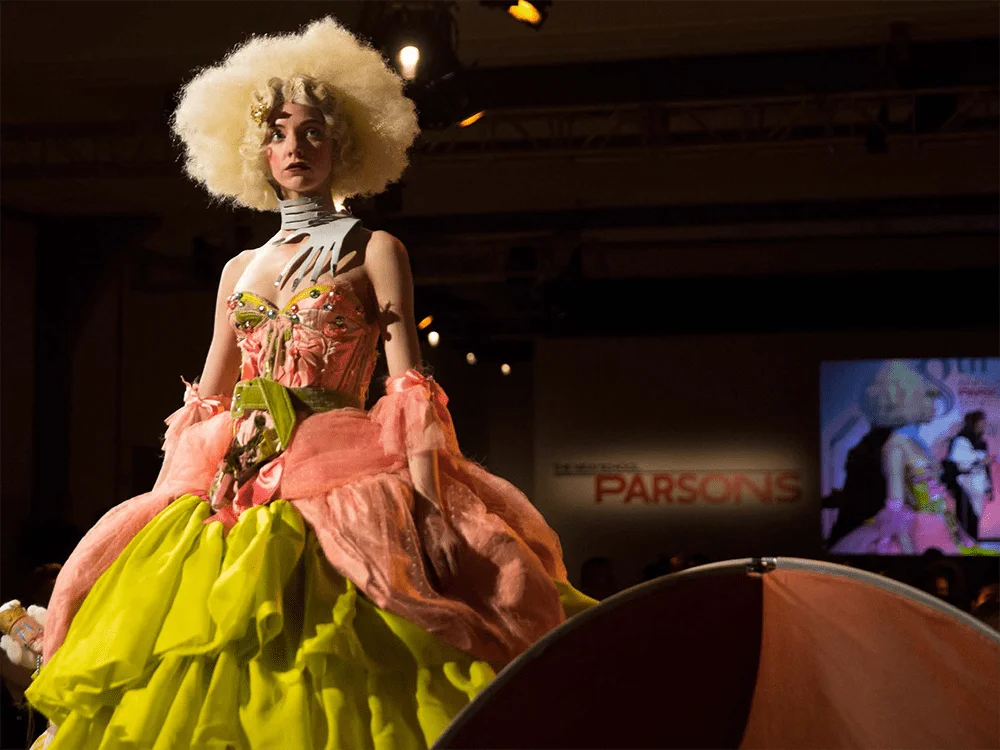
The history of fashion moves in cycles, but the most interesting things happen at the turns, where archival cuts meet innovative materials and new sewing technologies. This isn’t a sentimental journey into the past, but a practical lesson that timelessness is no accident. It’s the result of thoughtful proportions, attention to detail, and the understanding that a well-made garment doesn’t age as quickly as a season that lasts three months.
In essence, retro-future is the answer to a question we’re asking ourselves more and more often: how to wear the future without losing what truly works in fashion?