
Since 1884, Bvlgari has meant one thing: Roman opulence that never ages. Around 300 boutiques worldwide, the expansion of the Valenza manufacture to 33,000 m² by 2025, and records set by the ultra-thin Octo Finissimo watches. This is not a museum brand living off nostalgia. It’s a brand that, in 2026 at Watches & Wonders, is presenting the Octo Finissimo 37 mm with a 72-hour power reserve and has no intention of slowing down.
What makes Bvlgari so endlessly fascinating? It’s the Roman DNA: yellow gold, colorful cabochons, serpentine shapes that look as if someone melted down the Pantheon and turned it into a bracelet. In 2024, the Bvlgari Foundation reminds us that the maison takes cultural heritage just as seriously as jewelry-making.
In this article, you’ll explore the full history of the brand, understand the origins of its design, take a look into the world of watches (where a lot is really happening), and see the impressive scale of today’s business. No pathos, just the facts.
From Paramytii to Via Condotti
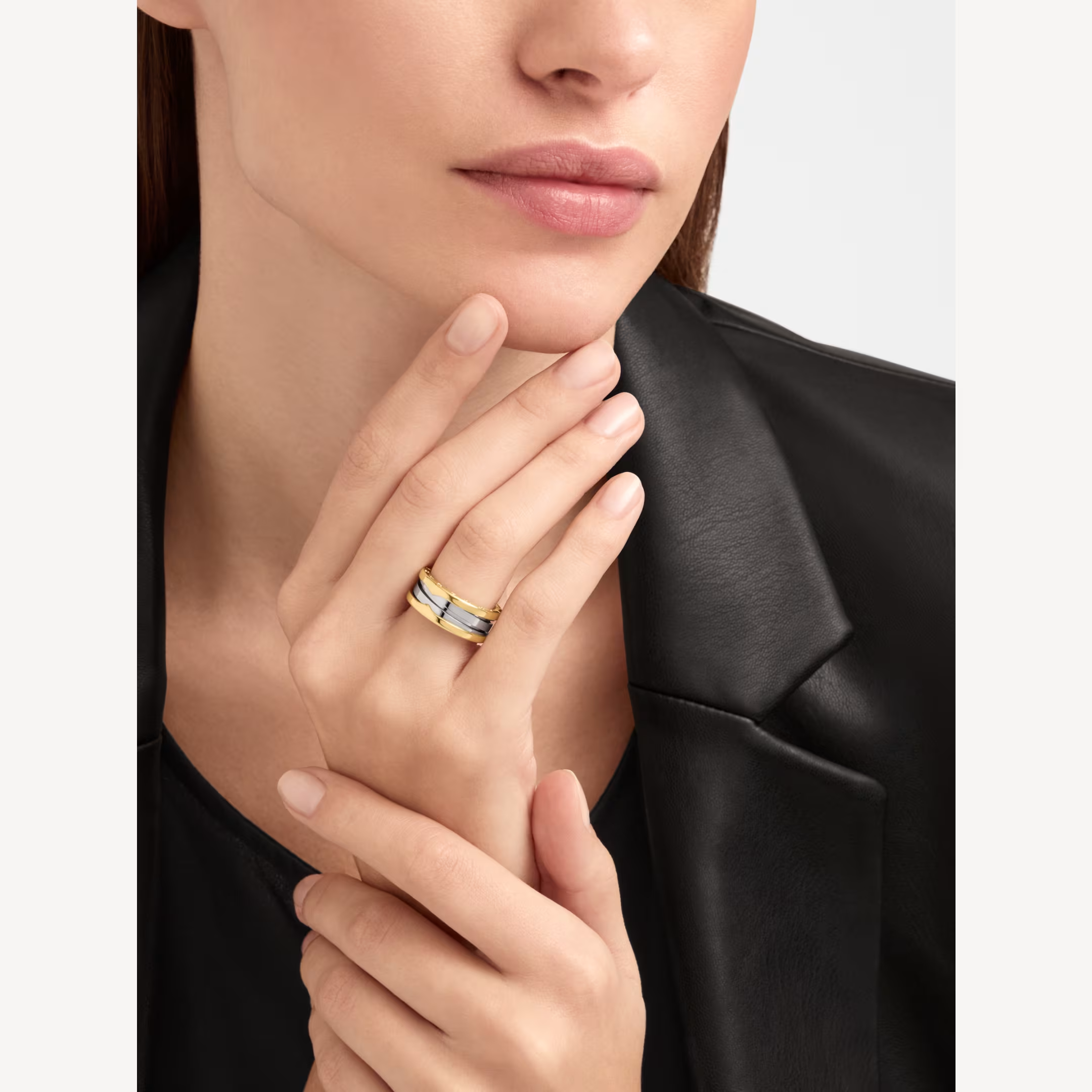
Sotirios Voulgaris was born in 1857 in Paramythia, a town in Epirus where his family had been engaged in jewelry-making for generations. Around 1881, he arrived in Rome as the situation in the Balkans was becoming increasingly tense. In 1884, he opened his first shop at Via Sistina 85, selling mainly silver items with Byzantine and Islamic motifs that he had brought with him. The real breakthrough? That was in 1905, when he moved to a boutique at Via Condotti 10, an address that became synonymous with the brand.
The 1920s and 1930s marked the Art Deco era: platinum, geometric lines, Trombino watches with polished gold. After Sotirio’s death in 1932, his sons Giorgio and Costantino took the helm, guiding the company through the turbulent war years. In the 1940s, when precious stones were worth their weight in gold (literally), Bvlgari turned to naturalistic gold and introduced the first Serpenti watch—a snake coiling around the wrist.
From diversification to LVMH
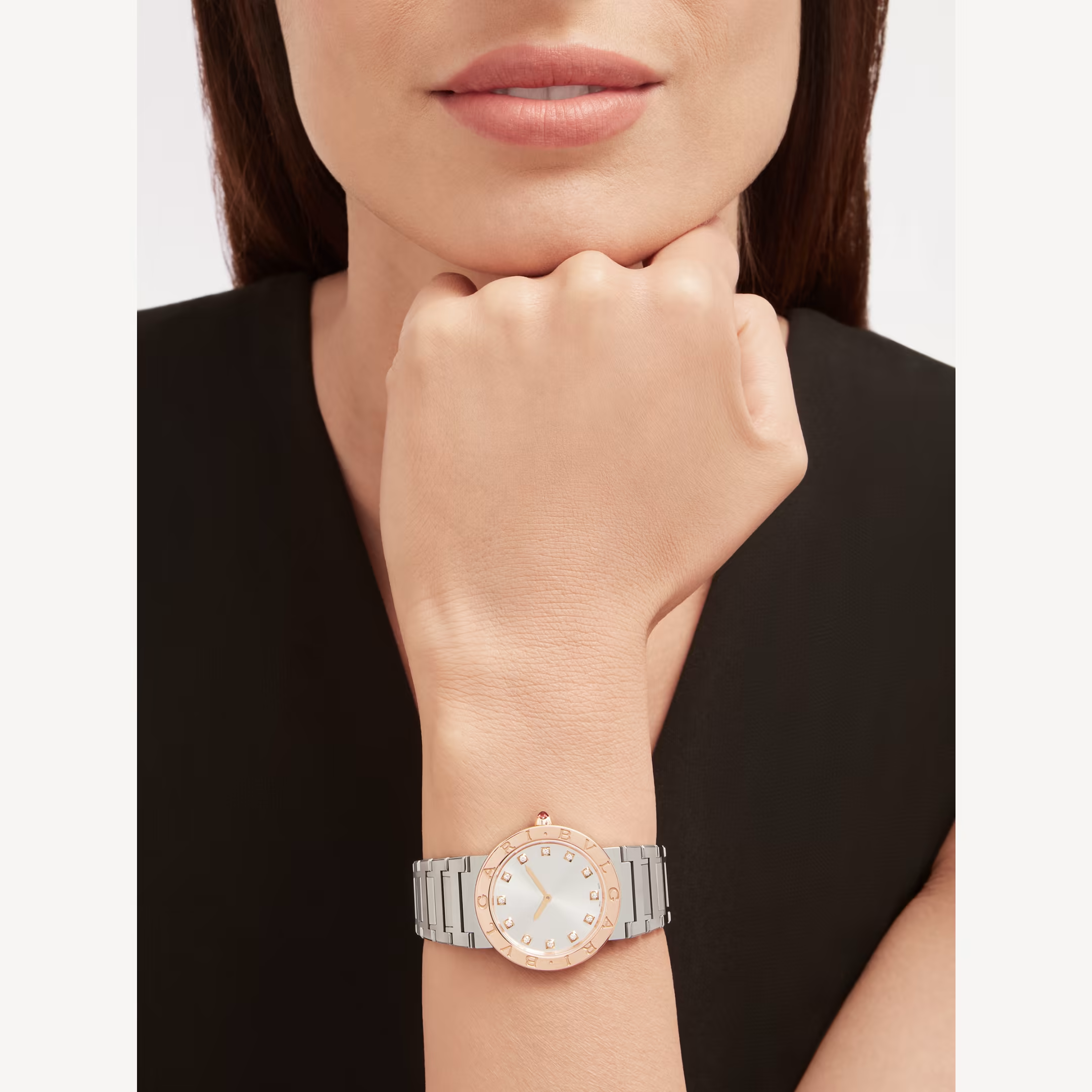
The fifties and sixties were dolce vita in its purest form. A revolution of color, cabochons, bold combinations. Elizabeth Taylor and Gina Lollobrigida wore Bvlgari like a second name. In the seventies, the brand took the world by storm: New York, Geneva, Monte Carlo, Paris. And in 1977, the BVLGARI BVLGARI watch debuted with its distinctive logo on the case.
The nineties marked true diversification:
- 1993: perfumes
- 1996: leather accessories
- 1999: B.zero1 collection
In 2004, the first hotel was opened in Milan. The breakthrough came in 2011, when LVMH acquired the brand in a share deal worth around €4.3 billion. Since 2013, the CEO has been Jean‑Christophe Babin. In 2017, a manufactory was launched in Valenza, which was just expanded in 2025. And in 2024? Fondazione Bvlgari, because the story continues.
Roman DNA of jewelry
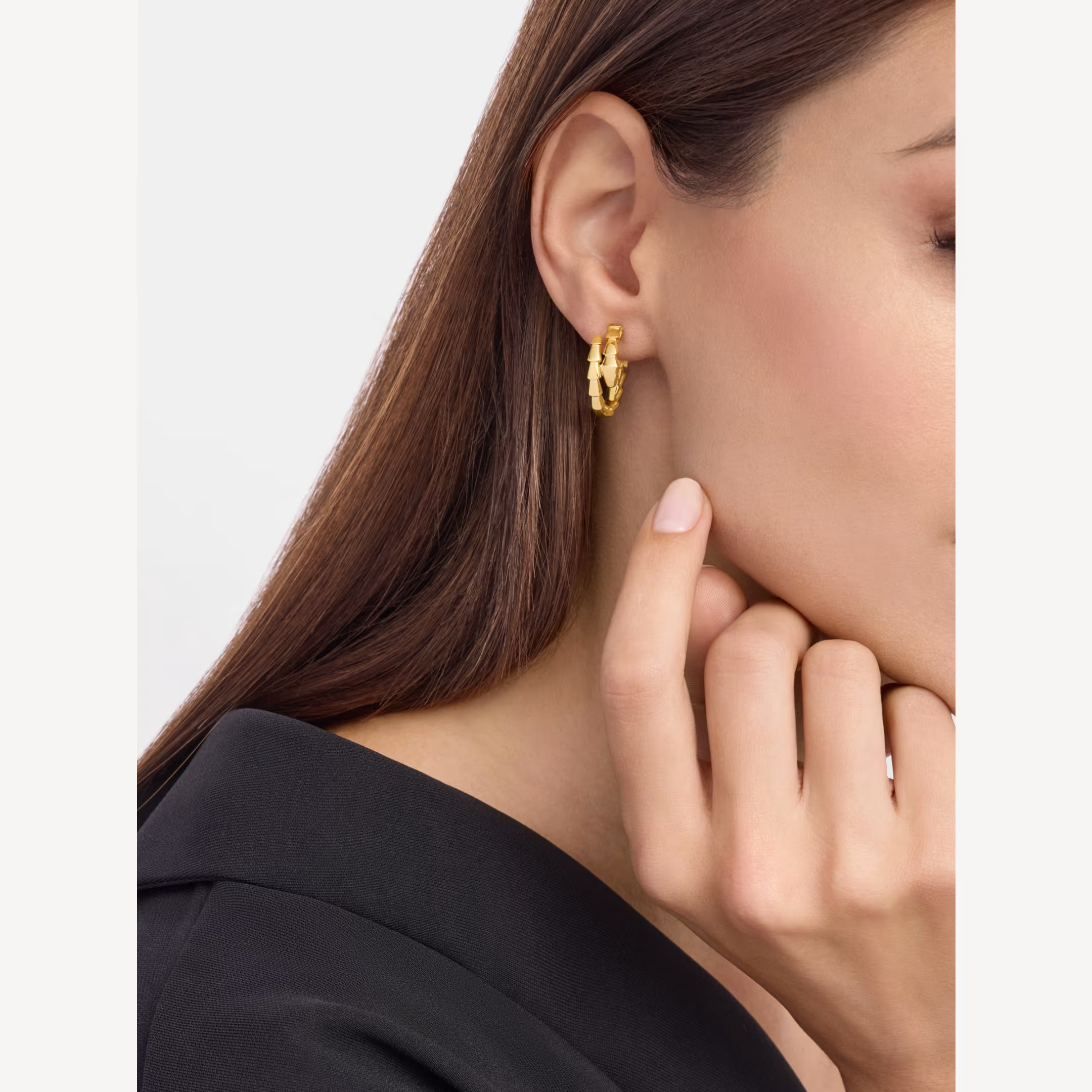
Bvlgari is not Parisian delicacy, but pure Mediterranean temperament. From the very beginning, the house has embraced massive yellow gold, bold cabochons, and colorful combinations of stones that look as if someone had scattered the contents of a treasure chest on Via Condotti. While other jewelry houses were polishing diamond after diamond, Sotirio Bulgari was combining rubies with emeralds and sapphires as freely as ancient Roman architects mixed marbles.
Color, gold, streamer
Three things you’ll recognize immediately:
- Polychromy of stones – no dull monochromatic combinations, only vibrant colors side by side.
- Cabochons instead of facets – smooth, domed cuts that provide color without unnecessary sparkle.
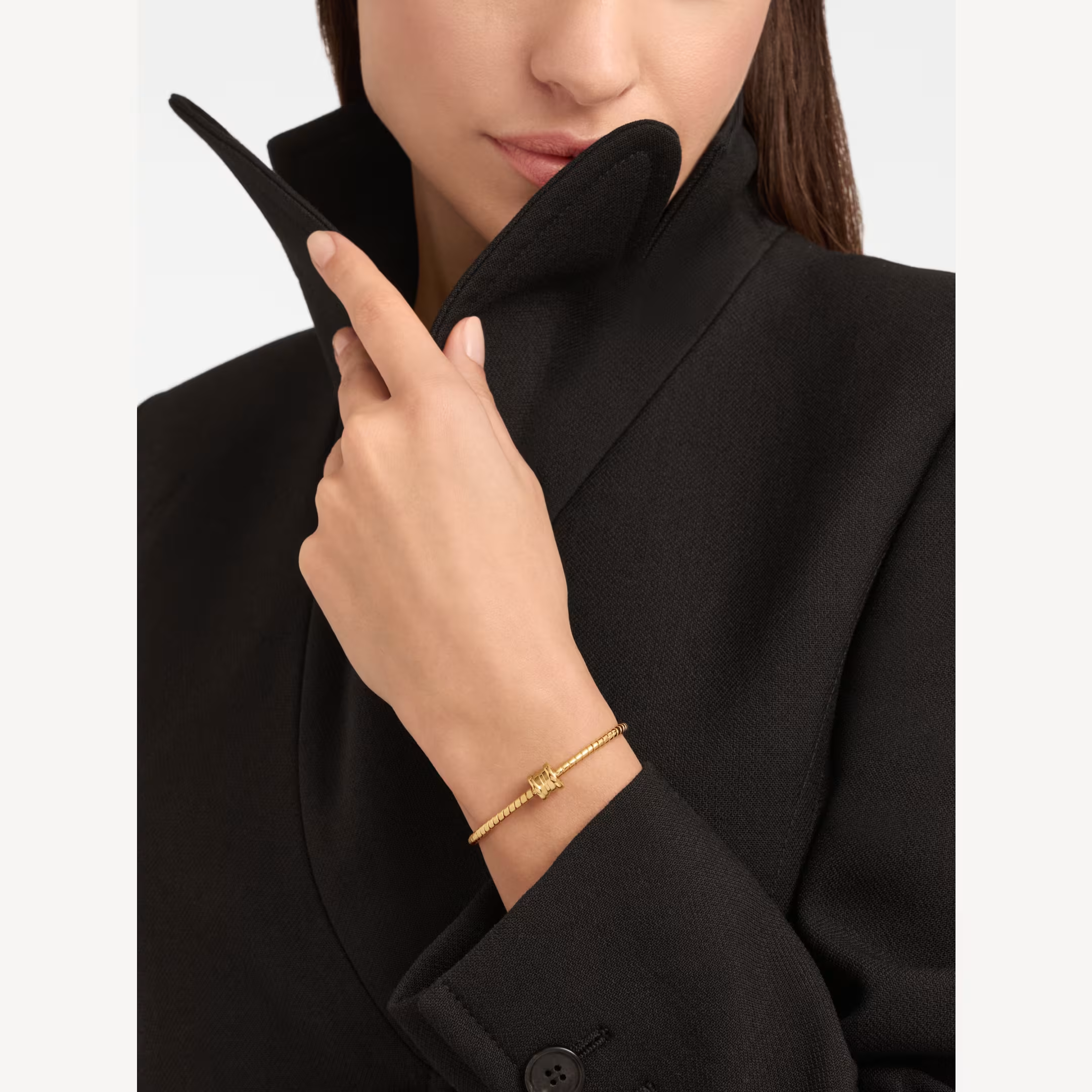
- Tubogas – this technique of winding gold bands without soldering is pure Rome, both flexible and substantial at the same time.
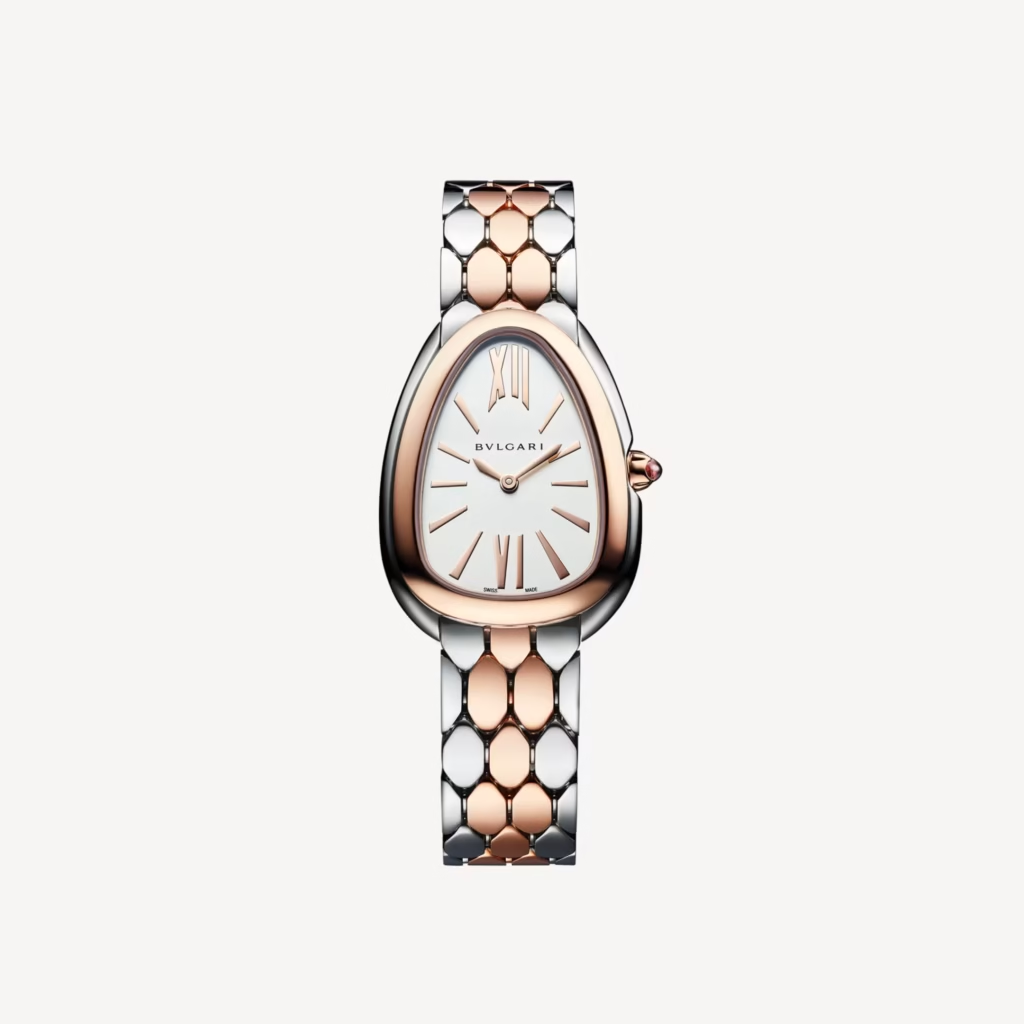
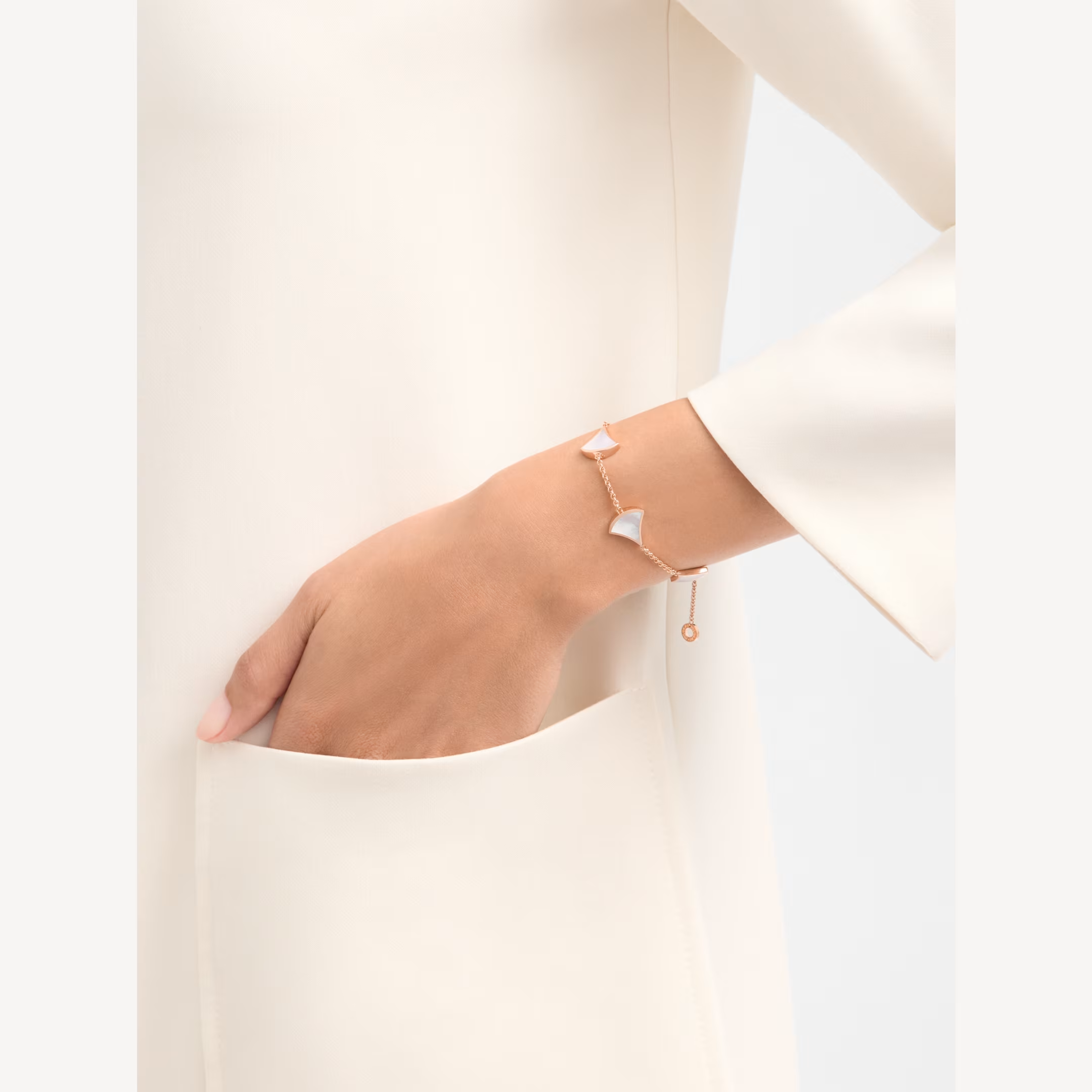
- Serpenti – the serpent is not just a motif, it is a talisman. Since the 1950s, these bracelet-watches with enameled scales have become synonymous with Bvlgari.
Icons
Serpenti has evolved over the decades, from colorful enamels in the 60s to contemporary versions with diamonds. Elizabeth Taylor wore this bracelet like a second skin, and today Zendaya and Dua Lipa continue that same “dolce vita” vibe.
Trombino (those distinctive rings with cabochons) and the B.zero1 inspired by the spiral of the Colosseum are proof that industrial architecture can be a tender gesture towards the city.
The “BVLGARI” logo with the Latin “V” appeared on the Via Condotti storefront in 1934. It was a deliberate reference to ancient inscriptions. Not discreet initials, but a proud declaration of origin.
That’s enough about form and color. Now it’s worth seeing how that same energy has translated into watches.
Watch innovations and Octo Finissimo
Bvlgari entered watchmaking seriously in 1977, when the BVLGARI BVLGARI with its engraved logo on the case was introduced. Today, production takes place in the manufactures in Neuchâtel, where something that sounds like an oxymoron is forged: ultra-thin works of art with Swiss precision, dressed in Roman elegance. And it is precisely this tension between technical austerity and Italian temperament that makes the brand’s watches stand out on the wrist.
Octo Finissimo
The Octo Finissimo series is practically a record-breaking machine when it comes to slimness:
- Manual tourbillon (1.95 mm movement thickness)
- Automatic time-only
- Minute repeater (the thinnest in the world)
- Chronograph GMT, only 6.9 mm thick overall
- Octo Finissimo Ultra: an absurdly thin 1.8 mm (newer versions go down to even 1.7 mm)
Each of these launches garnered GPHG awards and caused consternation among the competition. Watches & Wonders 2026 introduced the Octo Finissimo 37 mm, redesigned with slimmer wrists in mind. A new ultra-thin in-house caliber, a 72-hour power reserve, and the same proportions that made the larger model an icon.
This is what it means to be a ” jeweler of time “: you don’t just rest on your heritage, but prove every year that Italian design can set the standards for Swiss precision.
Scale, manufactories, and expansion
Contemporary Bvlgari is no longer just a jewelry house, but a global giant with revenues reaching around €3.47 billion (2024 estimates). Jewelry accounts for about 80% of turnover, and the entire company belongs to the powerful Watches & Jewelry segment of LVMH, which in 2025 achieved results of around €10.5 billion. We’re talking about “another record-breaking year,” employment ranging from 6,000 to 8,300 people (2025/2026 data), and around 300 boutiques scattered around the world.
Valenza and production strength
In April 2025, the brand completed a spectacular expansion of its Valenza Manifattura to 33,000 m², creating the world’s largest single-storey jewelry manufactory. The plan is to double production capacity by 2029 and hire over 500 new artisans (an increase from around 1,100 to more than 1,600 people). The Scuola Bulgari also operates there, training talents from over 30 countries, ensuring the continuity of traditional techniques. It is an investment in the future, not just in square meters.
Network, results, and the 2030 horizon
New flagship boutiques (Milan, Place Vendôme, South Coast Plaza) are complemented by the first store in Poland, opened in Warsaw in 2024. E‑commerce is thriving, especially in the USA, generating around US$1.3 billion GMV (2025). At the same time, the brand is expanding its network of Bvlgari hotels: currently, there are 9 locations (from Milan to Bali), and by 2030 there will be 15, including the Resort & Mansions in Abu Dhabi (opening in 2030).
Responsibility is also increasing. Fondazione Bvlgari (2024) supports art, education, and heritage, and its environmental goal is ambitious: a 50% reduction in emissions by 2030. It is worth mentioning the 2023 incident, when incorrectly listing Taiwan as a country sparked an uproar and an apology. The lesson in geopolitics can be painful, but necessary.
A sense of form, the courage of color
Bvlgari is not just history. It’s a way of thinking about luxury, where boldness of form meets Italian sense of beauty. This brand proves that prestige doesn’t have to be quiet or restrained. It can shine with colors, captivate with objects, and still maintain timeless class.
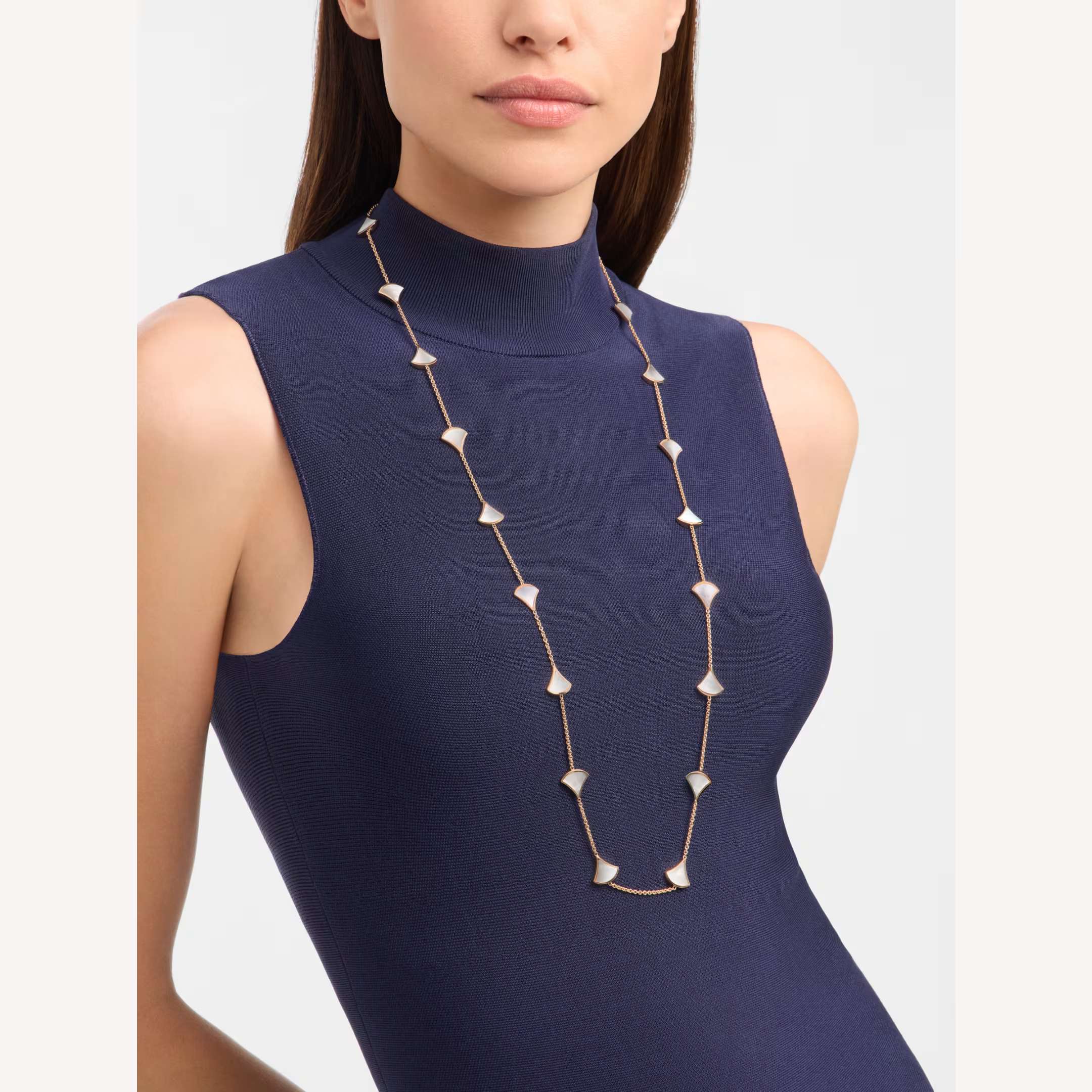
Today, when the luxury brand market is teeming with similar products, Bvlgari stands out precisely because of its unique character. It doesn’t imitate, it doesn’t follow trends, it simply stays true to itself. And that’s exactly what attracts new generations of clients who are looking for something more than just a logo.
This is Roman DNA in its purest form.
Seu E.
editorial fashion