
“eBay Watchlist 2026: Dior surpasses Hermès in resale.” This quote from the report really says it all about how the hype around the maisons has shifted. The year 2026 marks the moment when the four biggest houses suddenly revisit their heritage codes and try to find a balance between what they have always been and what the market now demands.
Why is 2026 the year of change?
Hermès has built on equestrian heritage for decades, Chanel on tweed and the 2.55, Louis Vuitton on the monogram and travel, Dior on the New Look and the Bar silhouette. Now? They are focusing on fluidity versus structure, soft forms against rigid standards. And interestingly, they are doing this at a time when their financial condition is far from struggling. Hermès closed 2025 with €16 billion in revenue and an operating margin of 41%, while Chanel achieved $19.3 billion. Slowdown in Asia? Yes, but their resilience turned out to be greater than anyone had anticipated.
Showing in Los Angeles instead of Paris ( Dior Cruise, Hermès “Chapter Two”), building a set with a wave of water for LV—these are signals that the maisons are experimenting with format and space. Without going into details (there will be time for that), one thing can be said: 2026 is the first year when all four are changing simultaneously.
Hermès and Chanel 2026
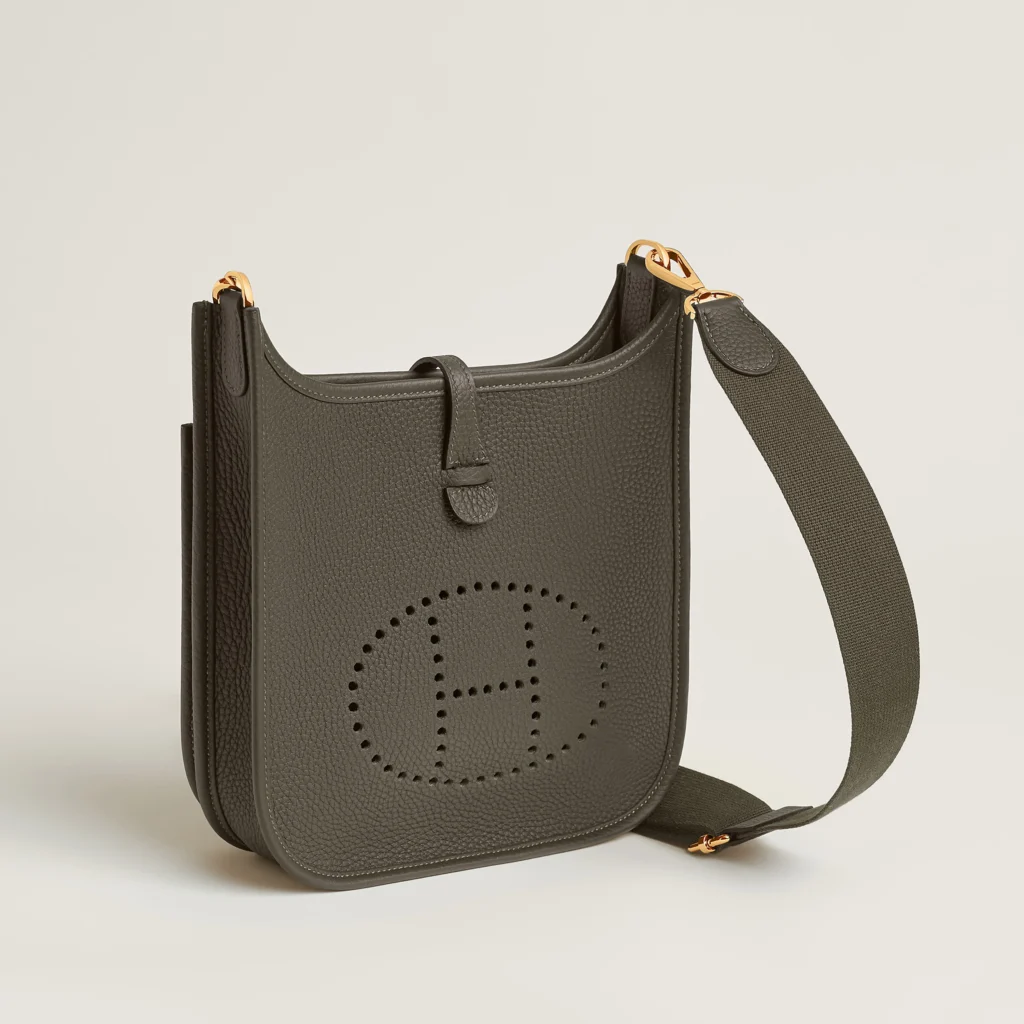
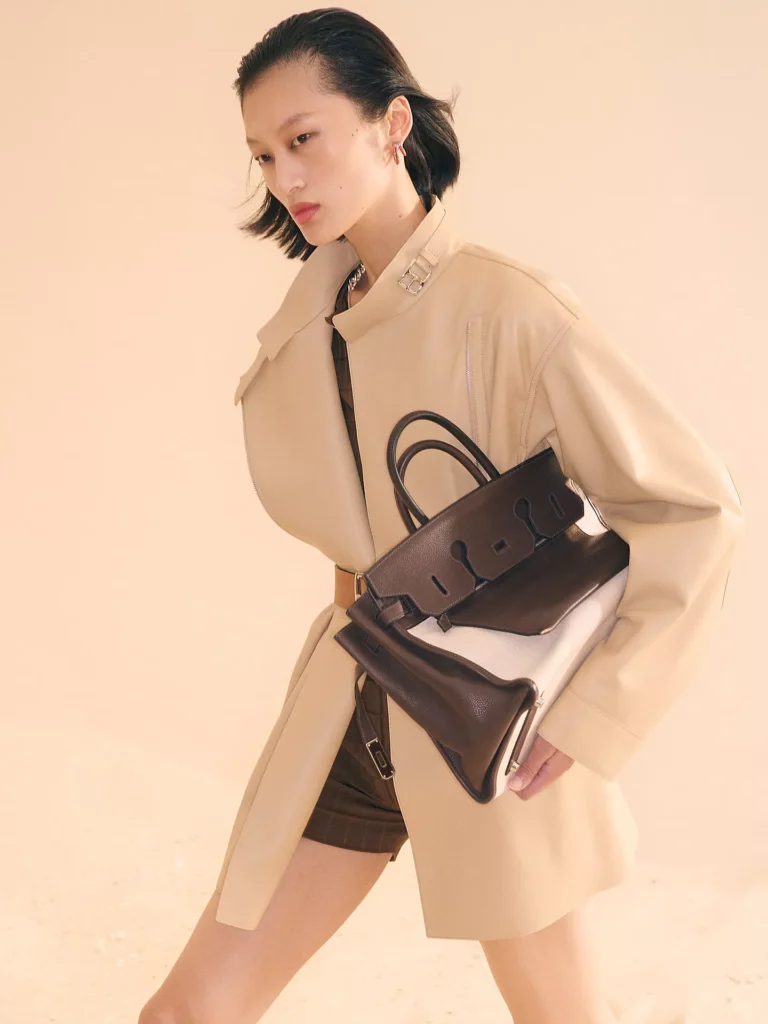
Hermès in 2026 continues its signature balance—functionality inspired by equestrian heritage merges with maritime motifs and balletic lightness. Spring and summer are all about “land to sea,” where harnesses appear on silks and knits resemble waves. The autumn-winter show in Paris is pure equestrian elegance: jodhpurs and blazers reminiscent of dressage arenas, contrasted with a romantic, moody atmosphere. June brought “Chapter Two” in Los Angeles, where satin and sheers created fluid dresses with Carré motifs.
New bags for the season:
- “Evelyne 23/Mini” – the compact version of the iconic perforated bag
- “Faubourg Express” – soft Evergrain leather, casual character
- Classic materials: Epsom and hand stitching (everything still sewn by hand)
Chanel: Blazy’s new codes
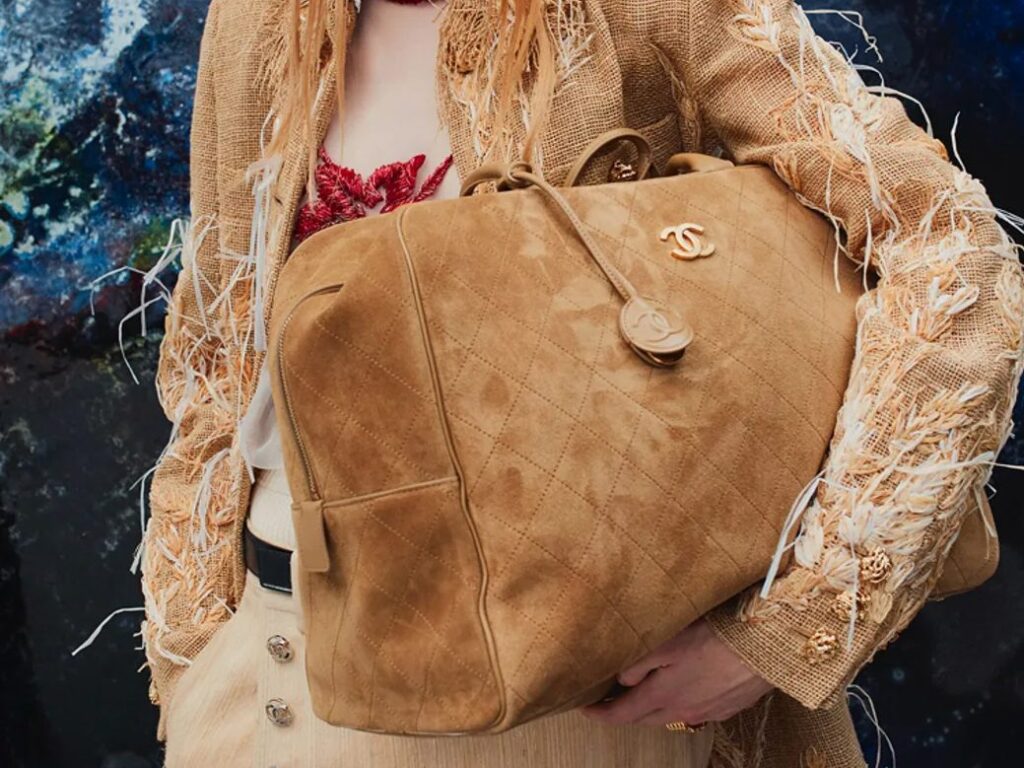
Matthieu Blazy made his debut in the spring with a “distressed” 2.55 – crumpled, exposed lining, less quilting than usual. Leather straps instead of traditional chains. In the fall, the ” caterpillar and butterfly ” motif developed the practicality versus fantasy theme: ribbed knits and iridescent bouclé, a decidedly deconstructive approach. Haute Couture features transparency and fairy-tale motifs.
Refreshed bag models:
- “XL Tote” – larger size for everyday use
- Variants of the 2.55: double-sided flap, suede top-handle
- Footwear: high instep, two-tone architectural forms
This entire strategy, both at Hermès (precision craftsmanship) and at Chanel (controlled deconstruction), is redefining the RTW silhouette for 2026. Both houses focus on materials and cuts that transform ordinary accessories into key wardrobe elements. Interestingly, their approaches are completely different, but the goal is similar. To change what we wear every day.
Louis Vuitton and Dior 2026
Alongside the artisanal patience of Hermès and the minimalism of Chanel, Louis Vuitton and Dior have taken a different path. The former brand focuses on spectacle and travel as performance, while the latter translates archival codes into something between collecting and garden fantasy. Both build narratives, but in completely different ways.
Louis Vuitton
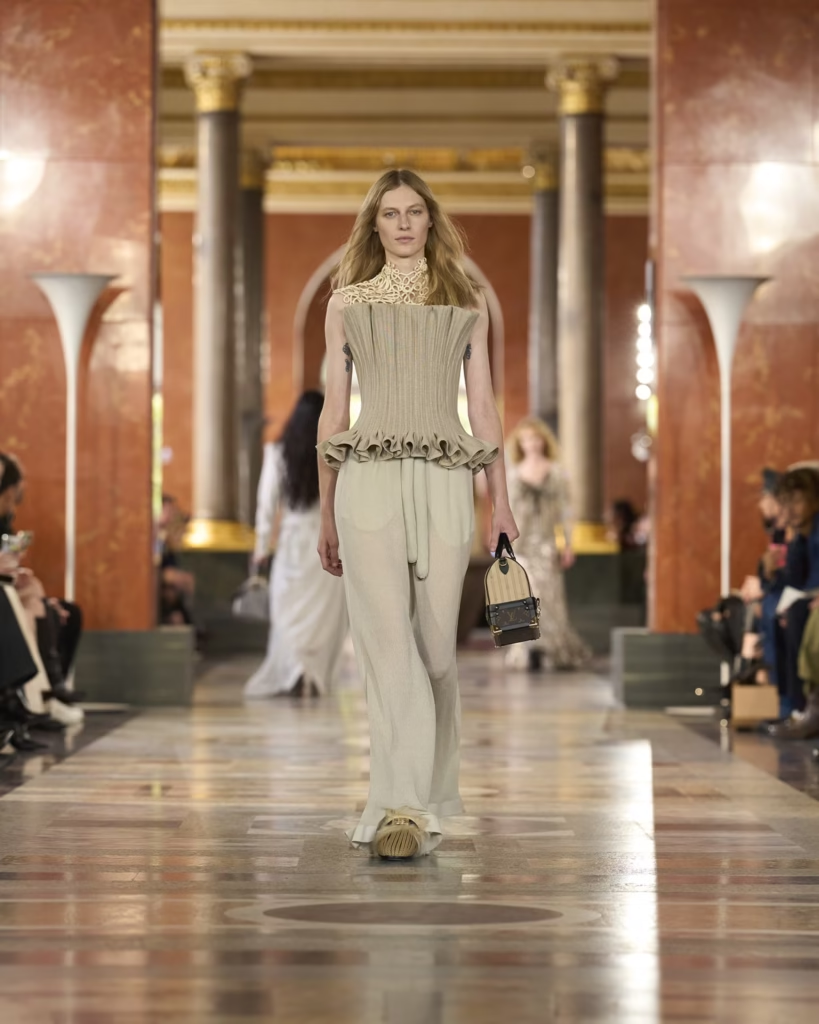
Nicolas Ghesquière presented SS2026 at the Louvre and opted for delicacy. Embroidery, jacquards, reinterpretations of vintage makeup bags. Nothing overly loud. At Pharrell Williams (men’s FW2026), the “future dandy” appeared, adaptive fabrics, suits for both business and evening wear. But the real show took place in June 2026, when surfing appeared at the men’s SS2027 in Paris. Neoprene textures, patched outerwear, distressed denim, and at the center of the show, a monumental wave with real water in a closed circuit. Theatrical? Absolutely.
The new bags follow the same travel theme:
- L’Express (soft, inspired by Keepall)
- Alma Trunk (a return to trunk DNA)
- Multipass (functionality in motion)
- Speedy P9 (reversible model)
- Christopher Buttersoft P9 (men’s line)
Dior
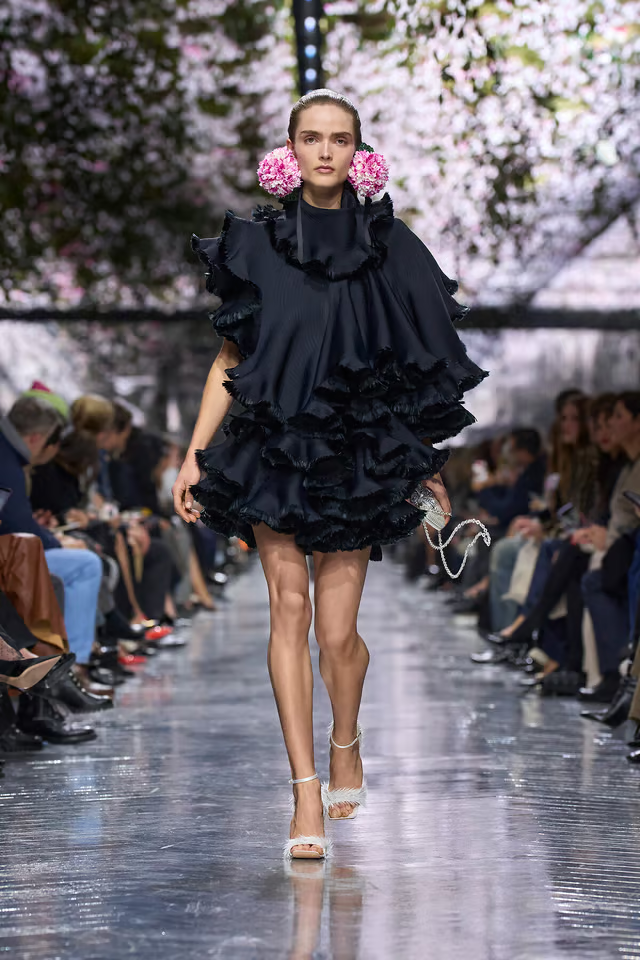
Jonathan Anderson came to Dior and brought order to the archives. SS2026 RTW is New Look in tulle and georgette, Bar jacket, bows, clovers, book motifs. FW2026 brought lilac water motifs, oversized suits, peplums, a play on mask/femme. Haute Couture SS2026 went for spiral constructions of nature, as if someone were reading Mrs. Dior’s garden diaries. And Cruise 2027 at LACMA (Los Angeles, May 2026) is old Hollywood and glamour that doesn’t return, but has been reimagined.
Bags? Literary and collectible:
- Dior Bow (the bow as the central motif)
- Lady Dior Clover (clover in a new scale)
- Micro and mini Lady Dior (proportions for a younger client)
- Book Tote with book covers (bibliophile in the spotlight)
Louis Vuitton turns travel into a show, Dior turns archives into a library. Both approaches work because both brands know that luxury in 2026 is not a product. It’s the way you tell the story of a place and its history.
Shows, venues, and narratives
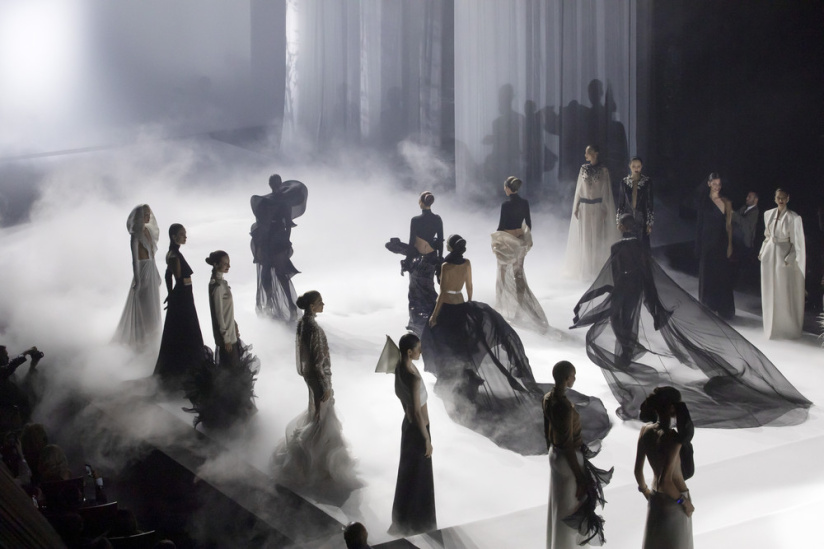
The location of a haute couture show is practically half the success today. Every brand faces the question: where and how to present the collection so that the place itself creates meaning? And it’s not just about the visual effect. It’s about what a given space says about the DNA, about the position in culture.
Los Angeles
Hermès chose Bel Air for the June “Chapter Two” in 2026. The contrast with Parisian precision was intentional, with balletic fluidity prevailing over constructivism. The most interesting part? The reinterpretation of the iconic Carré as dresses, a completely new language. Dior, on the other hand, took Cruise 2027 to LACMA in May 2026. The museum, Hollywood, and cinema served as points of reference. Baudelaire in the lookbook, literary references woven into the narrative. And haute couture SS2026 was presented at the Musée Rodin to highlight craftsmanship and sculptural form. LA is a dream of Hollywood, Paris is the canon. Simple.
Paris and museums
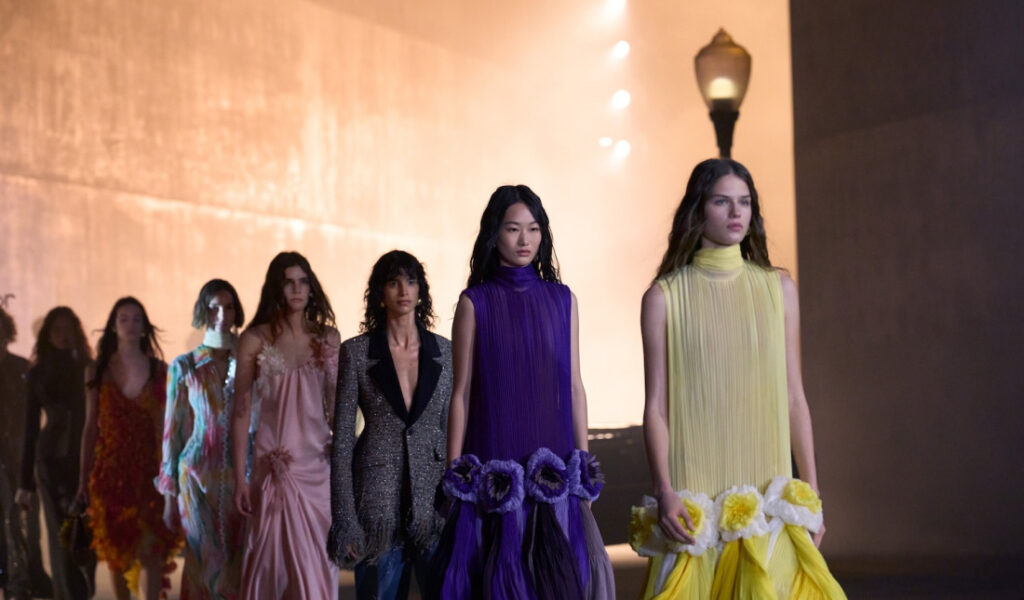
Louis Vuitton in June 2026 went for a spectacle in Paris: the men’s SS2027 collection set against an 8 m × 37 m wave of water. Real water in a closed circuit, surfing as a metaphor for journey and movement. Technical madness? Probably. But the result was that fashion became a cultural event, not just a clothing presentation.
The choice of locations legitimizes fashion as culture. LA offers global reach and associations with cinema, Paris stands for heritage and prestige, museums represent art. The question is: who buys into these narratives? And does the spectacle translate into demand?
It-bags 2026 and the market
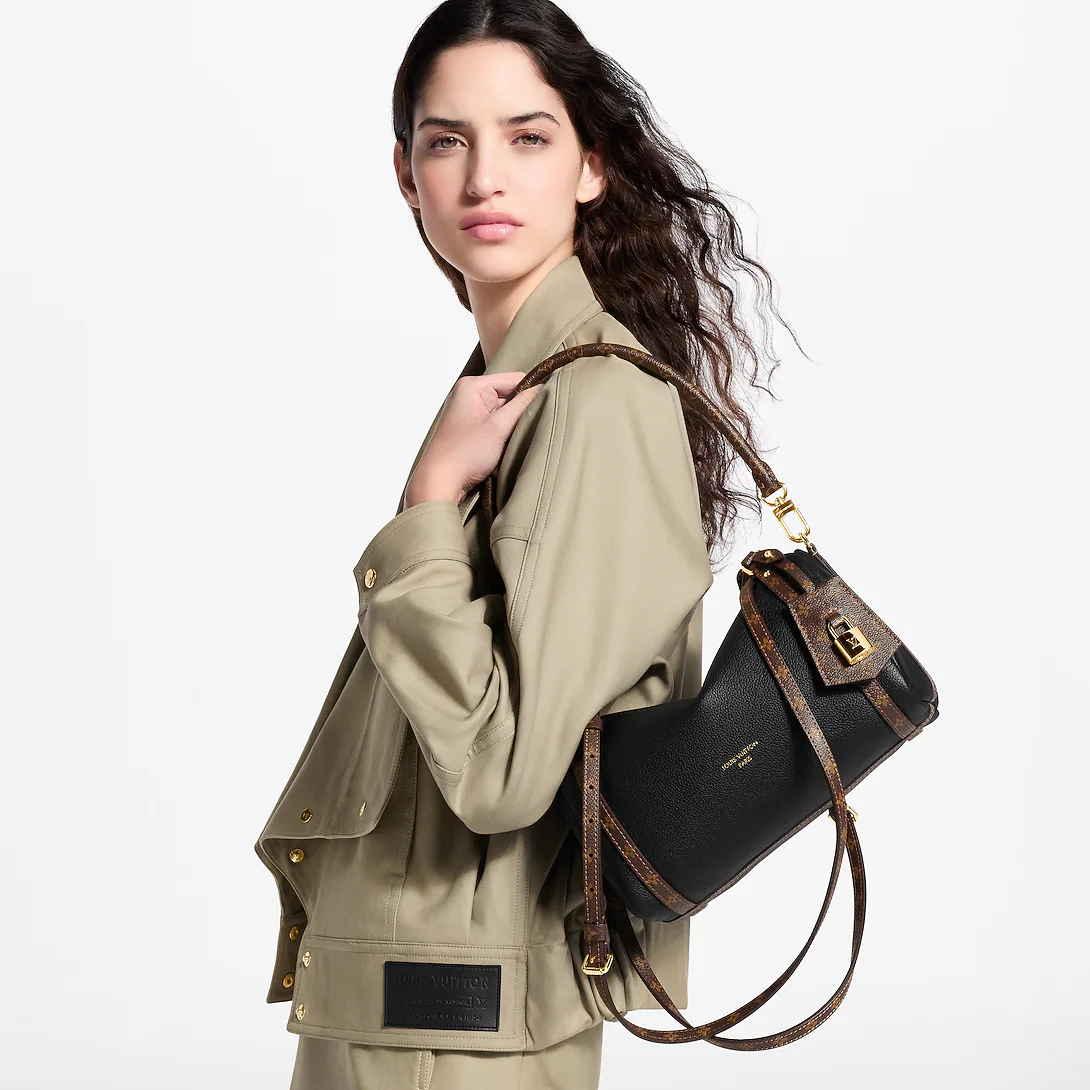
It seems that the it-bag in 2026 is no longer just about having “that one from the runway.” Now, versatility and resale stability matter most. According to eBay Watchlist 2026 data: “Dior on top, Hermès drops from #1.” Interestingly, Chanel and Louis Vuitton remain strong in the middle of the ranking, while the Jonathan Anderson effect is indeed fueling the hype around Dior.
Candidate list? Chanel XL Tote (a return to classics, but in XXL size, more easily available), Chanel 2.55 (still an absolute staple), Hermès Evelyne 23/Mini (compact size, price increase of 2-5% depending on leather), Hermès Faubourg Express (new model, limited availability), Dior Bow (Anderson introduced the bow into the canon, seriously), Lady Dior Clover (four-leaf version, freshness in an iconic form), and Louis Vuitton L’Express (Ghesquière has returned to the brand’s travel DNA).
Resale and prices
Hermès raises prices slowly but steadily. Birkin and Kelly are still limited by client profile quotas (so you can forget about a spontaneous purchase), but Evelyne or Faubourg are within reach if you have a relationship with the boutique. Availability? It varies. On the other hand, looking at revenues: Hermès reached €16 billion in 2025 (41% margin), Chanel achieved $19.3 billion, and LVMH (fashion and leather goods) €80.8 billion. Asia is weaker, while the Americas are holding up better.
Forecast for 2027? Hermès will likely stabilize prices, Dior and Louis Vuitton under new artistic directions have a chance for growth, and market normalization is already visible.
Luxury in return
The great fashion houses are rewriting the rules of luxury not because they need to keep up with trends, but because they shape them themselves. Hermès opts for silence and discretion, Chanel balances between tradition and modernity, Louis Vuitton experiments with form, while Dior creates narratives intertwined with art. These are not random choices; they are strategies for building value in an era when luxury is no longer just about ownership.
Interestingly, all these changes have one thing in common: authenticity. Clients of luxury brands are increasingly able to spot artificiality and empty promises. That’s why brands are returning to their roots, to craftsmanship, to stories that matter. Luxury in 2026 is luxury with context, not just a logo.
And that’s exactly why it’s worth following these codes. Because they show not only how fashion changes, but also how we ourselves are changing.
Alone
High Class Fashion editorial team